
























.avif)







"Today, when folks talk to me about anything AI, they say, 'Can Clay do this?' And what they mean is can we find an AI workflow to solve for this," Arthur Lorente, A-LIGN's Director of GTM Operations
A-LIGN is a technology-enabled security and compliance partner trusted by more than 5,000 global organizations to mitigate cybersecurity risks.
Compliance and cybersecurity
Tampa, Florida
The problem: Paying for research that didn't help reps sell
Before Clay, A-LIGN paid $60K annually for a contractor to manually research 2,000 accounts over six months. The output was a spreadsheet with 15 columns of yes/no answers. Does this company do SOC 2 audits? Yes. Does this company need penetration testing? Yes. Arthur Lorente, A-LIGN's Director of GTM Operations, describes the core issue: "I tell my rep, 'Yes, they do SOC 2.' And my rep looks at that and says, 'Okay, who does?' It was just not very insightful."
The team needed faster turnaround, richer intelligence, and competitive displacement data. They'd been exploring Clay for months, but the turning point came when they saw how Vanta used it for research at scale.
Here's what they built:
- Replaced manual research that took six months and delivered 30K basic data points with automated workflows that ran in one month and delivered 450K detailed insights
- Deployed competitive displacement data in March 2025, fully operational by May 2025
- Fixed 23% of their "good" contact data by pulling current locations directly from LinkedIn instead of trusting stale email signatures
- Removed admin bottlenecks in Salesforce operations, making data updates 24x faster
- Created a culture shift where non-technical reps started thinking about automation
- Gross expansion to existing customers now exceed new logo sales
- Reduced six-month manual workflows to one-month automated ones
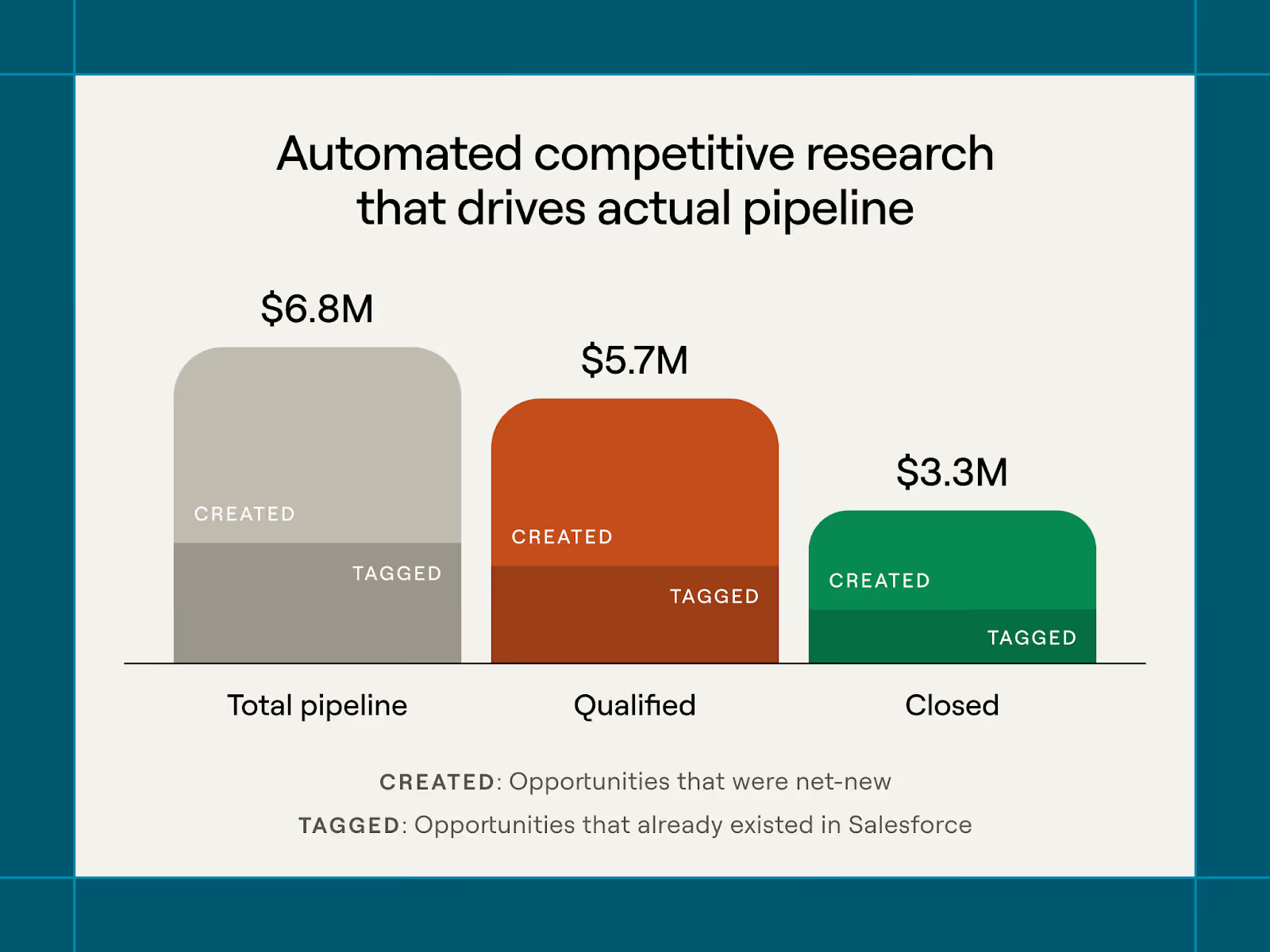
A-LIGN's first Clay project replaced their manual researcher with an automated workflow that delivered 15x more useful information at lower cost and faster speeds.
The build: Instead of checking boxes for compliance services, they searched for whether companies used 15 specific services, why they used them, and which competitors were providing them. The workflow ran through 2,000 accounts and delivered 1M+ data points.
The timeline: Clay deployed March 20, 2025. All competitive displacement data was live in Salesforce by May 22, 2025—a two-month build that would have taken six months manually.
The cost: The Clay contract cost $10K less than the manual research contract. They saved money while getting 15x more data.
The revenue impact: A-LIGN tracked results through a "Displacement SPIFF" program where reps flagged opportunities as displacement deals. From March 20 through December 12 (6.5 months of live data):
- $6.8M in total pipeline generated or identified ($4.2M created, $2.6M tagged)
- $5.7M in qualified (Stage 2+) pipeline ($3.6M created, $2.1M tagged)
- $3.3M closed revenue ($2.2M created, $1.1M tagged)
For context, A-LIGN's total pipeline generation improved dramatically during this period. Comparing March-December 2025 to the same period in 2024:
- Total pipeline: $185M (up from $132M in 2024, +40%)
- Qualified pipeline: $83M (up from $57M in 2024, +46%)
The displacement research directly contributed to this growth while representing a small fraction of total pipeline, proving its efficiency as a targeted outbound strategy.
One key design choice made this work. Instead of telling reps "this company uses compliance services," the system showed them which specific service the company used and why they needed it.
"We searched for 15 services as well as the justification behind the services and the competitors playing in the space," Arthur Lorente, A-LIGN's Director of GTM Operations
This context changed how reps opened conversations because they could reference specific needs rather than making generic pitches.
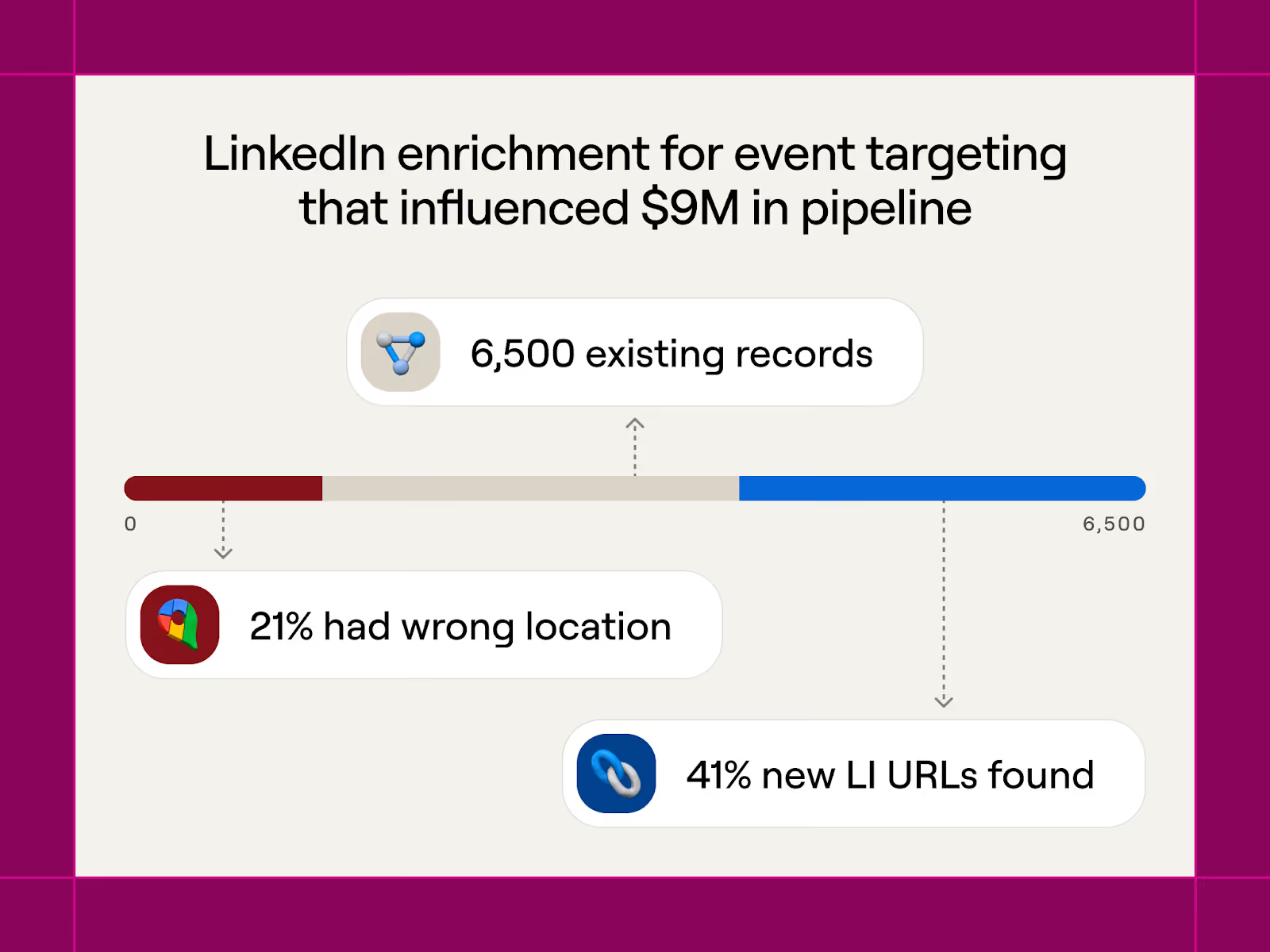
When A-LIGN planned regional in-person events, they ran into the same problem every events team faces: contact data from providers relies on stale information from email signatures. People move cities but don't update their email signatures for months.
The build: Starting with 11,000 target contacts, they used Clay to:
- Find LinkedIn URLs for contacts where standard providers came up empty
- Pull current city locations directly from LinkedIn profiles
- Compare provider data against LinkedIn data
The data quality impact: Clay found 4,500 new LinkedIn URLs that standard providers missed (41% lift). More surprisingly, Clay identified that 1,500 of the 6,500 existing records had wrong locations. That meant 23% of their "known good" data was actually incorrect.
The revenue impact: Those corrected and enriched contacts drove $9.3M in influenced pipeline, $8.4M in last-touch pipeline, and $558K in closed revenue. Arthur notes many of these were existing customers, but the precise targeting made these events far more effective than previous attempts.
The speed: Arthur estimates the entire enrichment workflow took about 20 minutes to build.
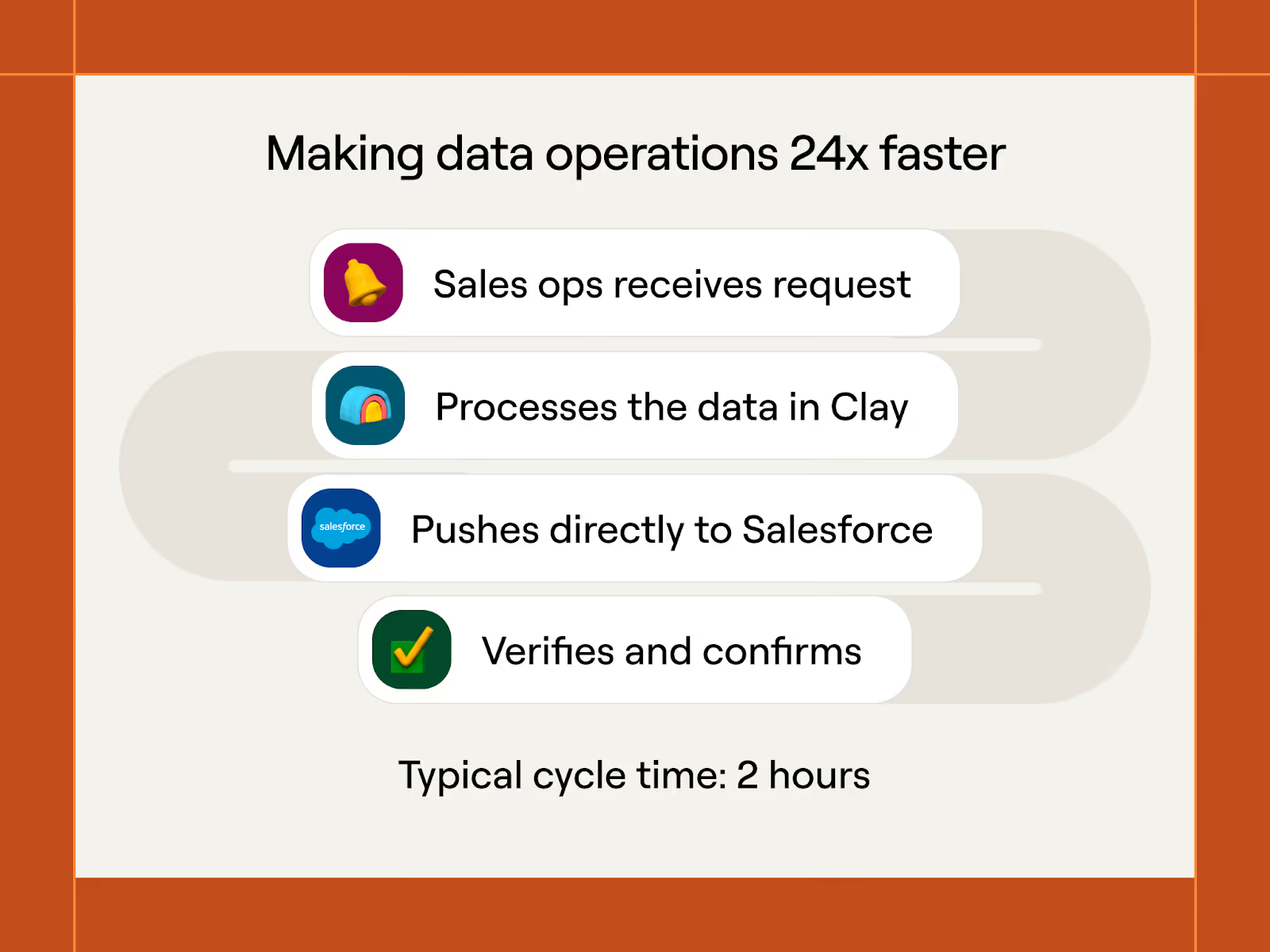
This doesn't show up in pipeline reports, but it transformed how A-LIGN's RevOps team works.
The old workflow: Any Salesforce data operation required a multi-step handoff. Marketing would send data to sales ops, sales ops would prepare a CSV and submit a ticket to the Salesforce admin team, admins would process it, sales ops would verify, then confirm back to the original requester. Typical cycle time: 48 hours.
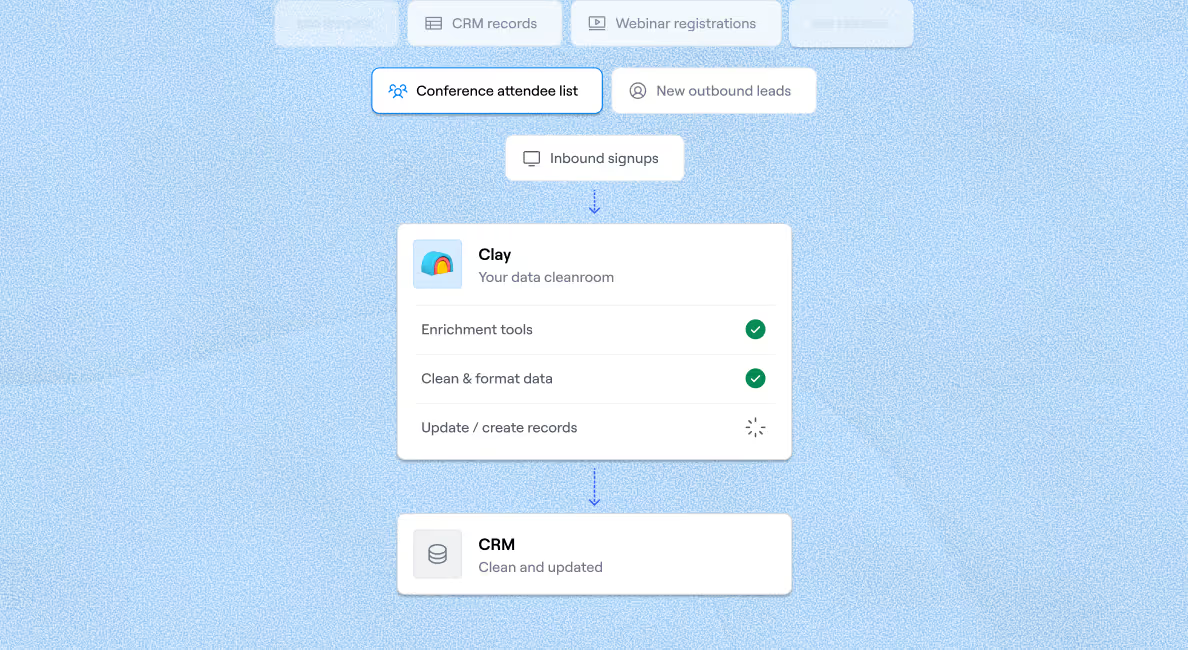
The new workflow: Sales ops receives the request, processes the data in Clay, pushes directly to Salesforce, verifies, and confirms. Typical cycle time: 2 hours.
That's a 24x speed improvement. With at least one major upload per week, A-LIGN saves roughly 46 hours weekly. Their ops team now spends that time on strategic projects rather than administrative work.
"Clay removes that barrier. It's literally manipulating your CRM as a CSV. I can have people that are not technical, that don't have Salesforce permissions, do anything," said Dimitrios Gatsos, an analyst on Arthur’s team at A-LIGN.
Building an AI-first culture in a services company
A-LIGN isn't a software company with AI-native employees. They're a professional services firm where many employees aren't particularly technical.
But Clay changed how the organization thinks about automation. When reps started seeing compliance research with AI-generated explanations instead of binary yes/no flags, they began to understand that AI could provide intelligent reasoning, not just data lookup.
"Today, when folks talk to me about anything AI, they say, 'Can Clay do this?' And what they mean is can we find an AI workflow to solve for this? Some people thought Clay was a person. It just shows up on Salesforce for them." Arthur Lorente, A-LIGN's Director of GTM Operations
The talent team saw Arthur using Clay, got curious, and asked for an introduction. Reps started spotting errors in AI outputs and suggesting prompt improvements. The question shifted from "Can you build this?" to "How should we automate this?"
For a company where AI adoption could easily stall in the face of change resistance, Clay became the entry point that made automation feel accessible rather than threatening.
The playbook
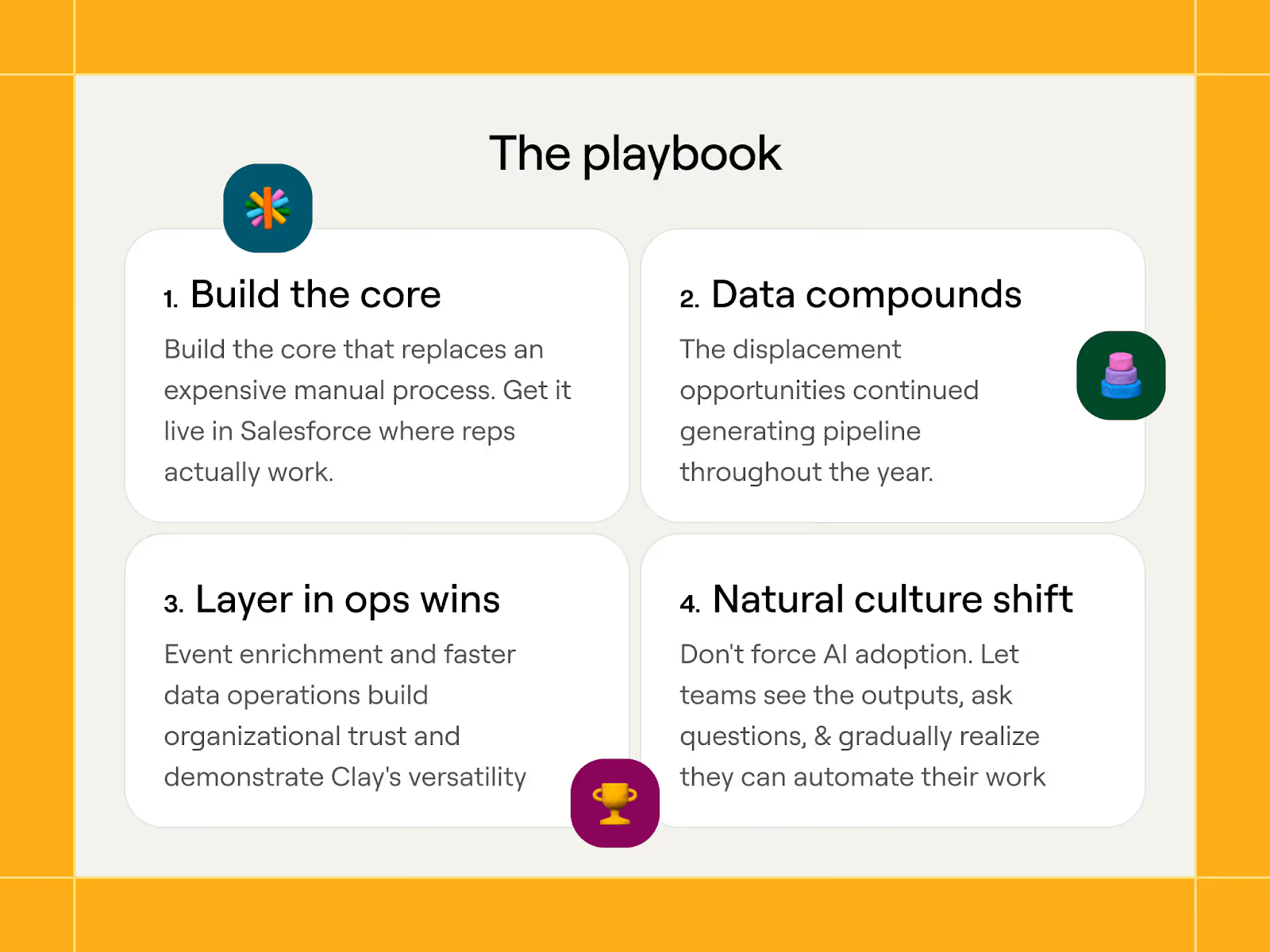
A-LIGN's success comes down to a clear sequence:
Build the core research workflow that replaces an expensive manual process. Get it live in Salesforce where reps actually work. A-LIGN went from Clay deployment (March 20) to full production (May 22) in two months.
Let the data compound. The displacement opportunities continued generating pipeline throughout the year, with reps flagging both new opportunities and identifying competitive landscapes in existing deals.
Layer in operational wins: Event enrichment and faster data operations build organizational trust and demonstrate Clay's versatility beyond the core use case.
Use enrichment insights to inform strategy. A-LIGN used the patterns in their enriched data to allocate budget, refine their upmarket approach, and set retention targets based on actual customer attributes rather than assumptions.
Let culture shift naturally: Don't force AI adoption. Let teams see the outputs, ask questions, and gradually realize they can automate their own repetitive work.
The result: $6.8M in displacement pipeline (with $3.3M closed), 83% reduction in research costs, significant cost savings, 108% net revenue retention, contribution to 40%+ year-over-year pipeline growth, and an organization that now defaults to asking "Can we automate this?" instead of accepting manual processes as inevitable.










.svg)