
“Clay helps us focus our reps on the companies we serve best and reach them at the right time. That’s helping us grow deal sizes and pipeline consistently.” – Gabriela Belnikolovska, CRO
Payhawk is a spend management platform combining corporate cards, expense management, and accounts payable automation for finance teams.
Fintech
London, UK
Executive summary
Payhawk grew pipeline 3x by rebuilding outbound, already one of its strongest channels, around better account selection and timely signals. After scaling its BDR team, Chief Revenue Officer Gabriela Belnikolovska and VP of Revenue Operations Richard Standring set out to unlock more pipeline from every rep. With Clay, they gave each BDR 100 high-fit named accounts, expanded account scoring from three or four inputs to roughly 25 parameters, and layered in signals such as CFO appointments and former Payhawk users joining new companies. Research is delivered straight into reps’ tools, so they know exactly why each account is worth pursuing. Improved contact coverage supported connected calls, sharper targeting lifted median deal size for outbound-sourced customers by 70%, and 50% more reps are hitting or exceeding quota each month. The partnership team has also adopted Clay to research and source new partners, with partner-sourced leads reaching win rates of up to 60% in some months.
Outbound had become one of Payhawk’s strongest pipeline-generating channels, consistently converting better than inbound. To build on that momentum, the company expanded its investment in BDRs. The early results were promising but hadn’t yet caught up with the scale of the investment.
Payhawk Chief Revenue Officer Gabriela Belnikolovska and VP of Revenue Operations Richard Standring reviewed the outbound motion end to end to find its biggest lever for growth.
“We’d invested heavily in our reps, but we hadn’t been as deliberate about which accounts they were working,” Gabriela recalls.
Reps had been choosing companies from a broad account base. They could pick one up, try it, and move on without a consistent way to judge whether it deserved sustained attention. The team had put considerable thought into developing its BDRs, but account selection hadn’t received the same infrastructure.
The goal was to unlock more pipeline from the BDR team Payhawk had built by helping reps focus their time where it would have the most impact. Gabriela and Richard designed a dual-track outbound strategy powered by Clay:
- Give each rep a defined book of high-fit accounts they can work
- Surface relevant changes that could make an outreach conversation timely
Scoring accounts and leads to prioritize the right companies
Payhawk’s scoring model relied on a few basic inputs, including headcount, industry, and location. Those fields helped describe a company but missed characteristics that mattered to Payhawk’s ability to serve it.
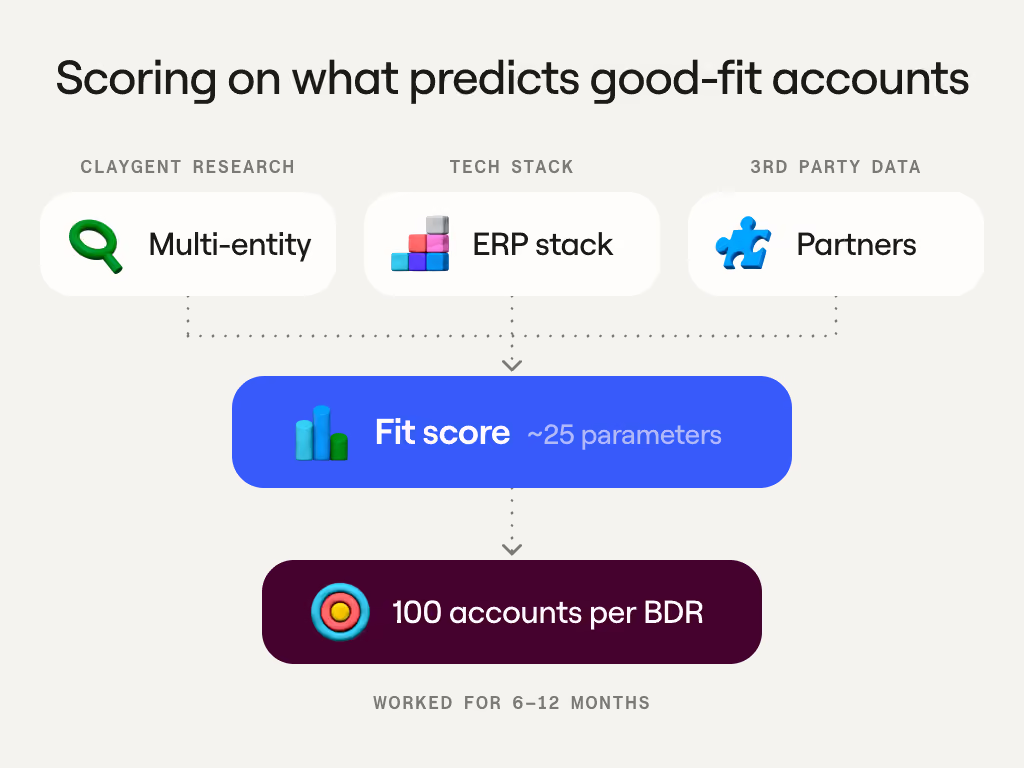
Multi-entity operations were one example. Finance teams managing several entities domestically or internationally could benefit from Payhawk’s multi-entity management. ERP usage was another strong signal. A company running NetSuite or Microsoft Business Central could be a strong fit for its integrations.
“Multi-entity is one of the strongest indicators of fit for Payhawk, and it’s a data point most GTM tools simply don’t have,” Richard says. “We needed a way to validate it predictably for every account.”
Researching the attributes that matter
The team used Claygents to research where companies operated, combining existing account information with web research. The countries it found became a proxy for likely international multi-entity operations, giving Payhawk evidence to use in scoring.
The model also incorporated ERP data and partner relationships. Payhawk brought data from Crossbeam into Clay to identify prospects already working with one of its partners as a useful connection for outbound.
Together, those inputs expanded the model to roughly 25 parameters. Richard anchored the model in Payhawk’s own customer data, validating its logic against the customer base, the pipeline, and the judgment of sales leadership.
“Use your knowledge as a company about what your good customers look like,” he advises.
Each BDR now receives 100 high-fit named accounts to work for six to twelve months. Marketing advertises to those same accounts, supporting the relationships reps are building.
As Payhawk focused outbound on companies it was better equipped to serve, median deal size for outbound-sourced customers increased 70%.
Making the score useful in outreach
Richard knew a score alone wouldn’t change how reps worked. They needed to understand the reasoning behind every account assignment.
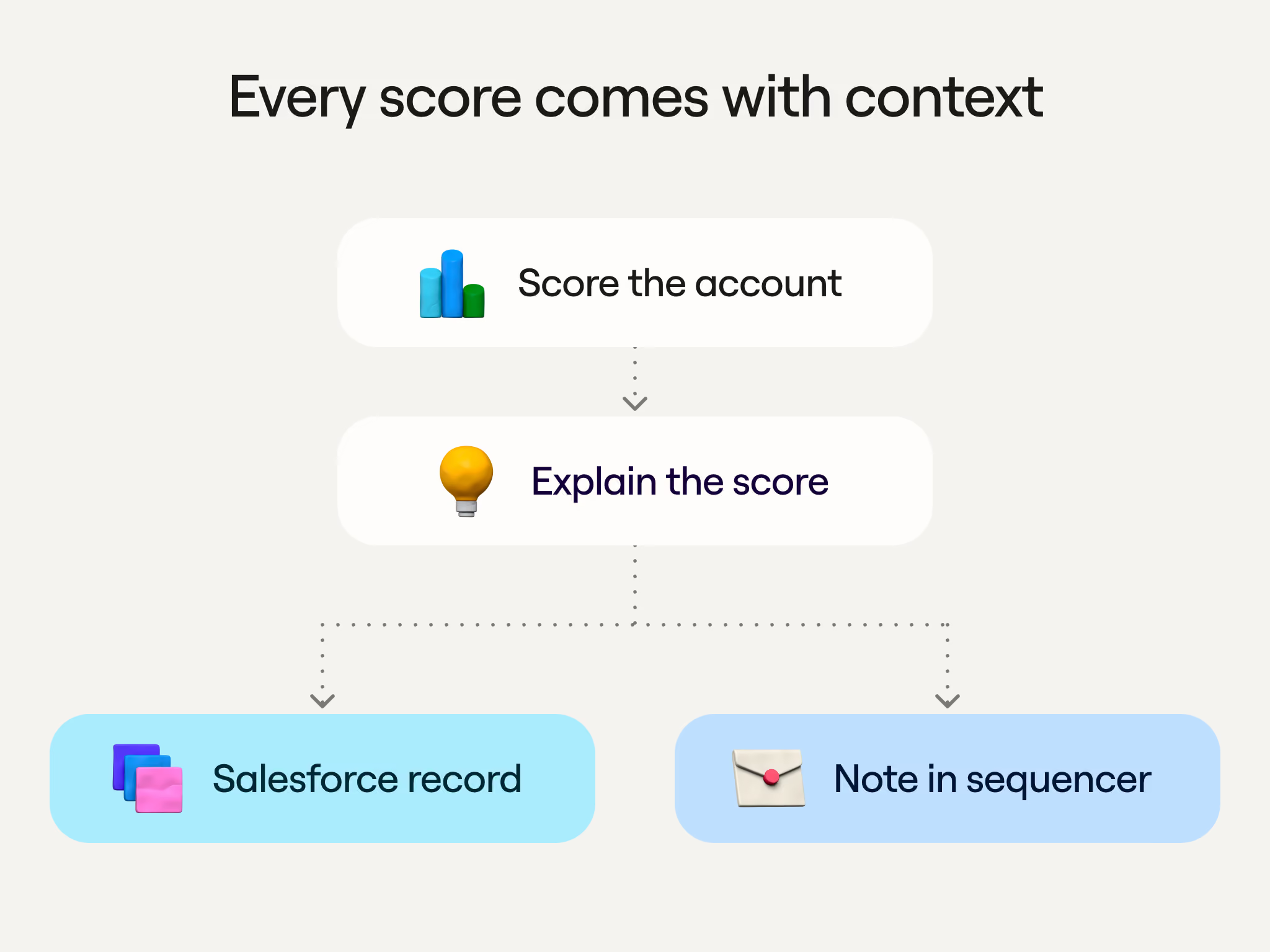
Richard built a Clay Workflow to calculate each account’s score and summarize the attributes behind it in a checklist. Reps could immediately see why a company was worth pursuing, such as its international operations or use of a relevant ERP.
“Reps need to know what’s exciting about an account, why they’re working it, and what its strongest attributes are,” Richard explains.
The explanation writes back to Salesforce and appears as a note in their sequencer, where BDRs work through their cadences. When a rep prepares to call or write an email, the account research is already beside the task.
Running signal-based outbound to reach prospects at the right time
The named-account strategy gives reps a sustained focus. Signals help them decide when to act.
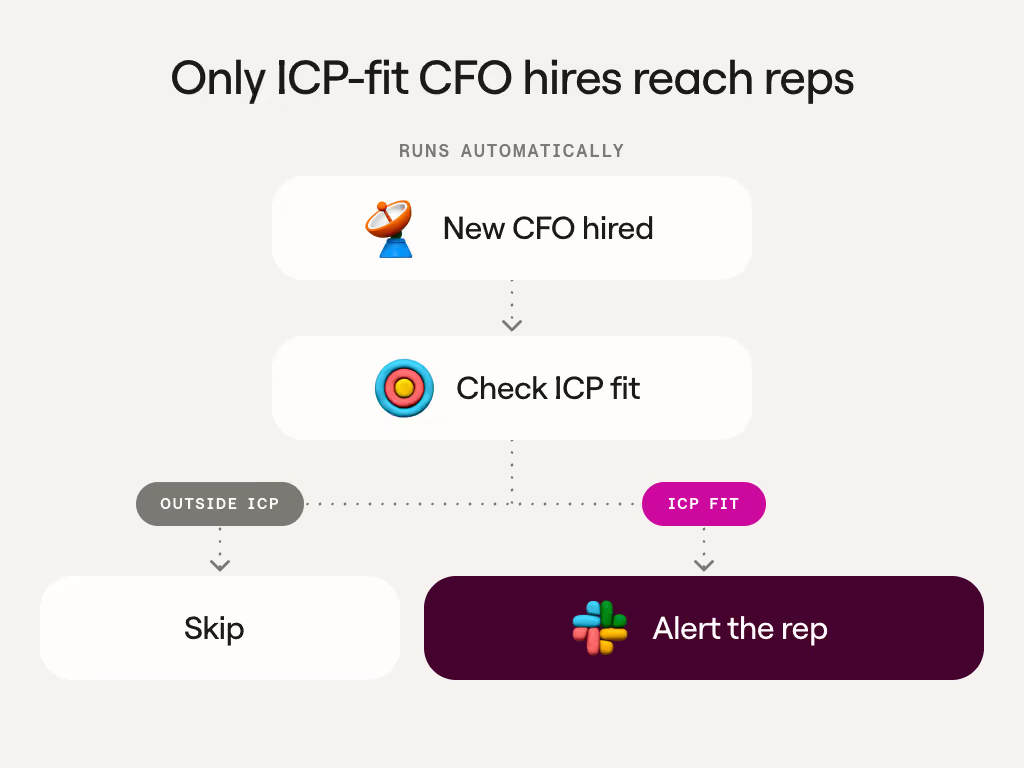
Payhawk started with research BDRs were already doing manually. A CFO a few months into a new role, for example, might have a mandate to change how the finance team operates. Reps previously searched Sales Navigator for those appointments, exported leads, and created account records manually.
Clay Signals now identifies new CFO job-changers automatically, and Richard built in a relevance check so that only companies that fit Payhawk’s ICP reach the Salesforce account record.
“There are CFOs joining companies that aren’t relevant,” Richard says. “We don’t want to spam our reps with companies that are outside of our ICP, or that we can’t even serve.”
Signals also reach reps through Slack notifications and notes in Salesloft, so the reason for reaching out is available when they begin outreach.
Following product users into new accounts
Payhawk built another signal around administrators and accountants who had used its platform in a previous role.
When one of those users joins a new company, they bring product familiarity into a potential account. Finding those moves requires connecting a user record to a LinkedIn profile, tracking job changes, and checking that both the new role and company are relevant.
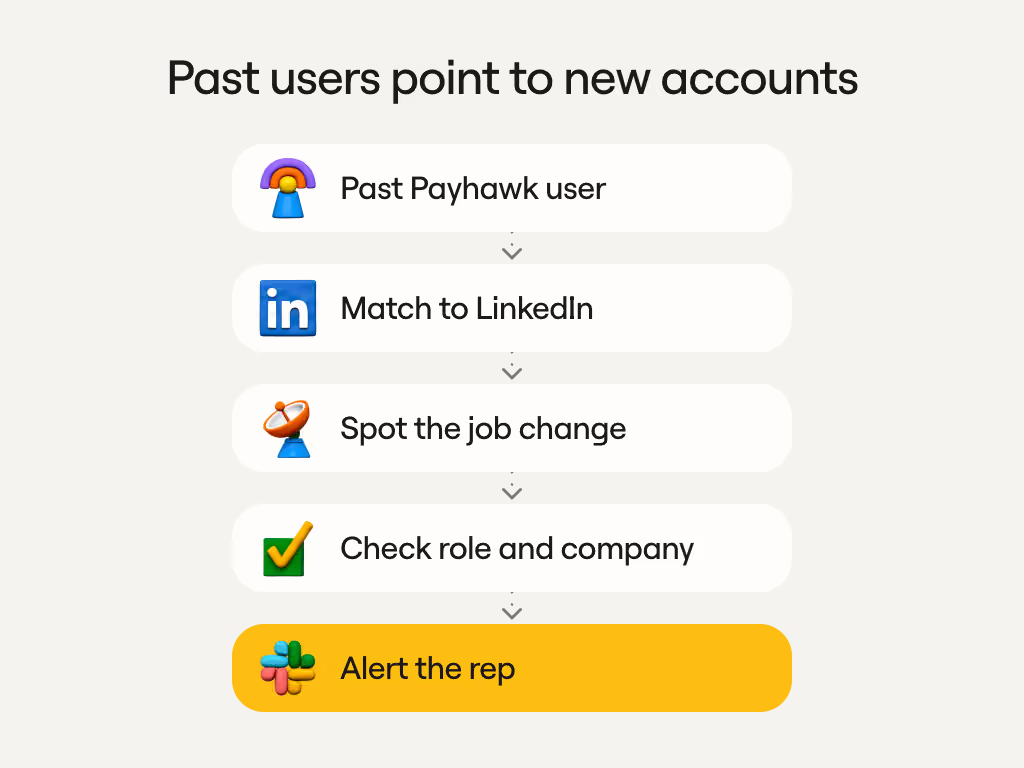
Richard sees it as a capability Payhawk simply didn’t have before. “Tracking those moves manually would have been too time-intensive to scale across the BDR team,” Richard says.
Other examples include hiring for financial systems and digital transformation roles, fundraising, and headcount growth. Payhawk now tracks more than 20 account and contact signals overall in Clay.
A signal doesn’t have to come from a named account to be useful. It can introduce a relevant company outside a rep’s existing book. Equally, a strong named account remains worth working without a new signal. The most promising overlap is a company Payhawk already wants to win, showing a fresh reason to start a conversation.
Building prospecting lists for partner recruitment
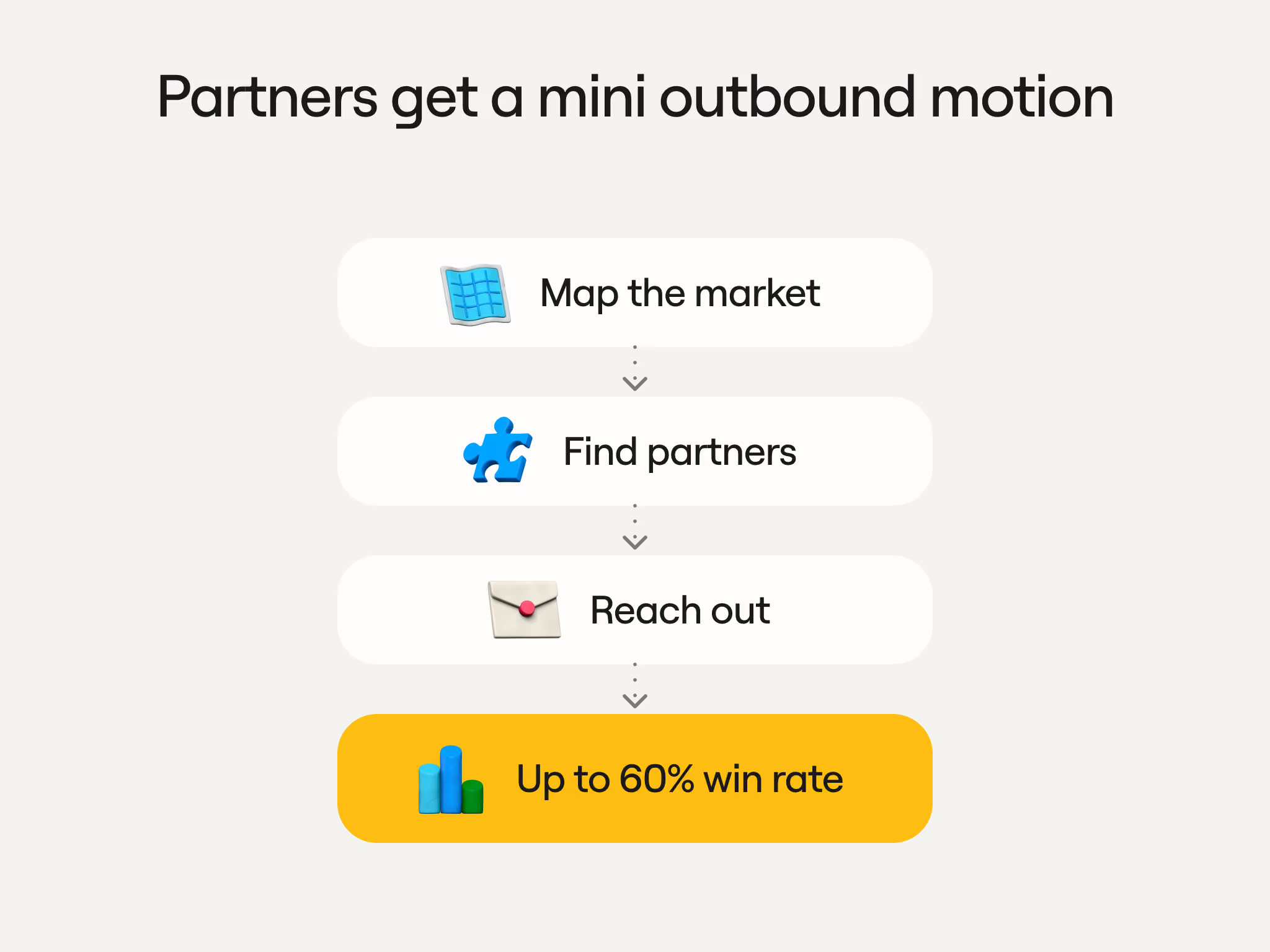
Partner relationships contribute to Payhawk’s customer-account scores. The partnership operations team also uses Clay to find potential partners itself.
The team maps the partner market and supports outreach through what Richard calls “a mini version of the outbound that we’re doing for customers.”
According to Gabriela, partner-sourced leads reached win rates of up to 60% in some months, making partnerships a core part of the company’s growth strategy.
Clay helps the team research and reach potential partners while incorporating existing partner connections into customer prospecting. Both uses give the team more context about where to invest its effort.
Making better account selection part of everyday work
The strategy delivered on its goal of unlocking more pipeline from the BDR team, and Payhawk reported 3x pipeline growth as it transformed outbound. Payhawk saw 50% more reps hitting or exceeding quota each month, as larger deals helped reps turn fewer wins into stronger results.
“We’re moving more towards mid-market, where we win more,” Gabriela says.
Realizing those gains meant changing how the team managed outbound, and Gabriela led that shift. She brought BDR managers into the strategy, introduced dashboards tracking named-account and signal performance, and built them into regular one-on-ones. Monthly regional reviews kept the whole organization aligned on the same objectives.
Richard also built a feedback loop into the model. Reps could challenge their account assignments, and when they flagged companies unlikely to move that year, he quickly rebalanced their books. Leadership also made a point of sharing wins across the team, so every rep could see what was working and repeat it.
The impact showed up in rep performance, too. Gabriela reported that more reps were exceeding quota as deal sizes grew. Payhawk matched that performance with a clearer career path, pairing higher expectations with more senior titles and salary increases.
Gabriela credits both the systems and the people using them. “The RevOps team has been incredible with what they’ve built,” she says. “But on the other side, a lot of it is also on reps being open to change.”
Outbound was already one of Payhawk’s strongest channels, and the company had built a team to match. With Clay, Gabriela and Richard gave that team sharper insight into where to spend its time, and put that insight directly into the tools reps use every day.