






































.avif)



























How to find company revenue
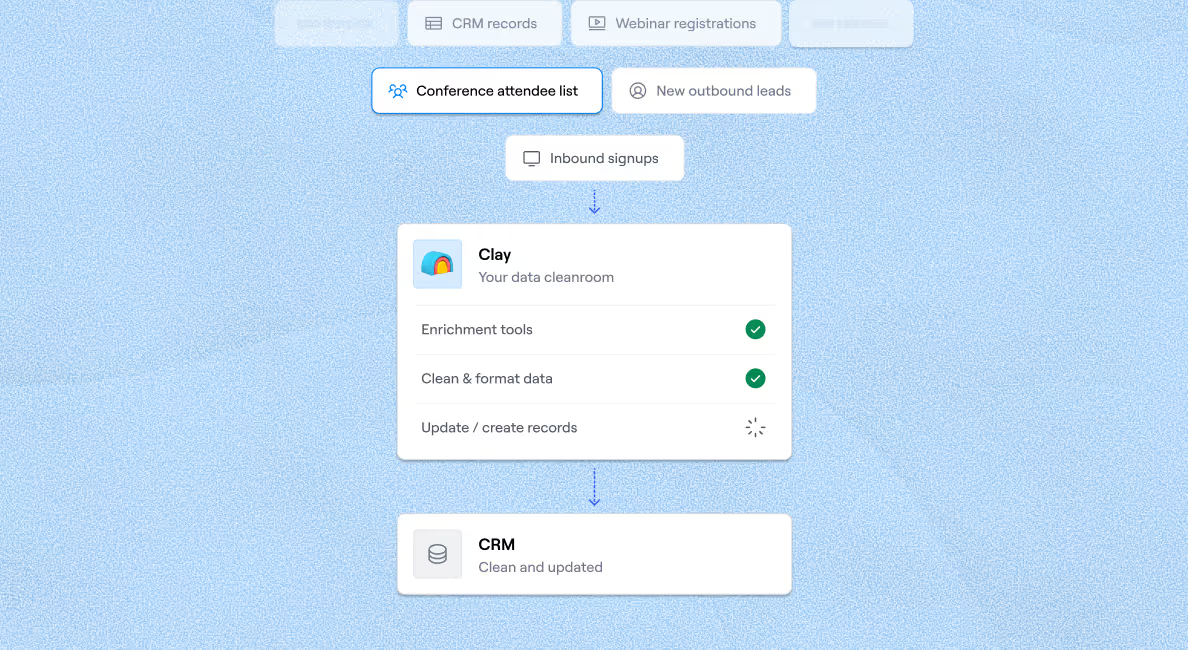
Paste your company list or name
Drop in a company name, domain, or a list of accounts. Sculptor waterfalls through Clay's provider network to find estimated annual revenue and headcount for each.
Sculptor enriches revenue and headcount data
Sculptor chains together Clay's waterfall enrichment, querying multiple data providers in sequence for each company. It appends estimated annual revenue and headcount to every row where a match is found, only charging credits on matched rows.
Finished table shows revenue and headcount
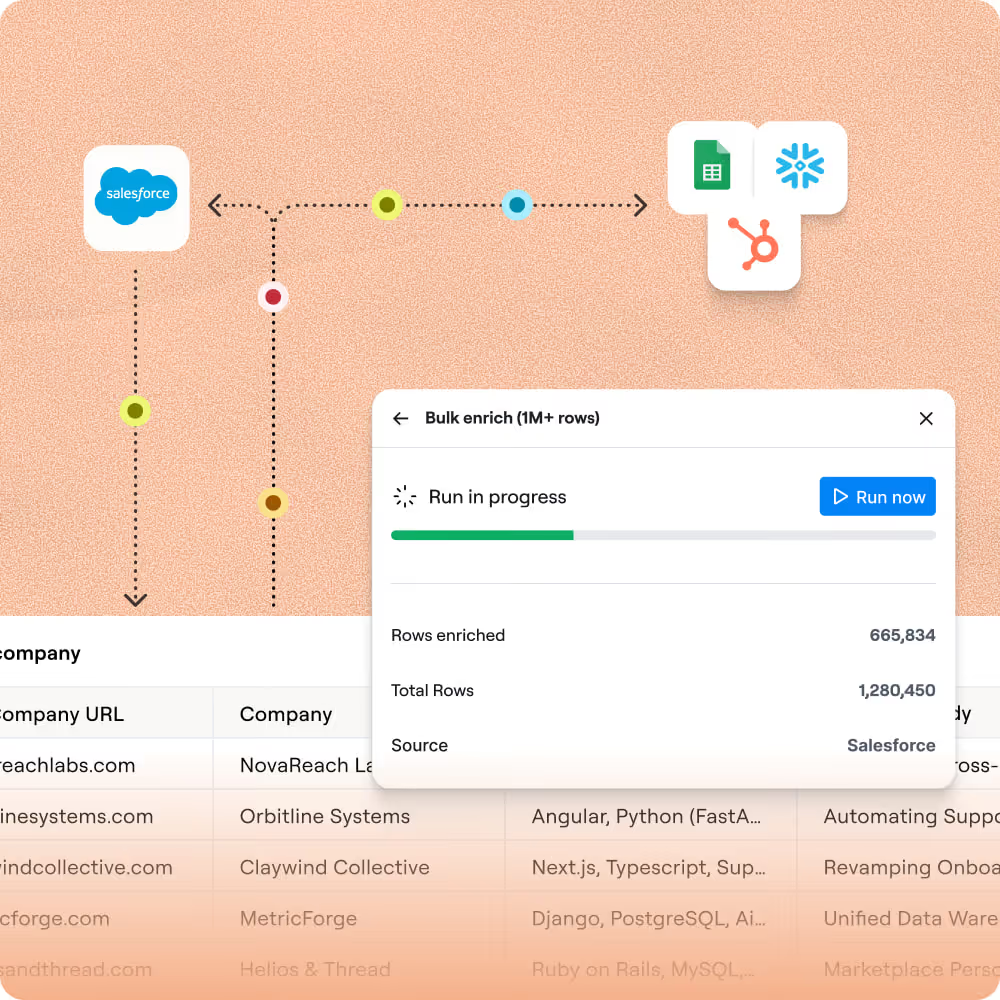
The finished table has company name, estimated annual revenue, and headcount. Matched rows include enrichment context. Sync to HubSpot or Salesforce, or export to CSV for scoring and segmentation.
Why Clay for finding company revenue
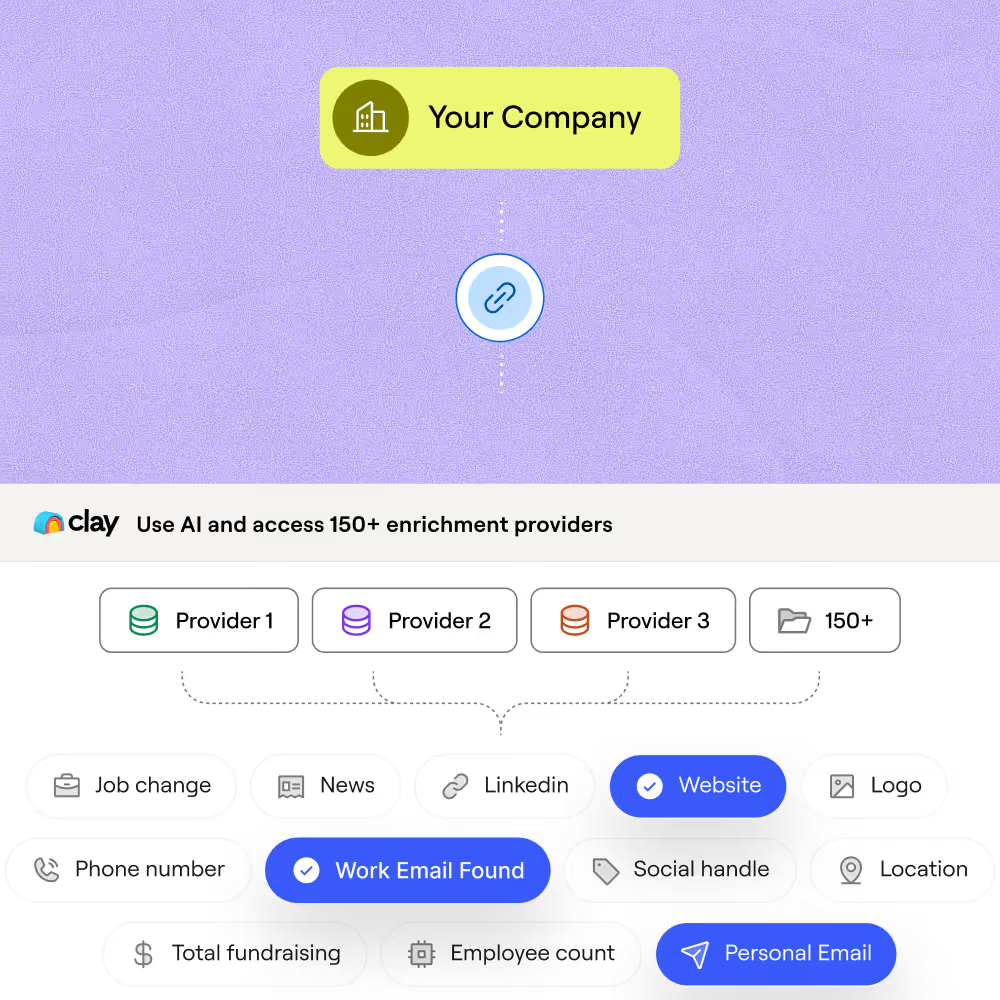
Waterfall enrichment across multiple providers
Get estimated annual revenue for matched rows without betting on a single source. Clay waterfalls through multiple providers in sequence, charging credits only when one returns a hit.
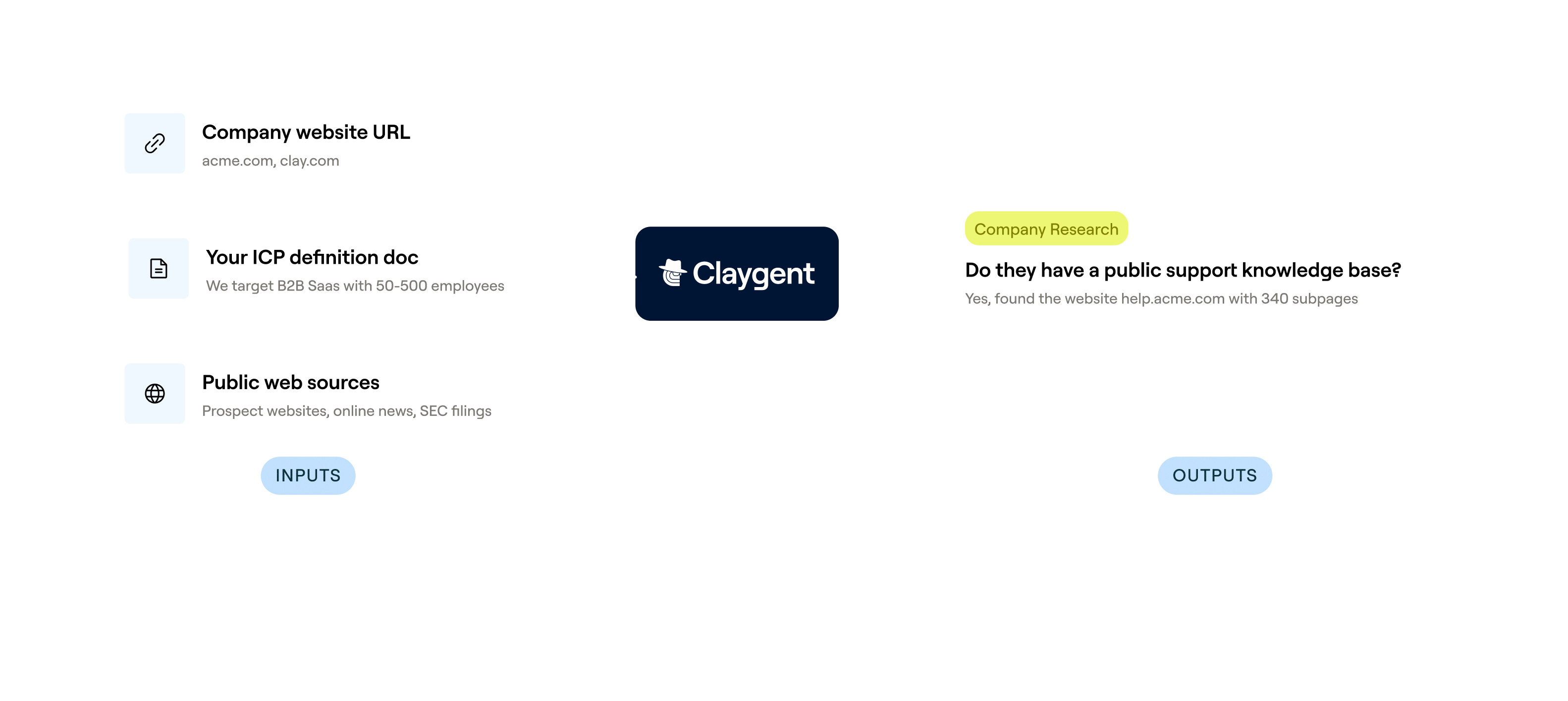
Claygent fills gaps providers miss
Get revenue and headcount estimates even when standard databases fall short. Claygent browses Crunchbase, PitchBook, and each company's public site to extract the freshest available figures.
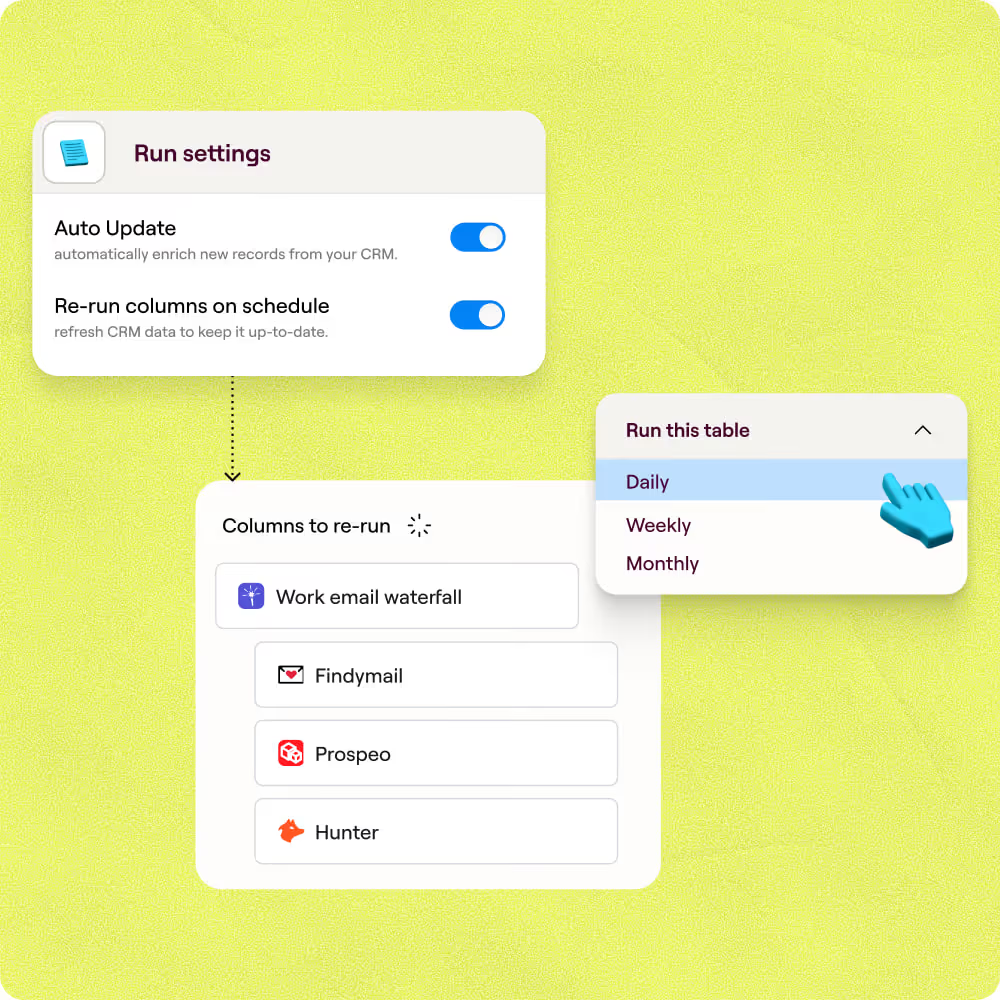
Auto-refresh keeps revenue data current
Revenue figures decay fast as companies grow. Clay re-runs enrichment on a scheduled cadence, refreshing matched rows with updated estimates without any manual exports.
Score accounts and sync to CRM
Build ICP scoring formulas using enriched revenue and headcount columns, then push scored records directly to HubSpot or Salesforce, keyed to existing record IDs to avoid duplicates.

Clay is a game changer for marketing, data, and operations. We have 3x our enrichment rate with Clay’s combination of data providers. Clay makes it easy to use AI for GTM initiatives, unlocking new workflows that were infeasible before.
Frequently asked questions
How does Sculptor find company revenue data?
Sculptor queries Clay's Find Companies source using your target industry and region, then filters results by revenue brackets ranging from $0–500K up to $100B+. For private companies, it layers a waterfall enrichment across providers like HG Insights, People Data Labs, and Crunchbase in sequence, pulling estimated annual revenue from the next source only when the previous one returns no data.
How accurate are private company revenue estimates?
Revenue figures for private companies are estimates, not audited financials. Clay's waterfall approach lifts overall data coverage from roughly 30% with a single provider to around 80% by chaining sources like Crunchbase, People Data Labs, and HG Insights. Crunchbase returns a revenue range rather than a point figure, so treat the output as a sizing bracket for account prioritization rather than an exact number.
Can I find revenue for a whole list of companies at once?
Yes. Paste a list of domains or company names into a Clay table, upload a CSV, or let Sculptor generate the starting list from your industry and region criteria. Clay runs revenue enrichment across every row automatically. When the table is complete, push revenue-tagged accounts directly to HubSpot, Salesforce, or Pipedrive for territory planning.
Is enriching company revenue data compliant with privacy laws?
CAN-SPAM governs commercial email in the U.S. and applies to B2B messages. In the EU, GDPR Article 6(1)(f) allows processing B2B data under a legitimate interest basis, but you must document a balancing test. The CCPA's B2B data exemption expired in January 2023, so California residents' business contact data is now fully covered under the law.
Always check the rules for your jurisdiction before using enriched company data in outreach campaigns.