





































.avif)


























How to find a company VAT number
Describe your target market or region
Add your target market or region, such as SaaS companies in Germany or e-commerce brands in France. Sculptor builds a matched company list from Clay's B2B company data.
Sculptor assembles the list and researches VAT numbers
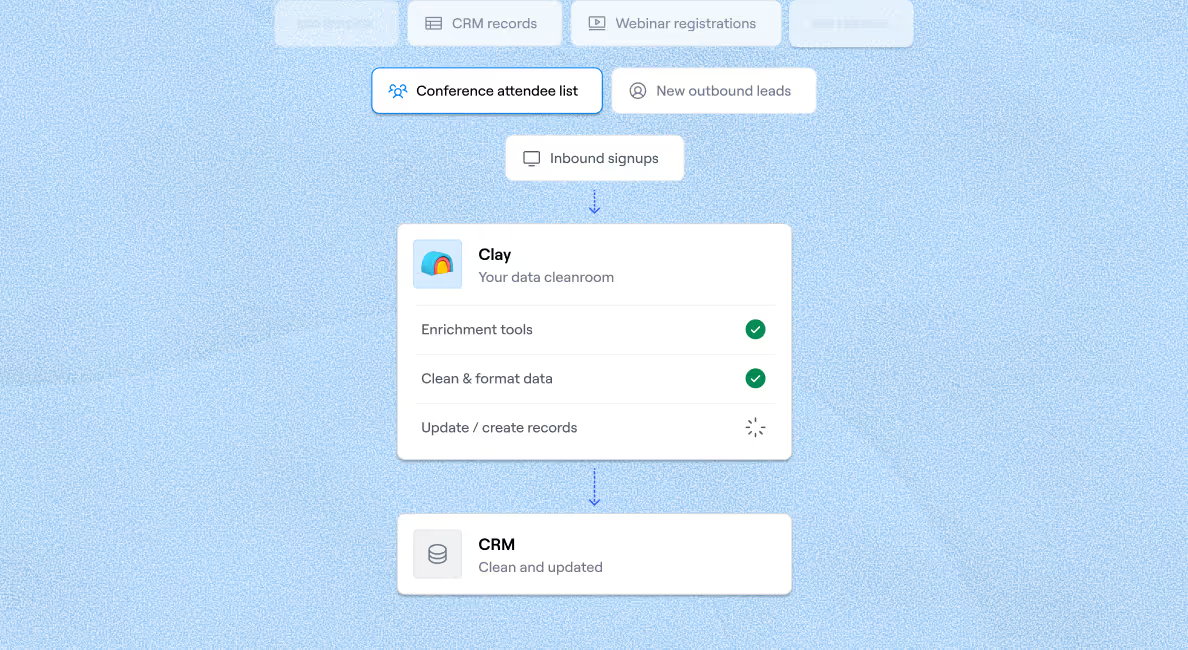
Sculptor compiles a company list filtered by industry, headcount, and location, then Claygent browses each company's website and public registries to extract the VAT number for each matched row.
Finished table with company name and VAT number
The finished table has company name and VAT number where Claygent found a match. Export to CSV, sync to Salesforce, or pipe into your outbound tool of choice.
Why Clay for finding company VAT numbers
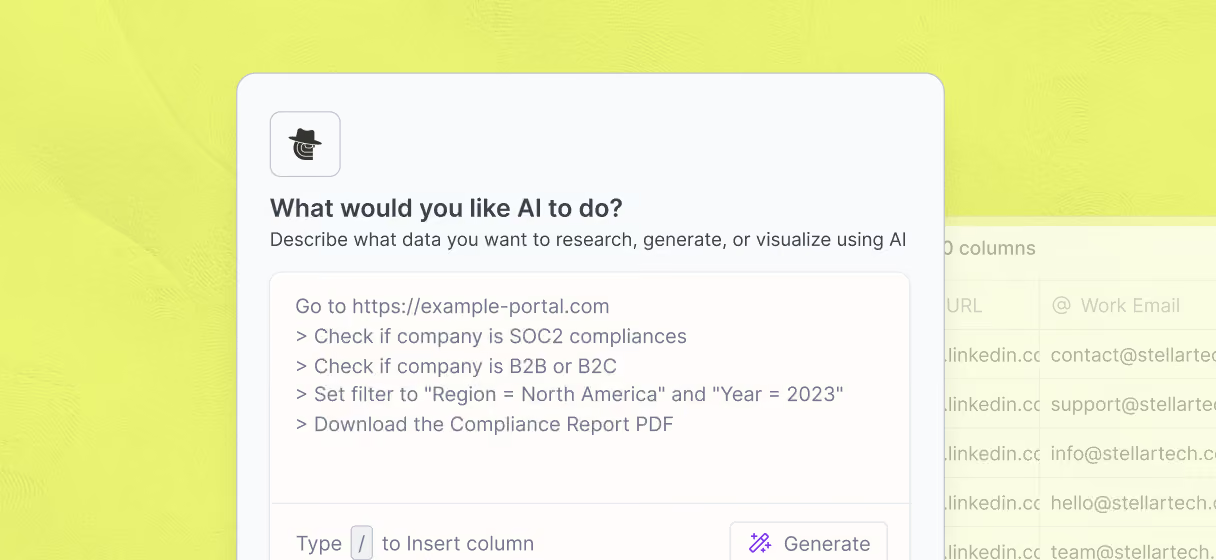
Claygent browses registries other tools can't reach
Get VAT numbers pulled directly from public registries. Claygent Navigator fills forms, paginates results, and extracts structured fields from government portals, including multi-country European sources.
Multi-language research across European markets
Claygent browses German, French, Dutch, Italian, Spanish, and Nordic-language company pages without requiring separate tools. VAT registration across multiple European countries is extracted in one pass.
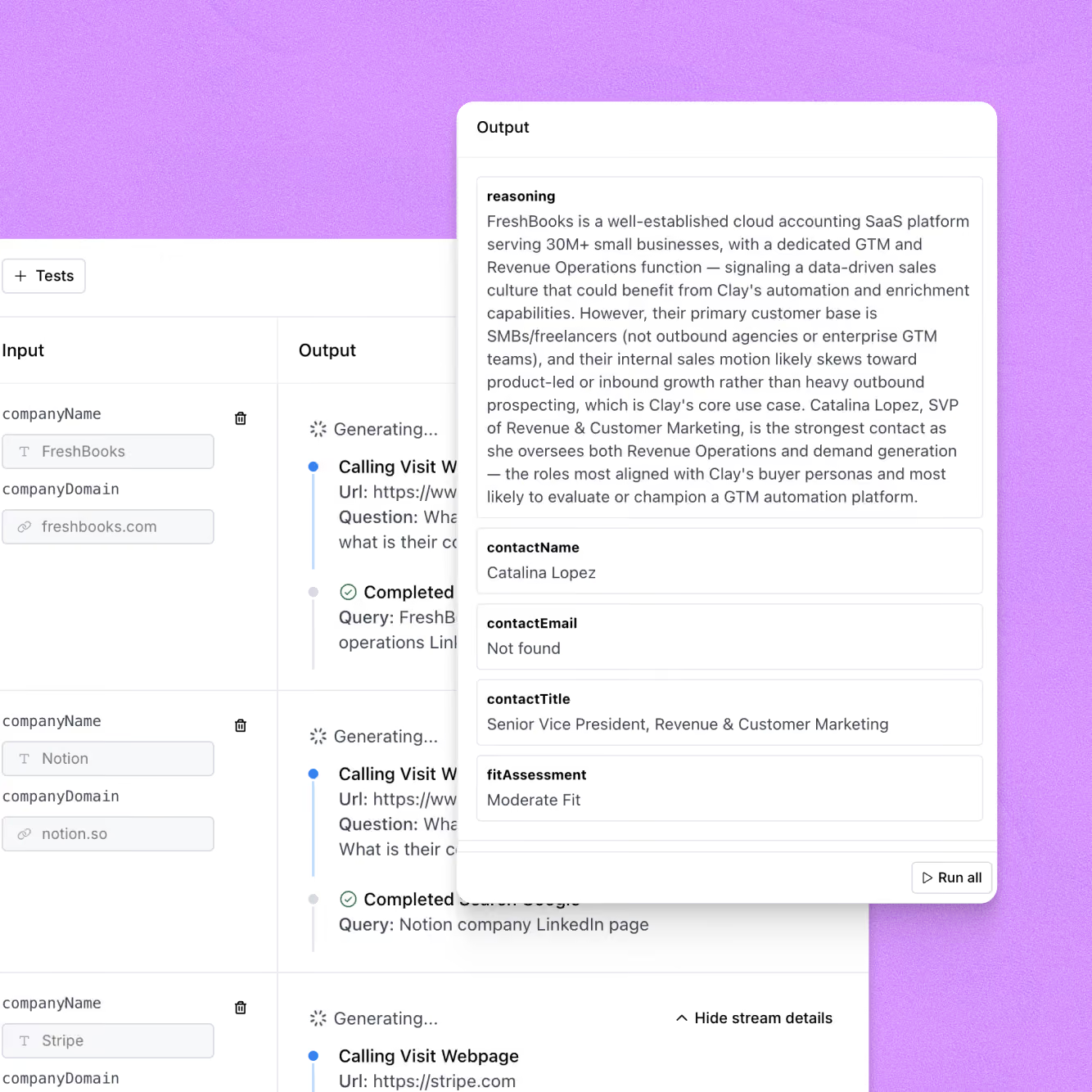
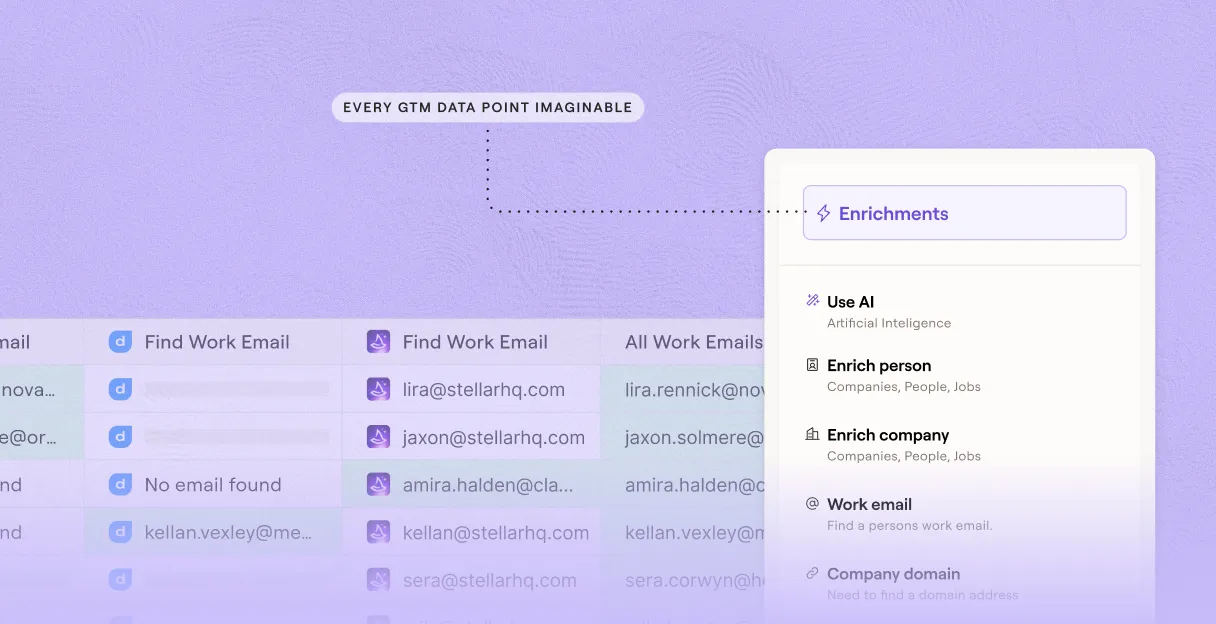
Build your company list with precise ICP filters
Pull matched companies from Clay's B2B company database using filters like industry, headcount, location, and funding stage. Claygent then browses each matched row to retrieve the VAT number.
Sync finished records to Salesforce or HubSpot
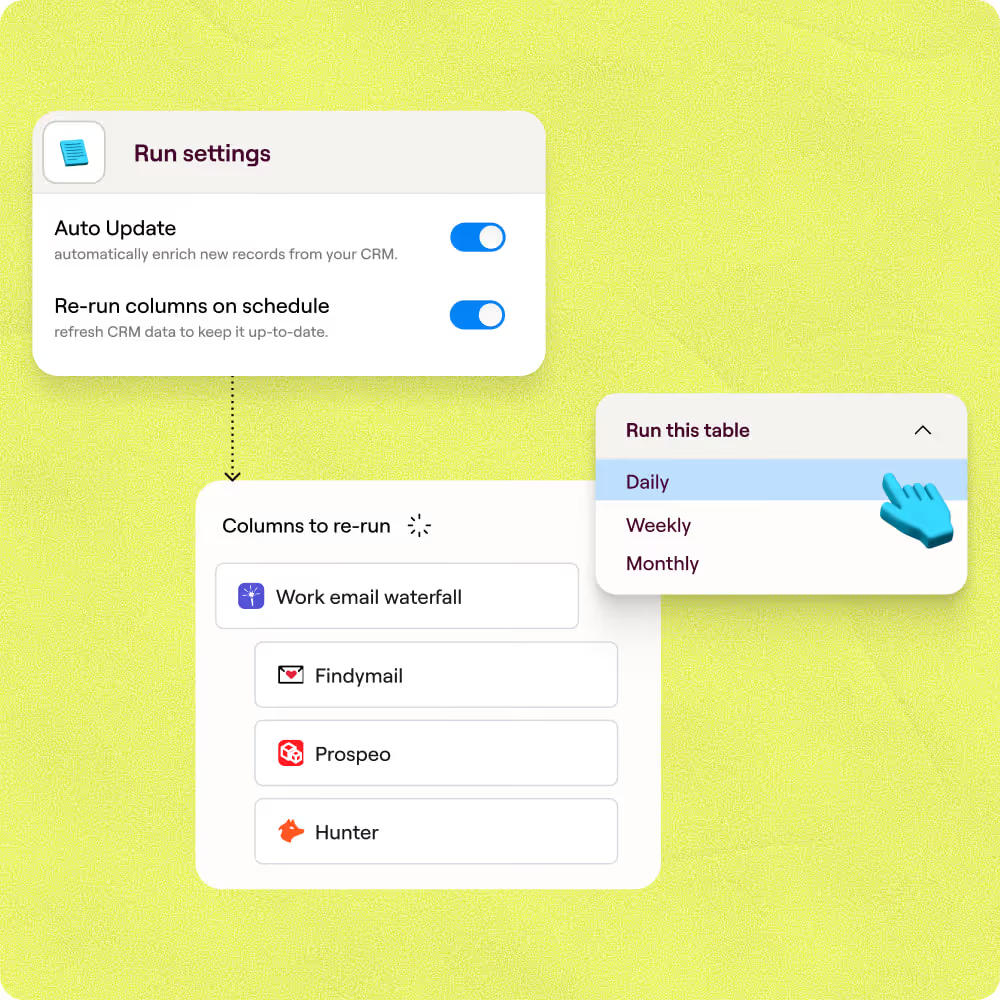
Push the enriched table, company name plus VAT number, directly into Salesforce or HubSpot. Auto-refresh on schedule ensures records stay current as company data changes.

The challenge in Europe is each country has different GTM playbooks. It's painful to find, procure, and test data vendors for each market. Clay speeds up your ramp period in a new country by allowing you to test quickly, adapt your strategy to local nuances, and avoid the SaaS bloat of single-point solutions for each region."
Frequently asked questions
How does Sculptor find company VAT numbers?
Sculptor starts by pulling EU-registered companies from HitHorizons, which covers 80M+ European firms across 50 countries, filtered by your target country or industry. It then uses Claygent, Clay's AI web research agent, to visit public EU business registries and extract each company's VAT number. The results populate a pre-configured table with company name and VAT number columns, ready for enrichment or export.
How accurate are the VAT numbers Clay returns?
Accuracy depends on the source registry. VIES, the EU's official VAT validation system, covers all 27 member states but some countries only activate numbers for cross-border trade, so a valid domestic VAT number may not appear. HitHorizons sources firmographic data from local government registers and updates monthly. For highest confidence, validate returned VAT numbers against the EU VIES portal or add a Claygent step that cross-checks each number directly.
Can I find VAT numbers for a whole list at once?
Yes. Paste a list of company names or domains into a Clay table, upload a CSV, or pipe rows from an existing Clay table into the VAT lookup workflow. Claygent runs the registry research on every row automatically. Once complete, push enriched rows to HubSpot or Salesforce via native integrations, or export the full table as a CSV for your finance or compliance team.
Is it legal to collect company VAT numbers in bulk?
VAT numbers for limited companies are public registration data, not personal data under GDPR, so collecting them carries low regulatory risk. However, sole-trader VAT numbers may qualify as personal data because they identify a natural person, which means GDPR Article 6(1)(f) legitimate interest rules apply. The EU VIES portal terms also restrict automated bulk queries.
Always check the rules for your jurisdiction and respect registry terms of service before running large-scale lookups.