





































.avif)

























How to find when a company was founded
Paste your company list or describe your industry
Drop in your target company list or name the industry you want to cover. Claygent browses each company's web presence to research founding year and incorporation details.
Claygent researches founding year across each row
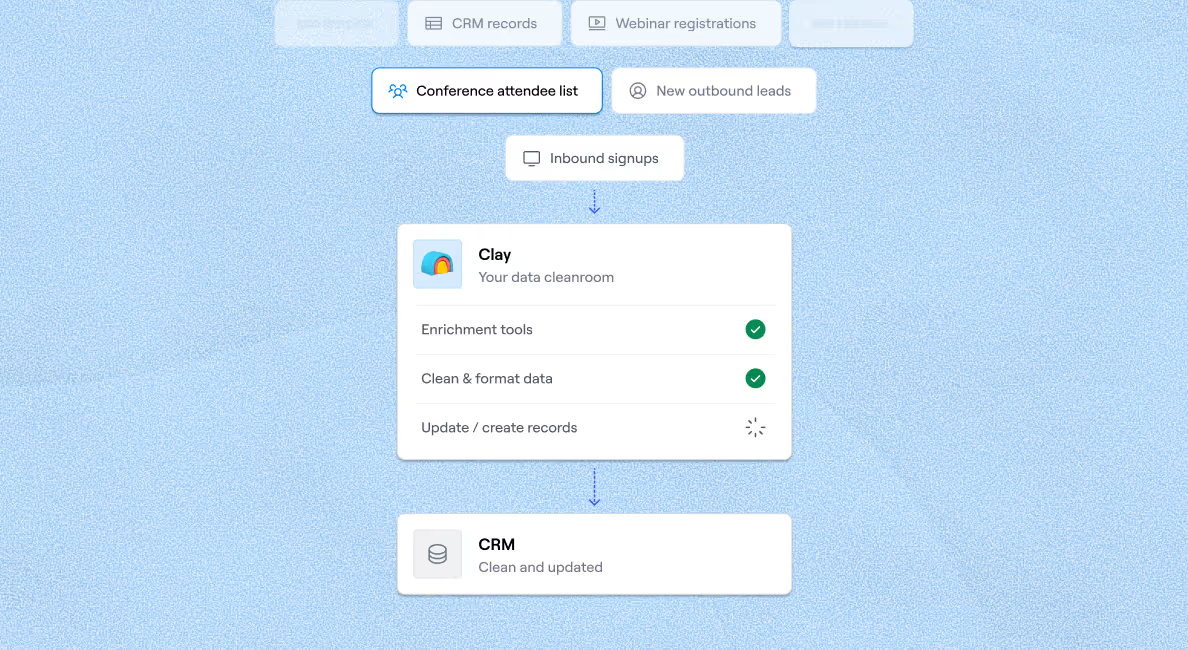
Sculptor chains together Clay's company database with Claygent, which browses company websites, LinkedIn profiles, and Crunchbase to extract founding year and incorporation context for each row. Matched rows are enriched with verified founding data.
Get a table with company name and founding year
The finished table has company name and founding year for enriched rows. Export to CSV, sync to Salesforce, or pipe into your outbound tool of choice.
Why Clay for finding when a company was founded
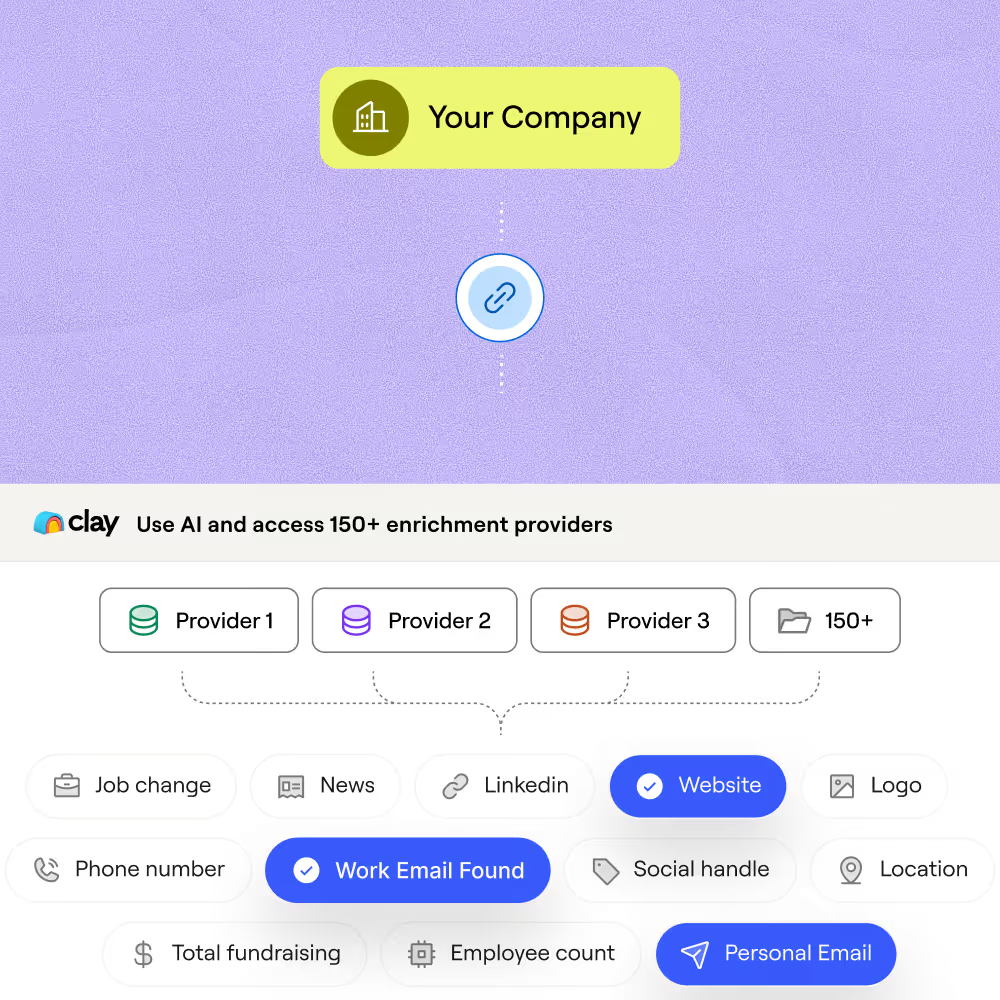
Waterfall enrichment across multiple providers
Get founding year for matched rows without gaps. Clay waterfalls across providers including Crunchbase, PitchBook, and its Companies, People, and Jobs dataset, charging credits only when a provider returns a hit.
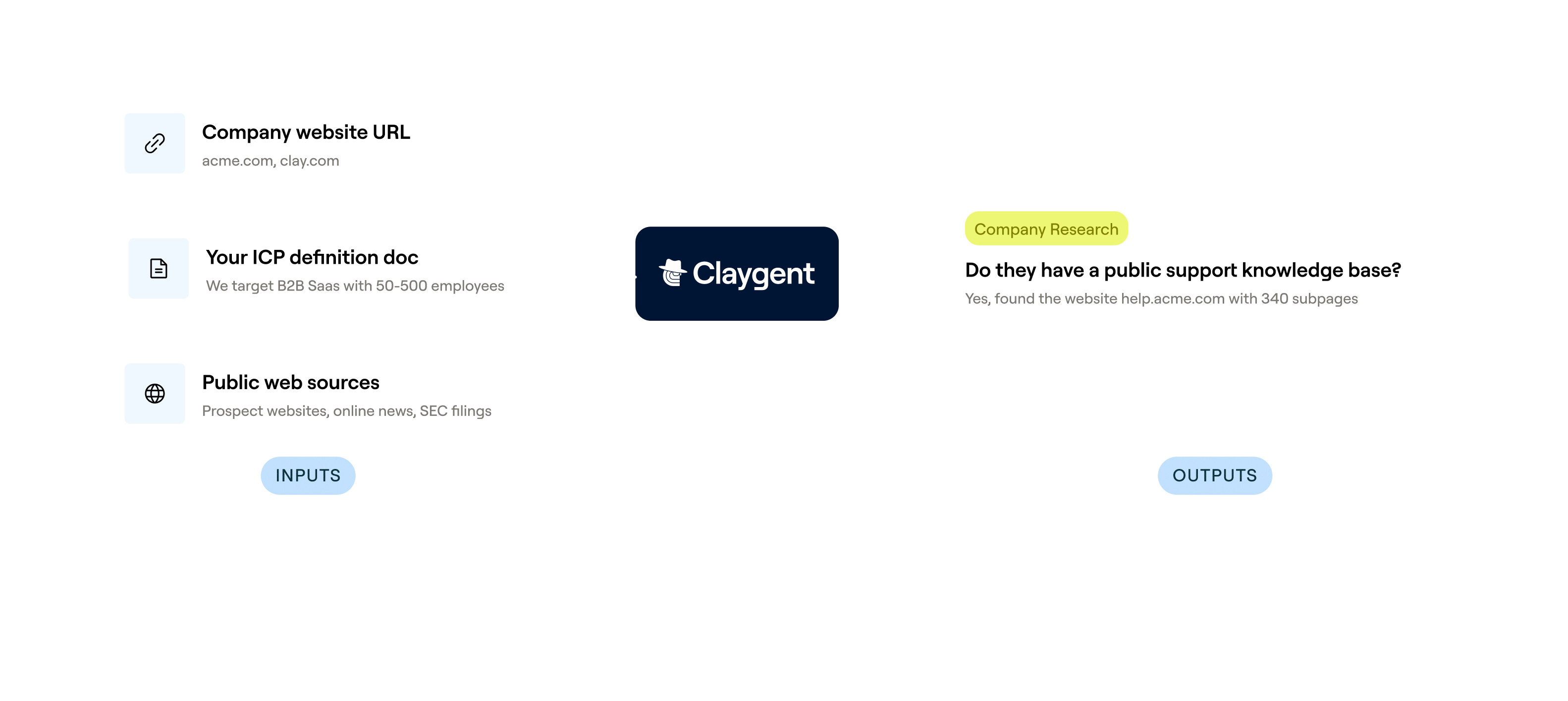
Claygent browses sites for hard-to-find dates
When database providers come up empty, Claygent reads each company's own website, LinkedIn profile, and Crunchbase page in real time to extract founding year and incorporation context for that row.
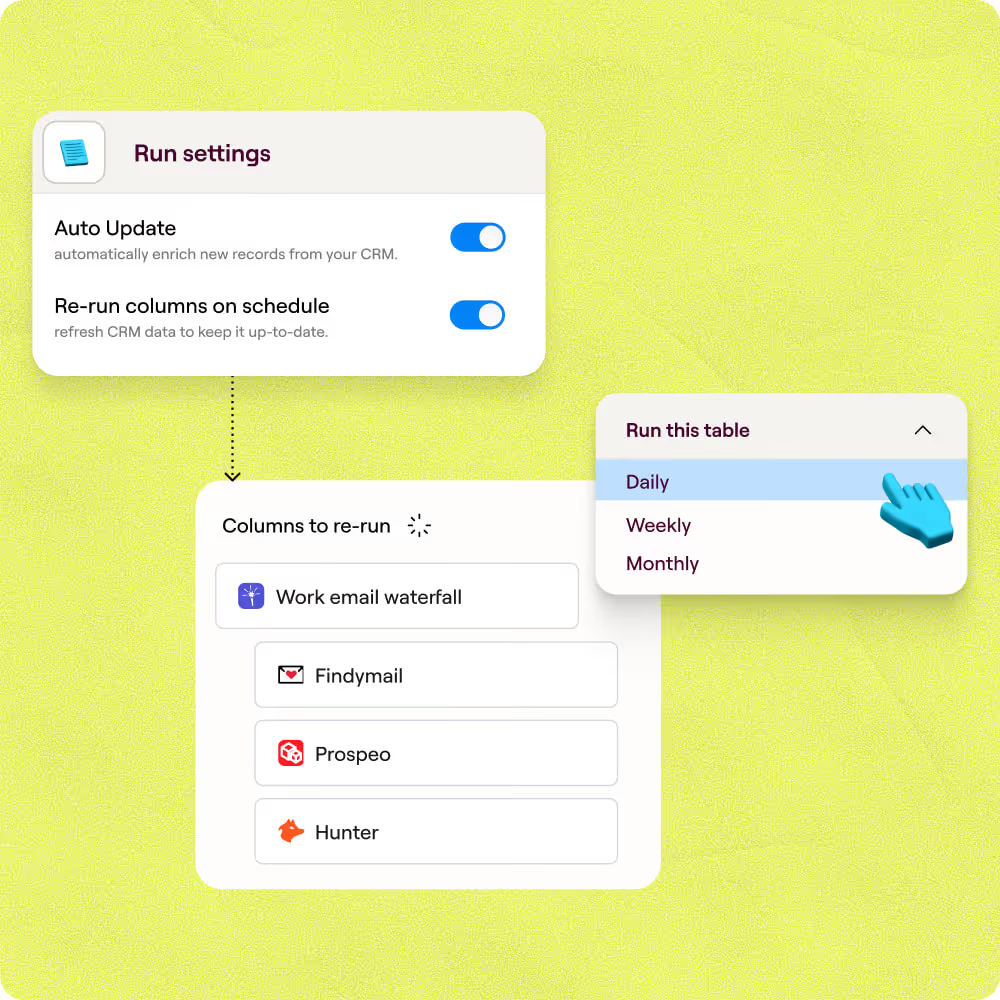
Auto-refresh keeps founding data current
Schedule enrichment to run on repeat so newly added companies are researched automatically. Updated founding years stay accurate without manual re-runs or stale database snapshots.
Sync enriched records to HubSpot or Salesforce
Push the finished table, company name and founding year included, straight to HubSpot or Salesforce. Clay maps fields and deduplicates before writing, so no duplicate records land in your CRM.

When one provider doesn’t have it, Clay automatically checks the next one. It really helps our inbound and outbound motions because we can leverage the best source of data. I’ve never seen a tool that was so easy to do this process.
Frequently asked questions
How does Sculptor find when a company was founded?
Sculptor takes the industry or region you type into the bracketed field and queries multiple B2B data providers, including Apollo, Clearbit, People Data Labs, and Crunchbase, using Clay's waterfall enrichment. It checks each provider in sequence and stops at the first one that returns a founding year, then populates your table with company name and founding year for every match.
How accurate is the founding year data Clay returns?
Clay's waterfall queries up to 15 providers for founding year data, which lifts overall field coverage from roughly 30% with a single provider to around 80% or higher. Because the waterfall cross-references sources like Clearbit, Crunchbase, and PitchBook, you get broadly consistent results. For newer or very small companies, coverage may vary, so spot-check a sample against state Secretary of State records if precision matters.
Can I find founding years for a whole list of companies at once?
Yes. Sculptor builds the full table in one pass from your target industry or region. You can also paste a list of company names or domains, upload a CSV, or pipe rows from an existing Clay table to enrich in bulk. Once populated, push the results to HubSpot or Salesforce for segmentation by company age, or export as a CSV for offline analysis.
Is it legal to collect and use company founding year data for outreach?
Company founding year is publicly available firmographic data, so collecting it carries minimal risk under most frameworks. In the U.S., the CAN-SPAM Act governs commercial email but does not restrict gathering company-level data. In the EU, GDPR's legitimate interest basis (Article 6(1)(f)) typically covers B2B prospecting with company data, though you should document your interest assessment.
Regulations vary by jurisdiction, so always check the rules for your specific region before launching outreach campaigns.