





































.avif)

























How to find a company risk score
Describe the company you want to assess
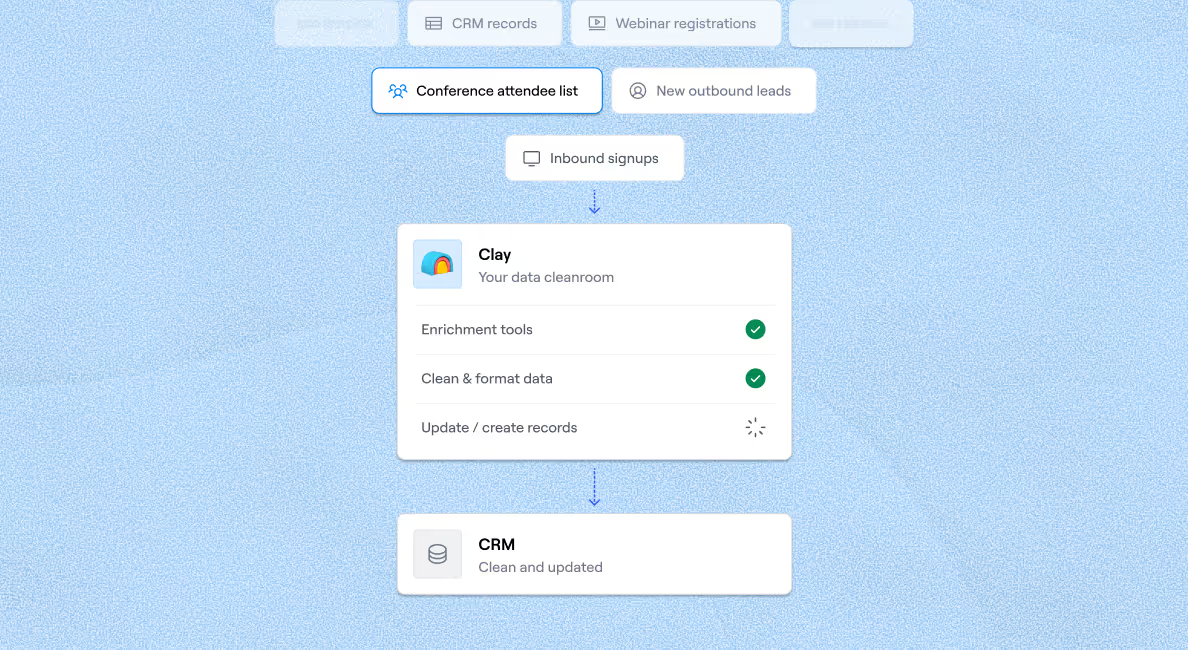
Paste a company name or list into Sculptor. Claygent browses public signals, news, and financials to build each risk profile.
Claygent researches and scores each company
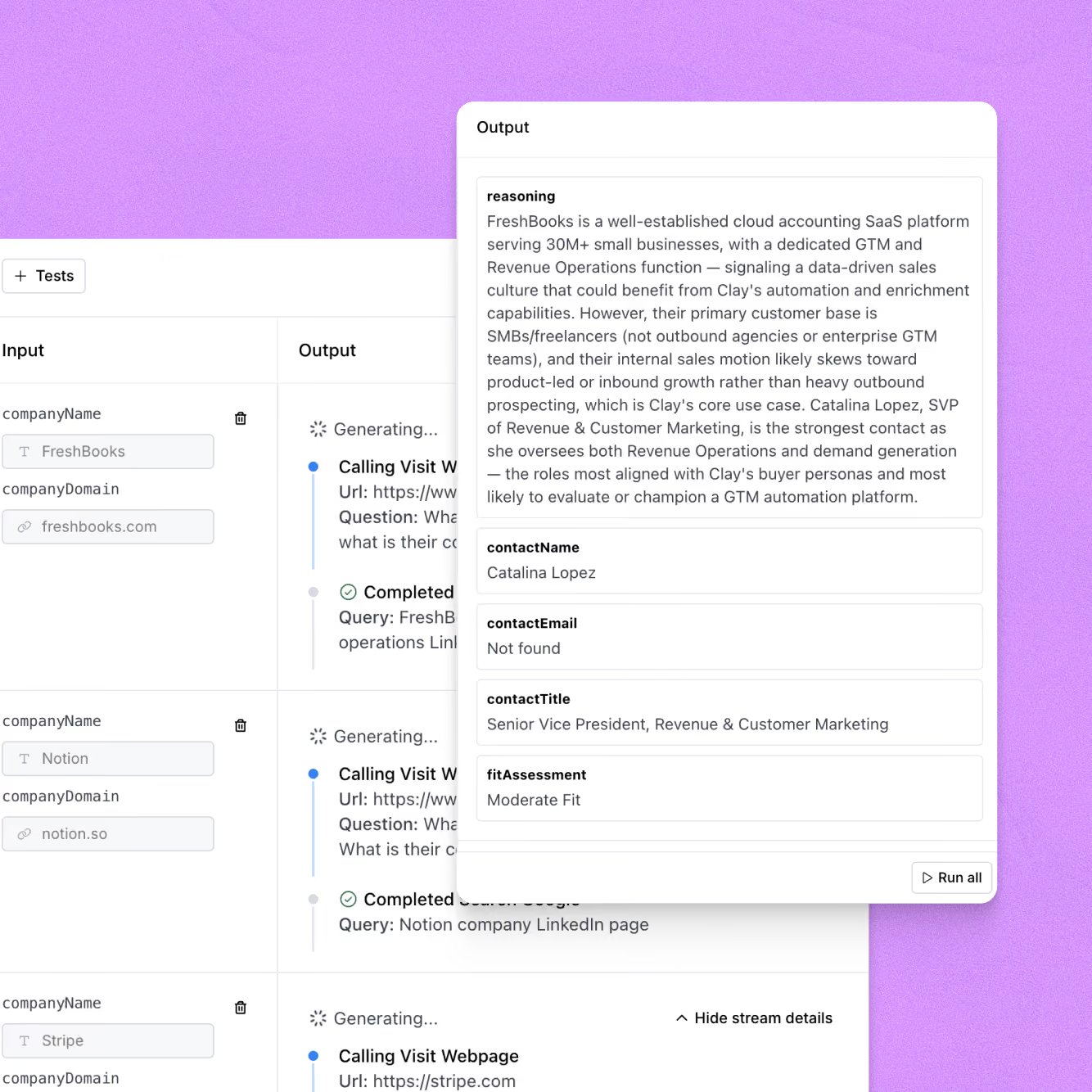
Claygent browses each company's website, recent news, funding history, and public records, then synthesizes findings into a structured risk score with labeled key risk signals per row.
Get a risk score table, then act on it
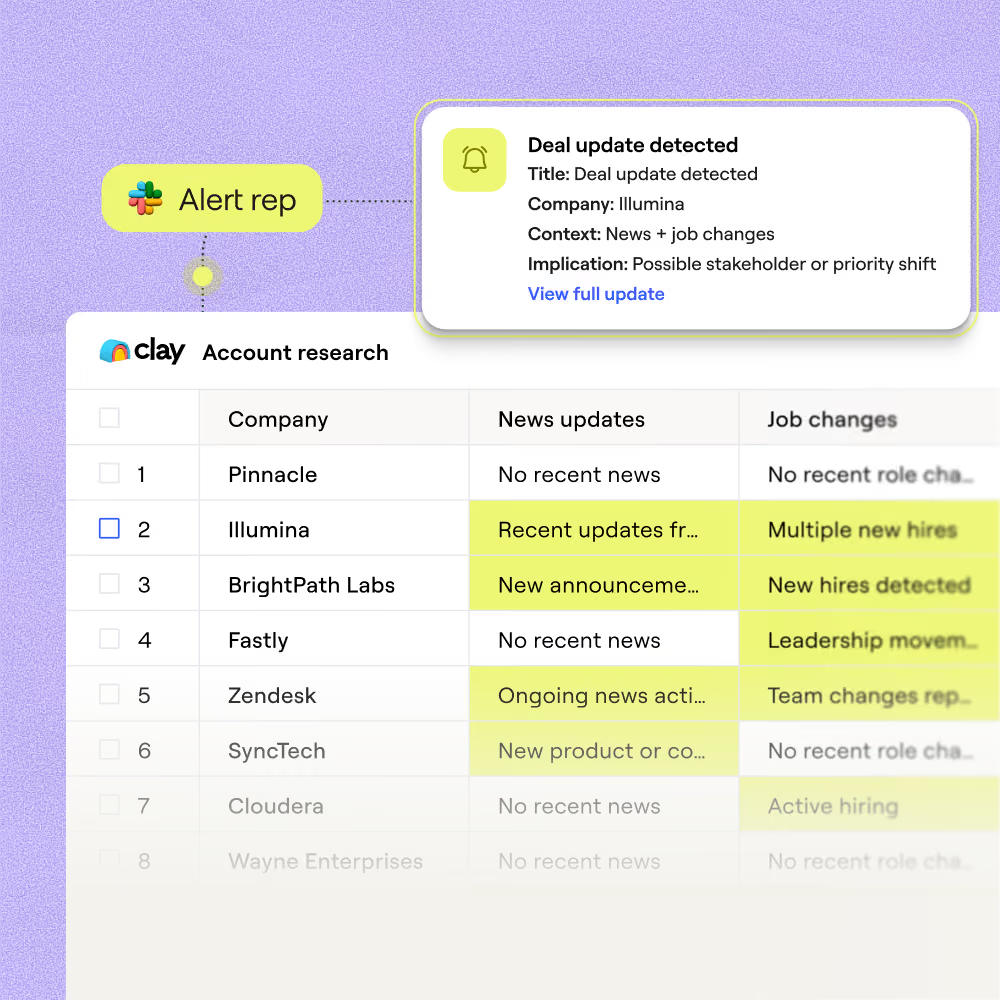
The finished table has company name, risk score, and key risk signals per row. Send flagged accounts to Slack or log them in HubSpot or Salesforce so your team can act fast.
Why Clay for finding a company risk score
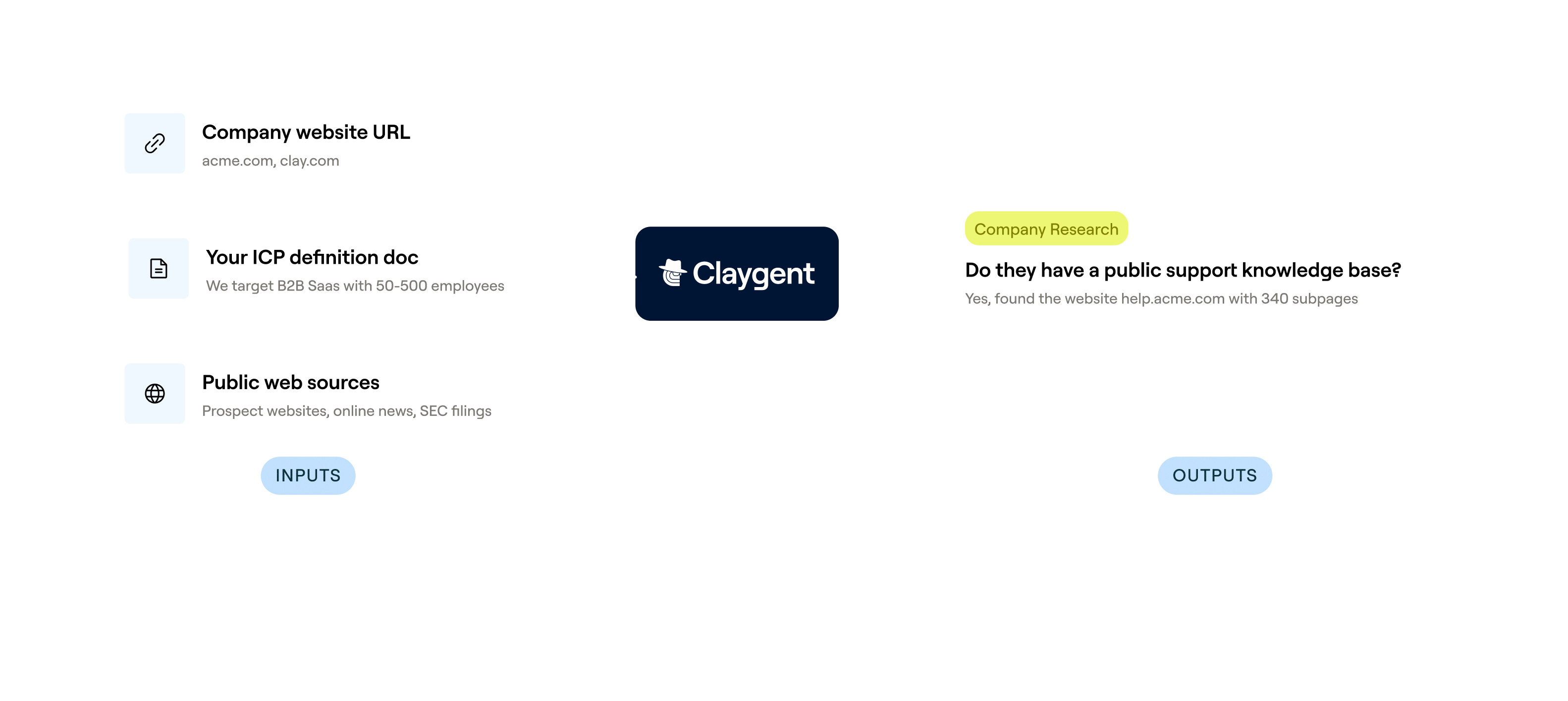
Claygent browses multiple public sources at once
Get a structured risk profile for any company in minutes. Claygent browses each company's website, recent news, regulatory filings, and public records to surface key risk signals per row.
Layer signals into a scored risk formula
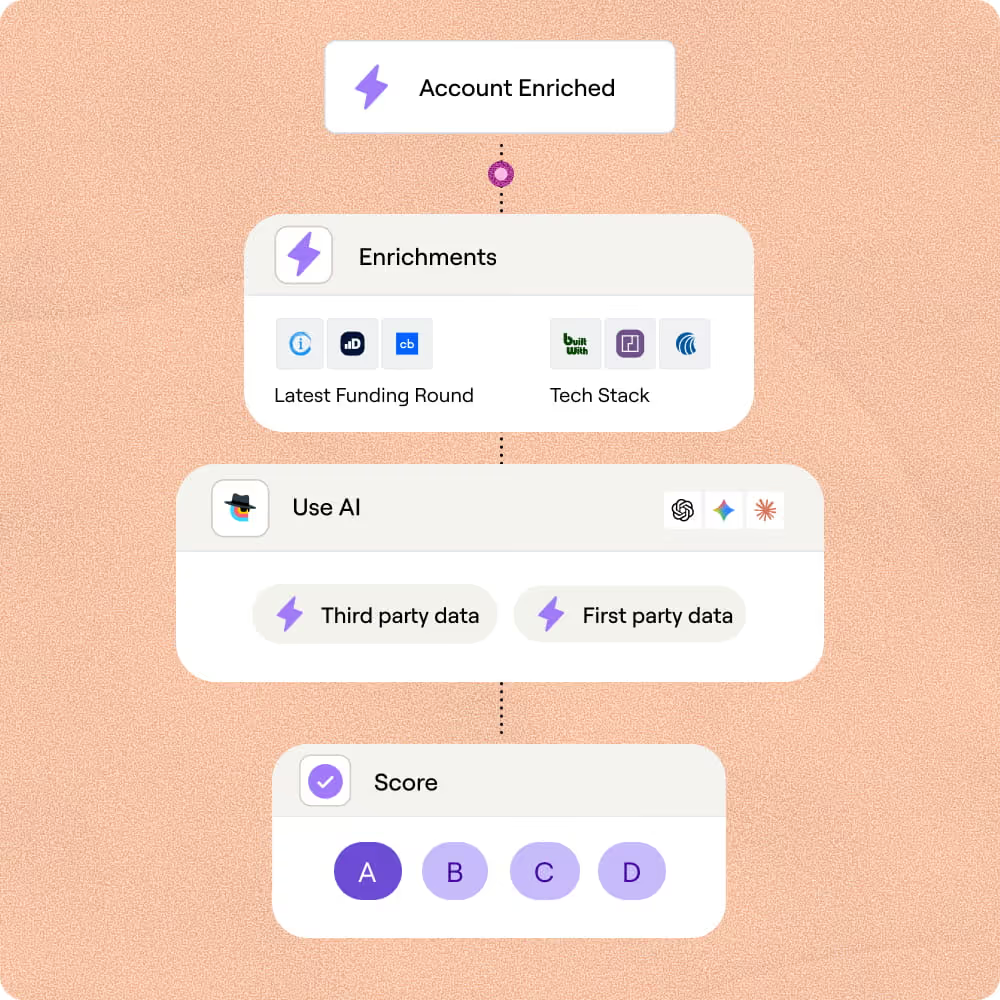
Combine funding stage, hiring velocity, compliance signals, and news sentiment into a single risk score using Clay's AI-powered scoring. Point-based and AI-weighted formulas both run natively in the table.
Enrich with firmographic and technographic depth
Add context to every risk profile: industry, headcount, funding stage, tech stack, and location are pulled from Clay's B2B company database and enriched with Crunchbase and BuiltWith data.
Route flagged accounts to Slack or CRM
Accounts that cross your risk threshold are automatically routed to a Salesforce or HubSpot record or sent as a real-time Slack alert, so your team can act fast without leaving their existing tools.

Clay gave us the ability to define what a great customer looks like on our terms. Not just industry and title, but the signals that actually predict who will buy. Our reps are working better lists, closing faster, and generating 19% more revenue per head.
Frequently asked questions
How does Sculptor find companies with high risk scores?
Sculptor uses Clay's Find Companies source to pull firms matching your target industry or region, then layers on AI enrichment to score each one. Claygent and Oakie AI extract risk signals from public SEC filings (10-K and 10-Q reports), surfacing cost pressures, leadership changes, and financial challenges. A formula column combines those signals with funding stage, revenue trajectory, and headcount into a single 0-to-100 risk score per row.
How accurate are AI-generated company risk scores in Clay?
Accuracy depends on the quality and recency of public data available for each company. Publicly traded firms with SEC filings yield the richest signals because Oakie AI pulls directly from 10-K and 10-Q documents. For CFO email coverage, Clay's waterfall enrichment across providers like Apollo, Datagma, and Prospeo lifts match rates from roughly 30% to 80%, about 2 to 3 times what a single provider returns. Spot-check a sample of scores against a known benchmark before scaling outreach.
Can I score and contact CFOs for a whole list at once?
Yes. Paste a list of company names or domains directly into a Clay table, upload a CSV, or pipe rows from a CRM integration. Sculptor runs the same risk-scoring and CFO email waterfall enrichment on every row in parallel. Once scored, push the flagged high-risk accounts with CFO emails into HubSpot or Salesforce, or download as a CSV for immediate outreach.
Is it legal to scrape public data for company risk scoring?
In the U.S., the Computer Fraud and Abuse Act (CFAA) generally permits scraping publicly available data, a position reinforced by the hiQ v. LinkedIn ruling. SEC EDGAR filings are public government records freely accessible for analysis. In the EU, GDPR applies when any scraped data includes personal information tied to identifiable individuals, requiring a lawful basis such as legitimate interest. The CCPA adds similar obligations for California residents' data.
Always respect each site's robots.txt directives and terms of service, and check the rules for your specific jurisdiction before building a scraping workflow.