
Clay Certifications: Turning mastery into credentials that matter

How we're using Clay to power a certification program that's already changing careers

Author
Author
Sarah Xu
Yash Tekriwal
Date
Dec 4, 2025

Certifications are one way that we continue to reward and recognize Clay users who spend the time learning how to use the platform. But when one of the core values of Clay is that anyone can use it, why do we even use certifications? 

The Education team at Clay wanted to answer that question with a program built around three core principles:

Anyone can build Clay expertise. The bar for entry isn't years of technical background or coding experience. Clay expertise is genuinely accessible to people from diverse backgrounds.

Standardized proof of mastery. Anyone can claim they use Clay, but certifications provide concrete proof that someone can build production-ready workloads that solve real business problems.

A tool for mobility and opportunity. Perhaps most meaningfully, certifications help demonstrate that Clay is a tool for mobility and gives people opportunities they might never have had access to before.

Three tracks—with more coming soon

Clay currently offers three certification paths, each designed around real GTM use cases:
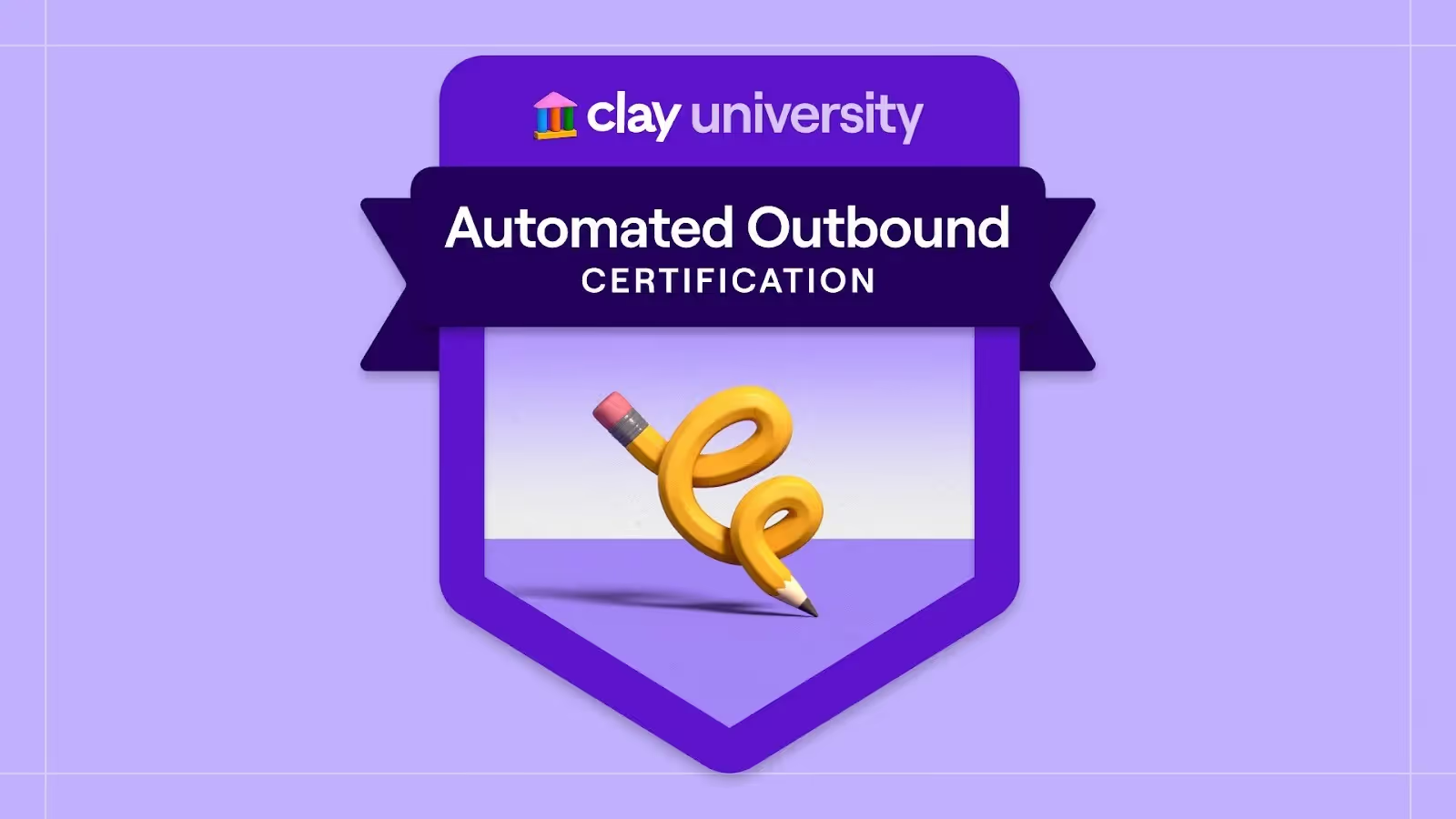
Outbound automation

This certification asks candidates to demonstrate their ability to identify and find target prospects, enrich leads strategically to collect contextual data, craft personalized dynamic outreach sequences, and automatically sync campaigns with CRM and email tools for seamless execution.
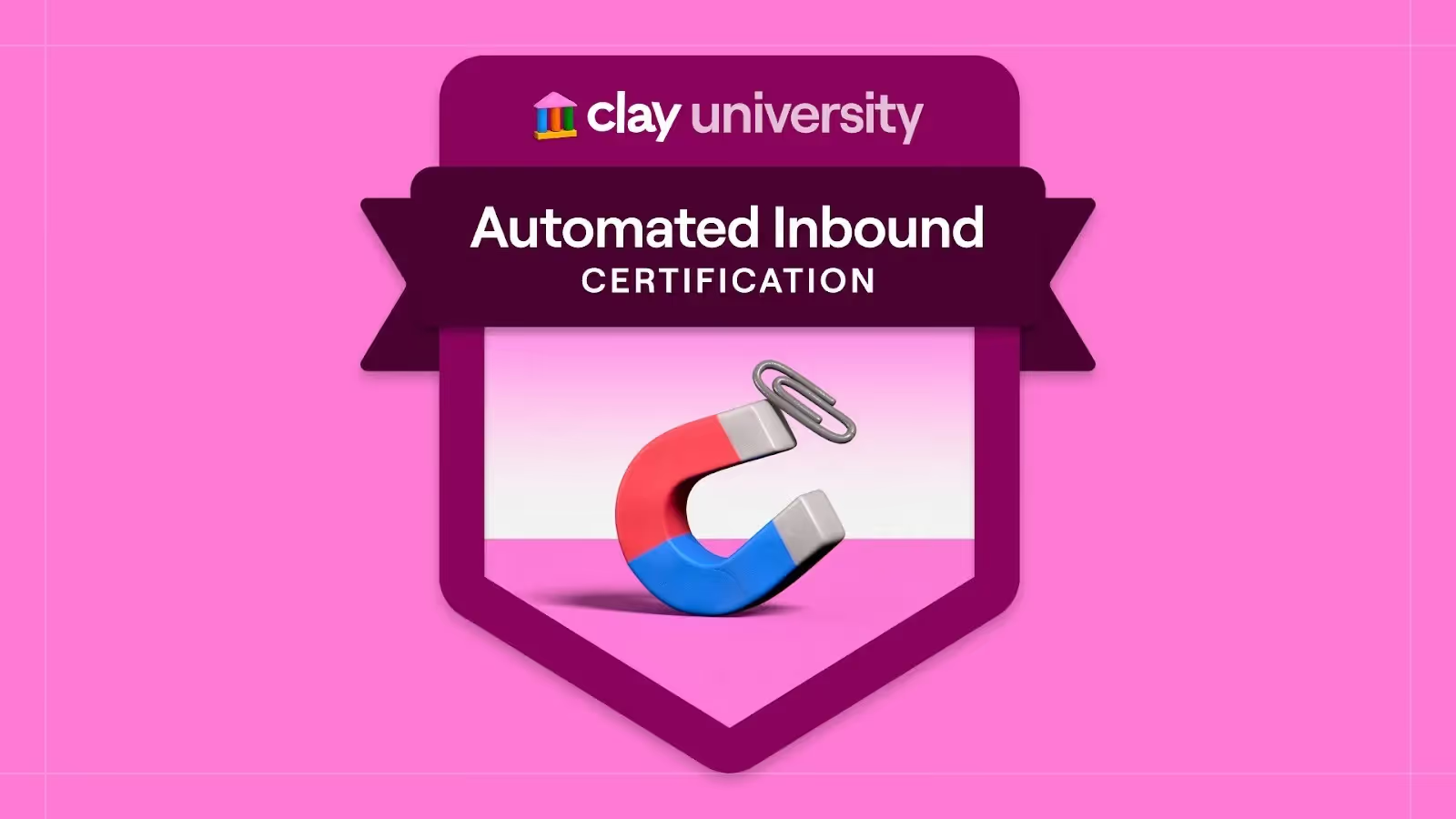
Inbound automation

This track requires candidates to demonstrate their ability to build systems that capture inbound leads across sources, enrich them with rich context, score and route prospects using automated workflows, and seamlessly integrate qualified leads into CRM and outreach workflows.
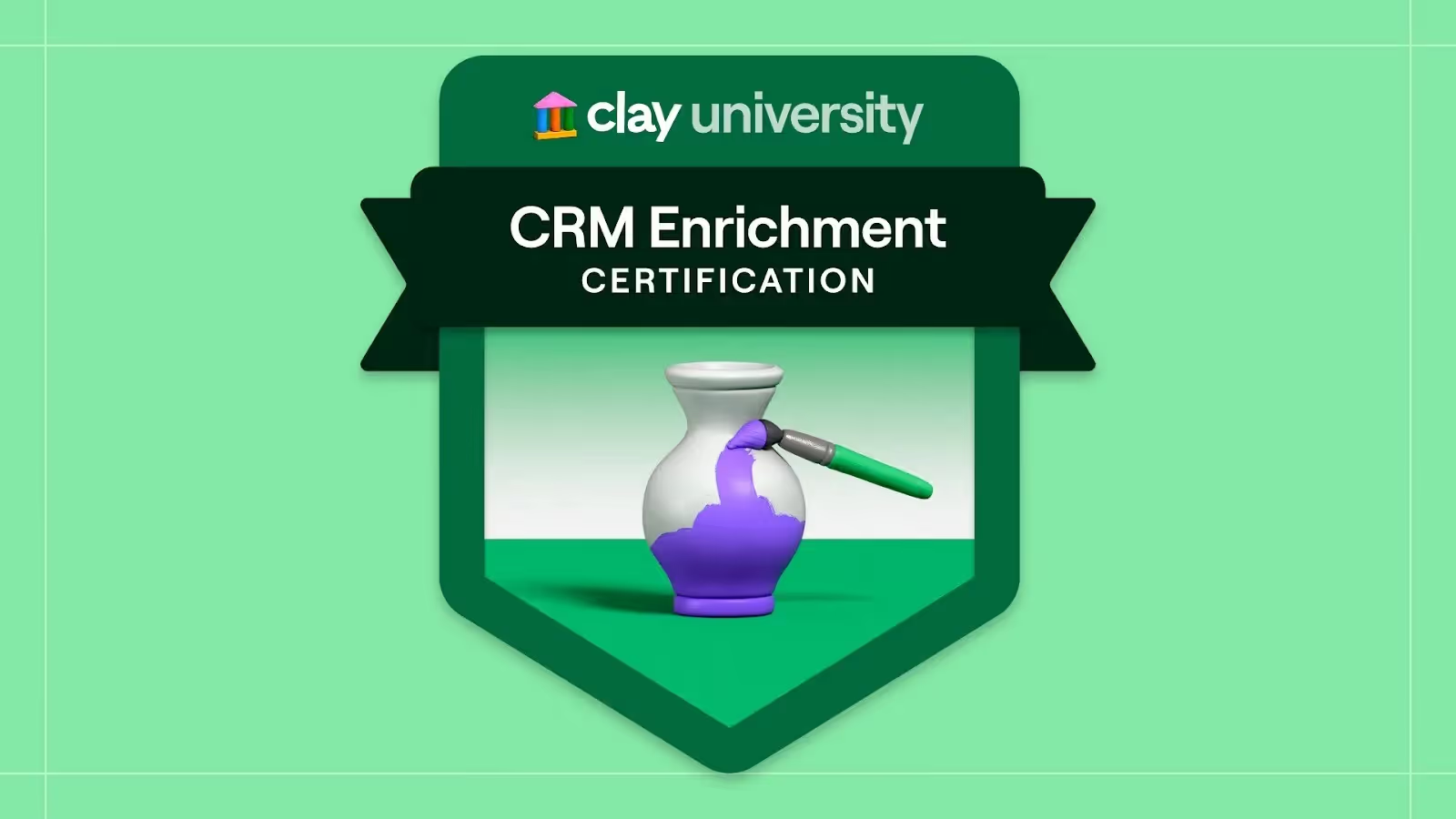
CRM enrichment

This track showcases proficiency in transforming incomplete customer records into comprehensive, actionable profiles. Candidates must demonstrate they can import CRM data into Clay, enrich records with contact and company intelligence, clean and standardize messy data, and bidirectionally sync back to CRM with automated updates.
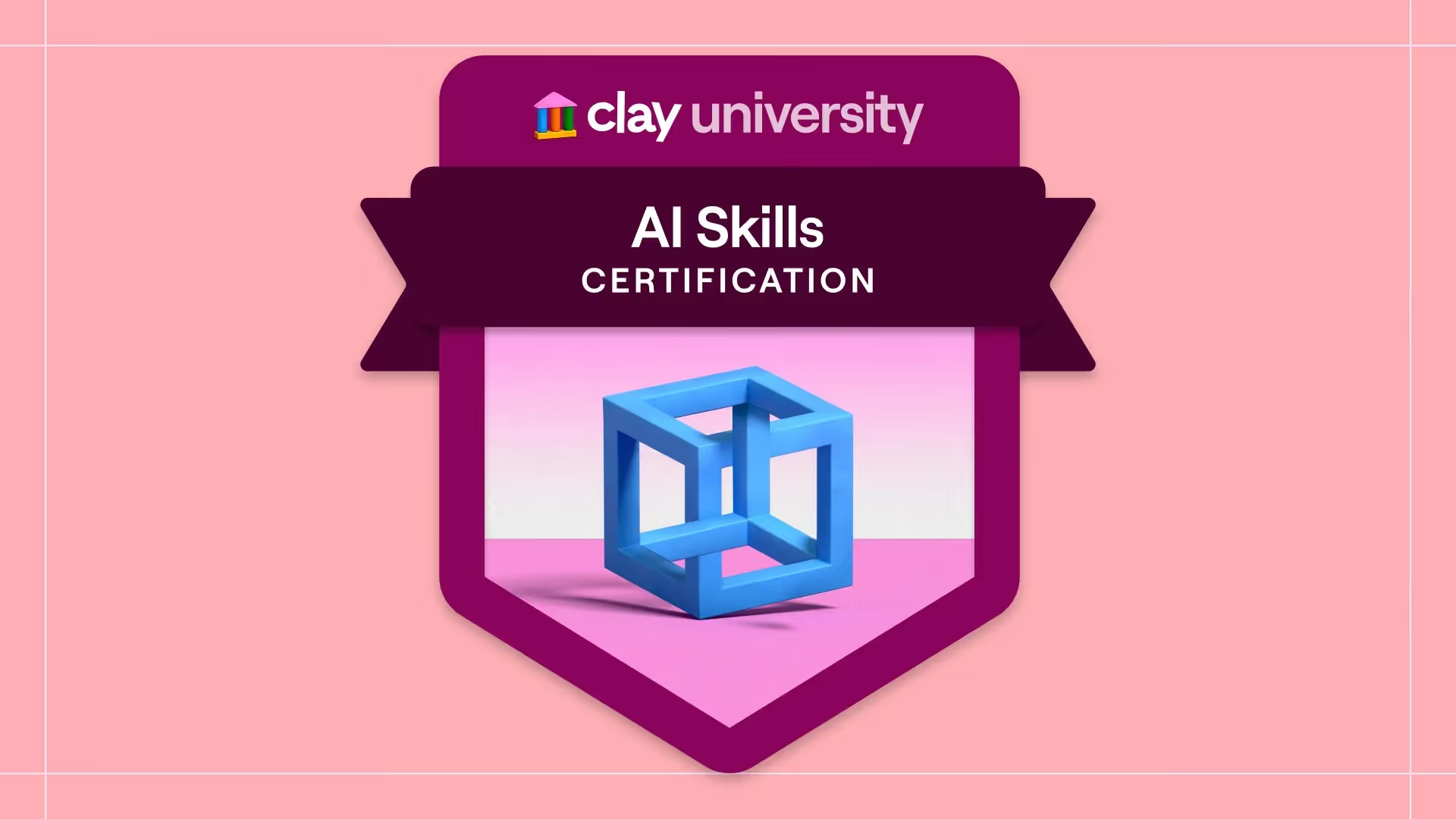
AI skills

This track showcases proficiency in using AI tools to create consistent and reliable outputs. Candidates must demonstrate they successfully create and refine LLM prompts, understand how to use AI tools strategically and efficiently, as well as critically analyze AI outputs to validate the results and resolve errors.

The process is simple

The submission process is straightforward, and doesn’t require anyone to complete coursework or exams. All we want to see is that you have the skills to build production-ready workflows:

  1. Build a Clay table that fits the certification requirements
  2. Submit it through a typeform for review
  3. Receive a certification via Credly if passing (sent to the same email address used for submission)

The typical turnaround time is about one week, though the team continues working to streamline this even further.

Real stories: When certifications open doors

The impact is already tangible. Akash Radadiya, a cohort student who earned his certification and posted about it on LinkedIn, shared his experience:

"I can't believe a 2 year old YC startup reached out to me yesterday as they wanted to hire someone to fill their GTM engineering position and they wanted to hire someone who knows Clay. The CEO directly reached out to me, all because of my LinkedIn—a big role of the certification & all things Clay I posted."

Signaling real GTM expertise to the market demonstrates exactly the kind of impact Clay certifications can have. To round out the ecosystem, the team is also building a talent marketplace where certified individuals can be displayed on a public-facing directory for employers to discover.

Behind the scenes: Grading at scale with Clay
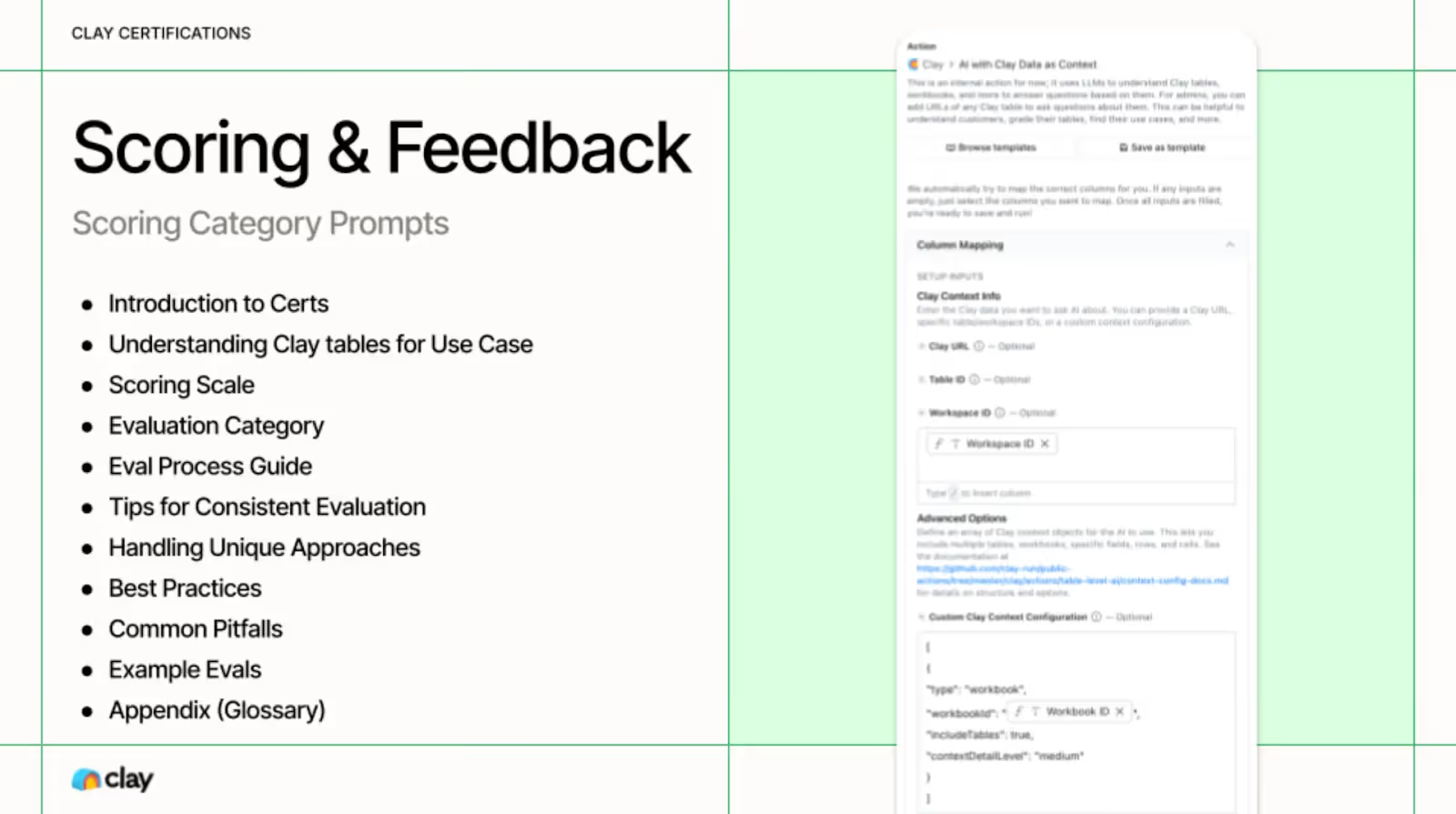
The entire certification grading system runs in Clay, using the platform's full capabilities to evaluate submissions, provide feedback, and track program growth.

Monster prompts for each category

The first component is a series of detailed prompts for each scoring category. These prompts feed into the Chat with Table feature along with the workspace ID. Each prompt includes:

  • Context about what Clay is and what certifications are
  • Details about the specific evaluation category
  • Examples of good and poor implementations
  • Tips for consistent evaluation
  • Best practices and common pitfalls to watch for
  • An extensive glossary of Clay terms

AI-powered scoring and feedback

The table generates both numerical scores for each category and detailed written feedback. The quality of the feedback has been remarkable; it reads naturally and provides actionable guidance like any human grader would. The feedback documents sound like they come from an experienced Clay expert reviewing each submission personally.

Integrity checks with Snowflake

To prevent people from submitting tables they didn't actually create, the system includes integrity checks using Snowflake lookups that verify:

  1. Whether the person who created the table matches the person who submitted it
  2. What percentage of fields in the table were created by that person

If there's any discrepancy, the system enrolls them in a sequence asking them to explain the situation.

Four possible outcomes

Every submission routes to one of four outcomes:

1. Auto pass (85-100 points) - The system automatically converts the Google Docs feedback into a PDF and issues the badge via Credly.

2. Borderline (80-84 points) - Submissions land in a Slack channel called #badge-approvals for manual review. The reviewer can then approve (triggering issuance) or deny (triggering the fail sequence).

3. Not quite (below 80 or critical factors missed) - The system writes up a resubmission email that includes the AI-generated feedback from the table and sends it through Sequencer. There are unlimited resubmissions allowed.

4. Empty/invalid table - If someone submits a shared workbook or a link that can't be parsed, they receive a different email sequence asking them to resubmit with the correct format.

Badge issuance through functions

Badge issuance works through Clay's functions feature. When a submission is approved, the relevant information passes into a badge issuance function that makes an HTTP API call to Credly, which sends the certification email to the recipient.

Tracking everything back to Salesforce

The program tracks a lot more than badges, too. Using HTTP API as a source on a scheduled basis, Clay checks for new badges from Credly, determines if recipients accepted or rejected them, looks up users in Salesforce, and creates badge records attached to contacts.

This is particularly valuable for the Partners team, since partners need team members to earn certifications to graduate through different partnership tiers.

Weekly metrics to Slack

The system also schedules Snowflake queries that pull all badge data from Salesforce and send weekly updates to the Education Updates Slack channel showing:

  • Total certifications issued
  • Certifications issued this week
  • Applications this week
  • Rejected applications this week
  • Breakdown by certification type

Recent metrics showed numbers like "Total Certified (all-time): 370, Issued this week: 32, Applications this week: 49."

Continuous improvement

The team maintains a monthly refresh system to keep rubrics current as the product evolves. They stay active in the community Slack where people constantly suggest improvements and share how they've built different solutions. That feedback gets incorporated regularly into the rubrics.

For accuracy in CRM enrichment certifications, the AI flags error columns, empty columns, and other indicators that something went wrong with inputs and mapping, even though the system doesn't explicitly check for coverage rates.

The bigger picture

We've built a system that proves the product can seamlessly execute complex operations with tangible, real-world impact. What makes Clay Certifications special is that they demonstrate what's possible when people use the product to solve real problems. Every part of the grading system, from AI evaluation to Snowflake integrity checks to Salesforce tracking to Slack reporting, showcases Clay's real capabilities. Clay certifications run on Clay; we think of it as dogfooding at scale

Get started

Whether you're looking to land a coveted GTM role, differentiate yourself to clients, or simply validate your skills, Clay Certifications signal your ability to build production-ready workflows that solve real business challenges.

Candidates can build a table that showcases their skills in Outbound Automation, Inbound Automation, or CRM Enrichment, submit it for review, and join the growing community of certified Clay experts who are opening new doors in their careers.

Special thanks to Sarah, Spencer, Ryan, Yash and Joe for building this program—and for showing the rest of us what's possible when dogfooding the product.

Certifications are one way that we continue to reward and recognize Clay users who spend the time learning how to use the platform. But when one of the core values of Clay is that anyone can use it, why do we even use certifications? 

The Education team at Clay wanted to answer that question with a program built around three core principles:

Anyone can build Clay expertise. The bar for entry isn't years of technical background or coding experience. Clay expertise is genuinely accessible to people from diverse backgrounds.

Standardized proof of mastery. Anyone can claim they use Clay, but certifications provide concrete proof that someone can build production-ready workloads that solve real business problems.

A tool for mobility and opportunity. Perhaps most meaningfully, certifications help demonstrate that Clay is a tool for mobility and gives people opportunities they might never have had access to before.

Three tracks—with more coming soon

Clay currently offers three certification paths, each designed around real GTM use cases:

Outbound automation

This certification asks candidates to demonstrate their ability to identify and find target prospects, enrich leads strategically to collect contextual data, craft personalized dynamic outreach sequences, and automatically sync campaigns with CRM and email tools for seamless execution.

Inbound automation

This track requires candidates to demonstrate their ability to build systems that capture inbound leads across sources, enrich them with rich context, score and route prospects using automated workflows, and seamlessly integrate qualified leads into CRM and outreach workflows.

CRM enrichment

This track showcases proficiency in transforming incomplete customer records into comprehensive, actionable profiles. Candidates must demonstrate they can import CRM data into Clay, enrich records with contact and company intelligence, clean and standardize messy data, and bidirectionally sync back to CRM with automated updates.

AI skills

This track showcases proficiency in using AI tools to create consistent and reliable outputs. Candidates must demonstrate they successfully create and refine LLM prompts, understand how to use AI tools strategically and efficiently, as well as critically analyze AI outputs to validate the results and resolve errors.

The process is simple

The submission process is straightforward, and doesn’t require anyone to complete coursework or exams. All we want to see is that you have the skills to build production-ready workflows:

  1. Build a Clay table that fits the certification requirements
  2. Submit it through a typeform for review
  3. Receive a certification via Credly if passing (sent to the same email address used for submission)

The typical turnaround time is about one week, though the team continues working to streamline this even further.

Real stories: When certifications open doors

The impact is already tangible. Akash Radadiya, a cohort student who earned his certification and posted about it on LinkedIn, shared his experience:

"I can't believe a 2 year old YC startup reached out to me yesterday as they wanted to hire someone to fill their GTM engineering position and they wanted to hire someone who knows Clay. The CEO directly reached out to me, all because of my LinkedIn—a big role of the certification & all things Clay I posted."

Signaling real GTM expertise to the market demonstrates exactly the kind of impact Clay certifications can have. To round out the ecosystem, the team is also building a talent marketplace where certified individuals can be displayed on a public-facing directory for employers to discover.

Behind the scenes: Grading at scale with Clay

The entire certification grading system runs in Clay, using the platform's full capabilities to evaluate submissions, provide feedback, and track program growth.

Monster prompts for each category

The first component is a series of detailed prompts for each scoring category. These prompts feed into the Chat with Table feature along with the workspace ID. Each prompt includes:

  • Context about what Clay is and what certifications are
  • Details about the specific evaluation category
  • Examples of good and poor implementations
  • Tips for consistent evaluation
  • Best practices and common pitfalls to watch for
  • An extensive glossary of Clay terms

AI-powered scoring and feedback

The table generates both numerical scores for each category and detailed written feedback. The quality of the feedback has been remarkable; it reads naturally and provides actionable guidance like any human grader would. The feedback documents sound like they come from an experienced Clay expert reviewing each submission personally.

Integrity checks with Snowflake

To prevent people from submitting tables they didn't actually create, the system includes integrity checks using Snowflake lookups that verify:

  1. Whether the person who created the table matches the person who submitted it
  2. What percentage of fields in the table were created by that person

If there's any discrepancy, the system enrolls them in a sequence asking them to explain the situation.

Four possible outcomes

Every submission routes to one of four outcomes:

1. Auto pass (85-100 points) - The system automatically converts the Google Docs feedback into a PDF and issues the badge via Credly.

2. Borderline (80-84 points) - Submissions land in a Slack channel called #badge-approvals for manual review. The reviewer can then approve (triggering issuance) or deny (triggering the fail sequence).

3. Not quite (below 80 or critical factors missed) - The system writes up a resubmission email that includes the AI-generated feedback from the table and sends it through Sequencer. There are unlimited resubmissions allowed.

4. Empty/invalid table - If someone submits a shared workbook or a link that can't be parsed, they receive a different email sequence asking them to resubmit with the correct format.

Badge issuance through functions

Badge issuance works through Clay's functions feature. When a submission is approved, the relevant information passes into a badge issuance function that makes an HTTP API call to Credly, which sends the certification email to the recipient.

Tracking everything back to Salesforce

The program tracks a lot more than badges, too. Using HTTP API as a source on a scheduled basis, Clay checks for new badges from Credly, determines if recipients accepted or rejected them, looks up users in Salesforce, and creates badge records attached to contacts.

This is particularly valuable for the Partners team, since partners need team members to earn certifications to graduate through different partnership tiers.

Weekly metrics to Slack

The system also schedules Snowflake queries that pull all badge data from Salesforce and send weekly updates to the Education Updates Slack channel showing:

  • Total certifications issued
  • Certifications issued this week
  • Applications this week
  • Rejected applications this week
  • Breakdown by certification type

Recent metrics showed numbers like "Total Certified (all-time): 370, Issued this week: 32, Applications this week: 49."

Continuous improvement

The team maintains a monthly refresh system to keep rubrics current as the product evolves. They stay active in the community Slack where people constantly suggest improvements and share how they've built different solutions. That feedback gets incorporated regularly into the rubrics.

For accuracy in CRM enrichment certifications, the AI flags error columns, empty columns, and other indicators that something went wrong with inputs and mapping, even though the system doesn't explicitly check for coverage rates.

The bigger picture

We've built a system that proves the product can seamlessly execute complex operations with tangible, real-world impact. What makes Clay Certifications special is that they demonstrate what's possible when people use the product to solve real problems. Every part of the grading system, from AI evaluation to Snowflake integrity checks to Salesforce tracking to Slack reporting, showcases Clay's real capabilities. Clay certifications run on Clay; we think of it as dogfooding at scale

Get started

Whether you're looking to land a coveted GTM role, differentiate yourself to clients, or simply validate your skills, Clay Certifications signal your ability to build production-ready workflows that solve real business challenges.

Candidates can build a table that showcases their skills in Outbound Automation, Inbound Automation, or CRM Enrichment, submit it for review, and join the growing community of certified Clay experts who are opening new doors in their careers.

Special thanks to Sarah, Spencer, Ryan, Yash and Joe for building this program—and for showing the rest of us what's possible when dogfooding the product.

More Articles