

































.avif)









Most GTM teams treat CRM growth as a sign of progress. The more accounts, the more surface area, the more opportunity. At a certain scale, that logic inverts.
Clay has 250,000 accounts in Salesforce, 850,000 users, and 600,000 workspaces. That's not a pipeline. It's a prioritization problem. Without a system for deciding which accounts deserve sales attention, which need marketing investment, and which should be left to find their own way to PLG, the CRM becomes a source of confusion rather than direction. Reps spend months working accounts that will never convert. Marketing spends budget generating awareness in companies that aren't structurally equipped to buy. Neither team knows what the other is optimizing for, which is how a well-funded GTM motion quietly becomes chaotic and disconnected.
The fix isn't more data. Most teams already have more data than they can act on. The fix is a shared framework for turning data into a clear decision: who gets our attention, and how much.
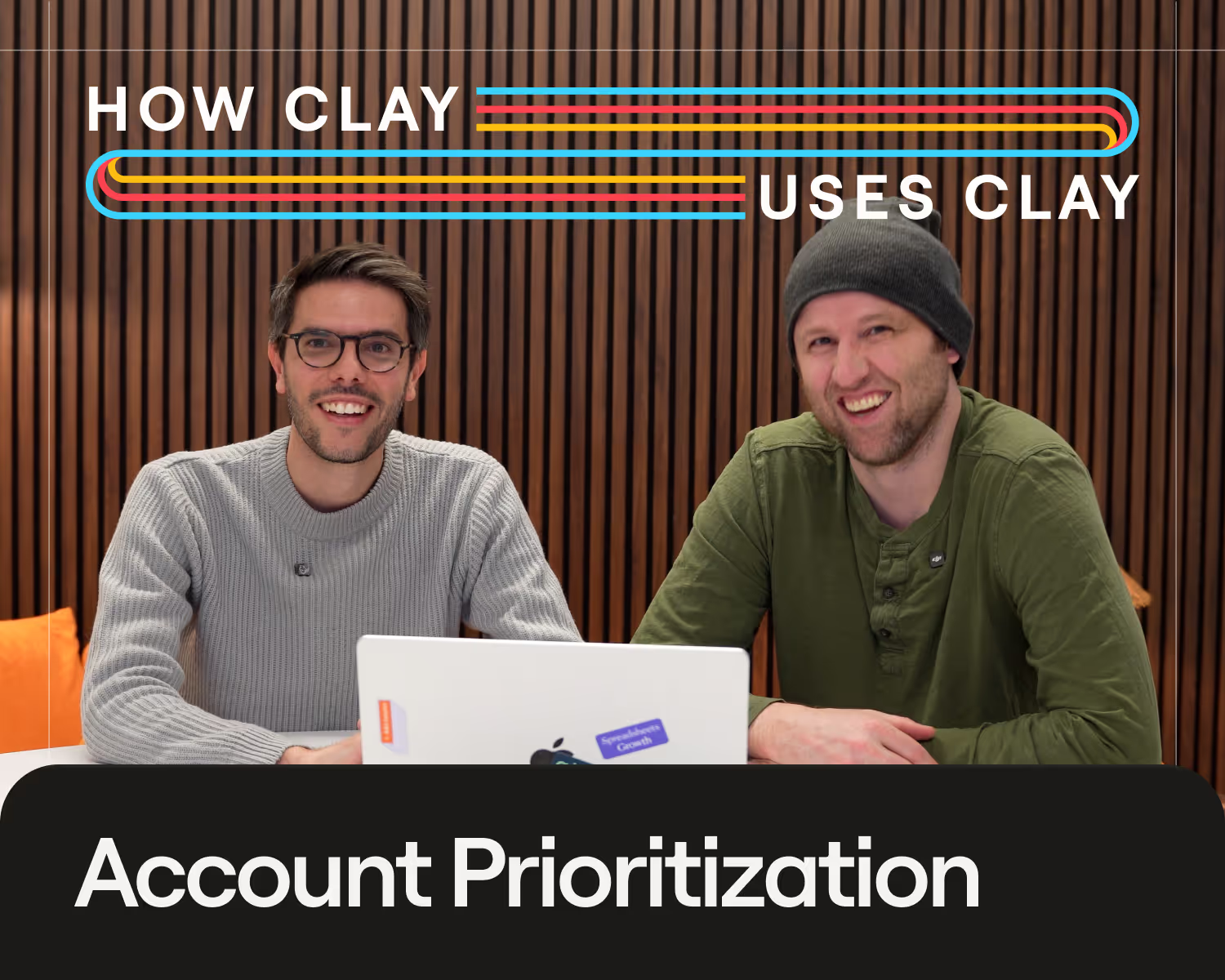
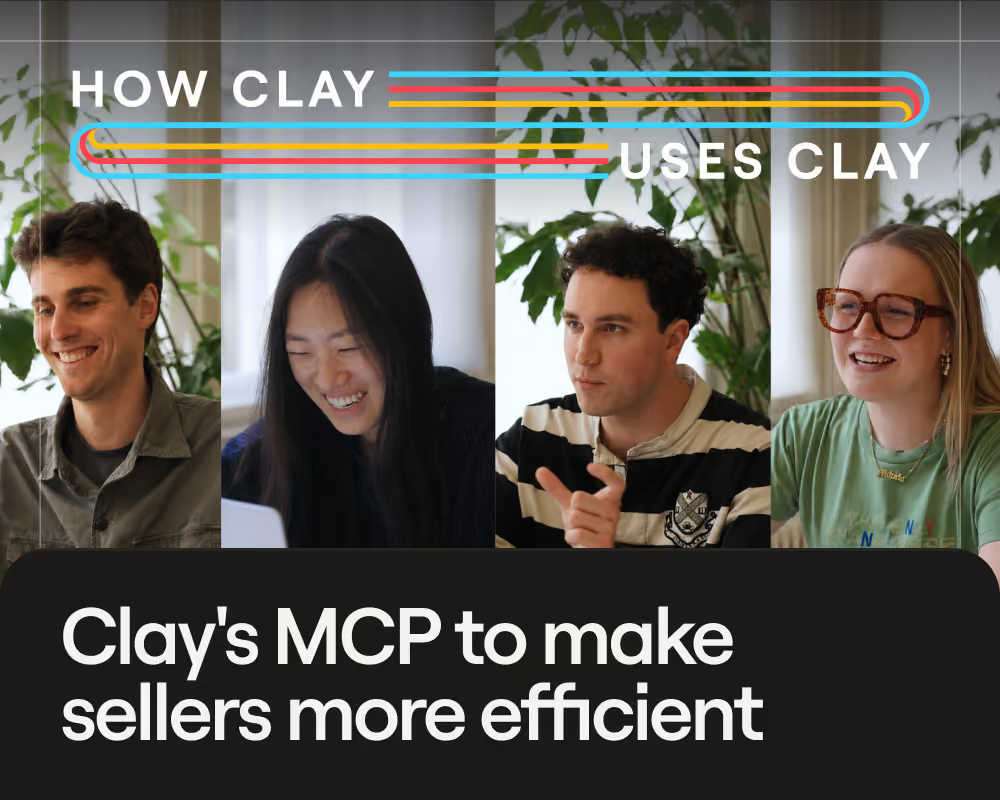
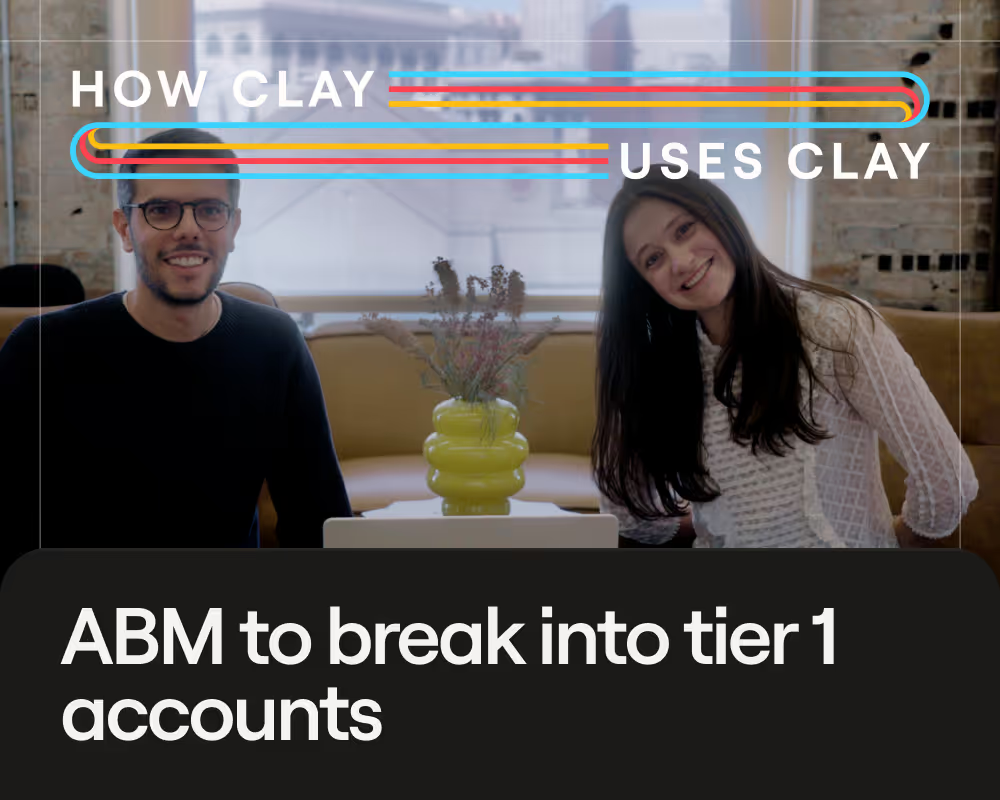
Rob Cook joined Clay as Head of SDR expecting to spend his first months doing what he'd always done (manually mapping accounts, wrangling signals, coaching reps to figure out who was worth pursuing). Clay let him skip most of that. What he built instead, in partnership with our GTM engineering team, was a three-score prioritization system that gives sales and marketing a single, continuously updated picture of every account. It determines how both teams spend their time.
Here's how it works.
TL;DR
- Clay scores every account across three dimensions: Account Fit, Engagement, and Potential Contract Value. Together these determine which accounts get full sales investment, marketing nurture, or no outreach at all.
- Tier 1 accounts are high fit and high engagement. They get full buying-center prospecting and MOFU/BOFU marketing investment.
- Potential Contract Value is estimated using the 90th percentile ARR of the 25 most similar closed-won customers, keeping estimates grounded in real deal history.
- The framework creates a shared language for sales and marketing so both teams act on the same account priorities, not competing assumptions.
The three-score framework Clay uses to prioritize every account
Every account in our Salesforce gets scored across three dimensions. Together, they determine how sales and marketing action on that account.
Account Fit Score answers whether a company is structurally right for Clay. This is third-party data: company size, business model (B2B vs. B2C), GTM motion (PLG, sales-led, or hybrid), number of sellers and ops headcount, tech stack, data warehouse, CRM, competitive products in use, region, funding stage, and revenue trajectory. The output is a score from 0–100 and a tier designation (from Low Fit to Best Fit) that gets written directly to a custom field in Salesforce.
Engagement Score answers whether the company is actually paying attention to Clay right now. This is first-party data pulled over a rolling 90-day window: form fills, event attendance, workspace creation, users added, website visits, LinkedIn activity. An account can look perfect on paper and still score low here, meaning they haven't signaled that they're in market yet. The score produces an Engagement Status (Passive through Highly Engaged) and tracks which channels they're active on.
Potential Contract Value answers what the deal would be worth if they bought. Rather than guessing, we identify the 25 closed-won customers most similar to the prospect (matched on headcount, ICP, industry, funding stage, region, and tech stack) and estimate PCV as the 90th percentile ARR of that lookalike cohort. This keeps the estimate grounded in actual deal history rather than wishful thinking.
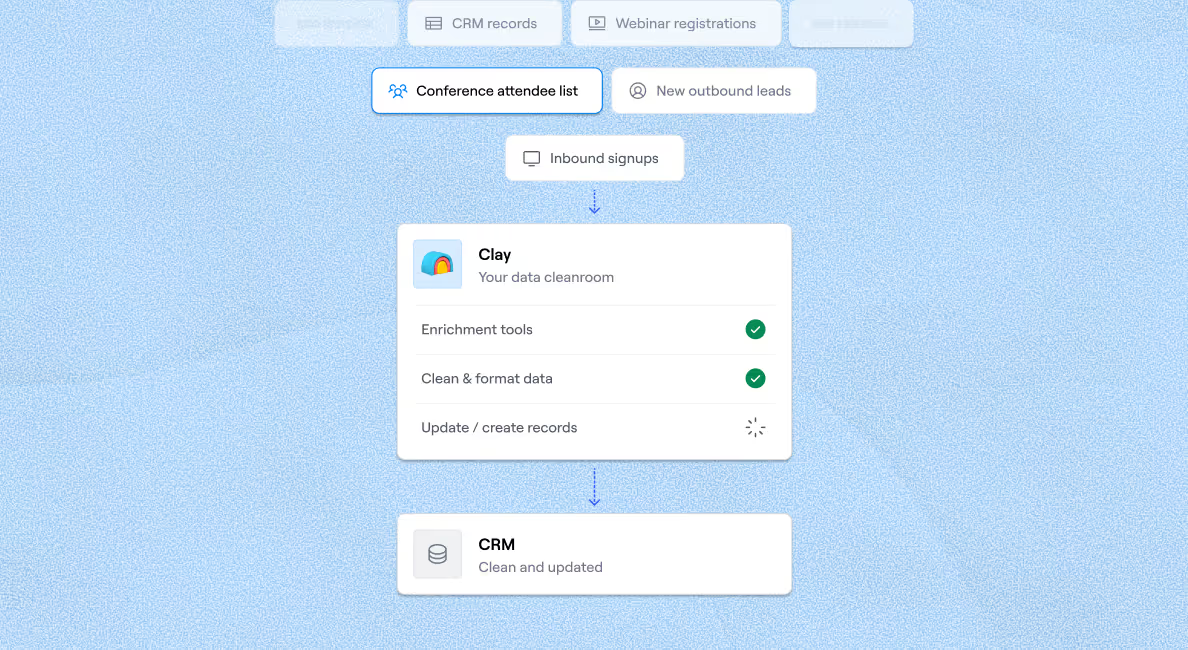
Clay, built by our GTM engineering team led by Osman, pulls the third-party and first-party signals that feed all three scores and keeps them current as accounts change.
How the scores drive sales and marketing action
The real value is the combination of scores. Plotting accounts on a matrix of Account Fit versus Engagement Score produces four distinct playbooks.
High fit, high engagement: Tier 1 Target Accounts. These are the accounts worth full sales investment. Reps prospect to unlock the entire buying center, build pipeline, and multi-thread open opportunities. Marketing runs MOFU/BOFU ads and invests in events and dinners to deepen relationships.
High fit, low engagement: Tier 2 Marketing Nurture. This is where Rob and the team have found the most productive collaboration between sales and marketing. The account looks like a great customer, but the signals just haven't shown up yet. Sales prospects selectively, prioritizing value over selling: a tailored invite to a field event, a relevant case study, a specific "how Clay uses Clay" example matched to their use case. Marketing invests in thought leadership and education. The goal is activation, not closing.
Low fit, high engagement: Tier 2 Opportunistic Sales. They're engaged, but the structural fit is weaker. Sales prioritizes inbound signals and moves smaller deals toward the PLG funnel. Marketing focuses on lead capture over top-of-funnel investment.
Low fit, low engagement: Tier 3 De-Prioritize. No prospecting. Clay-DRs handle light touch if needed to push accounts toward PLG. Marketing builds nurtures that help people onboard without sales involvement.
Why this works for both sales and marketing
Before this framework, the two teams were operating on different assumptions about the same accounts. Marketing was generating interest in companies sales had already written off. Sales was prospecting into accounts marketing had decided weren't worth the spend. The framework doesn't just organize accounts. It creates a shared language for prioritization that both teams can act on.
The signals that feed the scores are specific to Clay. Your ICP signals will look different. The number of ops and sellers matters for us; Snowflake in the tech stack matters for us. What translates is the structure: account fit tells you whether to invest at all, engagement tells you what kind of investment makes sense, and PCV tells you how hard to push.
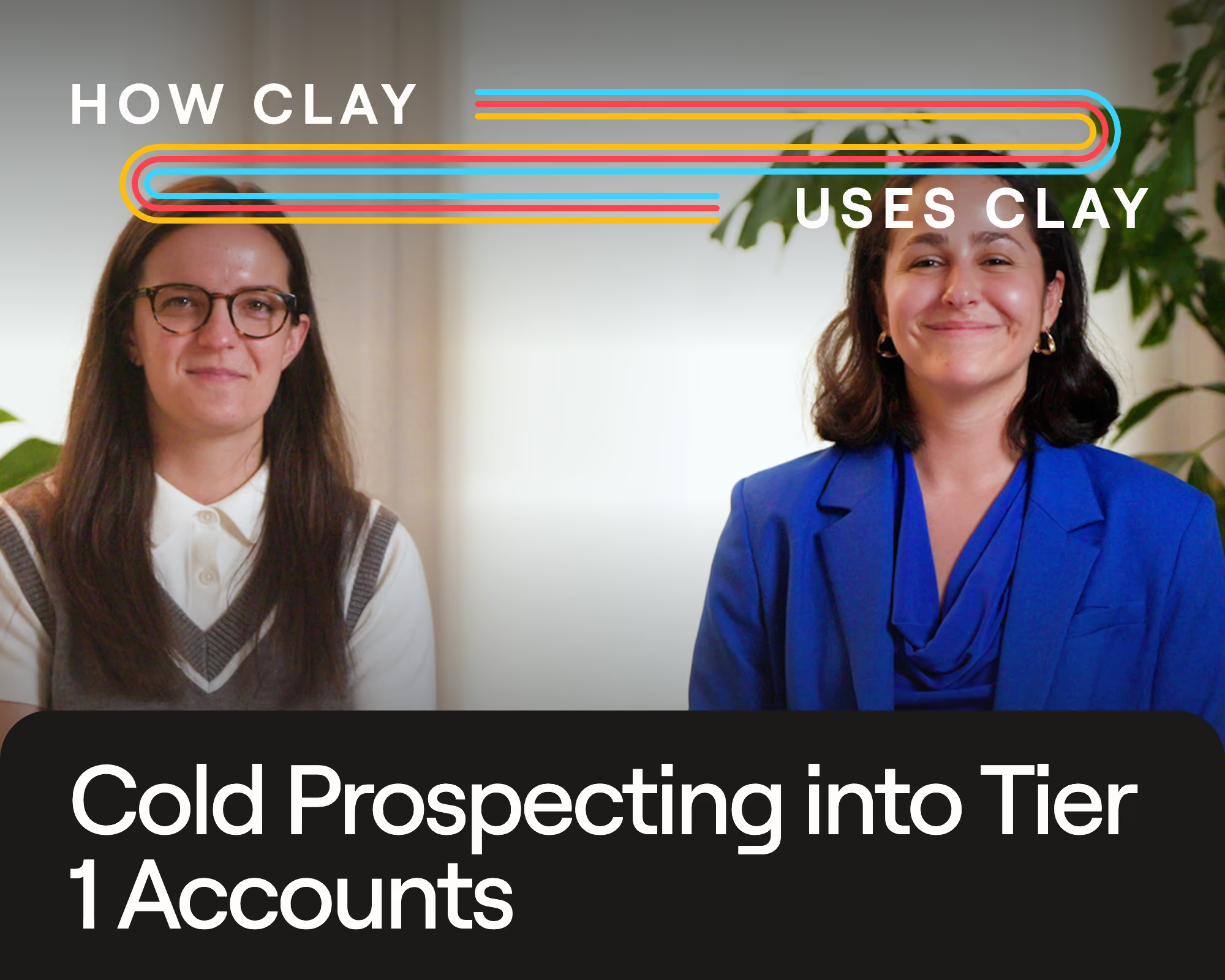
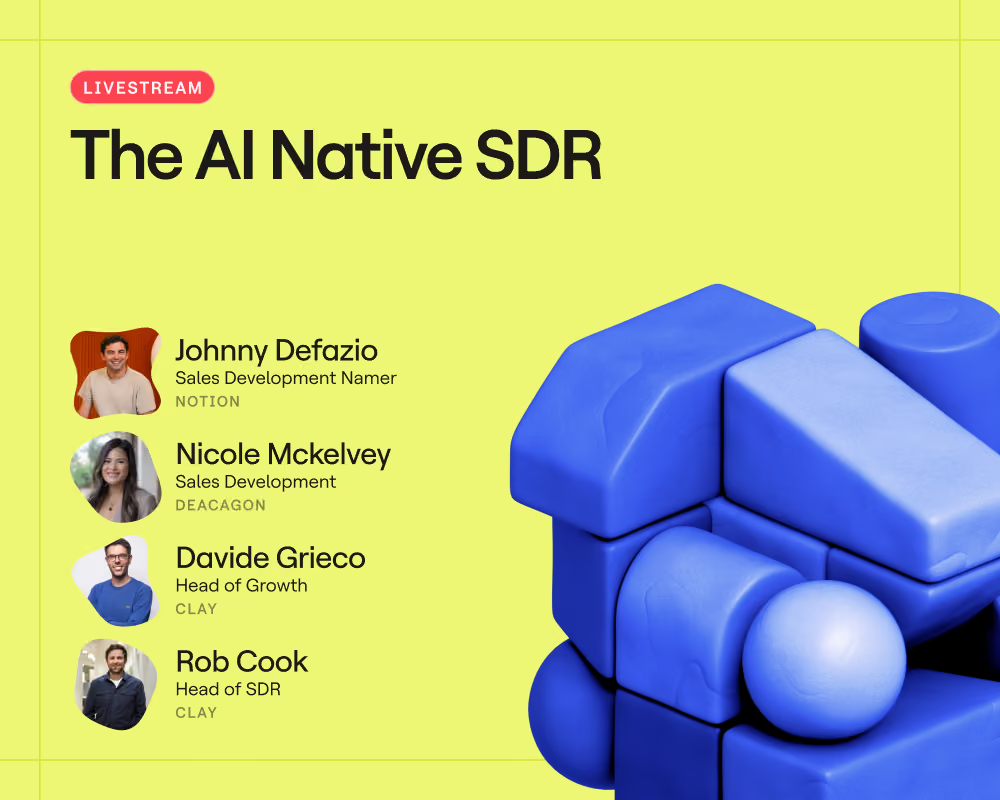
If you want to see how this works in practice (the actual Clay tables, the signal logic, how scores push to Salesforce), watch this live workshop with Rob who walks through the full build.
Frequently Asked Questions
What data do you need before building a fit and engagement scoring system?
At minimum, you need a CRM with account records, access to third-party firmographic and technographic data, and a way to capture first-party signals like website visits, form fills, and product activity. Clay pulls both third-party and first-party signals into a single workflow and writes scores back to Salesforce automatically, so you don't need to stitch together separate tools before getting started.
How do you define your ICP for account fit scoring?
Start with your closed-won customers. Look for patterns in company size, business model, GTM motion, tech stack, funding stage, and region. For Clay, the relevant signals include number of sellers and ops headcount, whether Snowflake is in the tech stack, and whether the company runs a sales-led or hybrid GTM motion. Your ICP signals will differ, but the structure is the same: identify the firmographic and technographic attributes that predict a good customer, then score every account against them.
How do you identify accounts that are showing buying intent right now?
Clay's Engagement Score uses a rolling 90-day window of first-party signals: form fills, event attendance, workspace creation, users added, website visits, and LinkedIn activity. An account with strong fit but low engagement hasn't signaled that they're in market yet. Tracking these signals continuously means the score updates as behavior changes, so sales always has a current read on who is actually active.
How do scores get pushed to Salesforce and used by reps?
The Account Fit Score, Engagement Score, and Potential Contract Value are all written directly to custom fields in Salesforce. Reps see the scores alongside the tier designation (Tier 1, Tier 2, Tier 3) and the Engagement Status (Passive through Highly Engaged). This gives both sales and marketing a single, continuously updated view of every account without requiring reps to leave their CRM.
.png)






.avif)


.avif)










.avif)













.avif)