
Clay's inbound workflow removes that tradeoff. A single field, an email address, is enough to kick off a workflow that builds a complete picture of the prospect before a rep ever reaches out. That means their LinkedIn profile, job title, seniority, and whether they're a decision maker, as well as the company they work for, who that company sells to, how big they are, and what signals indicate fit. And it also means knowing their history with Clay, including every webinar they've attended, every event they've shown up to, every prior touchpoint on record. Conversion rate stays high. Reps show up prepared.
The workflow runs always-on, pulling in leads the moment they come inbound. Clay pulls first-party data from your CRM or data warehouse, aggregates third-party enrichment, scores the lead, and enrolls them in outreach automatically. A rep can engage with a prospect while they're still on the website, and do it with full context. Both things at once.
What makes that context meaningful is the combination of data sources. First-party signals tell you what actions a prospect has taken: which webinars they've attended, which events they've shown up to, what their history with Clay looks like. Third-party enrichment tells you who they are and where they work. Together, those two layers don't just tell you whether to reach out. They tell you how.
A prospect who's brand new to Clay gets a different conversation than one who's already building tables and needs help getting internal buy-in. Without the enrichment, a rep needs to get up to speed on context manually, but with it, that call is shaped before it starts.
TL;DR
- Clay's inbound workflow enriches a lead automatically from a single email address, pulling contact data, firmographics, and first-party history before a rep ever reaches out.
- The workflow runs in four phases: identify the person, identify the company, score and segment, then enroll in automated outreach, all without manual research.
- First-party signals (webinar attendance, event history, prior touchpoints) combine with third-party enrichment to shape how reps approach each conversation, not just whether to reach out.
- Personal Gmail submissions are not dead ends: Clay can recover a work email, locate the LinkedIn profile, and map the buying center using just a name and company.
The problem with managing inbound leads at scale
Inbound leads arrive through all types of entry points with minimal information. An email address, maybe a name, title. To figure out whether someone is worth prioritizing, and how to approach them, a rep would normally spend an hour piecing together their background, their company, and their relevance. Then repeat that for every lead in the queue.
Clay also runs multiple inbound channels simultaneously: demo requests, trial signups, webinar registrations, field events, contact forms. Each one brings in leads at different intent levels. A demo request and a webinar signup require different responses than a field event attendee, but both need to be evaluated quickly.
This is already hard. It gets harder when a prospect submits a personal Gmail address instead of a work email. Most inbound enrichment systems depend on that work email. It's what ties a contact to a company, unlocks firmographic data, and makes qualification possible. Without it, reps are stuck manually hunting for the right information before they can even decide whether the lead is worth pursuing. That kills speed to lead and adds noise to the qualification process. Most teams just skip personal email submissions entirely and move on.
How the automated enrichment workflow actually runs
A submission comes in with a single input: an email address. From there the workflow runs in four phases.
Identify the person. Claygent finds the LinkedIn profile URL. Clay pulls job title, seniority, tenure, social URLs, and whether the contact is a decision maker.
Identify the company. With the contact resolved, Clay enriches the account: size, who they sell to, tech stack, growth signals, and whatever else indicates fit for Clay's product.
Score and segment. Contact and account data together determine fit. High-fit leads get prioritized for immediate outreach. Lower-intent leads get routed to the appropriate teams. Leads below the threshold get flagged for monitoring rather than active outreach.
Act. Qualified leads are enrolled in automated outreach within the same workflow. An email goes out within minutes of submission. If the prospect doesn't book from that first touch, the rep who follows up already has everything loaded: who they are, why they're a fit, and the right angle to take into the conversation.
The whole cycle runs without manual research.
Context is the other half of speed
The goal is to reach prospects faster and give them a better experience when you do.
Take a prospect who signs up for a webinar, then attends a field event two months later, then submits a demo request after getting promoted into a target role. By the time that request comes in, the rep should already know all of it: what they've attended, what they've engaged with, where they are in their Clay journey. That history, combined with third-party enrichment data, shapes the entire approach to the conversation.
A prospect who's brand new to Clay gets pointed toward resources like Clay University or a How Clay Uses Clay session, something that gives them a foundation. A prospect who's already active in their workspace doesn't need the intro. They need help getting internal buy-in, which might mean running a reverse demo and working through their actual build with them. The enrichment is what tells the rep which situation they're walking into before the call starts.
That's also why Clay measures conversion rates across ad spend going back a full year. A lead that converts three months after first contact still counts. The enrichment and touchpoint tracking that happened on day one made that outcome possible.
Speed to lead matters. But so does what you say when you get there.
Handling personal emails
Personal email submissions don't have to be dead ends. With a first name, last name, and company, Clay can locate the LinkedIn profile, run a work email waterfall to recover the professional address, and map the buying center at that account. When several people from the same company submit with personal emails, Clay identifies the pattern, surfaces the decision maker, and routes accordingly.
What this looks like in practice
The demo above runs the full workflow.
A submission comes in. Claygent finds the LinkedIn profile URL. Clay pulls job title, seniority, tenure, social URLs, and decision-maker status. That resolves the person. Then it resolves the company: size, who they sell to, what they care about, what signals indicate fit for Clay.
Once both layers are enriched, the workflow makes a fit determination. If the answer is yes, the lead gets marked, assigned, and enrolled in automated outreach, all in the same table. An email goes out within minutes of submission. If the prospect doesn't book from that first touch, the rep who dials them already has the enrichment data loaded: who they are, why they're a fit, how to sell them.
The whole cycle runs without a manual handoff.
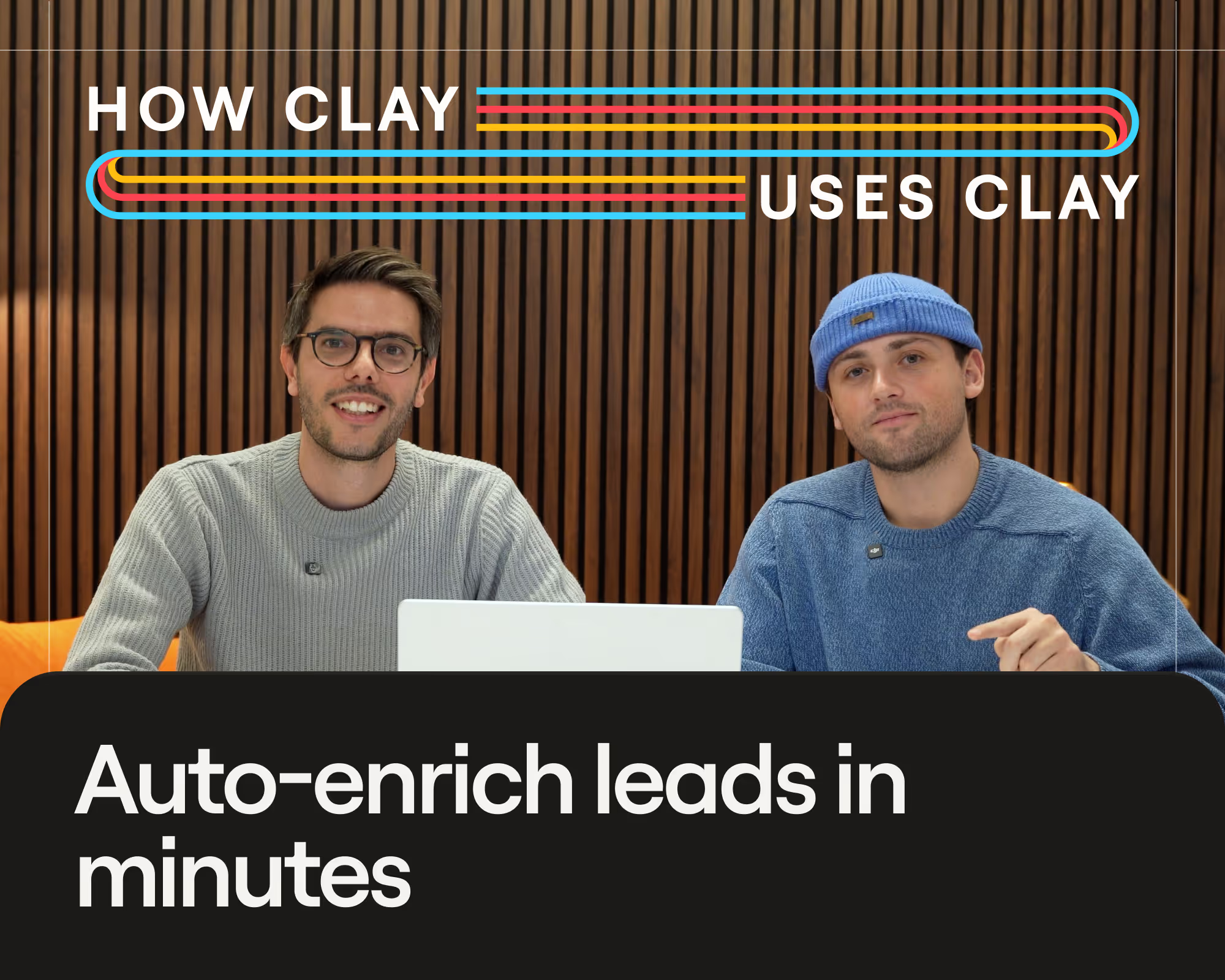
Want to build this yourself? Watch our live workshop where Davide Grieco and Manny Adelstein run through Clay's own outbound management system.
Frequently Asked Questions
What data points are most valuable for B2B contact enrichment?
The most actionable combination is contact-level data (job title, seniority, tenure, decision-maker status, LinkedIn profile) paired with account-level firmographics (company size, who they sell to, tech stack, growth signals). First-party behavioral data, such as webinar attendance, event history, and prior touchpoints, adds the layer that shapes how a rep approaches the conversation, not just whether to reach out.
How do you automatically enrich inbound leads without manual research?
Clay's workflow triggers the moment a form submission arrives. Starting from a single email address, it runs through four automated phases: identifying the person, identifying the company, scoring and segmenting the lead, and enrolling qualified leads in outreach. The entire cycle completes without a rep lifting a finger before the first email goes out.
What happens when an inbound lead submits a personal Gmail address instead of a work email?
Clay can still resolve the lead. Using a first name, last name, and company, Clay locates the LinkedIn profile, runs a work email waterfall to recover the professional address, and maps the buying center at that account. When multiple people from the same company submit with personal emails, Clay surfaces the decision maker and routes accordingly.
How does lead scoring work in this workflow?
Contact and account enrichment data feed into a fit determination together. High-fit leads get prioritized for immediate outreach. Lower-intent leads get routed to the appropriate teams. Leads that fall below the threshold get flagged for monitoring rather than active outreach, so reps focus their time where it matters most.

.avif)


.avif)