Most sellers spend less than 50% of their time actually talking to customers. The rest is tab-switching – Salesforce, Gong, LinkedIn, a data provider or two, maybe an internal spreadsheet, all before a single conversation happens.
RevOps teams have already solved a lot of this in Clay. They've built ICP scoring workflows, enrichment waterfalls, territory routing logic that pulls from a dozen providers. Until now, reps got the outputs — a field updated in CRM, a Slack notification — and filed a ticket when they needed anything more.
Clay’s MCP turns Clay into a context layer that LLMs can interact with. RevOps builders have historically created GTM alpha in Clay for their GTM teams; MCP makes that alpha easily consumable in the chat interfaces reps live in.
A few months ago, we brought Clay into ChatGPT and Claude. For the first time, reps could access Clay's full research stack — contact databases, tech stack data, headcount growth — and draft outreach right inside the AI tools they already use every day.
Since then, we’ve seen a huge uptick in rep usage. But RevOps leaders we talked to asked the same three questions: Who gets access? How do we set credit budgets for reps? Can reps use our existing workflows without learning Clay?
Today we're shipping the answers: Functions, MCP permissioning and credit budgets.
Enrichments out of the box
When a rep connects Clay in ChatGPT or Claude, they don't start from zero. They immediately get access to a default set of enrichment data points — the same ones your Ops team already trusts. A rep can find the right contact at a target company, pull important data on the account, and draft a personalized email, all in one conversation.
Clay gives you access to enriched datapoints not available in LLMs: headcount growth, recent news, investors, competitors, customers, tech stack, website traffic, open jobs, revenue model, annual revenue, latest funding, email, work history summary, and thought leadership, to name a few.
For teams running sophisticated GTM motions, the default enrichments are just the starting point.
Functions: the best of Ops + Reps, scaled
Your best RevOps workflows already live in Clay.
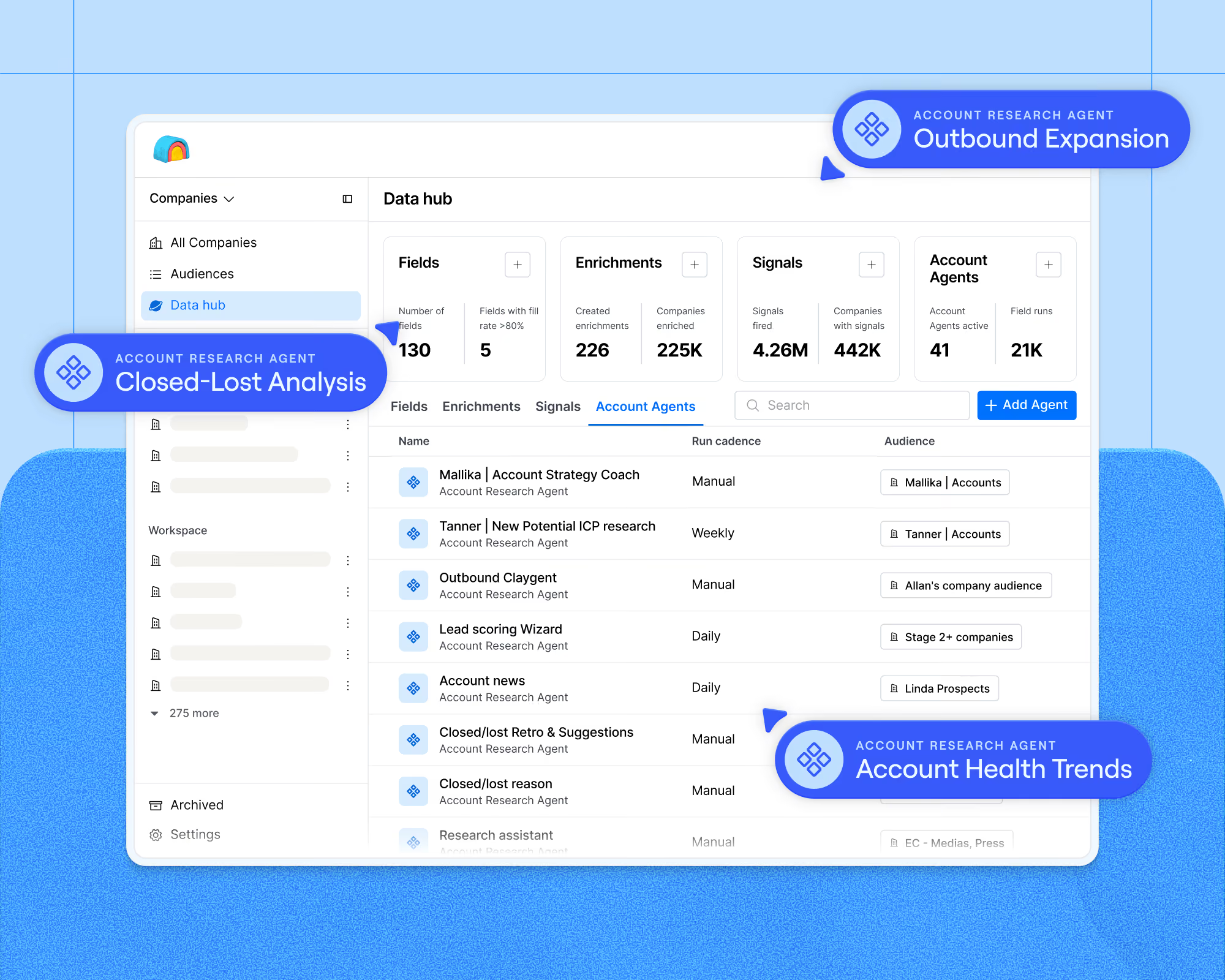
Functions are reusable enrichment workflows built in Clay that take a defined set of inputs, run a sequence of enrichments, and produce structured outputs.
Sometimes, Ops knows what workflows are most effective; sometimes, your best reps have found their own GTM alpha that hasn’t scaled to the rest of the team — the right sequence, the right data sources, the right message for the right account. Functions let Ops teams take what's actually working, encode it once in Clay, and make it the default for every rep. Same logic, same data sources, same quality output, creating a tighter feedback loop between Ops and sales teams. Ops stays in control of the business logic. Reps stop improvising.
Two examples of how Clay reps are using Functions:
Standardized company enrichments. Our Ops team built a Function that takes a company domain, runs it through a waterfall of enrichment providers, scores it against their ICP criteria, and returns a structured profile. Instead of every rep doing this differently across different tools — the whole team gets the same high-quality output.
Outbound generator. Another Function takes an email address, looks up the contact and account in Salesforce and Snowflake, pulls in signals, and uses AI to generate personalized outreach. That workflow would take any individual rep hours to replicate. Now our reps type in: "Run Clay outbound generator for jeremy@acme.com."
Guardrails: permissions, credit budgets, and confidence to scale
Functions are powerful — which is exactly why Ops teams want to put guardrails around who can use what.
Function-level permissions. Admins toggle which Functions are available via MCP from the Function settings page in Clay. Admins can roll out capabilities gradually, test with a small group, or restrict sensitive workflows to specific use cases.
Credit budgets. From the MCP Users settings page, admins set a default credit budget that applies to all reps — or configure per-user budgets for more granular control. If certain reps or teams need higher thresholds, they can be adjusted individually. Nobody burns through credits unchecked.
Reps interact with Clay exclusively through Claude or ChatGPT, without access to Clay’s web app, so the workflows and systems your Ops team has built stay exactly as they left them. Ops teams retain permissions, credit budgets, and Function-level governance, and decide what's available and to whom.
“Clay's MCP helps us find and enrich ICP contacts across multiple providers and push them into Salesforce for SDR follow-up, all from inside Claude. Budget guardrails and admin controls mean reps can move faster without Ops losing control.”
– Zach Matek, Dir. of Marketing Operations @ Saviynt
Available now and coming soon
MCP with Functions, MCP permissioning, and credit budgets is available now on all modern self-serve (Launch, Growth), and both modern and legacy Enterprise plans. Prospecting directly in ChatGPT and Claude. Company and contact lookups are still available for free and trial users.
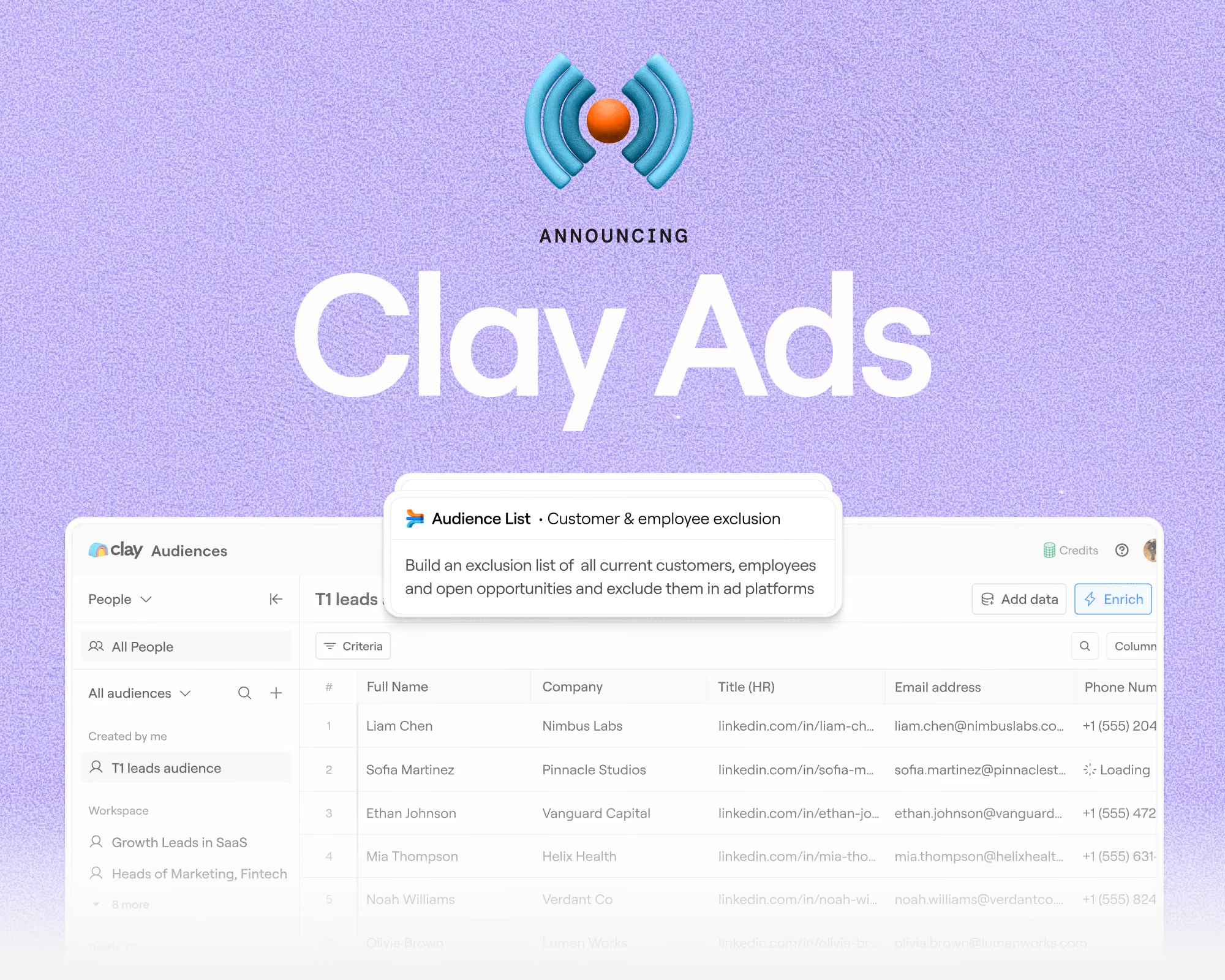
Enterprise customers who have already aggregated all data in Audiences (currently in Beta) can now allow reps to interact with that data directly in ChatGPT and Claude.
The gap between what Ops has built and what reps can access just got a lot smaller. We're working to close it entirely.
Learn more: Clay University Courses - MCP
.avif)


.avif)



.avif)











.avif)








.avif)















.avif)














.avif)