



































.avif)










How Clay Uses Clay for Recruiting Top Talent
When Danielle Poreh joined Clay to lead Talent Science a year ago, the company had 80 people and a clear mandate: grow fast without lowering the bar. Today we’re over 400 people.
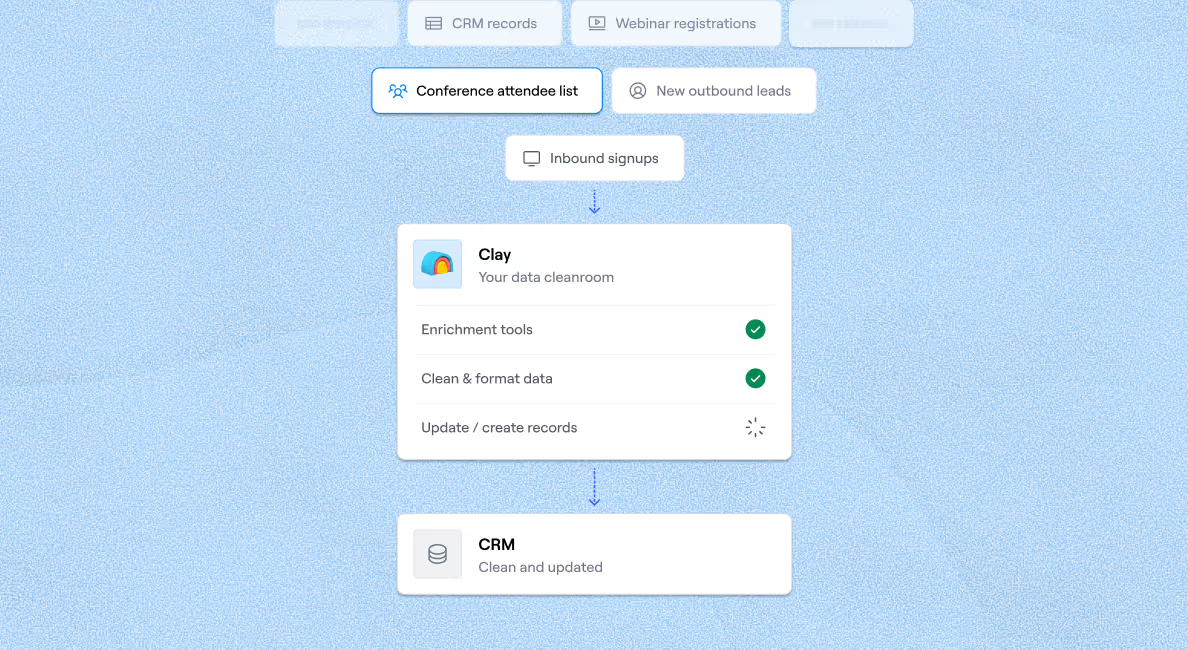
Recruiting, at its core, is the same problem GTM teams face every day. Find the right people, figure out which ones to prioritize, and reach them at the right time with the right message. The difference is that GTM had already built the infrastructure to do all three in one place - data enrichment, signal monitoring, personalized outreach at scale. Recruiting hadn't.
So Danielle applied the same frameworks to talent. Same logic, different inputs, all on Clay.
.avif)
Here's what that looks like across three motions:
The problem every recruiting team knows
Sourcing is limited by the surfaces you can search. The best candidates for a role don't always show up on professional networks. Oftentimes, you need to go where they actually are. And even when you find them, what makes someone right isn't generic - the criteria that matter for one role won't be the same for the next.
On top of that, inbound volume makes it hard to be effective. When applications spike, teams default to credential matching. But keyword matching is oftentimes a poor proxy for whether someone actually has the skills and competencies a role requires - and the best candidates don't always look right on paper.
And finding the best talent isn't just about waiting for inbound or running outbound campaigns. It's about keeping an eye on your dream candidates and knowing when the moment is right. It's also about re-engaging with people already in your ATS: silver medalists, candidates who applied at the wrong time, pipelines that went cold.
.avif)
1. Find candidates using unique data sources — leave no stone unturned
Most sourcing workflows are limited by the surfaces they can search. Clay removes that constraint.
For us, that means looking at sources beyond professional networks like X or Github. We then layer in data points that are important signals to us. For example:
- When an AE lists quota attainment on their profile, it’s a signal they're ready to move.
- SDRs from companies where AE roles are not being posted.
- SDR’s who played D1 sports are a great indicator of hunger and potential to do well in a sales role
- Some of the best designers are on X, so we pull followers of top designers and use an AI agent to find their LinkedIn profiles, location and source from that list.
- Solutions engineers who are creating content and posting on X.
- Or if you’re one of our customers, pulling PhD level authors from google scholar or an HVAC roll-up business looking to hire and reach technicians in Florida.
Sourcing from within your company: Last quarter, 47% of our hires came from referrals, all powered by Clay.
.avif)
We pull employee connection exports into Clay and filter down to people they actually overlapped with at previous companies.
Build it yourself using the template: here and Loom walkthrough.
Step 1: Employees export their connections and send them to the recruiting team.
Step 2: Upload each export into Clay
Step 3: Clay surfaces people who overlapped with that employee at past companies or schools and match your open role criteria.
Step 4: Recruiters use Clay to analyze best fit candidates for roles and send them to Employee in Slack to approve AI-generated message.
2. Prioritize candidates — spend time on the right people
High inbound volume isn't just a time problem. It's a quality problem. When you can't evaluate fast, you default to pattern matching on credentials, and the best candidates don't always have the credentials or key words that look right on paper.
At one point, we received 800 applicants in a week for a single role, with one recruiter managing four different job requisitions at the same time. Boolean filters would have reduced the noise, but not necessarily the accuracy.
Instead, we routed applications to Clay and layered in data points that helped us find role-candidate fit:
- Was this candidate at their last company during a high-growth period?
- Flagging entrepreneurial experience as a differentiator for a growth marketing hire, even if they’ve never done growth marketing themselves.
- Is there something extraordinary about this candidate? Did they play a D1 sport or do they have a unique skill that you’d find using an AI web search?
- For technical roles, we’ve analyzed if the company’s tech stack is similar to ours, even if it’s not listed on the candidates’ resume.
The humans are still making every decision. Clay just makes sure those decisions are as informed as possible.
The same logic applies to passive candidates or candidates in your ATS. Varun, our co-founder, always says that recruiting is a long game - several of our employees have interviewed multiple times because the timing or fit wasn’t right. Others we’ve been trying to hire for years!
Clay can help you track executive departures, funding announcements, company pivots. Then when the timing is right, you can be the first mover.
Your ATS is worth the same attention. Most teams have thousands of past applicants sitting dormant - silver medalists, candidates who applied at the wrong seniority, pipelines that got deprioritized. Bringing that data into Clay lets you find who's worth resurfacing and reach them when it actually makes sense.
Build it yourself using the template here.
3. Reach candidates — accurate outreach that gets responses
At the end of the day, finding and scoring candidates only matters if you can reach them with outreach that lands… and to a valid email!
For us, finding a personal email on Clay is an everyday task - in fact we do that on Claude now too, through functions. Behind the scenes, Clay runs a waterfall of data providers to find personal email addresses and phone numbers, if needed.
And since candidates have already been enriched, outreach can reference specific, accurate data points - tenure, past projects, growth signals - rather than generic copy. From there, data can be pushed out of Clay into your ATS or CRM through webhooks, or sequenced directly in Clay - whichever fits how your team already works.
Build it yourself using the template here.
The bigger shift
Recruiting has always been about finding the right people at the right time and moving faster than everyone else trying to hire them. What's changed is that unique data and AI makes it possible at a scale that wasn't realistic before.
.avif)
Clay gives recruiting teams the same leverage GTM teams have. More signal, less manual work, and the right data to make better decisions. The time you get back is time you can put into the craftsmanship of recruiting: building relationships, thinking creatively, and finding people in ways nobody else thought to look.
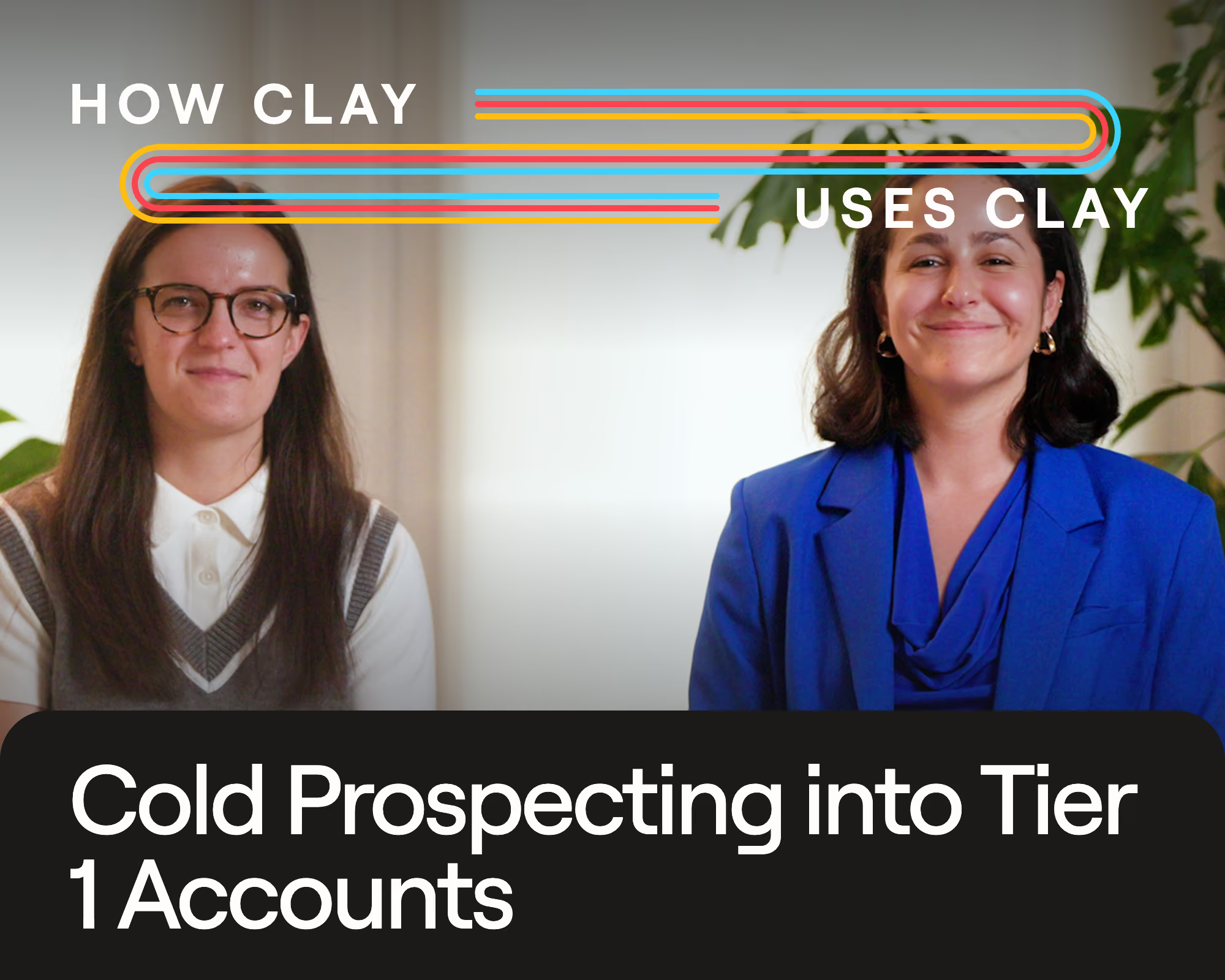
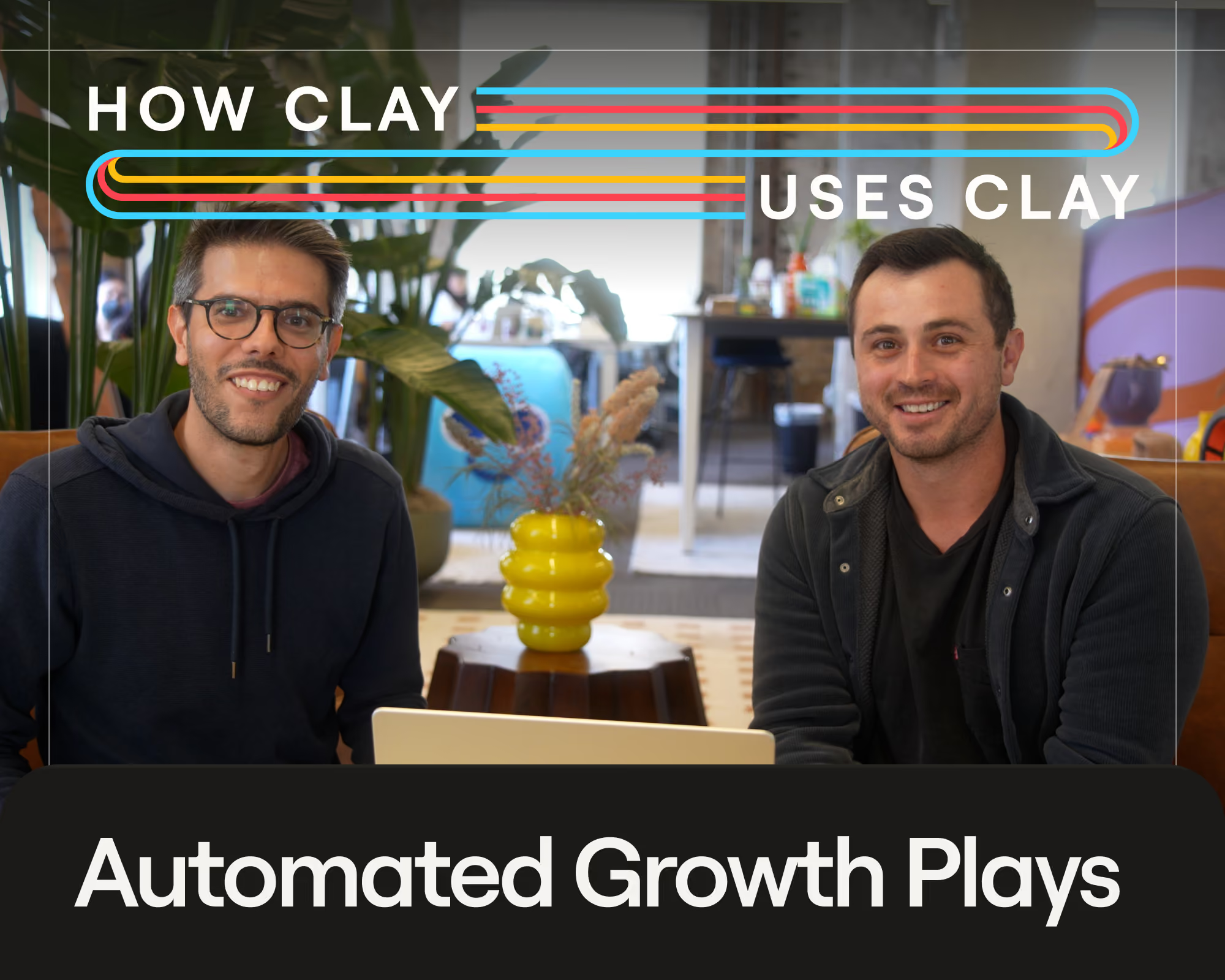
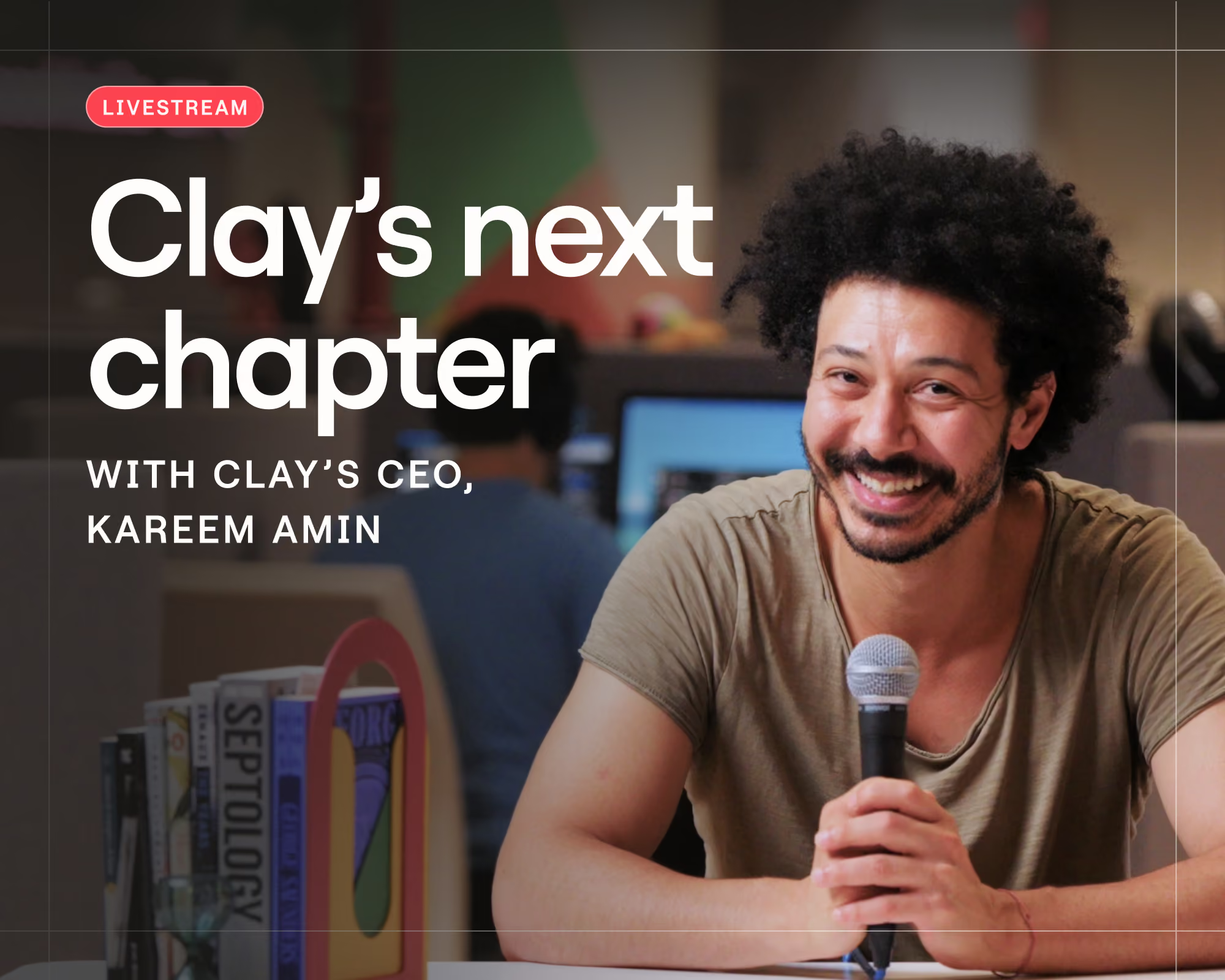
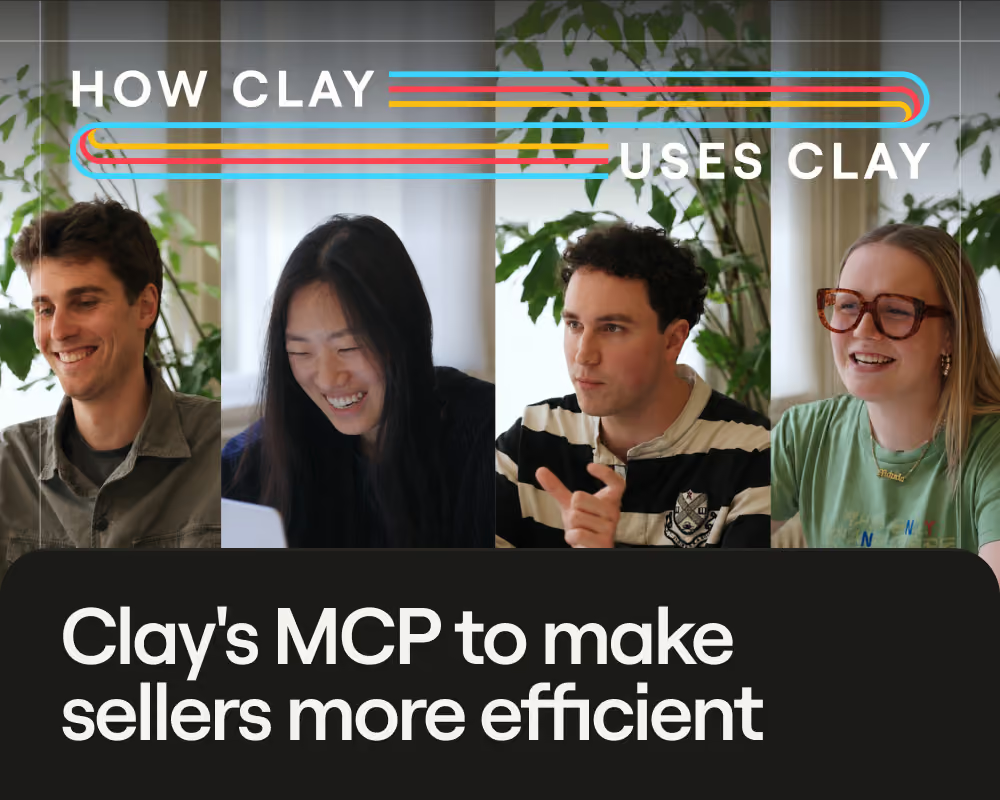
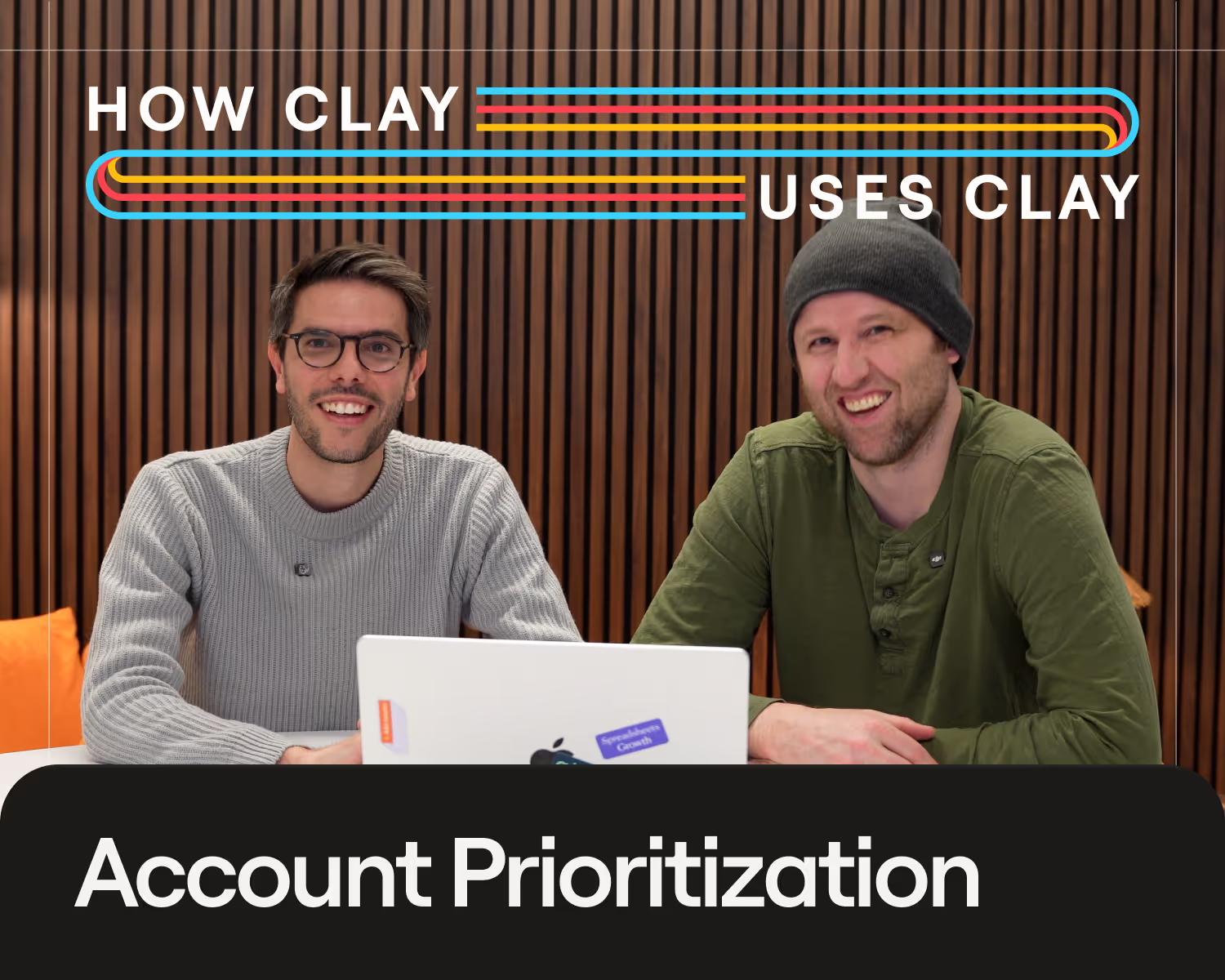
Want to see how these builds work from the inside? Watch How Clay Uses Clay Episode 8 for a live walkthrough of the tables and architecture behind each of these plays.
.avif)










.avif)



.avif)













.avif)














.avif)