Clay MCP turns Clay into a context layer that LLMs can interact with. That means sellers can access Clay’s prospecting, enrichment, and message generation capabilities inside the AI tools they use every day.
As of today, Clay MCP is available in OpenAI’s Codex. Clay MCP originally launched in December within ChatGPT and has since launched in other AI chat tools.
Search for Clay in Codex Plugins to get started.
With Clay MCP, reps use the same GTM infrastructure as their ops team
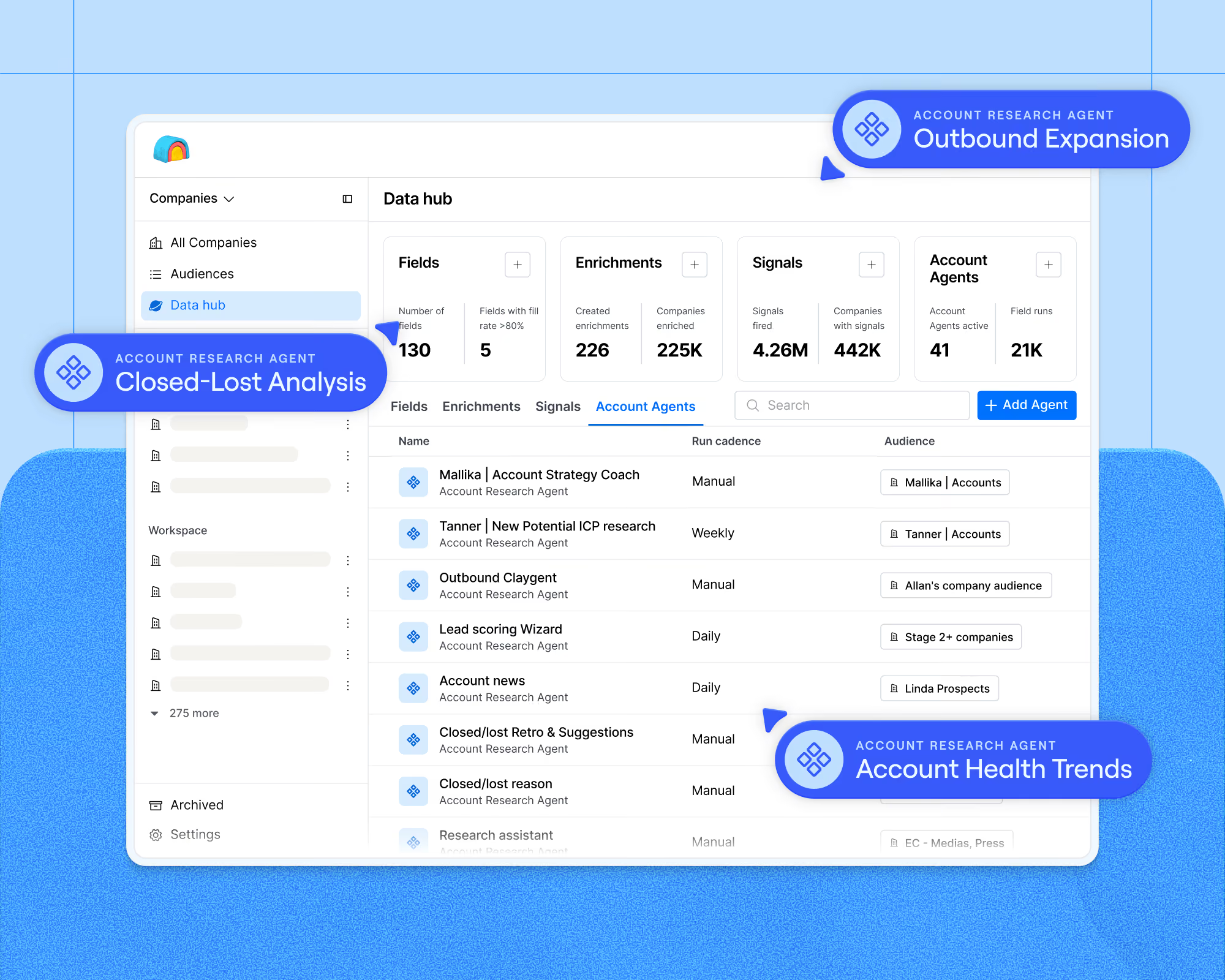
Clay is the infrastructure that companies use to source data to build a unified GTM data layer, orchestrate plays, run agents, and ultimately take action to drive revenue. That action can be any kind of GTM play, from signals-based prospecting to automated inbound to ads campaigns.
With MCP, reps can tap into that same infrastructure for prospecting, account research, and meeting prep, directly in Codex or ChatGPT. They can access Clay's data marketplace or call any function their ops team has built for them, without leaving the AI tools they already work in. Sellers get the full context of an account, and ops can trust the data stays clean and current.
Picture a seller starting their day in Codex. They can ask for their top accounts to prospect, pull contact info on the spot, research each account to know exactly what to say, use their company's messaging to draft copy for each prospect, and trigger the email to send. It all happens in one place, grounded in the same data and definitions the rest of the company works from.
Clay + Codex makes reps more effective
With Clay MCP in Codex, GTM teams get the best of both worlds: centralized GTM processes and reps have the power to experiment and move quickly on their own.
First, sellers get better data. Clay has already organized a company's go-to-market data in one place, so Codex can pull every relevant signal right away, without stitching things together one tool at a time or running one-off web research.
Second, ops keeps control. Instead of reps building their own one-off Codex flows, ops can publish standard functions so every rep follows the same proven workflow by default, whether that's enrichment, scoring, routing copy to sequencers, or updating CRM fields. Ops controls the parts that should stay consistent across reps, and reps stop redoing work that's already been figured out.
Every rep benefits as the GTM system improves
When ops teams improve their data or plays, every rep using Codex or ChatGPT picks up those changes automatically through Clay MCP. If ops updates the definition of mid-market versus enterprise, every rep uses that new definition in Codex. If ops adds Gong to Clay, every rep can immediately query their own call transcripts in Codex, with no setup on their end.
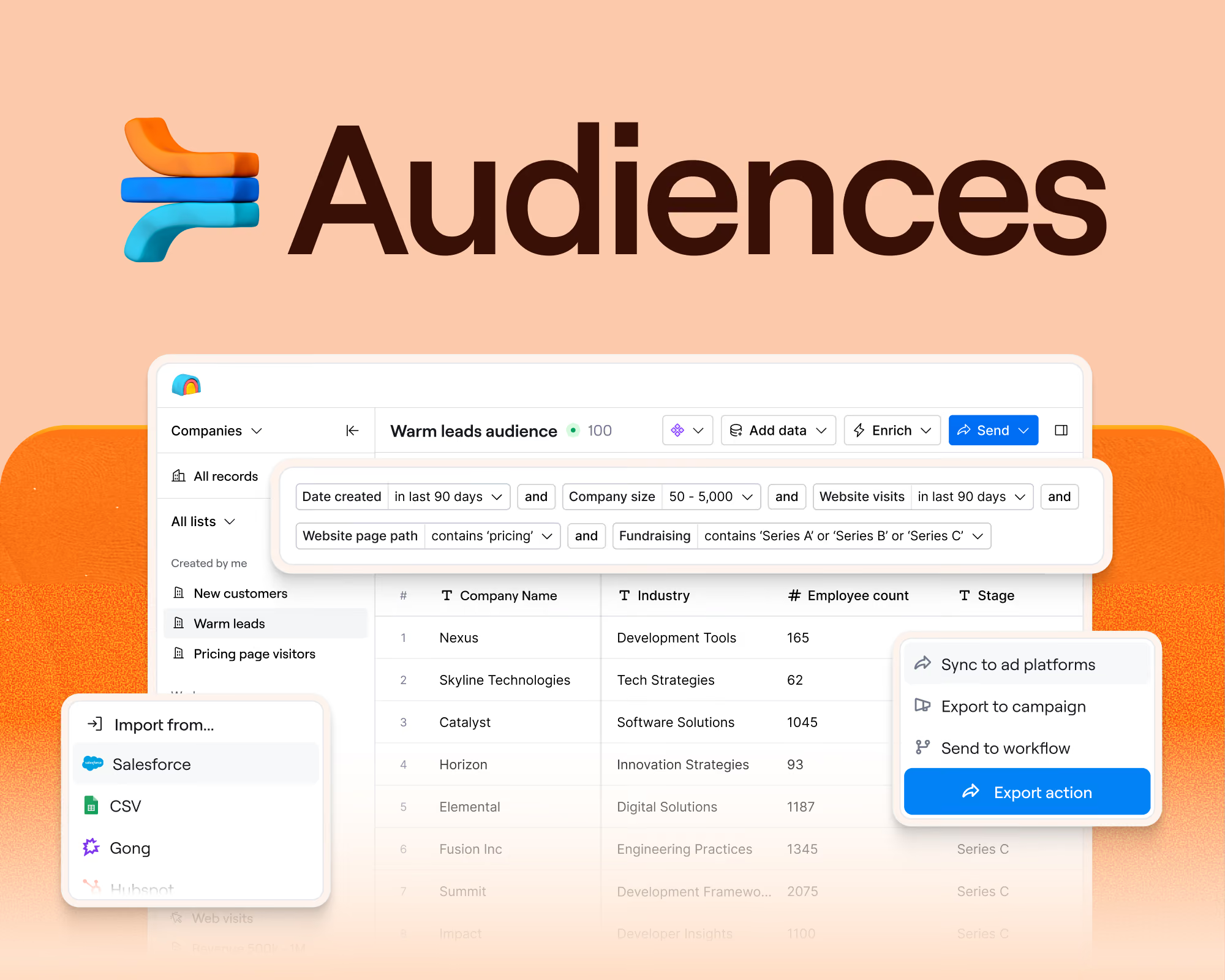
It works the other way too. Work that reps do in Codex or ChatGPT feeds back into the central system. When a rep uses Codex to find a prospect's phone number through Clay MCP, that number gets saved to Audiences in Clay. From there it can sync to the CRM. The next time anyone needs it, Clay MCP pulls the saved number instead of paying to enrich it again.
Clay is built for ops teams that manage governance at scale, and that governance carries into MCP. Ops can give reps access to all of a company's GTM context, or limit them to data tied to their own accounts in Salesforce. They can set a budget for each rep so no one runs up unexpected enrichment costs. They can turn specific functions on or off per rep. For example, they might let AEs trigger direct mail workflows but not BDRs.
The result is that ops teams can give sellers new tools like Codex without giving up control over the GTM processes and data standards they've worked hard to build. Sellers get the best information to prospect and close deals, and they spend more time selling and less on grunt work.
MCP in Codex is one of many ways Clay brings AI to your GTM
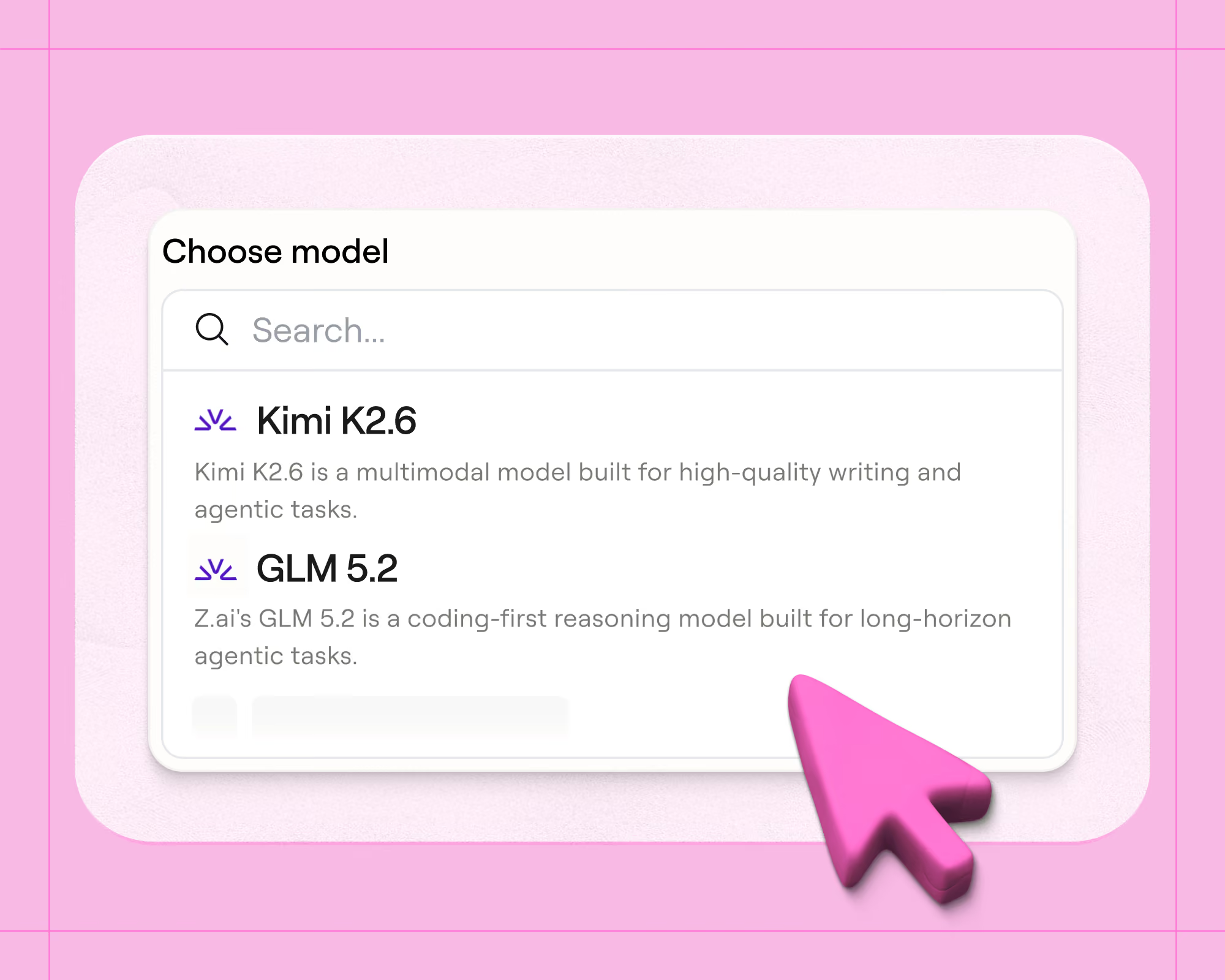
Whether you're using Clay's MCP in Codex or ChatGPT, or building Claygents in Clay on top of OpenAI models to do web research, write outbound copy, or surface new ways to engage your priority targets — Clay is the best way to build AI into your GTM infrastructure.
With Clay, agents have access to all of the first and third party data and the logic that's specific to your GTM motion. That delivers better results at every step. And because everything runs on common infrastructure, a change at one point of the system ripples downstream — compounding the impact of every improvement.
Get started
Clay MCP is in open beta for all enterprise customers and select self-serve customers. Open beta customers can start using Clay in Codex from Plugins. For more info or to get access, reach out to your Clay point of contact.
.avif)

.avif)


.avif)






.avif)



.avif)












.avif)













.avif)