

























Close
Thank you! Your submission has been received!
Oops! Something went wrong while submitting the form.
We couldn't find anything for that query...

The four layers of winning GTM infrastructure

Author
Author
Kareem Amin
Date
Jun 24, 2026

Two years ago, we coined the term GTM engineer to denote people who use automation to remove the bottlenecks to a company’s growth.

Early GTM engineers automated list building, sales research, and outbound messaging, which were the most obvious drains on sellers’ time. But their scope quickly expanded to tackle any bottleneck: automating call prep, account research, event invites, and more. 

The GTM engineering role has exploded beyond our wildest predictions. Hundreds of job postings go live each month, including at companies like OpenAI, Notion, Cursor, and more. The function has expanded beyond growth and RevOps to include marketing, CX, and even data engineering. Technological advances unlock more impactful work — AI Agents can now work 24/7 on unstructured goals, like building your TAM or re-engaging closed lost accounts. 

Every GTM motion is unique, but the best GTM engineering infrastructure shares the same building blocks. These help teams grow faster and more efficiently over time, building a culture of scientific experimentation in growth.

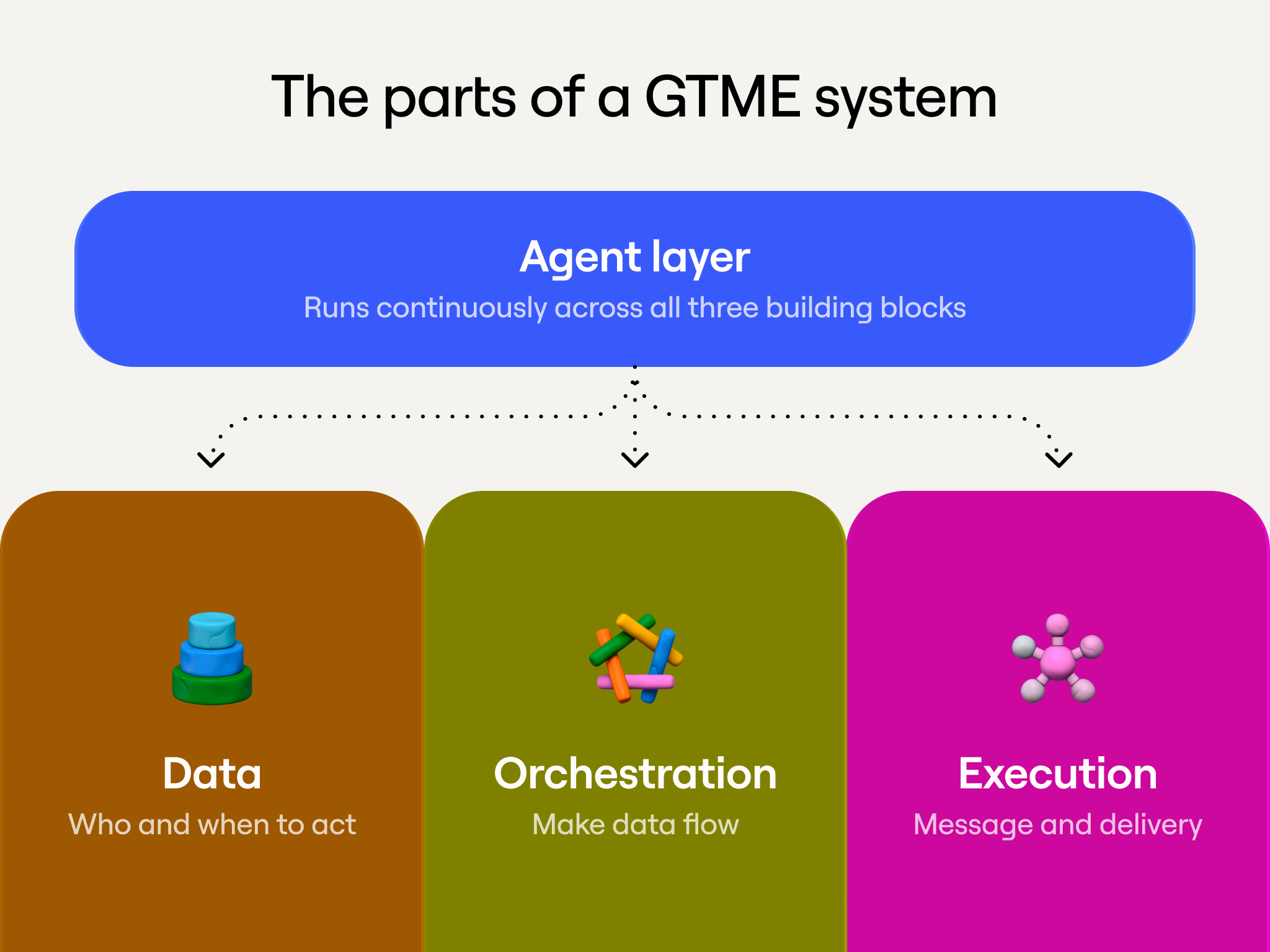
The parts of a GTME system

GTME systems have always shared three building blocks: data, orchestration, and execution. Those are now tablestakes. The best teams are adding a layer on top of that: agents. 

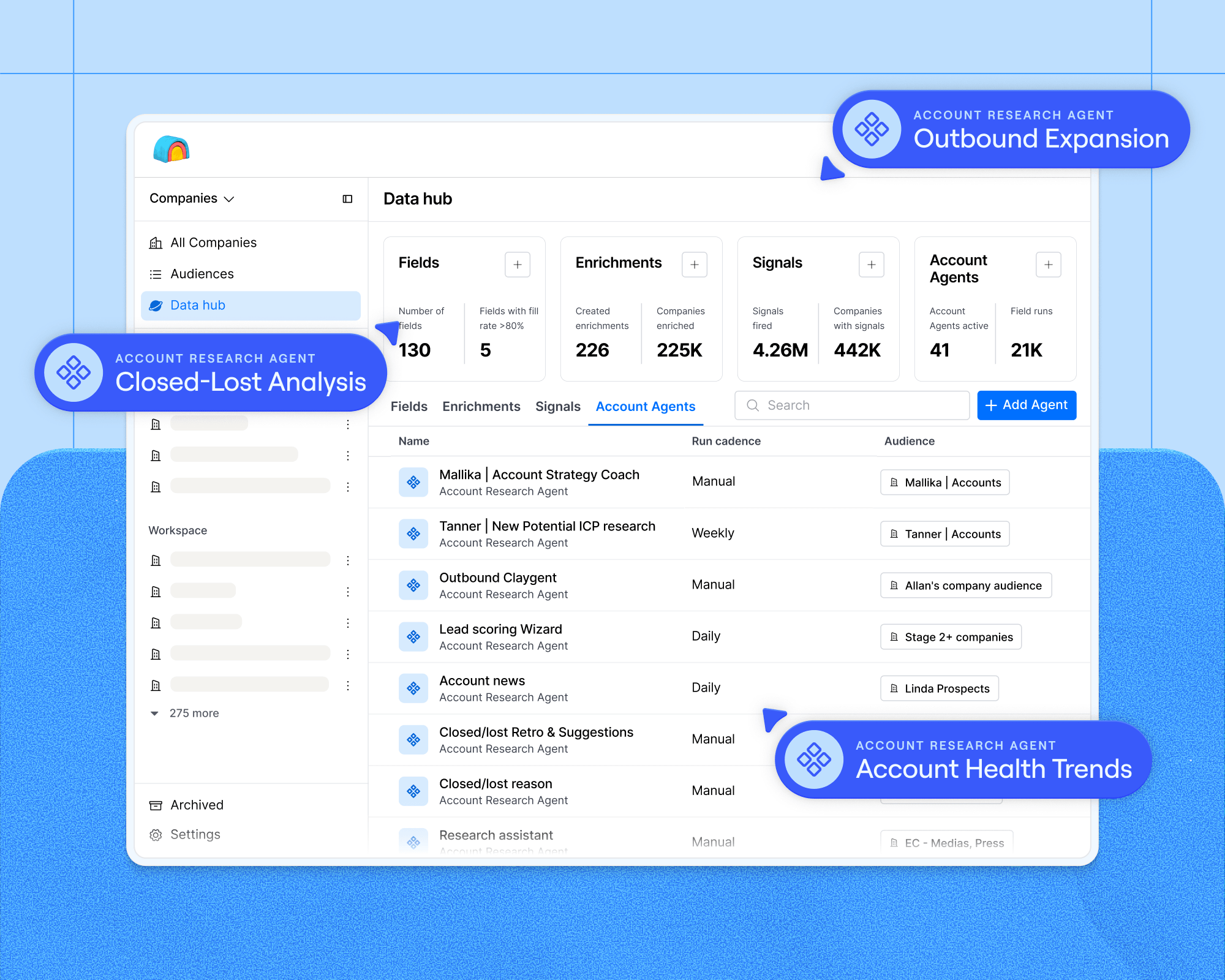
So far, GTM teams have used AI mostly for research, analysis, and writing. Agents go beyond that by tackling non-deterministic goals instead of running rules. A workflow fires when a specific signal hits, whereas an agent watches a set of accounts, decides on its own what's worth acting on, and chooses what to do.
1. Data foundation — a GTME’s top priority  

Everything in a GTM engineering system depends on building a strong data foundation: without it, nothing downstream will work. 

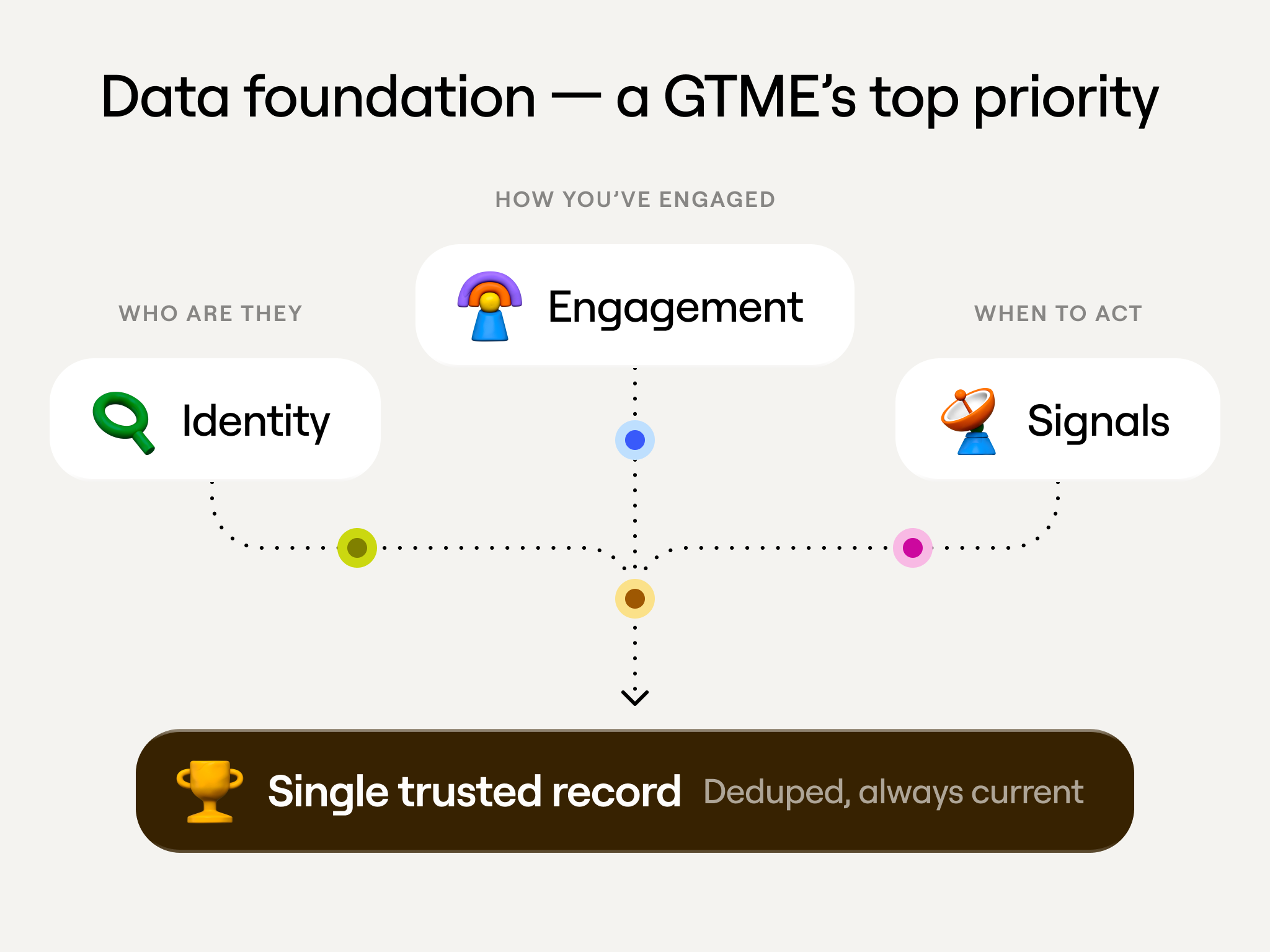
The data that matters beyond that depends on your sales motion, but it generally falls into three categories:

  • Identity: firmographics, tech stacks, and contact information drawn from hundreds of providers
  • Engagement: CRM records, product usage, call transcripts, and the organizational context behind decisions — the VP who approved a discount, the Slack thread that led to an escalation. 
  • Signals: job changes, funding events, and other time-sensitive triggers that tell you when to act.

Basic contact information, firmographics, and technographics remain tablestakes. Winning teams are using AI to unearth niche, creative data points — from counting the number of parking spots in a lot to estimate warehouse size to scanning the web for brand misalignments.
2. Orchestration

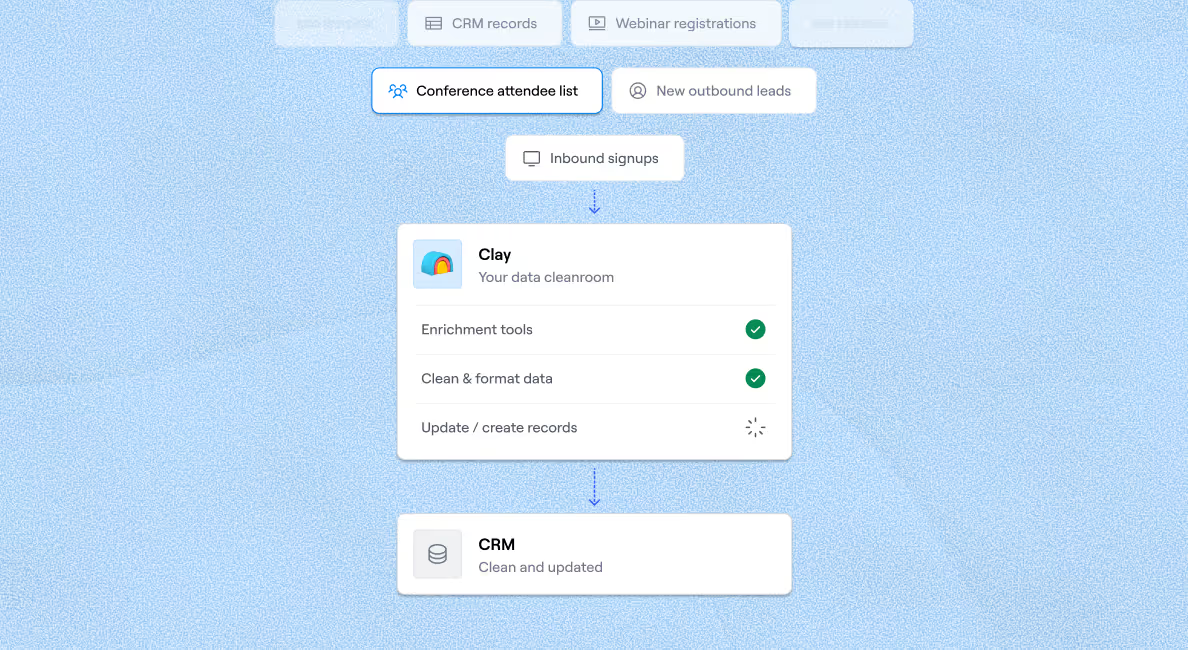
Sourcing data is only half the job. The other half is enriching records with the right data points and transforming them into clean, usable form. Most CRMs are a mess of duplicate and stale records. Until GTMEs clean them down to a single trusted record per entity, nothing downstream works the way it should.

The second job of a GTM engineer is to clean, maintain, and flow data well: syncing records across your stack, routing leads to the right rep, and keeping everything updated.

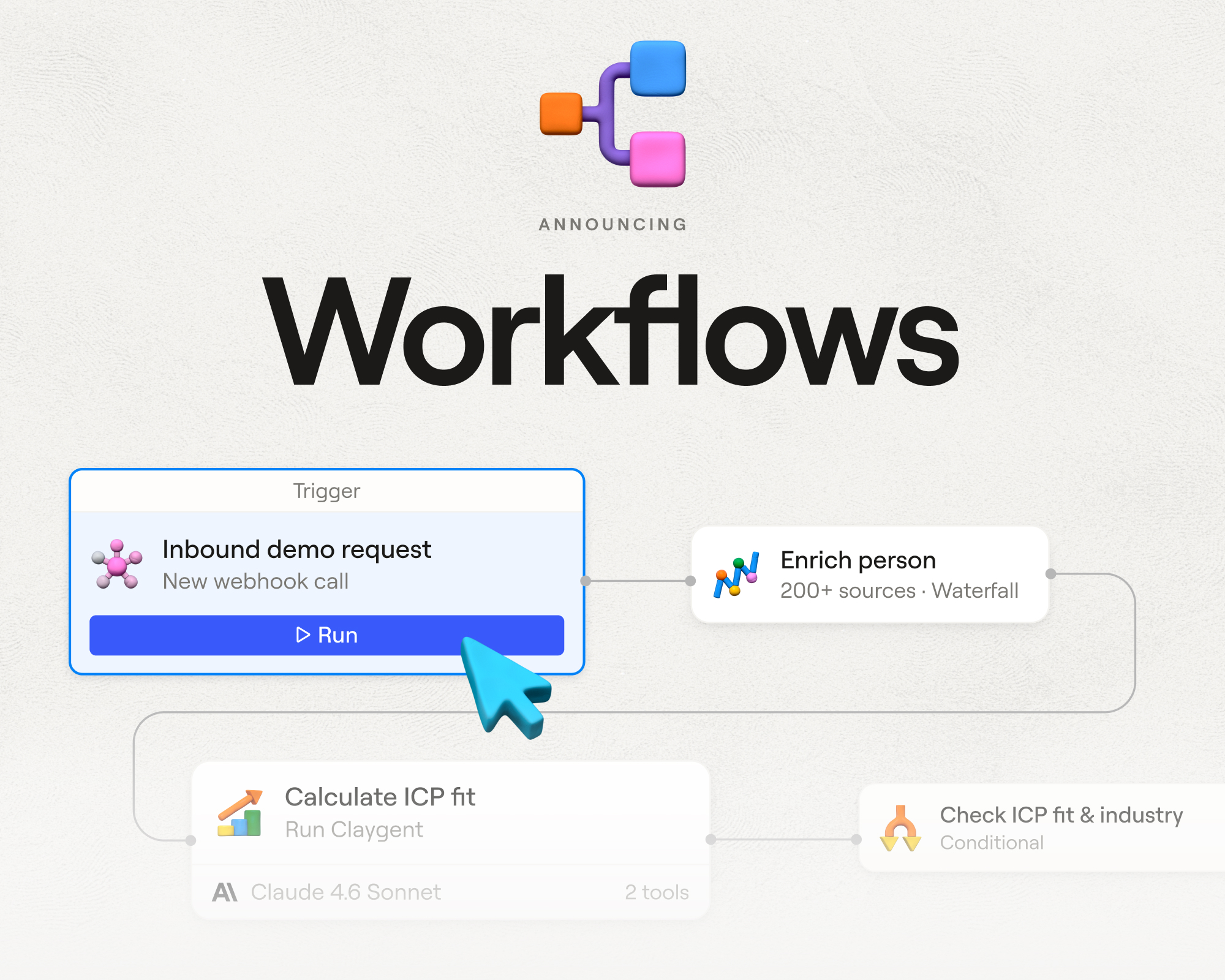
Orchestration means an inbound lead can be enriched, qualified, and emailed in minutes, with a call task automatically assigned to a seller, cutting speed-to-lead from hours to minutes. Without it, each of those steps (enrichment, qualification, email response, assignment, notification) happens manually, in different places, by different people, often hours apart, so reps lose context and data goes stale.

Over the last year, GTM engineers have automated many of the slow, load-bearing tasks in their organizations, sharply dropping the administrative tax on sales and marketing.

3. Execution 

All of that data and orchestration exists to produce action: getting the right output in front of the right person at the right time. Execution is the work of generating that output and delivering it on the right channel, whether a human, a workflow, or an agent triggered it.

The output category has expanded well beyond outbound messages. GTM engineering systems now produce QBR decks, personalized landing pages, ads, and internal Slack alerts that route signals to the right rep, all from the same underlying data.

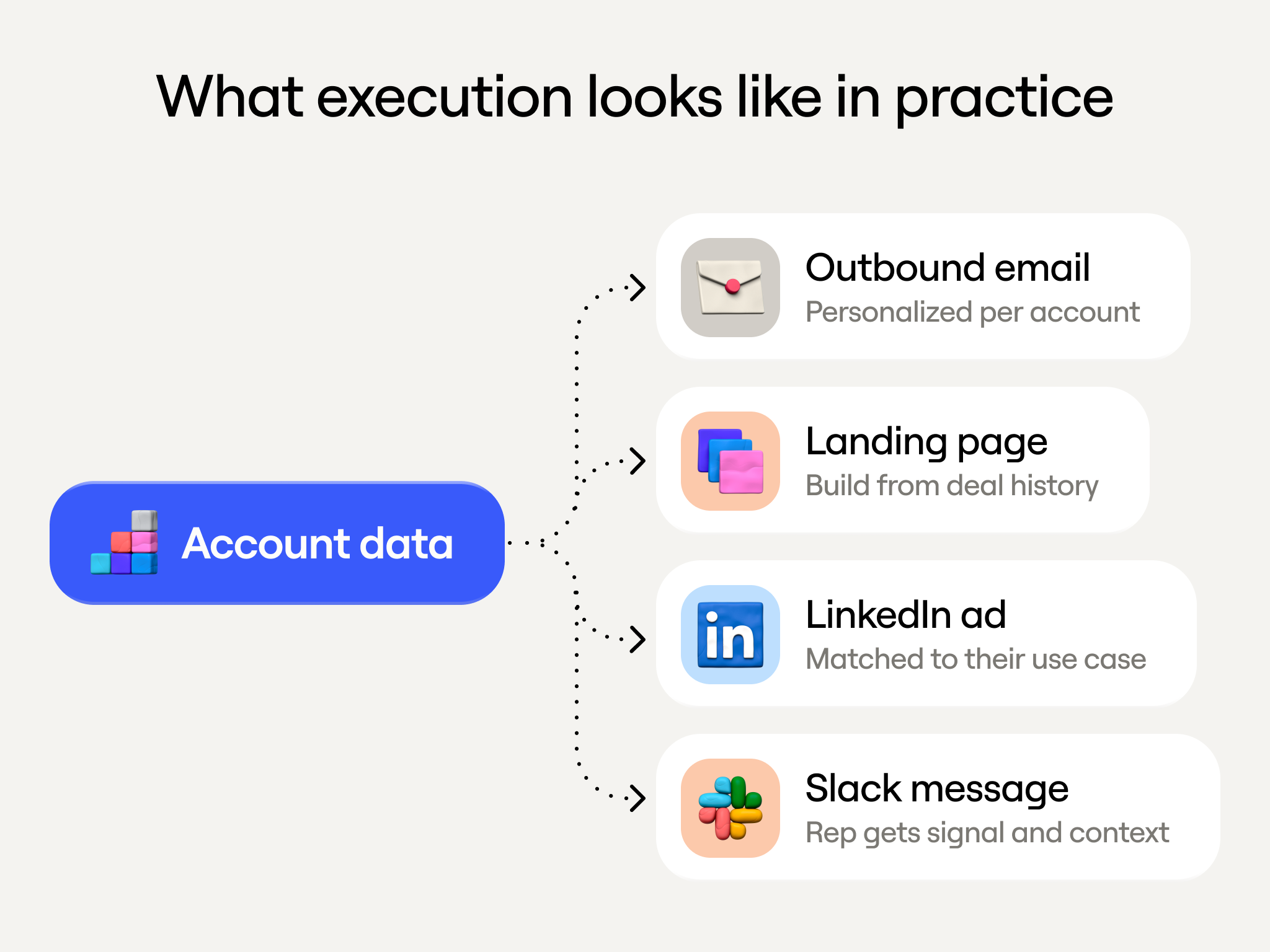
A few examples of what execution looks like in practice:

  • A prospect at a target account visits your pricing page. A Slack message goes to their rep with that signal, the account context, and a suggested next step so they can follow up on the quote they shared a few days previously.
  • An outbound prospect gets a personalized email referencing an initiative they ran at their last company they likely want to recreate at their new job.
  • A rep gets a personalized landing page generated from the account's history, objections, and use case.
  • A CX team gets a generated quarterly business review pulled from product usage, support history, and account health data.
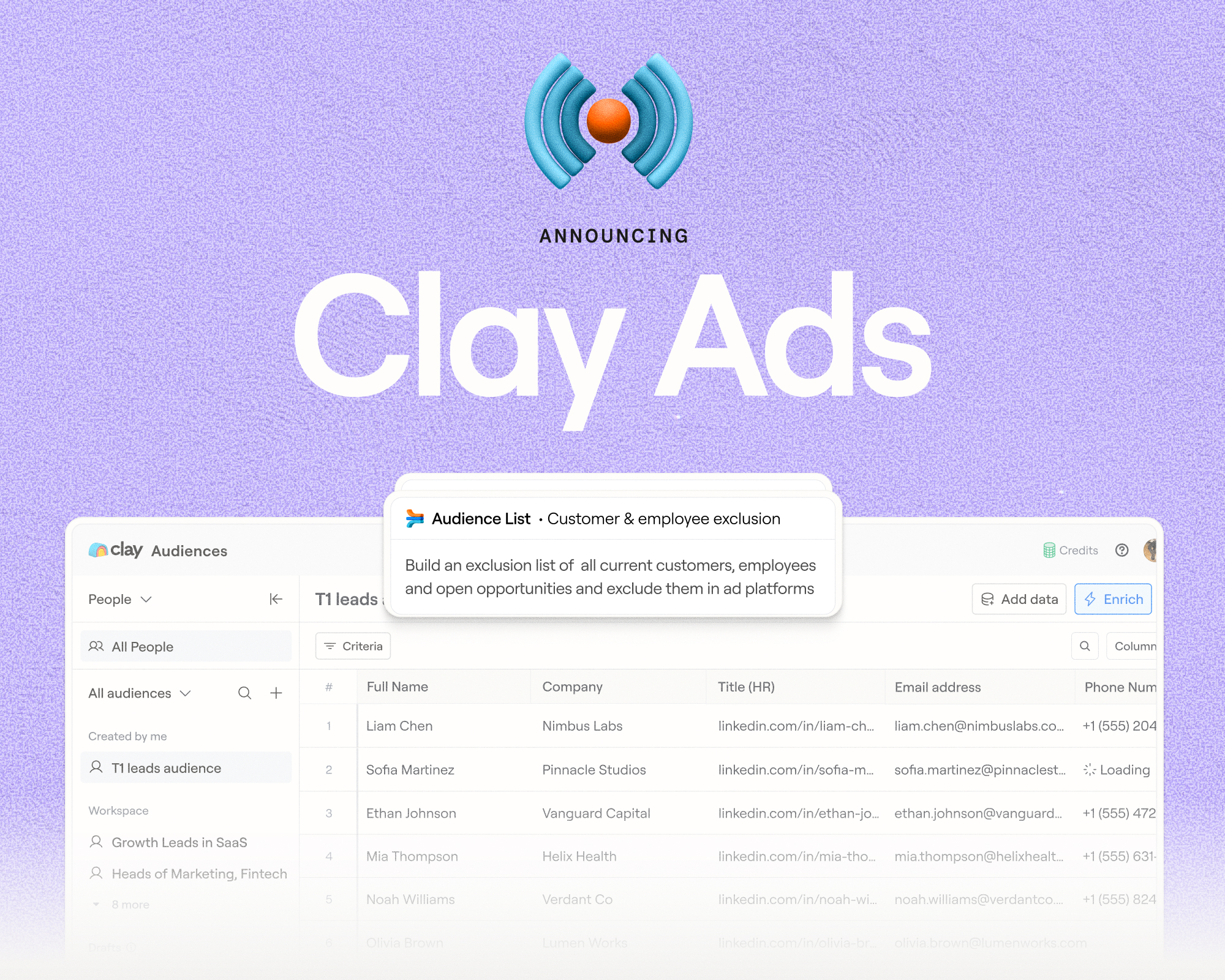
  • An enterprise prospect starts seeing a LinkedIn ad that speaks directly to their company's use case, generated from the same account context in the system.

The underlying data is the same in each case. What changes is who receives it, what form it takes, and where it gets delivered.
The future of GTM Engineering: the agent layer

The first three blocks produce outputs when something tells them to. Someone, usually a GTM engineer writing conditional logic, has to decide in advance what should trigger what (“if this signal fires, send this message.”) 

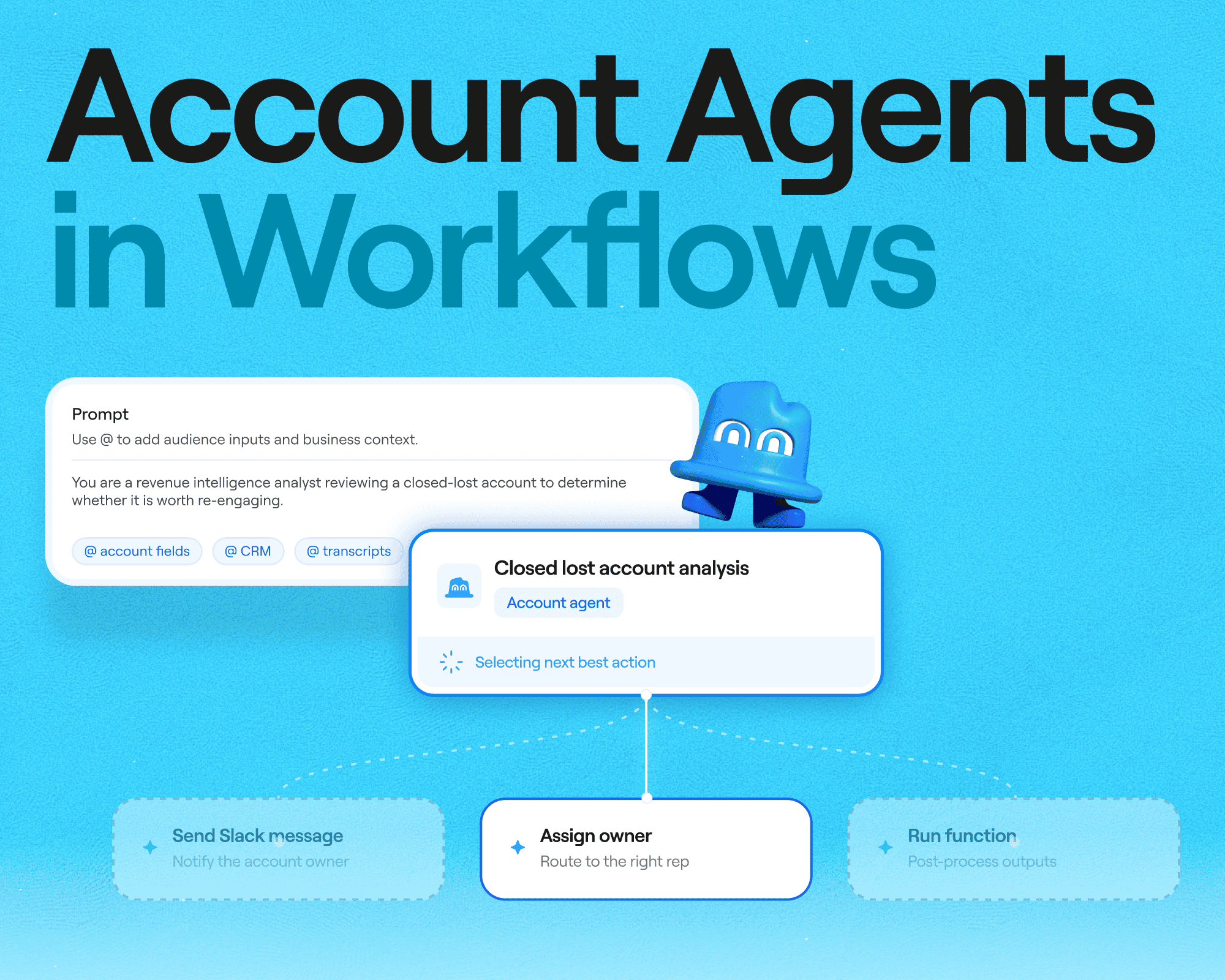
Agents take over that decision-making. Instead of following set rules, an agent holds a goal and figures out on its own what to do, when, and for which accounts.

In the next phase of work, GTM engineers will design agents that can autonomously handle abstract goals. 

A few examples of what agents can own:

  • A TAM list builder that finds and scores companies matching your ICP, adds new fits, removes bad ones, and flags accounts showing buying signals.
  • A closed-lost watcher that monitors churned accounts and triggers re-engagement when something relevant changes, like a new budget cycle or a product gap you've since filled.
  • A call prep agent that makes briefs pulled from deal history, recent signals, and account health data — generated before every call without anyone building the report.
  • An account routing agent that watches for when a key contact leaves a target account, updates the record, and re-routes the account to the right rep. If the champion lands somewhere else in your ICP, the agent flags the new company as a warm opportunity.

Agents make the institutional knowledge and creativity of your best reps available to your entire team, 24/7.

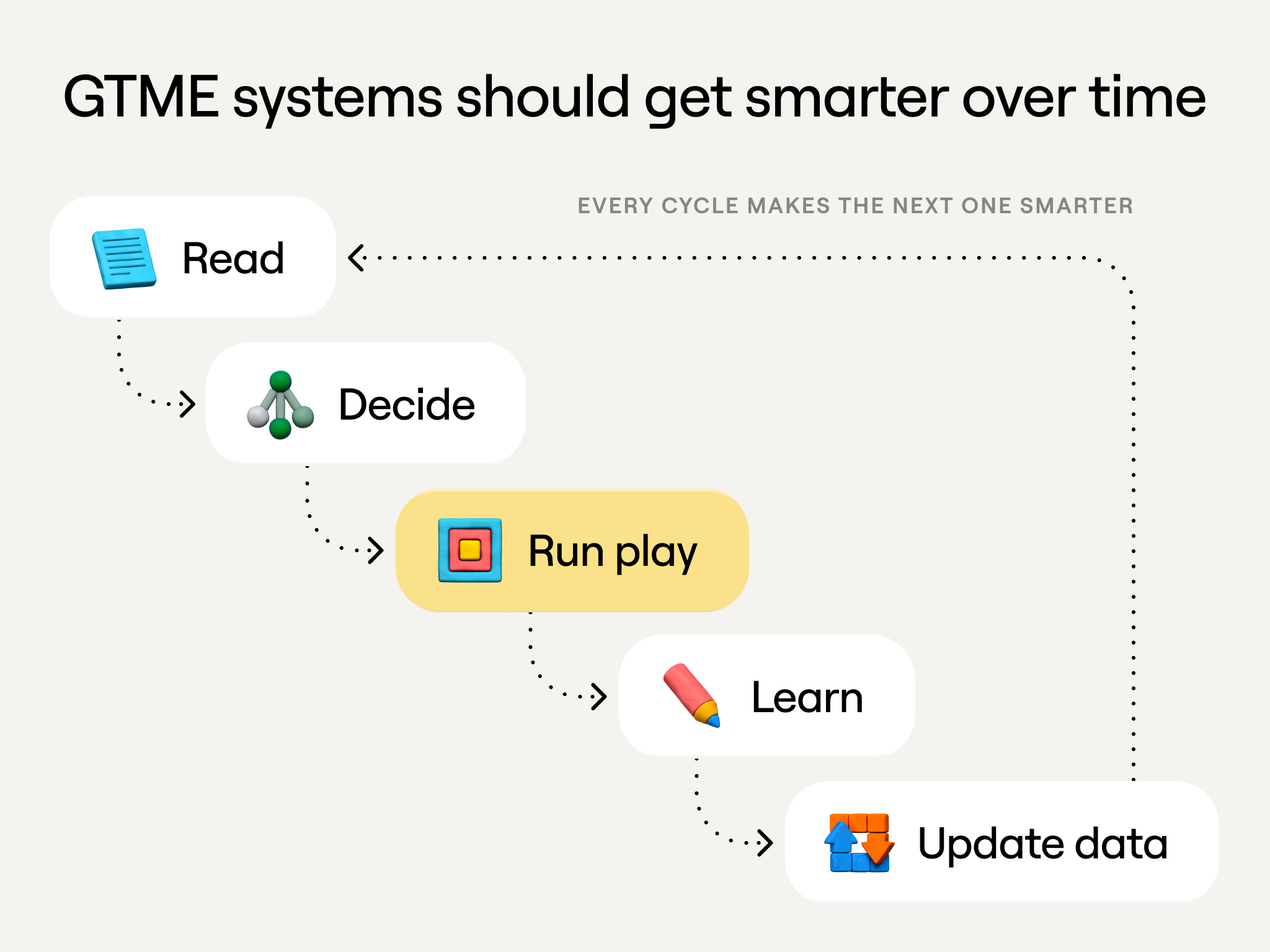
GTME systems should get smarter over time

The best GTM engineering systems improve as they run, because the people behind them are constantly tuning what's working. Every closed deal and email flow provides new data, like which signals preceded the win and which messages got responses. GTM engineers take those and update systems so the next play works better than the last.

Agents push this further. As an agent runs, it gets better at the goal it was given, refining which accounts it prioritizes and which messages it picks. The agent sits upstream of everything else: it decides which accounts to act on, what to send, when to send it. When the agent gets better at those decisions, every output downstream of it gets better automatically, without a human rewriting the workflow. Individual tools save time. A system with agents on top compounds.
How teams are building on Clay

Clay is the infrastructure for GTM engineering — teams build their GTM motions on Clay the way engineers build software on cloud infrastructure. The building blocks are composable, and we see teams combine them into whatever system their business needs.

Intercom grew outbound pipeline 140% by combining support team size, hiring signals, cloud technographics, and web intent into a continuously refreshed view of accounts that scores and prioritizes in Salesforce.

Klaviyo enriches >900K records in Salesforce and Snowflake continuously, routing job change signals into rep alerts and using Audiences to source, score, and sync new accounts automatically.

Rippling doubled cold email performance by testing messages, signals, and personalization approaches systematically.

OpenAI prepares reps for every sales call automatically with an agent that pulls prospect bios, recent company changes, and earnings reports into a brief before each meeting.

Vercel allows reps to query information about accounts on Slack, powered by Clay. An agent picks the right workflow to run, checks Salesforce, LinkedIn, and web research as needed, then returns the answer.

Clay is rarely the only tool in a GTM engineer's stack. Teams also reach for Claude Code, n8n, and others depending on what they're building. What makes Clay the foundation is the data layer. Audiences gives you a unified, resolved view of your entire TAM that everything else can plug into.

The compounding advantage

GTM engineering is moving fast, and the gap between teams building systems and teams running plays is widening. 

Every team now has access to the same models, data providers, and automation tools. Those pulling ahead use a system that picks up signals quickly and gets sharper with every play it runs, with better data and in a way that compounds over time. Clay is the infrastructure to build it. If you want to see what that looks like with your own data, talk to us.

Two years ago, we coined the term GTM engineer to denote people who use automation to remove the bottlenecks to a company’s growth.

Early GTM engineers automated list building, sales research, and outbound messaging, which were the most obvious drains on sellers’ time. But their scope quickly expanded to tackle any bottleneck: automating call prep, account research, event invites, and more. 

The GTM engineering role has exploded beyond our wildest predictions. Hundreds of job postings go live each month, including at companies like OpenAI, Notion, Cursor, and more. The function has expanded beyond growth and RevOps to include marketing, CX, and even data engineering. Technological advances unlock more impactful work — AI Agents can now work 24/7 on unstructured goals, like building your TAM or re-engaging closed lost accounts. 

Every GTM motion is unique, but the best GTM engineering infrastructure shares the same building blocks. These help teams grow faster and more efficiently over time, building a culture of scientific experimentation in growth.

The parts of a GTME system

GTME systems have always shared three building blocks: data, orchestration, and execution. Those are now tablestakes. The best teams are adding a layer on top of that: agents. 

So far, GTM teams have used AI mostly for research, analysis, and writing. Agents go beyond that by tackling non-deterministic goals instead of running rules. A workflow fires when a specific signal hits, whereas an agent watches a set of accounts, decides on its own what's worth acting on, and chooses what to do.

1. Data foundation — a GTME’s top priority  

Everything in a GTM engineering system depends on building a strong data foundation: without it, nothing downstream will work. 

The data that matters beyond that depends on your sales motion, but it generally falls into three categories:

  • Identity: firmographics, tech stacks, and contact information drawn from hundreds of providers
  • Engagement: CRM records, product usage, call transcripts, and the organizational context behind decisions — the VP who approved a discount, the Slack thread that led to an escalation. 
  • Signals: job changes, funding events, and other time-sensitive triggers that tell you when to act.

Basic contact information, firmographics, and technographics remain tablestakes. Winning teams are using AI to unearth niche, creative data points — from counting the number of parking spots in a lot to estimate warehouse size to scanning the web for brand misalignments.

2. Orchestration

Sourcing data is only half the job. The other half is enriching records with the right data points and transforming them into clean, usable form. Most CRMs are a mess of duplicate and stale records. Until GTMEs clean them down to a single trusted record per entity, nothing downstream works the way it should.

The second job of a GTM engineer is to clean, maintain, and flow data well: syncing records across your stack, routing leads to the right rep, and keeping everything updated.

Orchestration means an inbound lead can be enriched, qualified, and emailed in minutes, with a call task automatically assigned to a seller, cutting speed-to-lead from hours to minutes. Without it, each of those steps (enrichment, qualification, email response, assignment, notification) happens manually, in different places, by different people, often hours apart, so reps lose context and data goes stale.

Over the last year, GTM engineers have automated many of the slow, load-bearing tasks in their organizations, sharply dropping the administrative tax on sales and marketing.

3. Execution 

All of that data and orchestration exists to produce action: getting the right output in front of the right person at the right time. Execution is the work of generating that output and delivering it on the right channel, whether a human, a workflow, or an agent triggered it.

The output category has expanded well beyond outbound messages. GTM engineering systems now produce QBR decks, personalized landing pages, ads, and internal Slack alerts that route signals to the right rep, all from the same underlying data.

A few examples of what execution looks like in practice:

  • A prospect at a target account visits your pricing page. A Slack message goes to their rep with that signal, the account context, and a suggested next step so they can follow up on the quote they shared a few days previously.
  • An outbound prospect gets a personalized email referencing an initiative they ran at their last company they likely want to recreate at their new job.
  • A rep gets a personalized landing page generated from the account's history, objections, and use case.
  • A CX team gets a generated quarterly business review pulled from product usage, support history, and account health data.
  • An enterprise prospect starts seeing a LinkedIn ad that speaks directly to their company's use case, generated from the same account context in the system.

The underlying data is the same in each case. What changes is who receives it, what form it takes, and where it gets delivered.

The future of GTM Engineering: the agent layer

The first three blocks produce outputs when something tells them to. Someone, usually a GTM engineer writing conditional logic, has to decide in advance what should trigger what (“if this signal fires, send this message.”) 

Agents take over that decision-making. Instead of following set rules, an agent holds a goal and figures out on its own what to do, when, and for which accounts.

In the next phase of work, GTM engineers will design agents that can autonomously handle abstract goals. 

A few examples of what agents can own:

  • A TAM list builder that finds and scores companies matching your ICP, adds new fits, removes bad ones, and flags accounts showing buying signals.
  • A closed-lost watcher that monitors churned accounts and triggers re-engagement when something relevant changes, like a new budget cycle or a product gap you've since filled.
  • A call prep agent that makes briefs pulled from deal history, recent signals, and account health data — generated before every call without anyone building the report.
  • An account routing agent that watches for when a key contact leaves a target account, updates the record, and re-routes the account to the right rep. If the champion lands somewhere else in your ICP, the agent flags the new company as a warm opportunity.

Agents make the institutional knowledge and creativity of your best reps available to your entire team, 24/7.

GTME systems should get smarter over time

The best GTM engineering systems improve as they run, because the people behind them are constantly tuning what's working. Every closed deal and email flow provides new data, like which signals preceded the win and which messages got responses. GTM engineers take those and update systems so the next play works better than the last.

Agents push this further. As an agent runs, it gets better at the goal it was given, refining which accounts it prioritizes and which messages it picks. The agent sits upstream of everything else: it decides which accounts to act on, what to send, when to send it. When the agent gets better at those decisions, every output downstream of it gets better automatically, without a human rewriting the workflow. Individual tools save time. A system with agents on top compounds.

How teams are building on Clay

Clay is the infrastructure for GTM engineering — teams build their GTM motions on Clay the way engineers build software on cloud infrastructure. The building blocks are composable, and we see teams combine them into whatever system their business needs.

Intercom grew outbound pipeline 140% by combining support team size, hiring signals, cloud technographics, and web intent into a continuously refreshed view of accounts that scores and prioritizes in Salesforce.

Klaviyo enriches >900K records in Salesforce and Snowflake continuously, routing job change signals into rep alerts and using Audiences to source, score, and sync new accounts automatically.

Rippling doubled cold email performance by testing messages, signals, and personalization approaches systematically.

OpenAI prepares reps for every sales call automatically with an agent that pulls prospect bios, recent company changes, and earnings reports into a brief before each meeting.

Vercel allows reps to query information about accounts on Slack, powered by Clay. An agent picks the right workflow to run, checks Salesforce, LinkedIn, and web research as needed, then returns the answer.

Clay is rarely the only tool in a GTM engineer's stack. Teams also reach for Claude Code, n8n, and others depending on what they're building. What makes Clay the foundation is the data layer. Audiences gives you a unified, resolved view of your entire TAM that everything else can plug into.

The compounding advantage

GTM engineering is moving fast, and the gap between teams building systems and teams running plays is widening. 

Every team now has access to the same models, data providers, and automation tools. Those pulling ahead use a system that picks up signals quickly and gets sharper with every play it runs, with better data and in a way that compounds over time. Clay is the infrastructure to build it. If you want to see what that looks like with your own data, talk to us.
More Articles