Clay exists to help GTM teams grow creatively and reach their full potential. What that takes has looked different at different points in our history, and it’s shifting again now. Clay is evolving into an end-to-end orchestration platform for go-to-market. We’re building a self-improving revenue engine that remembers which of your GTM efforts worked out and suggests exactly what to do next.
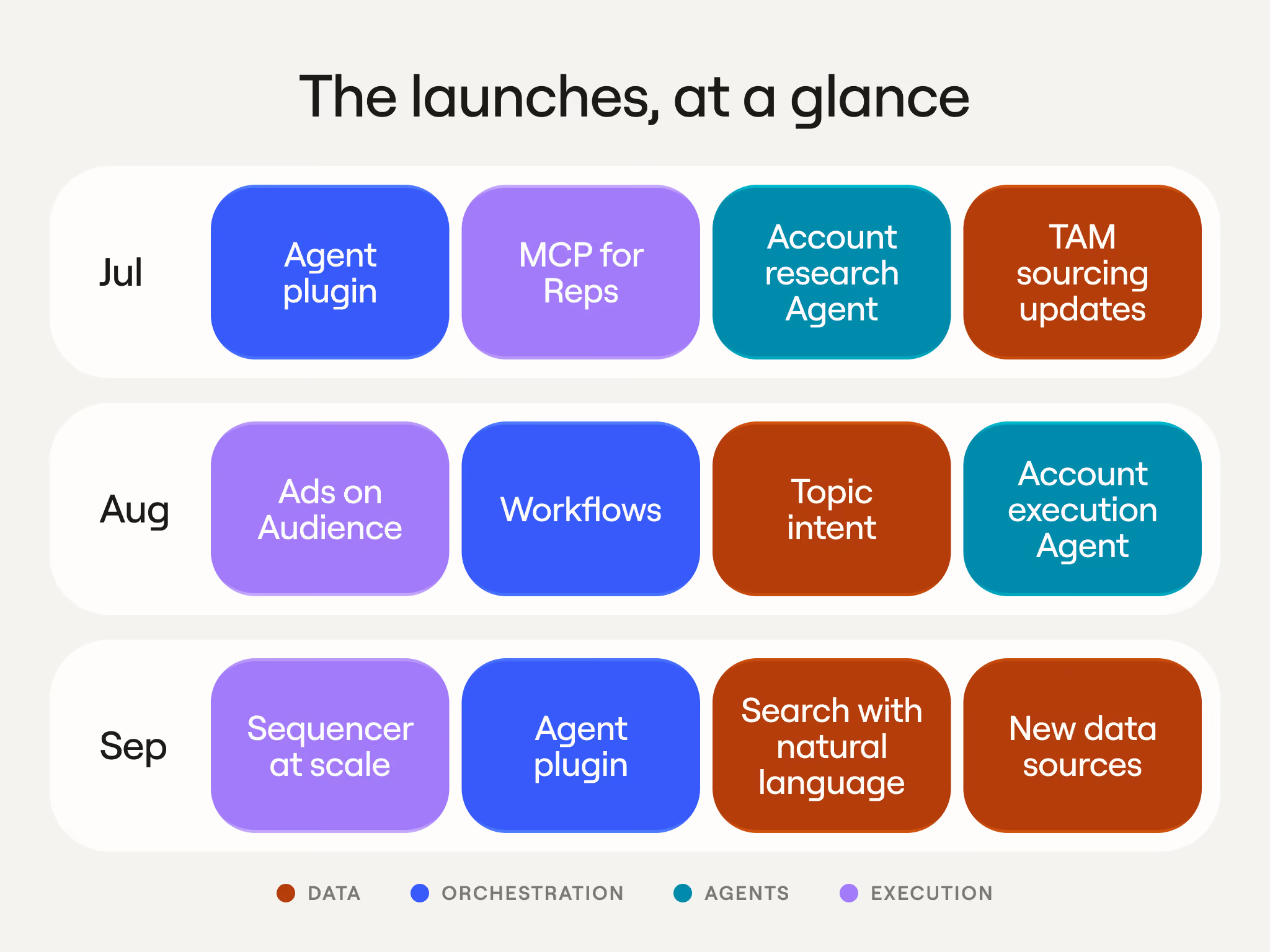
The pieces of that revenue engine are shipping now, one release at a time. We’re three weeks into Clay’s Summer of Launches. That’s 12 releases in 12 weeks, four a month, all the way through to the end of September. Week one brought the Agent Plugin, a CLI and API for building in Clay from tools like Claude Code. Week two was MCP for Reps, which puts Clay’s data and account research inside the tools reps already use. The latest arrival is the Account Research Agent, now in open beta, which keeps research current across your whole book of business by synthesizing new data as it lands in Audiences into fields that you can use to run plays. There’s plenty more on the way.
Co-founder and CEO Kareem Amin walked through our roadmap with Abbie Kouzmanoff, Weston Clarke, and Grant Empey from our product team. They previewed what’s coming, went into what it makes possible for your team, and how it will work inside the product. Watch in full, and keep an eye on our upcoming livestreams for what’s coming over the summer (and beyond).
How GTM is changing at the fastest-growing companies
From Lovable to Rippling, we work with the fastest-growing companies in the world. That means having a front row seat to how GTM is changing. GTM rewards you for finding what works, then takes it away once everyone else catches on. Winning tactics have a shelf-life, and a play performs for a while and then fades in effectiveness; the teams that stay ahead are the ones set up to find the next one instead of running a stale strategy.
What it takes for a GTM team to win has moved through three distinct stages. Two years ago, the teams with the best data won. Today, wins go to the teams that run their whole motion as one system. In the phase ahead, the winners will be the teams whose systems learn and improve on their own. Each stage builds on the one before it, and this summer’s launches are aimed at the third.

Stage 1: Data
Two years ago, the best GTM teams won by having better data than everyone else. That meant things like accurate emails and direct dials, headcount growth, funding rounds, and which tools a prospect runs on their website. We built for that era with a marketplace of over 150 data vendors, and Claygent, an AI researcher that collects nearly any data point on the open web. Data remains invaluable; it’s just no longer enough on its own.
Stage 2: GTM infrastructure
Once GTM teams had access to the best data, we noticed two things set good teams apart from great ones.
The first is creativity. When any data point is available to anyone, the advantage shifts to knowing which data point actually marks a buyer for your product. Say you sell inference. Your best signal might be machine learning engineers complaining about the cost of frontier models. No vendor sells a list like that, so you have to dream up the signal yourself, then go collect it and see whether it predicts real customers.
The second differentiator is whether a team runs one integrated GTM system or disconnected plays held together by brittle handoffs. Handoffs drop context, and an insight trapped in one tool gets used once instead of everywhere. When the whole motion runs as one system, every play feeds what it learned into the next, and small gains at each step compound. That integrated system is what Clay is today: your CRM, your data warehouse, call recordings from tools like Gong, enrichment providers, and the sequencers and ad platforms where campaigns run, all working in one place.
Stage 3: Learning loops
The third stage takes shape in the near future.
Agents will run GTM plays on their own and improve them over time. The quality of their work and what it costs will depend on just how efficiently they can retrieve context from your GTM system. An agent picking which accounts to work needs to know who your best customers are and what has worked well for them. If that information sits across disconnected tools, the agent spends time and credits reassembling it on every task. On the other hand, if it sits in one navigable system, like Clay, the agent works from complete information (with greater token efficiency).
We’re building for this in two ways.
The first is a context layer that agents can plug into and navigate. The second is purpose-built agents that identify and execute the next best play, then learn from the results to improve your plays over time. This is what we mean by learning loops. A team can run them manually today, by reviewing results and adjusting the next play. The goal ahead is for Clay to run them autonomously on your behalf.
The launches, at a glance
Our mission is to help every company grow as fast as possible and reach its full potential. Each launch this summer is a building block: together they let you assemble the revenue system that fits exactly how your company sells.
Audiences: Centralize your GTM data
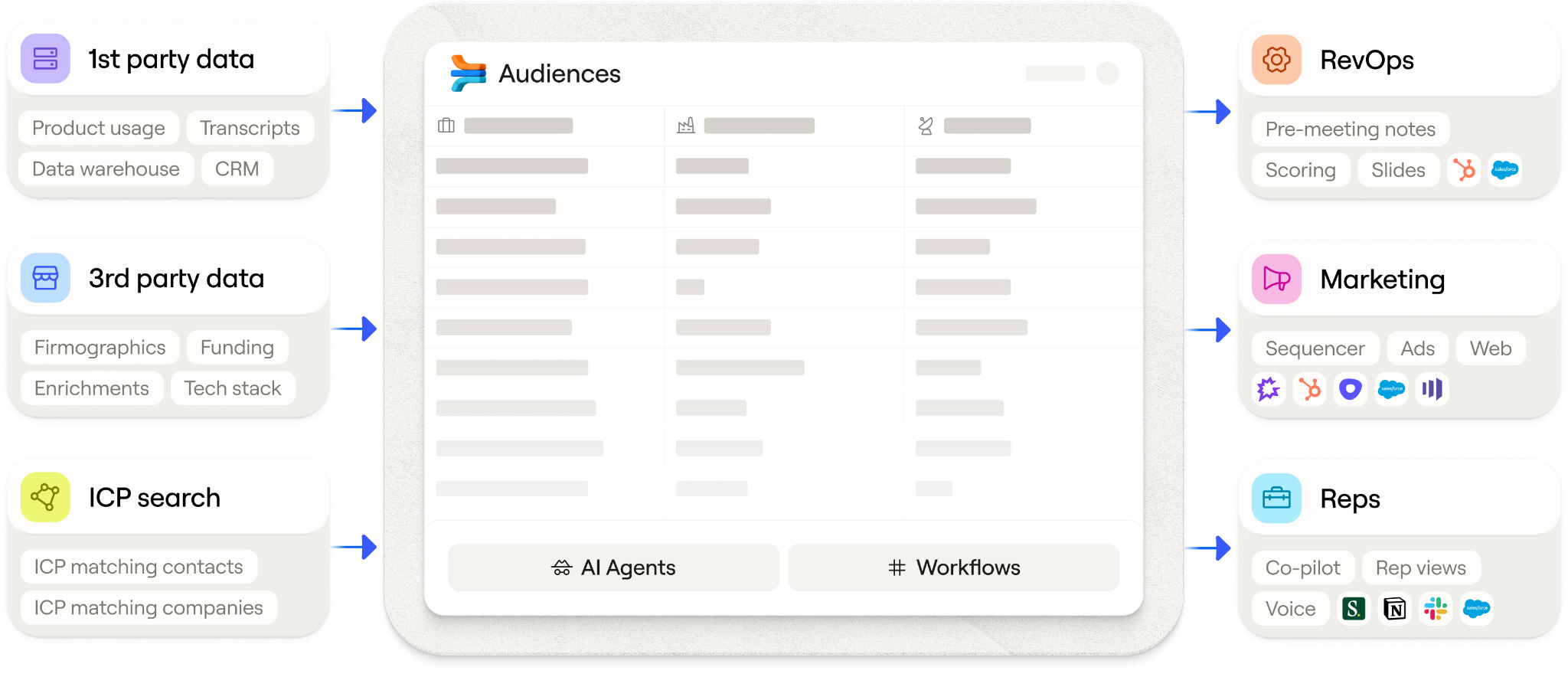
Audiences is already live, and it’s where all your GTM data comes together.
It brings your first-party data from your CRM and data warehouse into one place, with third-party enrichment from more than 150 providers, plus signals like job changes and web intent. From there, you build dynamic segments with simple filters, warm leads or re-engaged accounts, for example. Segments scale past 15 million records and refresh continuously, so there are no manual exports or outdated lists to work from.
A segment isn’t just a list to look at, either. You can activate one directly, syncing it to your sequencer or your ad platforms, and write clean, current data back to your CRM. Until now, teams stitched this together from point solutions or built it in-house, because no single product could import, enrich, segment, and activate data in one system. Audiences does all four.
Workflows: Visual, collaborative workflows that run at any scale
Workflows, in open beta this August, is a new way to build plays outside the table. Each step of a play becomes a node on a visual canvas. A trigger sits at the top, for example, a lead entering an audience segment. Below it sits everything that happens next, from enrichment steps to the conditional logic that decides where each record goes. You can follow what happens to a lead step by step, and a teammate can review or take over the play without a walkthrough. Baseten is among the teams building on it in closed beta.
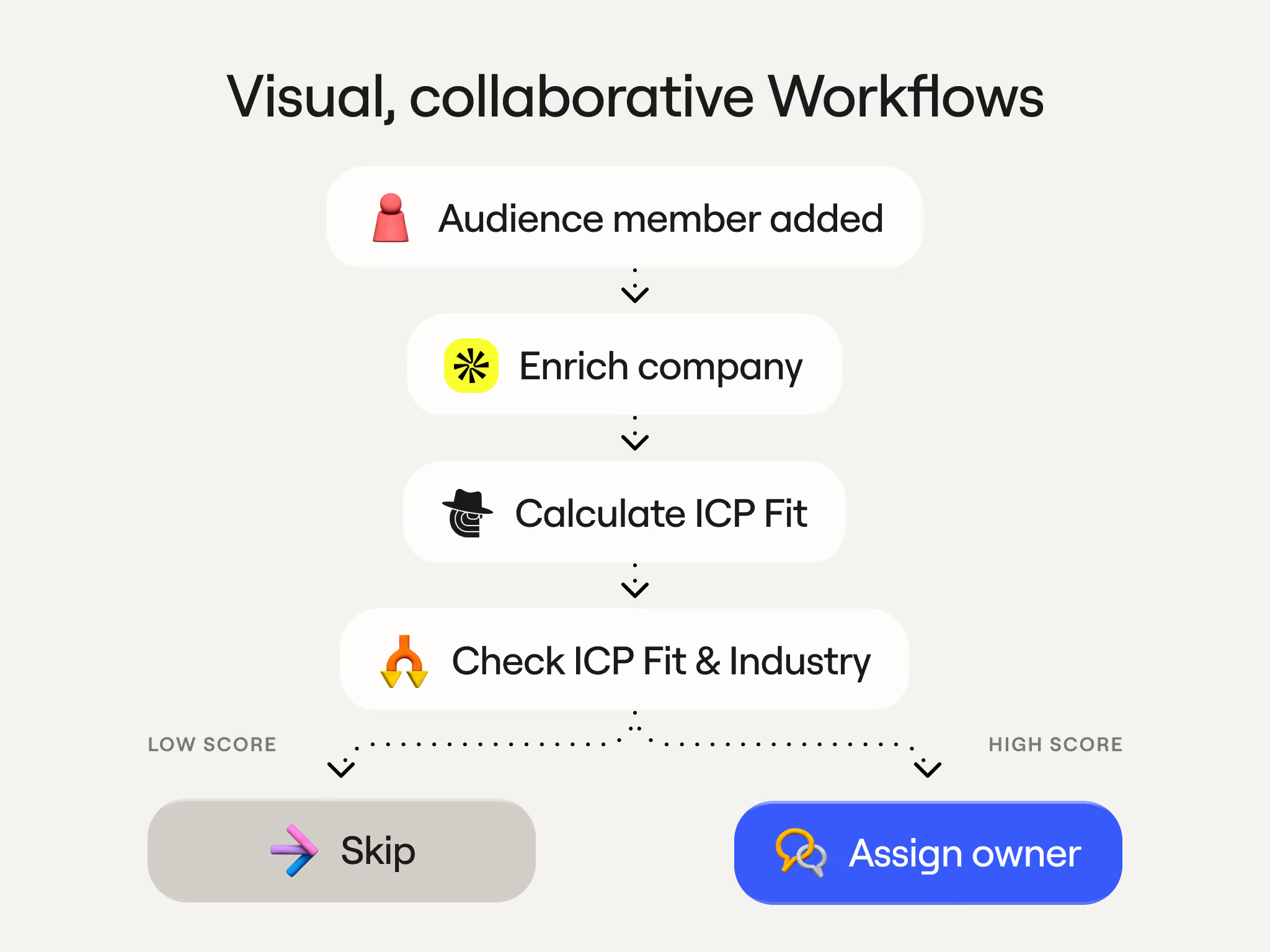
Workflows also do things tables never could. When a step is pure rules (rather than judgment), you can drop in a code node and run it as a script, which makes that step fast and economical, with the same output every time. And because Workflows runs at the same scale as Audiences, with none of the old row or cell limits, the play you build for a hundred leads works unchanged on a million.
Agents: Turn unstructured data into action
You can already build an agent for almost any GTM job in Claygent, Clay’s agent builder, by describing the task in natural language. That could mean researching companies or sorting messy job titles. What’s new this summer are purpose-built agents for the jobs nearly every team needs, with less to set up from scratch.
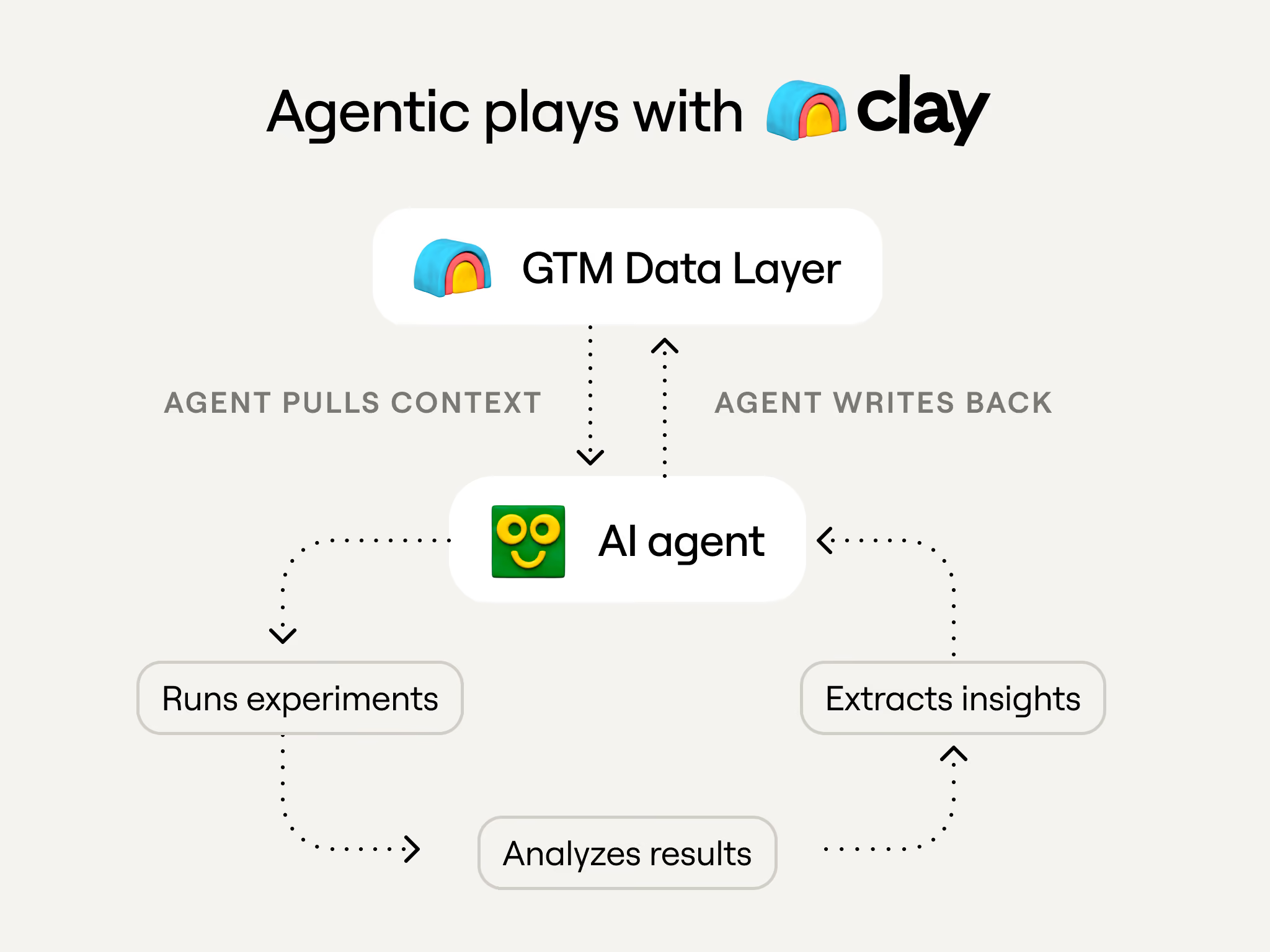
The first is the Account Research Agent, which just launched in open beta. It reads the unstructured data in Audiences, like signals and Gong transcripts, and turns it into structured fields you can write back to your CRM or use to trigger plays.
The Account Execution Agent follows in August and is already in closed beta with teams like Figma. It reads the context the Account Research Agent builds, then prioritizes your accounts and recommends the next play.
Ads and Sequencer: Build lists from first- and third-party data and sync continuously
Audiences holds the data and Workflows runs the logic, but you need a system where you can continuously take action.
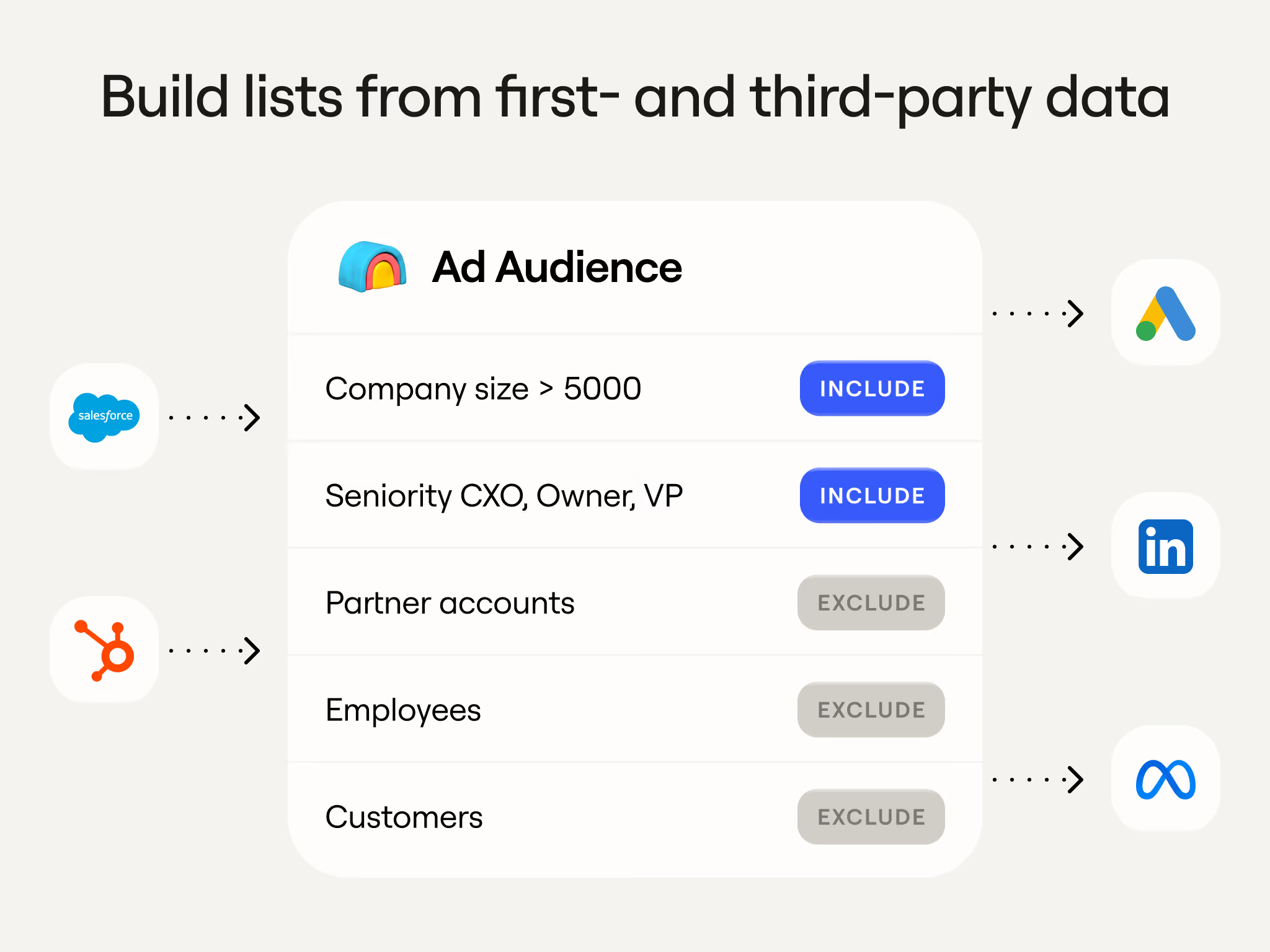
Clay Ads, GA in August for self-serve customers, help performance marketers spend ad budget more effectively by building targeted, always-on ad audiences and optimizing how those audiences match across platforms like LinkedIn, Meta, Google, Vibe, and soon Bing and Reddit. You can build dynamic, always-on ad audiences from first-party signals like intent, CRM fields, and sales activity, or use third-party data to build and refine U.S. audiences. Enhanced matching queries multiple providers and sends up to three hashed IDs per contact, raising match rates so ads reach more of your audience.
Sequencer 2.0, which arrives later this summer, turns cold outbound into one end-to-end workflow inside Clay, covering list building, lead management, copy generation, deliverability, and rep reply handling in one place. Lead lists refresh with Audiences as your data changes, agents personalize each message from your first- and third-party data instead of a generic template, and replies land with real reps right inside Clay.
TAM sourcing: Filter in natural language in search
TAM sourcing is how you find the universe of companies and people who could be your customers, beyond the ones already in your CRM. We’re rebuilding search around a simple idea: filter first, then source. You can now apply filters directly in search, so only the accounts that already match your criteria come into Clay.
Advanced search arrives next week on all plans, with natural language search and new data sources going GA in September. Topic intent signals and stronger lookalike audiences are on the way too, along with reporting that shows how much pipeline and revenue came from records that Clay sourced. And your TAM covers more than net-new logos: the same searches surface new departments and cross-sell openings inside companies you already work with.
Agent Plugin and MCP for Reps: Build on Clay without living inside it
You have access to these two: the Agent Plugin and MCP for Reps, Clay’s rep tool. Both come from the same belief: you shouldn’t have to log into Clay to use Clay. The Agent Plugin bundles Clay’s API, CLI, MCP, and skills so you can use Clay from coding agents like Claude Code, Cursor, and Codex. That covers things like sourcing your TAM from data vendors, building and enriching prospect lists, routing inbound leads, and creating new workflows in natural language, without opening Clay’s interface.
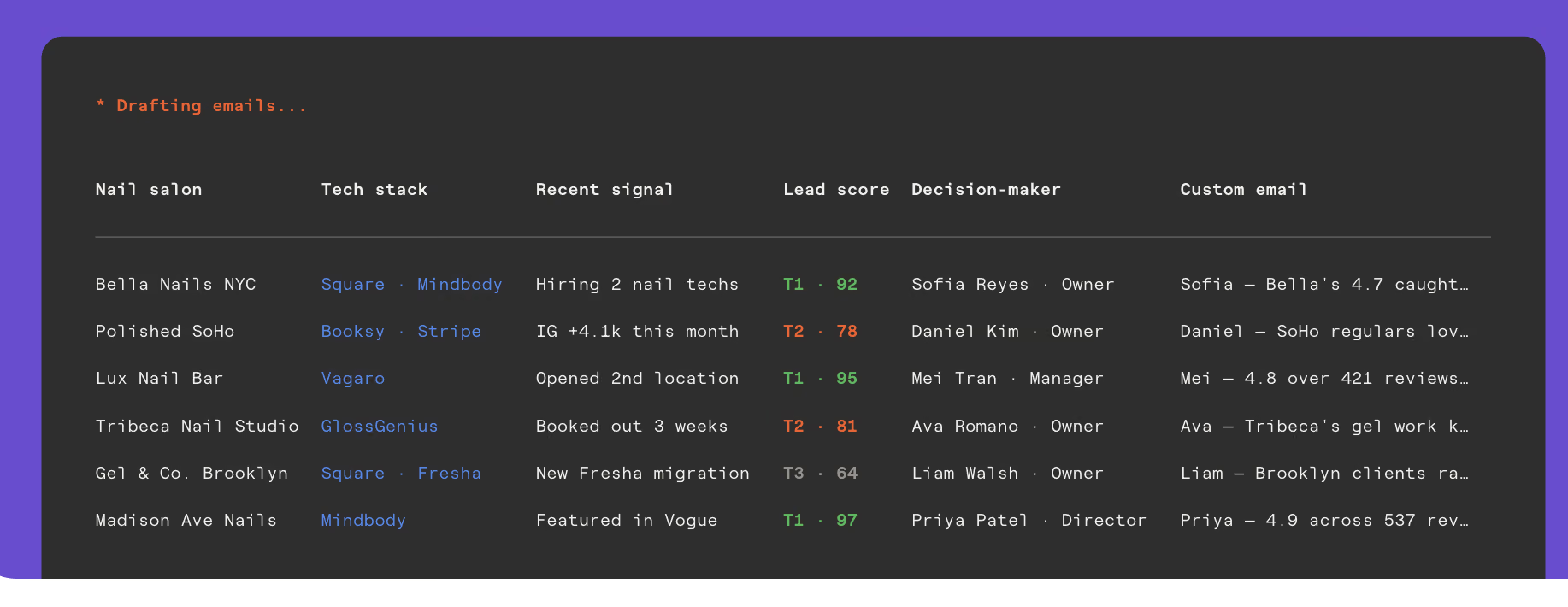
Clay MCP for Reps brings Clay’s data, workflows, and unified GTM context into the AI tools reps already use—Claude, ChatGPT, Claude Code, Codex, Microsoft Copilot, and Glean. Reps prospect better because they’re working with real account and person-level context, the best contact and firmographic data, and ops-built workflows that push leads straight to CRM or a sequencer. Reps get value from Clay without having to go into it. Meanwhile, ops still maintains control with governance of CRM hygiene, sequences, and credit spend and prescriptive workflows that scale what your best reps do across the entire team.
Now you can…
Every upcoming launch is in service of changing what you can actually do day to day. With the full system in place, you can:
- Reason across a dataset. Agents can work over a whole set of records at once, not one row at a time. Think of reading every sales call from the quarter to explain why deals were lost.
- Collaborate on visual workflows. The logic of a play is laid out where the whole team can see it, which makes changes easier to discuss and problems easier to spot.
- Run unlimited campaign sizes. Plays run across millions of records, with no row limits to design around.
- Reuse what you’ve bought. Data is enriched once and stored, so the next play on the same accounts starts from research that’s already done, with no need to re-run the same enrichments.
Demos: See it in action
The recaps below cover the highlights, but take the time to watch the demos in full. The Account Research Agent is in open beta now, and the rest rolls out over the coming weeks.
TAM sourcing
Abbie demoed the new search experience, which puts company and people data, plus job postings, in one graph.
- Plain English queries, or a query language. Type what you want, like companies with more than ten software engineers that are hiring a VP, and Clay turns it into filters with a readable summary. Or describe a query in Claude or ChatGPT and paste the returned Clay query language into search.
- Cross-entity filters with boolean logic. Filter companies by people attributes, like headcount in a specific department, and combine criteria with OR logic.
- A products and services field. This embeddings-based field maps categories rigid taxonomies miss. You can search “crypto payment providers” and get a clean list.
- Live searches and reporting. Saved searches stay live, so any new company that meets your criteria flows into Audiences automatically (the demo brought in 1,800 of the 40,000 companies found). A new Overview tab tracks what Clay sourced, enriched, and actioned, plus fill rates and revenue.
Signal-based outbound
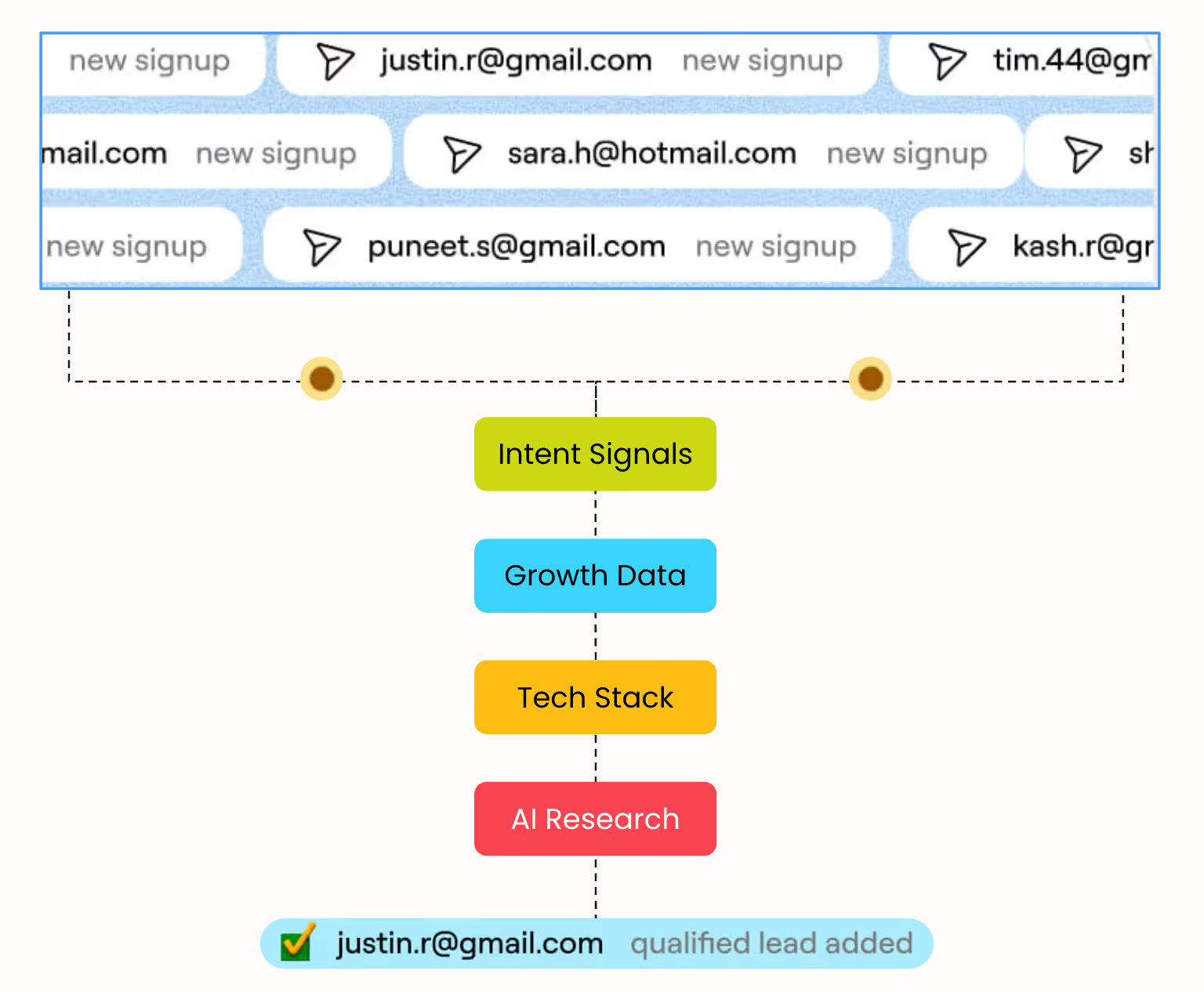
Weston walked through Workflows with a product-qualified lead play: someone enters an audience segment, a Claygent scores them against your ICP, and routing logic gets the right rep a packet with everything they need. Topic intent plays follow the same pattern: a signal fires, and qualified contacts land in a sequence.
- The CLI reads and writes workflows. You can have Claude summarize a play, with an ASCII diagram included, then update the ICP criteria in a Claygent node from a markdown file. No UI needed.
- Code nodes. Closed beta customers run rep routing and account scoring as Python steps. It’s really fast, really cheap, and totally deterministic.
- Observability on every run. A Runs tab tracks status, cost, duration, and version history. Every run is stored and immutable, so you can trace any lead end to end.
Account prioritization to ads
Grant previewed the Account Research Agent, this week’s release, along with the new Ads product: score a segment of accounts using everything Clay knows, then push the best ones into an ad campaign. Closed beta customers already use these for everything from email copy to onboarding new reps.
- Agents reason over all your data. Calls, emails, Salesforce, HubSpot, Snowflake data: the agent reads it all and shows its rationale for every score, with citations down to the data point.
- A build, test, run flow. Pre-built prompts cover jobs like closed-lost analysis, or describe your own in Sculptor. Testing is free on sample records before you spend credits on the full segment.
- Hands-off after setup. New accounts entering a segment get scored automatically, with cost estimates and credit limits keeping spend in check.
- Ads with better matching. Sync a segment to any of four ad platforms on a recurring schedule. Enriched personal emails drive up match rates, and past enrichments get reused.
The road to a self-improving revenue engine
Everything described, from the data up through execution, will be accessible to agents and through the CLI. Agents will be able to make decisions on your behalf, even managing other agents in Clay. That creates a self-learning loop: the more you use Clay, the more memory it holds of what has worked and what hasn’t, and the better it can suggest your next best action.
Each release in Clay’s Summer of Launches exists to get you there faster.
Clay exists to help GTM teams grow creatively and reach their full potential. What that takes has looked different at different points in our history, and it’s shifting again now. Clay is evolving into an end-to-end orchestration platform for go-to-market. We’re building a self-improving revenue engine that remembers which of your GTM efforts worked out and suggests exactly what to do next.
The pieces of that revenue engine are shipping now, one release at a time. We’re three weeks into Clay’s Summer of Launches. That’s 12 releases in 12 weeks, four a month, all the way through to the end of September. Week one brought the Agent Plugin, a CLI and API for building in Clay from tools like Claude Code. Week two was MCP for Reps, which puts Clay’s data and account research inside the tools reps already use. The latest arrival is the Account Research Agent, now in open beta, which keeps research current across your whole book of business by synthesizing new data as it lands in Audiences into fields that you can use to run plays. There’s plenty more on the way.
Co-founder and CEO Kareem Amin walked through our roadmap with Abbie Kouzmanoff, Weston Clarke, and Grant Empey from our product team. They previewed what’s coming, went into what it makes possible for your team, and how it will work inside the product. Watch in full, and keep an eye on our upcoming livestreams for what’s coming over the summer (and beyond).
How GTM is changing at the fastest-growing companies
From Lovable to Rippling, we work with the fastest-growing companies in the world. That means having a front row seat to how GTM is changing. GTM rewards you for finding what works, then takes it away once everyone else catches on. Winning tactics have a shelf-life, and a play performs for a while and then fades in effectiveness; the teams that stay ahead are the ones set up to find the next one instead of running a stale strategy.
What it takes for a GTM team to win has moved through three distinct stages. Two years ago, the teams with the best data won. Today, wins go to the teams that run their whole motion as one system. In the phase ahead, the winners will be the teams whose systems learn and improve on their own. Each stage builds on the one before it, and this summer’s launches are aimed at the third.

Stage 1: Data
Two years ago, the best GTM teams won by having better data than everyone else. That meant things like accurate emails and direct dials, headcount growth, funding rounds, and which tools a prospect runs on their website. We built for that era with a marketplace of over 150 data vendors, and Claygent, an AI researcher that collects nearly any data point on the open web. Data remains invaluable; it’s just no longer enough on its own.
Stage 2: GTM infrastructure
Once GTM teams had access to the best data, we noticed two things set good teams apart from great ones.
The first is creativity. When any data point is available to anyone, the advantage shifts to knowing which data point actually marks a buyer for your product. Say you sell inference. Your best signal might be machine learning engineers complaining about the cost of frontier models. No vendor sells a list like that, so you have to dream up the signal yourself, then go collect it and see whether it predicts real customers.
The second differentiator is whether a team runs one integrated GTM system or disconnected plays held together by brittle handoffs. Handoffs drop context, and an insight trapped in one tool gets used once instead of everywhere. When the whole motion runs as one system, every play feeds what it learned into the next, and small gains at each step compound. That integrated system is what Clay is today: your CRM, your data warehouse, call recordings from tools like Gong, enrichment providers, and the sequencers and ad platforms where campaigns run, all working in one place.
Stage 3: Learning loops
The third stage takes shape in the near future.
Agents will run GTM plays on their own and improve them over time. The quality of their work and what it costs will depend on just how efficiently they can retrieve context from your GTM system. An agent picking which accounts to work needs to know who your best customers are and what has worked well for them. If that information sits across disconnected tools, the agent spends time and credits reassembling it on every task. On the other hand, if it sits in one navigable system, like Clay, the agent works from complete information (with greater token efficiency).
We’re building for this in two ways.
The first is a context layer that agents can plug into and navigate. The second is purpose-built agents that identify and execute the next best play, then learn from the results to improve your plays over time. This is what we mean by learning loops. A team can run them manually today, by reviewing results and adjusting the next play. The goal ahead is for Clay to run them autonomously on your behalf.
The launches, at a glance
Our mission is to help every company grow as fast as possible and reach its full potential. Each launch this summer is a building block: together they let you assemble the revenue system that fits exactly how your company sells.

Audiences: Centralize your GTM data
Audiences is already live, and it’s where all your GTM data comes together.
It brings your first-party data from your CRM and data warehouse into one place, with third-party enrichment from more than 150 providers, plus signals like job changes and web intent. From there, you build dynamic segments with simple filters, warm leads or re-engaged accounts, for example. Segments scale past 15 million records and refresh continuously, so there are no manual exports or outdated lists to work from.
A segment isn’t just a list to look at, either. You can activate one directly, syncing it to your sequencer or your ad platforms, and write clean, current data back to your CRM. Until now, teams stitched this together from point solutions or built it in-house, because no single product could import, enrich, segment, and activate data in one system. Audiences does all four.

Workflows: Visual, collaborative workflows that run at any scale
Workflows, in open beta this August, is a new way to build plays outside the table. Each step of a play becomes a node on a visual canvas. A trigger sits at the top, for example, a lead entering an audience segment. Below it sits everything that happens next, from enrichment steps to the conditional logic that decides where each record goes. You can follow what happens to a lead step by step, and a teammate can review or take over the play without a walkthrough. Baseten is among the teams building on it in closed beta.

Workflows also do things tables never could. When a step is pure rules (rather than judgment), you can drop in a code node and run it as a script, which makes that step fast and economical, with the same output every time. And because Workflows runs at the same scale as Audiences, with none of the old row or cell limits, the play you build for a hundred leads works unchanged on a million.
Agents: Turn unstructured data into action
You can already build an agent for almost any GTM job in Claygent, Clay’s agent builder, by describing the task in natural language. That could mean researching companies or sorting messy job titles. What’s new this summer are purpose-built agents for the jobs nearly every team needs, with less to set up from scratch.

The first is the Account Research Agent, which just launched in open beta. It reads the unstructured data in Audiences, like signals and Gong transcripts, and turns it into structured fields you can write back to your CRM or use to trigger plays.
The Account Execution Agent follows in August and is already in closed beta with teams like Figma. It reads the context the Account Research Agent builds, then prioritizes your accounts and recommends the next play.
Ads and Sequencer: Build lists from first- and third-party data and sync continuously
Audiences holds the data and Workflows runs the logic, but you need a system where you can continuously take action.
Clay Ads, GA in August for self-serve customers, help performance marketers spend ad budget more effectively by building targeted, always-on ad audiences and optimizing how those audiences match across platforms like LinkedIn, Meta, Google, Vibe, and soon Bing and Reddit. You can build dynamic, always-on ad audiences from first-party signals like intent, CRM fields, and sales activity, or use third-party data to build and refine U.S. audiences. Enhanced matching queries multiple providers and sends up to three hashed IDs per contact, raising match rates so ads reach more of your audience.

Sequencer 2.0, which arrives later this summer, turns cold outbound into one end-to-end workflow inside Clay, covering list building, lead management, copy generation, deliverability, and rep reply handling in one place. Lead lists refresh with Audiences as your data changes, agents personalize each message from your first- and third-party data instead of a generic template, and replies land with real reps right inside Clay.
TAM sourcing: Filter in natural language in search
TAM sourcing is how you find the universe of companies and people who could be your customers, beyond the ones already in your CRM. We’re rebuilding search around a simple idea: filter first, then source. You can now apply filters directly in search, so only the accounts that already match your criteria come into Clay.
Advanced search arrives next week on all plans, with natural language search and new data sources going GA in September. Topic intent signals and stronger lookalike audiences are on the way too, along with reporting that shows how much pipeline and revenue came from records that Clay sourced. And your TAM covers more than net-new logos: the same searches surface new departments and cross-sell openings inside companies you already work with.

Agent Plugin and MCP for Reps: Build on Clay without living inside it
You have access to these two: the Agent Plugin and MCP for Reps, Clay’s rep tool. Both come from the same belief: you shouldn’t have to log into Clay to use Clay. The Agent Plugin bundles Clay’s API, CLI, MCP, and skills so you can use Clay from coding agents like Claude Code, Cursor, and Codex. That covers things like sourcing your TAM from data vendors, building and enriching prospect lists, routing inbound leads, and creating new workflows in natural language, without opening Clay’s interface.

Clay MCP for Reps brings Clay’s data, workflows, and unified GTM context into the AI tools reps already use—Claude, ChatGPT, Claude Code, Codex, Microsoft Copilot, and Glean. Reps prospect better because they’re working with real account and person-level context, the best contact and firmographic data, and ops-built workflows that push leads straight to CRM or a sequencer. Reps get value from Clay without having to go into it. Meanwhile, ops still maintains control with governance of CRM hygiene, sequences, and credit spend and prescriptive workflows that scale what your best reps do across the entire team.
Now you can…
Every upcoming launch is in service of changing what you can actually do day to day. With the full system in place, you can:
- Reason across a dataset. Agents can work over a whole set of records at once, not one row at a time. Think of reading every sales call from the quarter to explain why deals were lost.
- Collaborate on visual workflows. The logic of a play is laid out where the whole team can see it, which makes changes easier to discuss and problems easier to spot.
- Run unlimited campaign sizes. Plays run across millions of records, with no row limits to design around.
- Reuse what you’ve bought. Data is enriched once and stored, so the next play on the same accounts starts from research that’s already done, with no need to re-run the same enrichments.
Demos: See it in action
The recaps below cover the highlights, but take the time to watch the demos in full. The Account Research Agent is in open beta now, and the rest rolls out over the coming weeks.
TAM sourcing
Abbie demoed the new search experience, which puts company and people data, plus job postings, in one graph.
- Plain English queries, or a query language. Type what you want, like companies with more than ten software engineers that are hiring a VP, and Clay turns it into filters with a readable summary. Or describe a query in Claude or ChatGPT and paste the returned Clay query language into search.
- Cross-entity filters with boolean logic. Filter companies by people attributes, like headcount in a specific department, and combine criteria with OR logic.
- A products and services field. This embeddings-based field maps categories rigid taxonomies miss. You can search “crypto payment providers” and get a clean list.
- Live searches and reporting. Saved searches stay live, so any new company that meets your criteria flows into Audiences automatically (the demo brought in 1,800 of the 40,000 companies found). A new Overview tab tracks what Clay sourced, enriched, and actioned, plus fill rates and revenue.
Signal-based outbound
Weston walked through Workflows with a product-qualified lead play: someone enters an audience segment, a Claygent scores them against your ICP, and routing logic gets the right rep a packet with everything they need. Topic intent plays follow the same pattern: a signal fires, and qualified contacts land in a sequence.
- The CLI reads and writes workflows. You can have Claude summarize a play, with an ASCII diagram included, then update the ICP criteria in a Claygent node from a markdown file. No UI needed.
- Code nodes. Closed beta customers run rep routing and account scoring as Python steps. It’s really fast, really cheap, and totally deterministic.
- Observability on every run. A Runs tab tracks status, cost, duration, and version history. Every run is stored and immutable, so you can trace any lead end to end.
Account prioritization to ads
Grant previewed the Account Research Agent, this week’s release, along with the new Ads product: score a segment of accounts using everything Clay knows, then push the best ones into an ad campaign. Closed beta customers already use these for everything from email copy to onboarding new reps.
- Agents reason over all your data. Calls, emails, Salesforce, HubSpot, Snowflake data: the agent reads it all and shows its rationale for every score, with citations down to the data point.
- A build, test, run flow. Pre-built prompts cover jobs like closed-lost analysis, or describe your own in Sculptor. Testing is free on sample records before you spend credits on the full segment.
- Hands-off after setup. New accounts entering a segment get scored automatically, with cost estimates and credit limits keeping spend in check.
- Ads with better matching. Sync a segment to any of four ad platforms on a recurring schedule. Enriched personal emails drive up match rates, and past enrichments get reused.
The road to a self-improving revenue engine
Everything described, from the data up through execution, will be accessible to agents and through the CLI. Agents will be able to make decisions on your behalf, even managing other agents in Clay. That creates a self-learning loop: the more you use Clay, the more memory it holds of what has worked and what hasn’t, and the better it can suggest your next best action.
Each release in Clay’s Summer of Launches exists to get you there faster.



.avif)



.avif)


.avif)


.avif)


.avif)