



















.avif)












.avif)









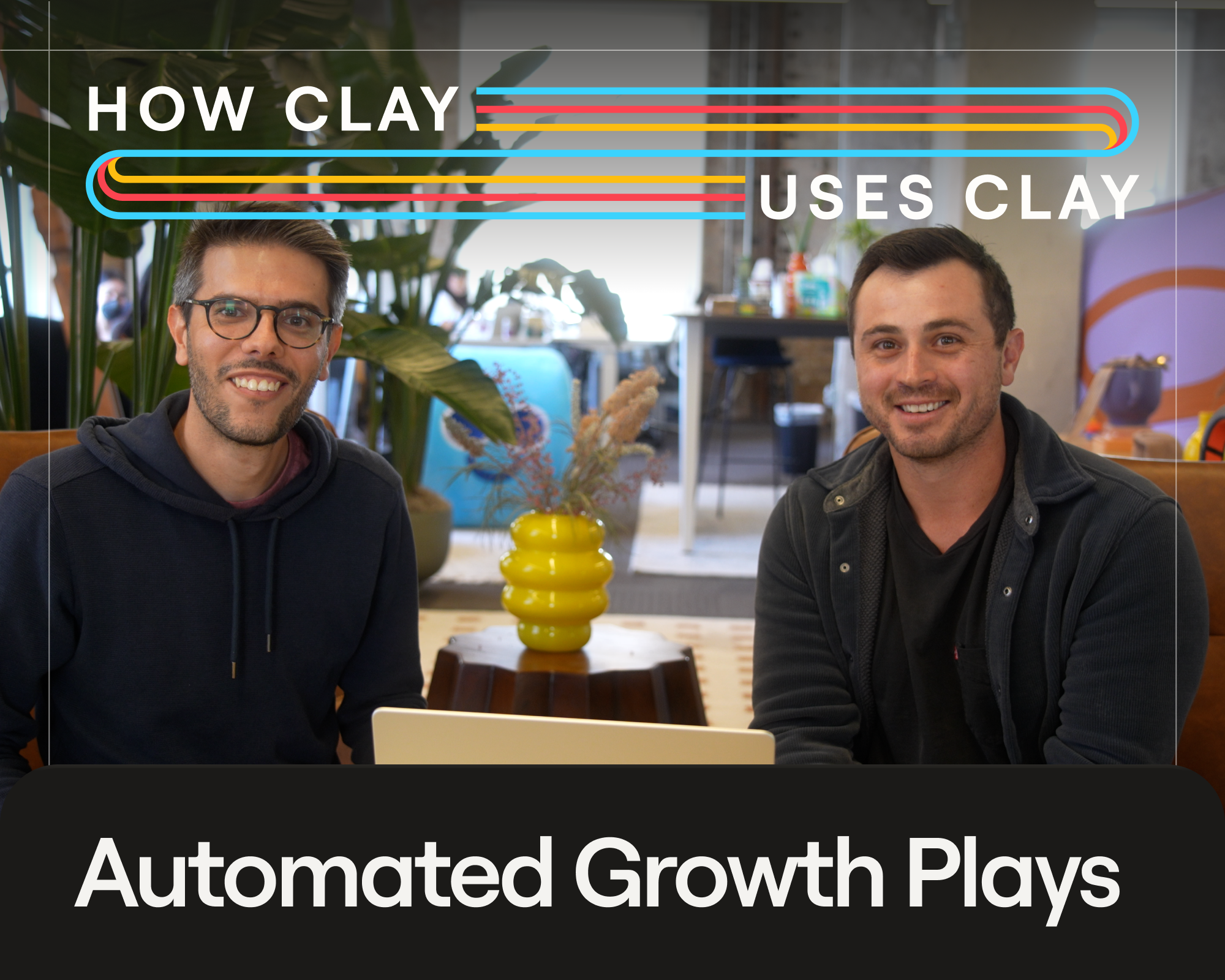
Growth work at software companies has a reputation for being a treadmill. You launch a campaign, results spike, results fade, and you start all over again. The way off the treadmill is to build plays that are always on. These are automated workflows that fire whenever a buying signal appears and keep running without anyone touching them. Each automation might only surface a handful of people a day, but stack enough of them and your portfolio of plays compounds into a steady stream of revenue that arrives while you sleep. Our growth team builds these always-on plays in Clay itself, using our own product as the orchestration layer.
Signals are what make the plays work. Industry reports consistently find that only about 5% of your market is ready to buy at any given moment—the 95:5 rule. The rest aren’t looking yet, which is why blasting a templated email to your whole ICP tanks reply rates. The email isn’t the problem, the timing is. A signal, like a usage spike or a job change, gives you an obvious reason to reach out. It tells you who to contact and why, and once you know both, the email becomes easy to draft.
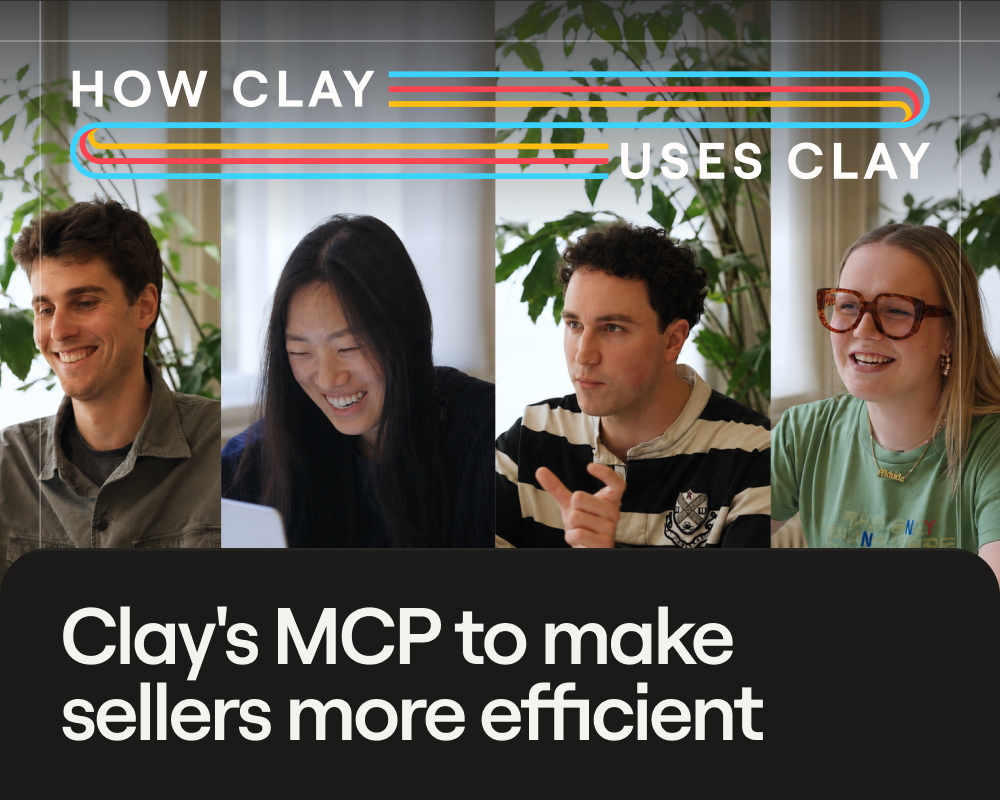
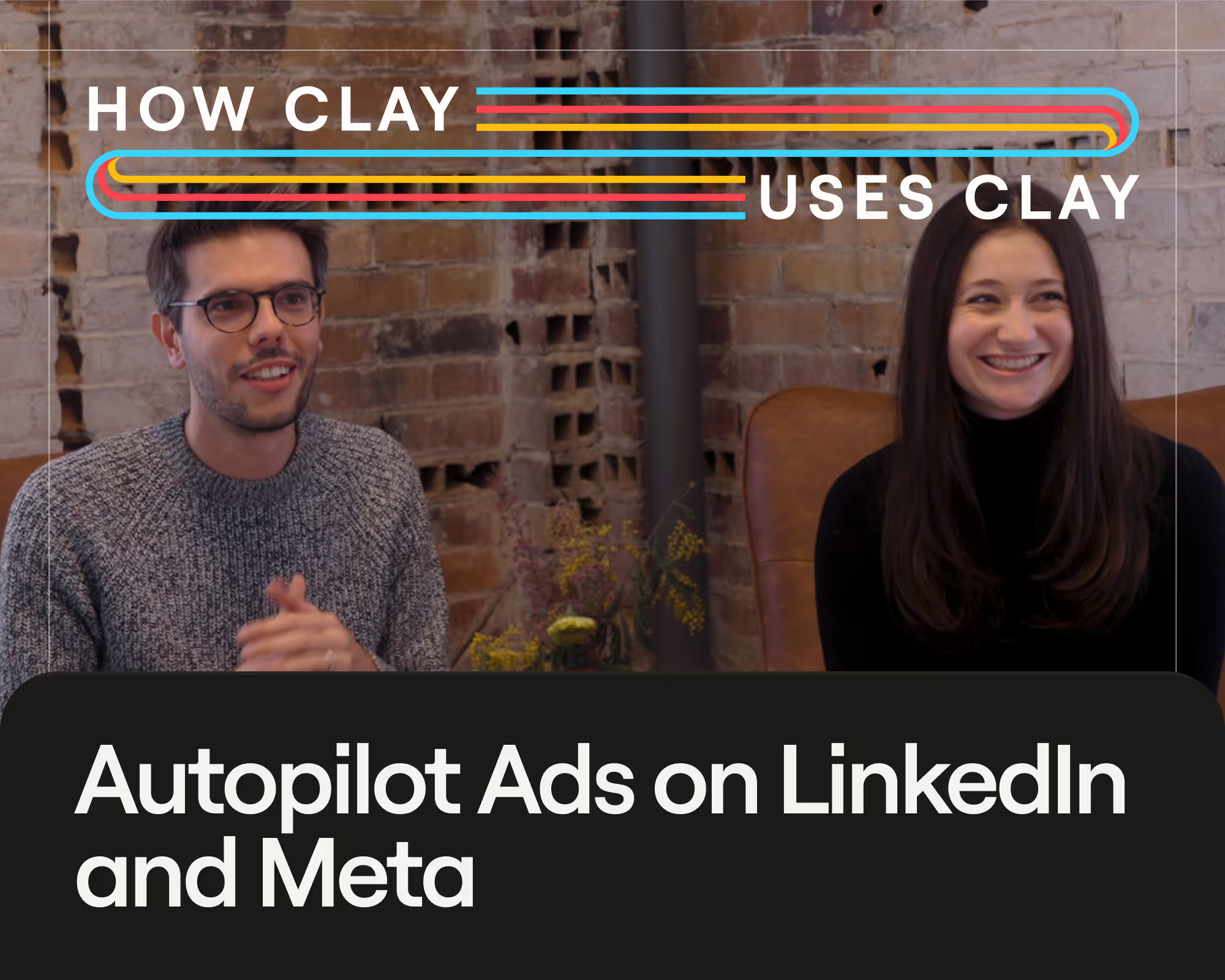
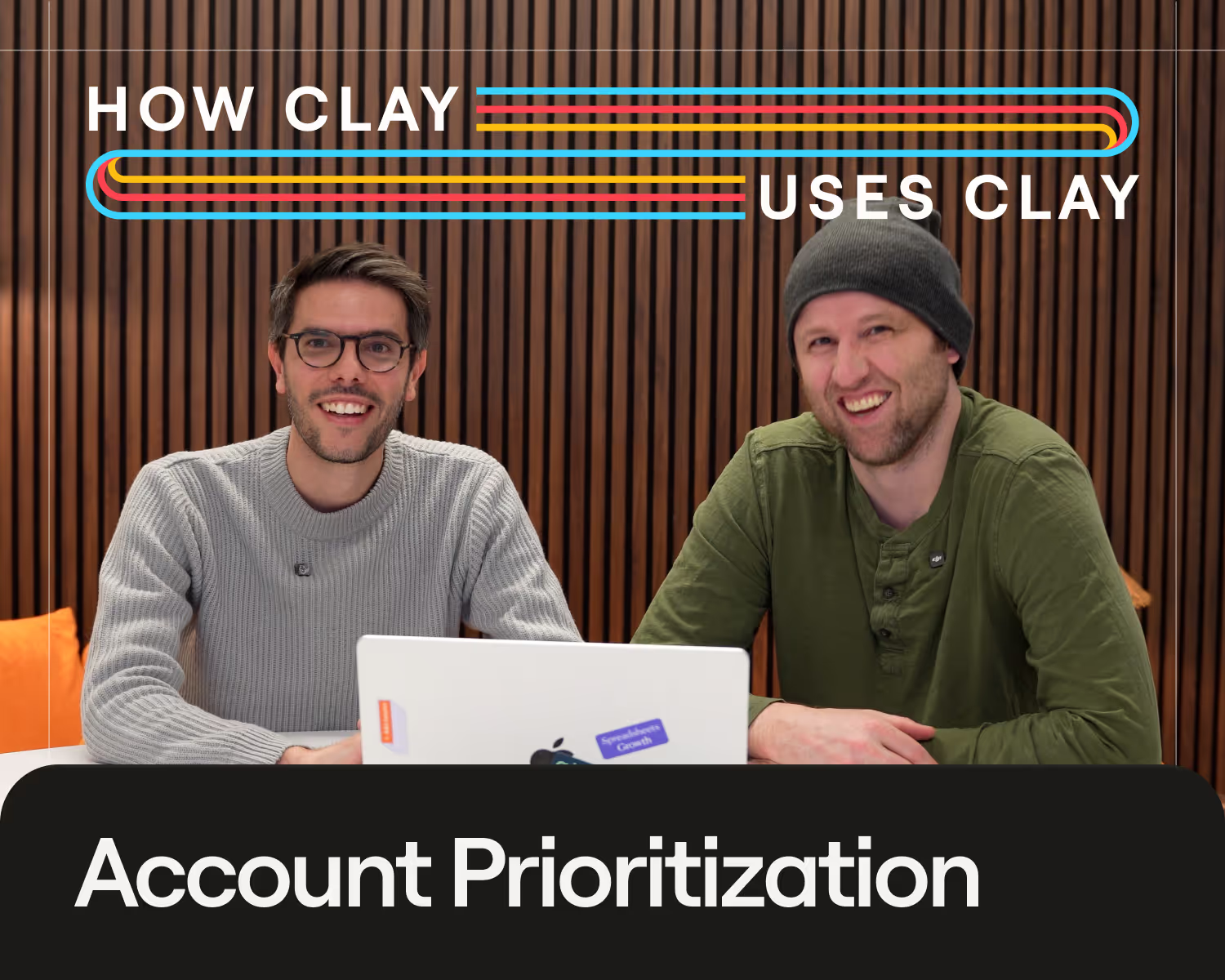
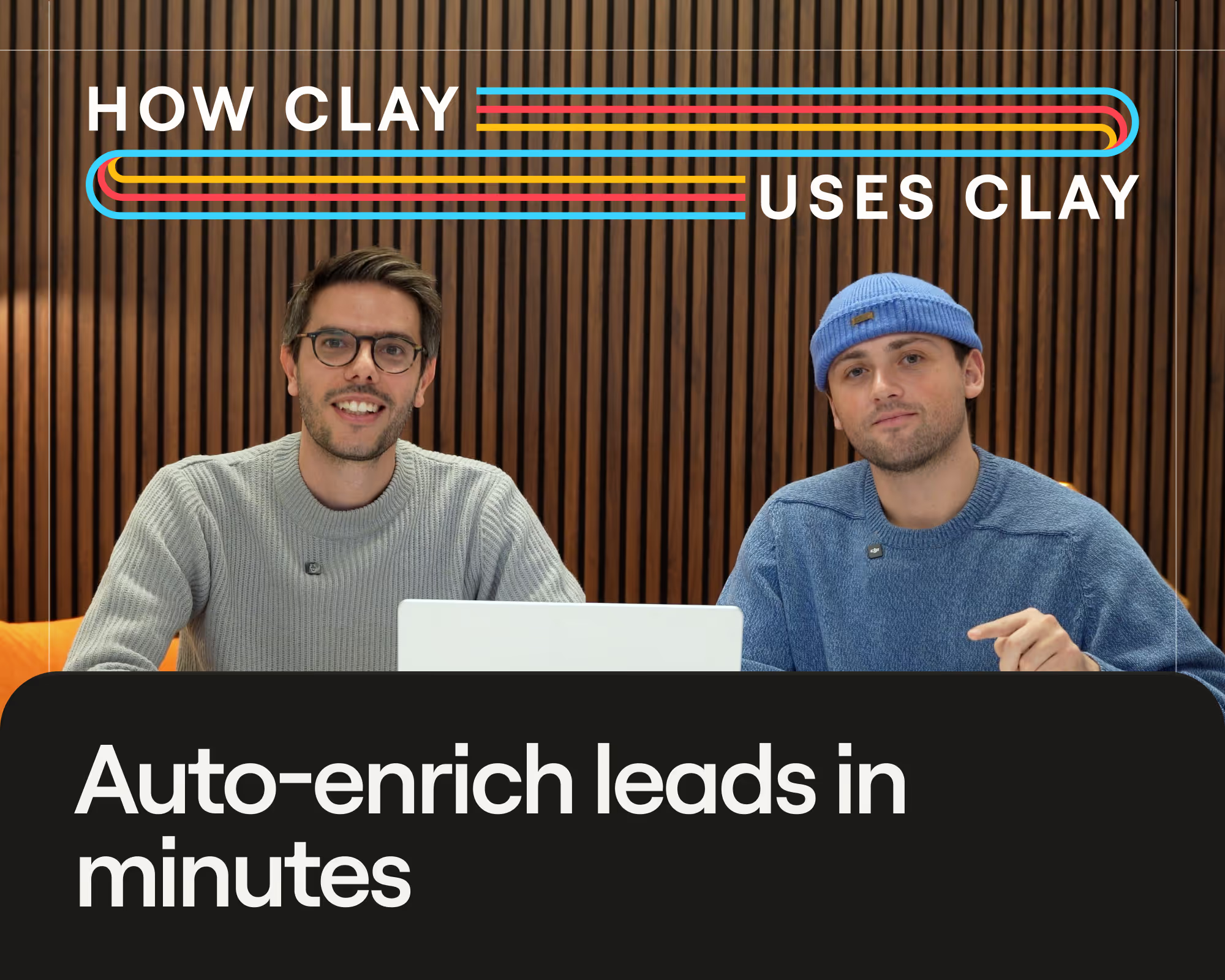
In this edition of How Clay Uses Clay, Head of Growth Davide Grieco, and growth team members Andrew Morris and Nicole Goot, share the exact plays we run to grow revenue from new and existing customers, from fully automated self-serve nudges to plays we run with our enterprise sales team.
Clay runs livestreams like this one every week, so register to catch future episodes of How Clay Uses Clay and the rest of the series. Up next, the team breaks down dynamic ad audiences that convert, covering the exact Clay Ads playbooks behind millions in pipeline and a 75x return on Meta spend.
One-time blasts versus GTM plays
Why should you care about automated growth plays at all?
The alternative, a blast, only produces results while someone is actively running it. That means the pipeline it creates arrives in bursts. Your SDRs get buried in follow-up work the week a campaign goes out, then sit idle until the next one.
Always-on automated plays smooth that out. They deliver a steady, predictable stream of qualified leads. And because each lead comes attached to the signal that flagged it, the rep opens every call with something relevant to say.
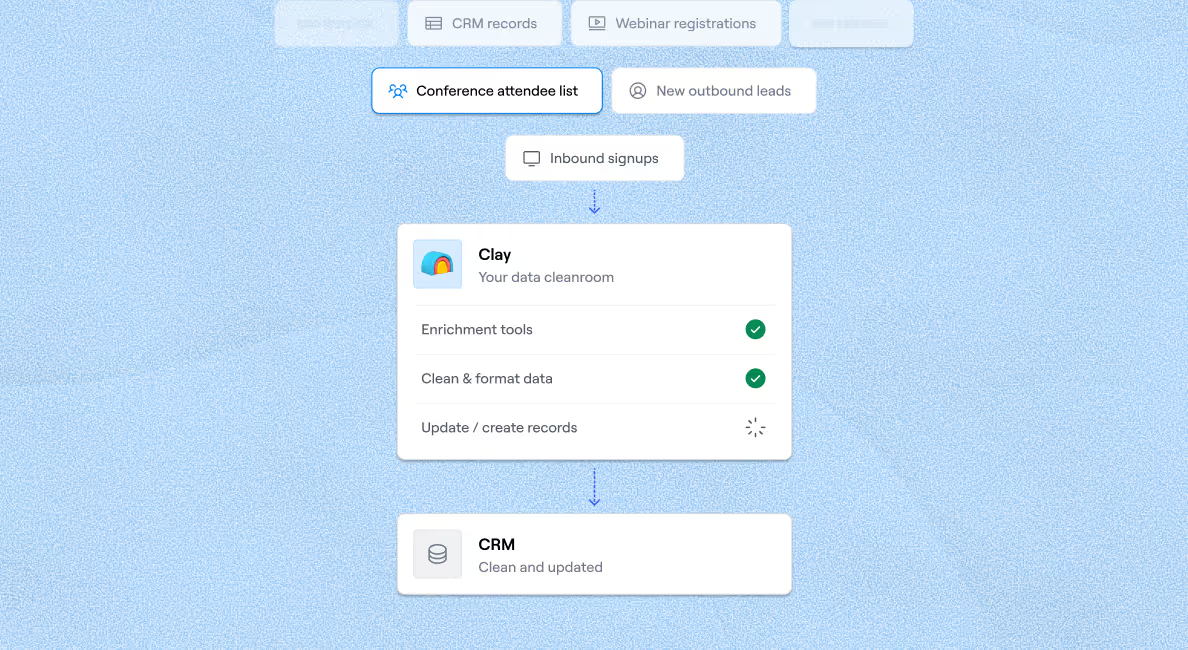
Running plays this way takes a system connecting data to outreach. At Clay that system is Clay itself, and every play we run moves through the same three stages:
- Data sources. Snowflake holds our product data, Gong holds call and email records, and Salesforce holds CRM history. Clay adds third-party data like job changes and open roles.
- Orchestrator. Clay stacks the signals, scores the account, and decides the next action.
- Execution. An automated email, an in-app notification, a sales sequence, or a Slack alert to the account owner.
Pure PLG vs hybrid PLG & SLG vs pure SLG
Not every play fits every customer. Sales-led growth (SLG) puts humans in the deal, and humans are expensive, so the contract cost has to justify them. Between salary and commission, a rep might cost $150,000 a year, so if they close 50 deals annually, each one has to be worth well over $3,000 before their involvement even breaks even.
Product-led growth (PLG) lets the product do the selling, which costs almost nothing per account but leaves money on the table when a big company slips through on a small plan. Most businesses with both a self-serve option and a sales team need both motions, so we bucket our automated plays in three ways:
- Pure PLG. Accounts below the line where a seller pays for themselves. For us that’s roughly anything under $20K to $25K in annual contract value. Product signals drive automated in-app messages and emails, with no humans involved.
- Hybrid PLG and SLG. The company runs both motions at once, with a self-serve product and a sales team working side by side. Some accounts start in one motion but belong in the other. A self-serve customer might grow into heavy enough usage that they become worth a salesperson’s attention, so sales reaches out. Meanwhile, a small company might request a sales demo it doesn’t qualify for, so it gets pointed to the self-serve product instead of being turned away.
- Pure SLG. This is classic outbound, where the full sales team activates on top-tier target accounts backed by every scrap of first-party data you have. These deals are too big to leave to automation, so salespeople pursue a short list of high-value accounts directly through calls, emails, and meetings.
To place your own business, look at your annual contract value (ACV) and your margins. Accounts where a rep will never pay for themselves belong to PLG automation. Accounts that could plausibly grow ten times over belong in the hybrid bucket. And the short list of companies you’d bet the year on deserves enterprise plays.
Pure PLG plays
This motion runs on product data. The goals are to convert trials to paid and to help existing customers discover new use cases so they spend more credits. For us at Clay, everything starts in Snowflake, which shows us what tables a workspace is building, how often people log in, how fast credits are burning, and which use cases are live in production. Each play combines usage, intent, and timing, and every step is automated.
Play 1: Churn risk from first-month activity
Everybody has churn, and for self-serve accounts it tends to happen in the first month. The play works because it catches the drop-off while the person can still be won back, using warning signs our data science team identified from historical churn. When an account starts showing those signs, an automated email goes out with one goal, getting the person to click back into the app.
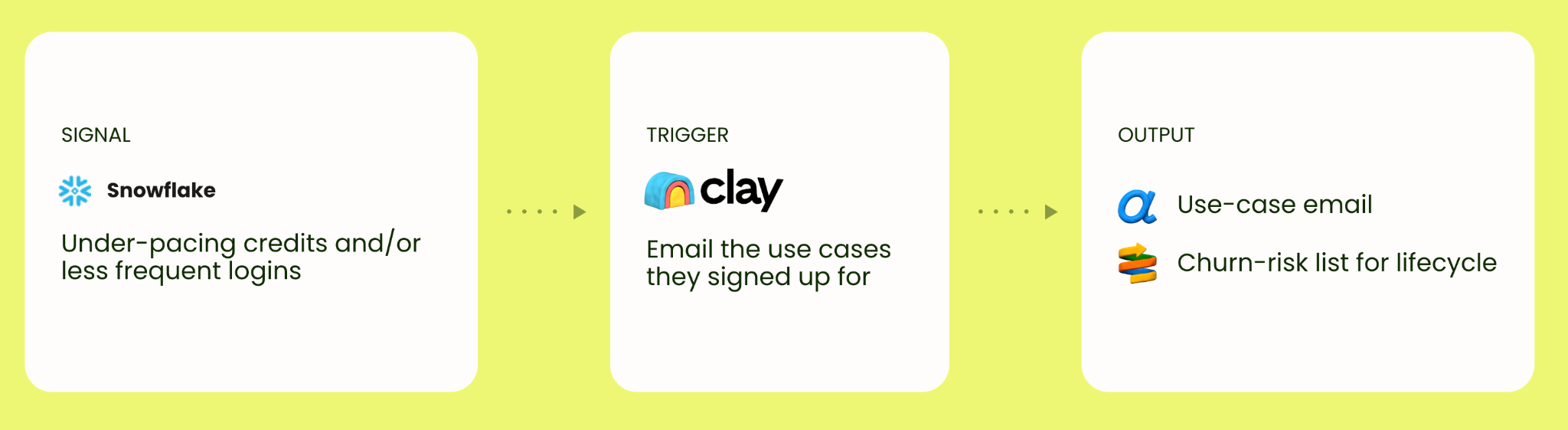
- Signal. Under-pacing on credits, less frequent logins, or no teammates invited.
- Trigger. An email built around the use cases the person named during onboarding, with one job, getting them to click back into the app.
- Output. In-app messages that guide the person toward that use case. Flagged accounts also join a running list of at-risk customers, which we can target later with campaigns like win-back emails.
Play 2: The credit top-up play
Clay’s 14-day trial comes with a few thousand credits, and some people burn through them by day two. That isn’t a problem and punishing it would actually work against us. So we send a “bridge loan,” a free refresh of credits that keeps the person building. It doesn’t cost us much and it pays off in how sticky the account becomes. Similarly, Cursor gives newer users free credits when they run out of their allowance early; the same logic applies to any consumption-priced product.
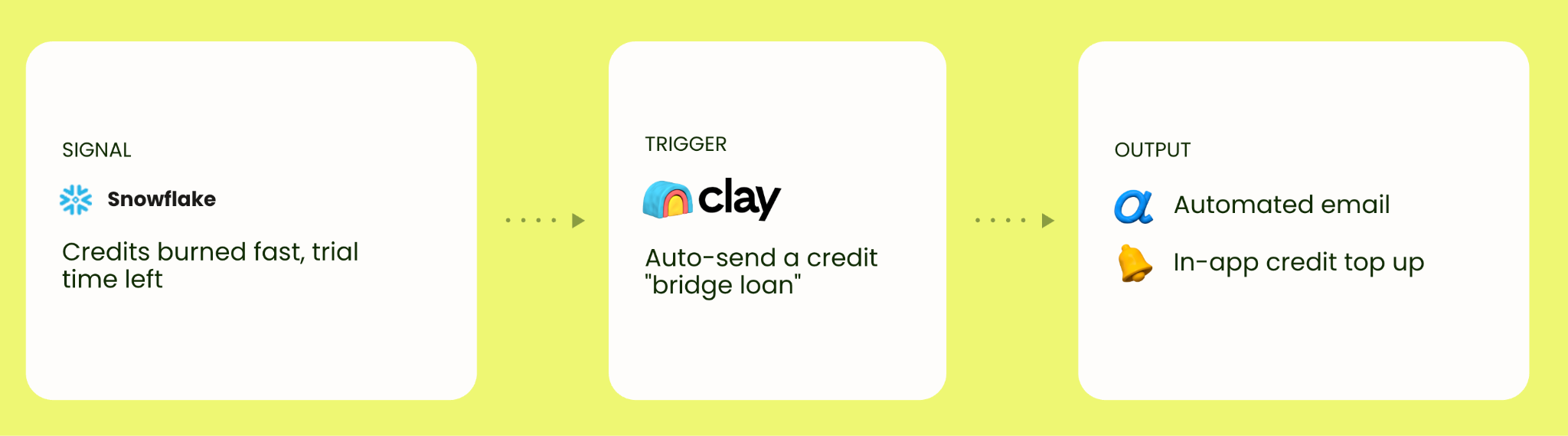
- Signal. Credits burned fast with plenty of trial time left. Scammers scraping data burn credits just as quickly, so before any credits go out, we verify the account looks like a real business based on how it’s using the product.
- Trigger. An automated congratulations email offering the refresh.
- Output. An in-app credit top-up, delivered with no human involved.
The same idea translates to seat-based pricing, with a different trigger. Instead of credit burn, watch how many seats an account has left against how fast it’s been adding them. If you have a customer in your software with 10 open seats who has added 10 users a month for the past quarter, they’re about to run out, and that's your moment to reach out.
Play 3: Feature adoption tied to your activation moment
Connecting a CRM, whether that’s Salesforce or HubSpot, is one of the biggest unlocks for a new Clay customer. Our data shows a steep drop-off among people who don’t connect one within their first two days. The play works because it’s a relevant nudge at the right moment, promoting the exact feature that fits the workspace. An analytics company could run the same play with its own context, nudging new signups who haven’t installed the tracking snippet by day two.
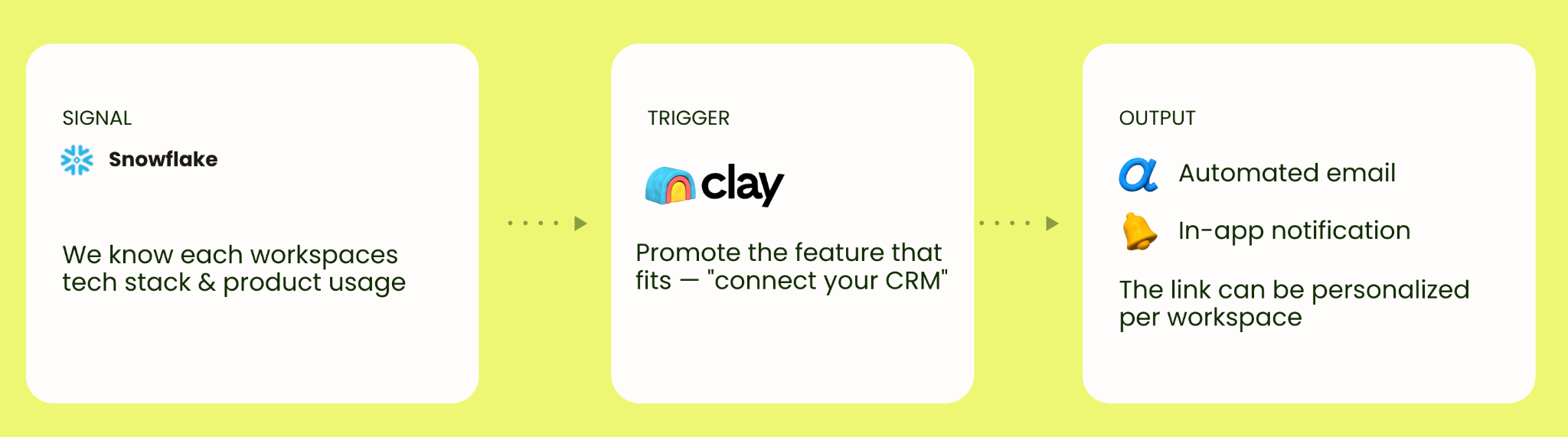
- Signal. Snowflake flags a new trial workspace approaching day two with no CRM connected.
- Trigger. An automated email promoting the feature that fits, in this case
“Connect your CRM.” - Output. Clicking the email leads to a page built for that customer’s specific CRM. Someone on HubSpot sees a video walking through the HubSpot connection, plus the use cases it opens up.
Hybrid PLG & SLG plays
The goal of this bucket is to connect the best self-serve accounts to sales at the right moment, and to move accounts back down when they don’t fit. An individual contributor at a juggernaut company like Anthropic might sign up self-serve, which makes them technically PLG even though the company behind the account is enormous. Meanwhile, a one-person business might request a demo, even though the deal is too small to justify a rep’s time.
An account in this bucket moves in one of two directions::
- Promote. A self-serve account shows it’s ready for a bigger contract, and a seller reaches out already knowing the full picture, from the features the account has adopted to the credits it’s burning.
- Return. A sales lead isn’t big enough yet, so it moves back to self-serve rather than getting disqualified.
Promoting is the harder call, because something has to decide which accounts are worth a seller’s time. We make that decision with a threshold, and any account that crosses it becomes a product qualified lead, or PQL. The threshold combines behavioral data (credits burned, seats added, features touched) with firmographic data (headcount, industry, revenue). An account that clears both has earned a spot in the sales queue. Think of it as the product-usage equivalent of the marketing qualified lead (MQL), mirroring what a good rep would do manually when scanning target accounts for promising signups.
The three plays below all handle promotion, since that’s the harder direction. The return path is simpler, and for us it mostly means routing small demo requests into self-serve instead of turning them away entirely.
Play 1: High pacing
Clay runs on credit consumption, but the same logic maps to seats, tasks, or tokens in other businesses. When people pace high against their allocation, they’re outgrowing their plan and finding new use cases, so an upgrade conversation feels natural rather than pushy.
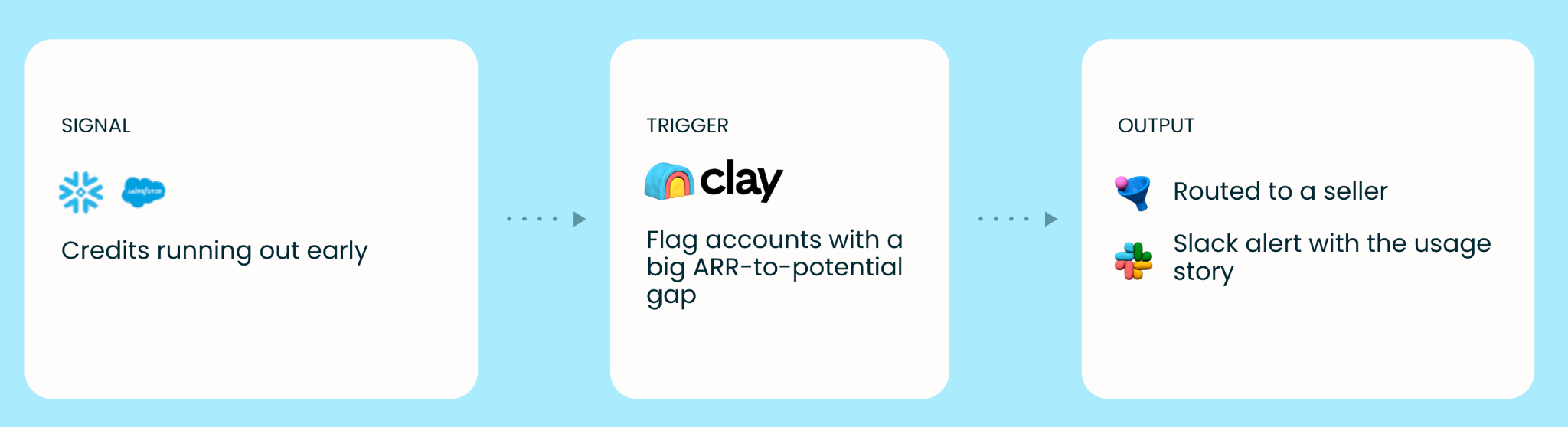
- Signal. Credits running out early. Our threshold is 80% of the allocation in back-to-back months.
- Trigger. Salesforce confirms the account has a big gap between current ARR and potential contract value, and the combination flags a PQL.
- Output. The account routes to a seller through a Gong sequence, along with a Slack alert carrying the full usage story, meaning the products they use, the use cases they’ve built, their current plan, and who to contact.
Play 2: Trial conversion
Plenty of large enterprises convert off a trial onto our lowest tier without ever talking to sales. If someone on Amazon’s growth team checks out on our launch tier, the gap between what they pay us and Amazon’s potential contract value is enormous. That gap is the signal. These accounts converted from a trial to a paid plan on their own, and their usage has kept climbing since, which is stronger evidence than any qualifying call. So we reach out and offer the white-glove treatment they never asked for.
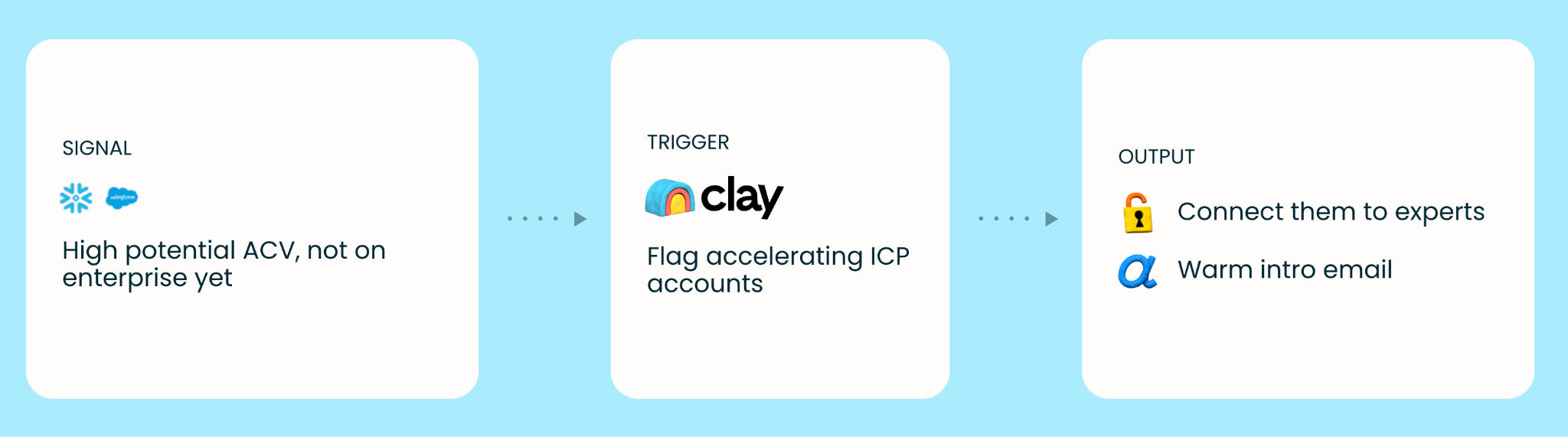
- Signal. High potential contract value on an account that isn’t on enterprise yet.
- Trigger. Flag accelerating ICP accounts that have never spoken to sales.
- Output. A warm intro connecting them with experts, from our solutions engineers to our GTM engineering team to Clay DRs, kicking off a hands-on sales cycle built around the use cases they want.
Play 3: Personal to work email
A lot of people sign up for products with their Gmail. At big companies, legal and compliance teams scrutinize new tools, so employees often trial something on a personal email before raising it internally. The problem is that a personal email can’t be assigned to the right account, so sales can’t see who already uses your product at the companies they’re trying to break into. We have an automated workflow for this, too:
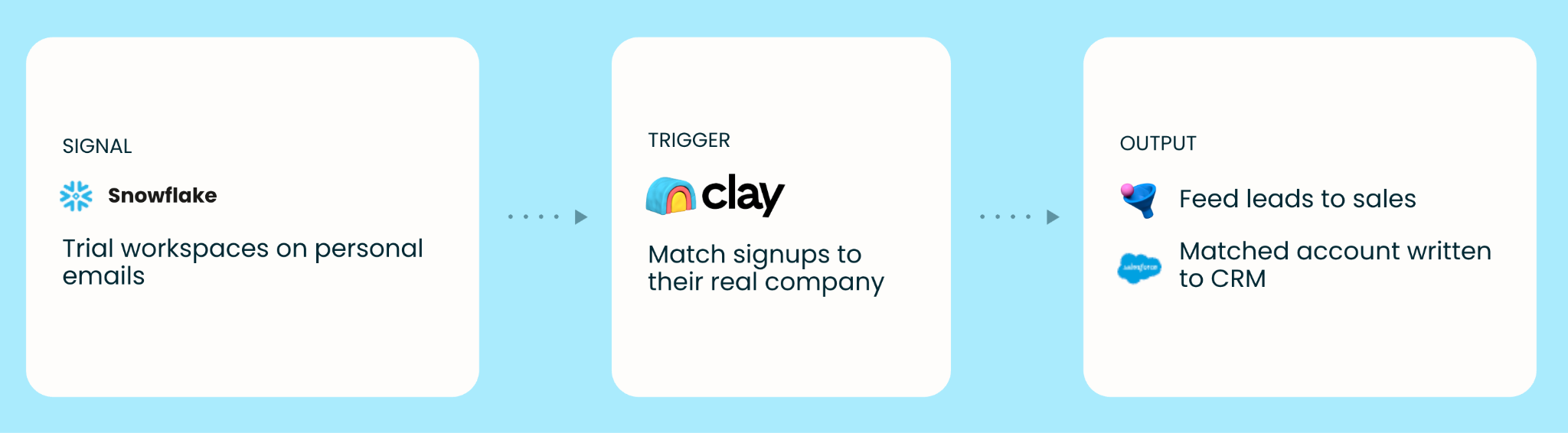
- Signal. New trial workspaces created with personal emails.
- Trigger. A Clay managed function matches each signup to their real company, translating personal emails to work emails automatically.
- Output. Matched accounts written to the CRM and fed to sales as leads.
Pure SLG plays
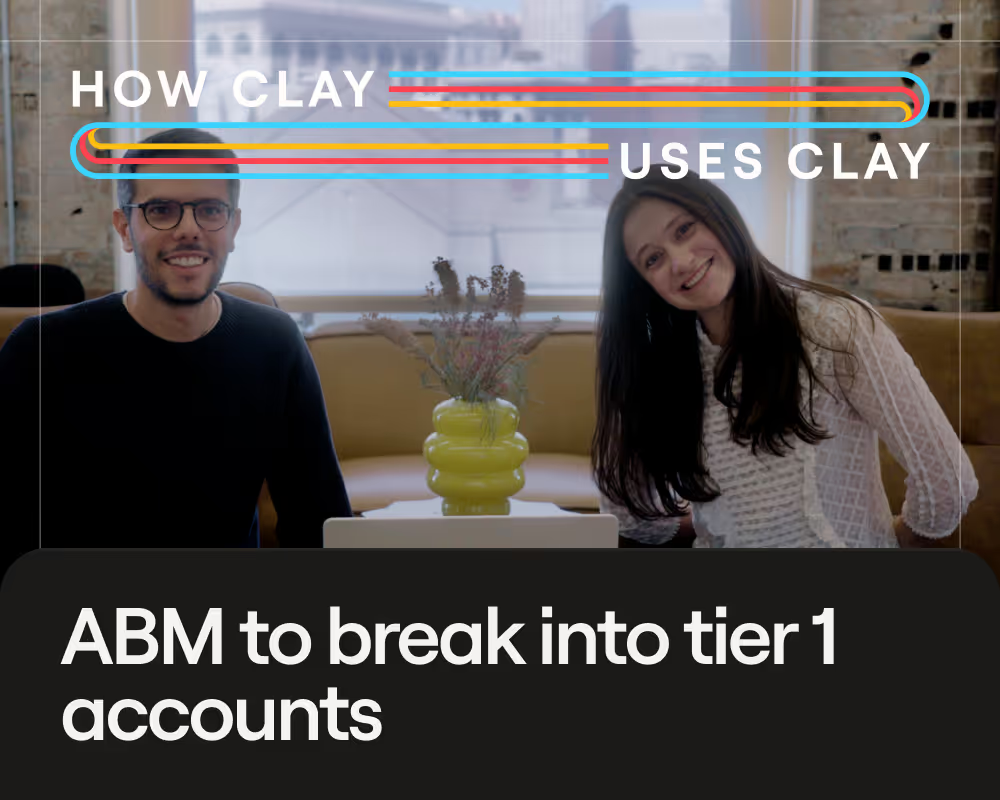
The third bucket is classic outbound, where the full sales team activates on top-tier accounts. We keep about 100 top accounts we call tier ones, the small audience of companies we’re obsessed with. Drip emails alone won’t crack accounts like these, so SDRs and sellers work them together. The plays draw on the deepest data available, combining the CRM, the data warehouse, and every call, email, and text you’ve ever exchanged.
Play 1: Tier one ABM accounts
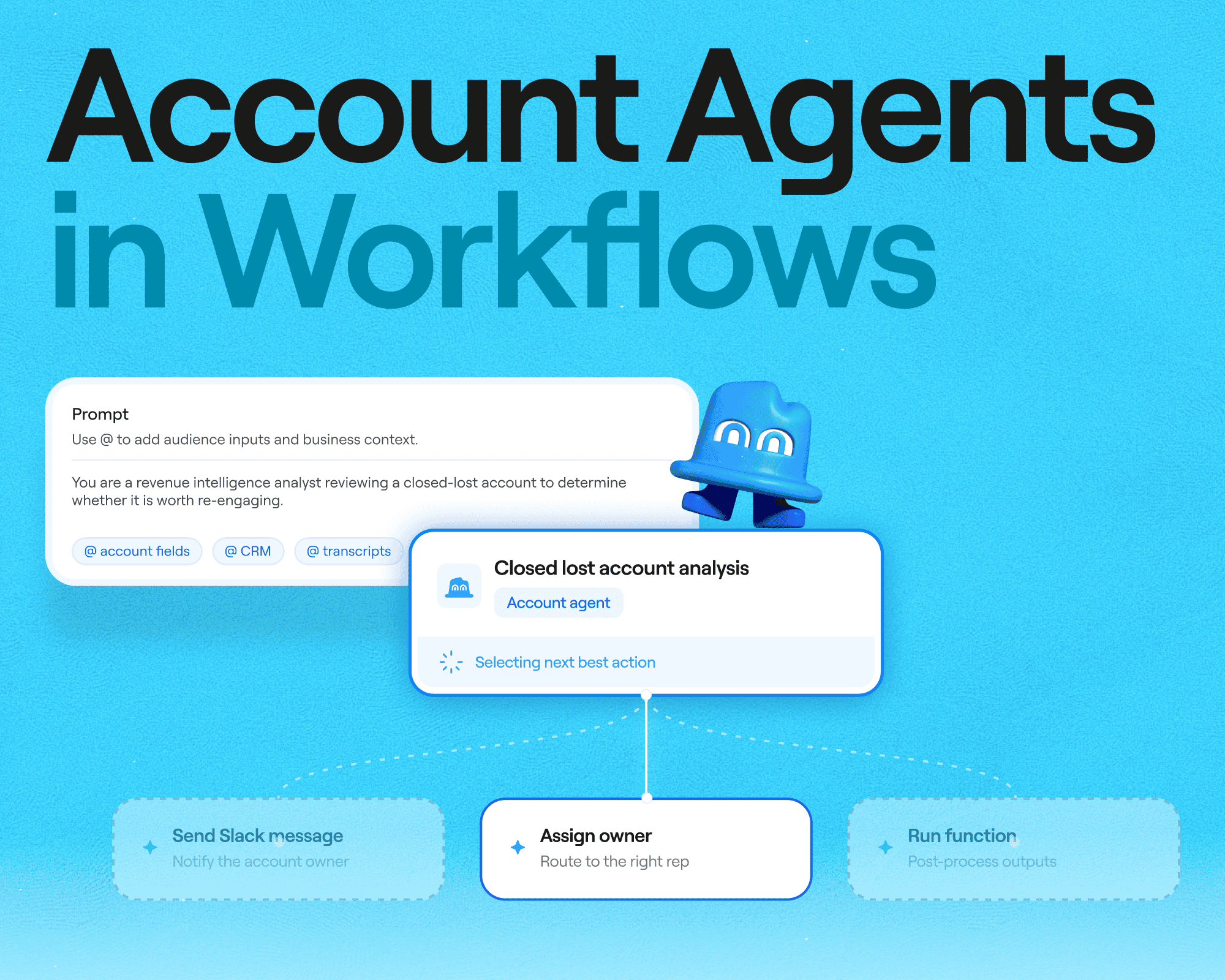
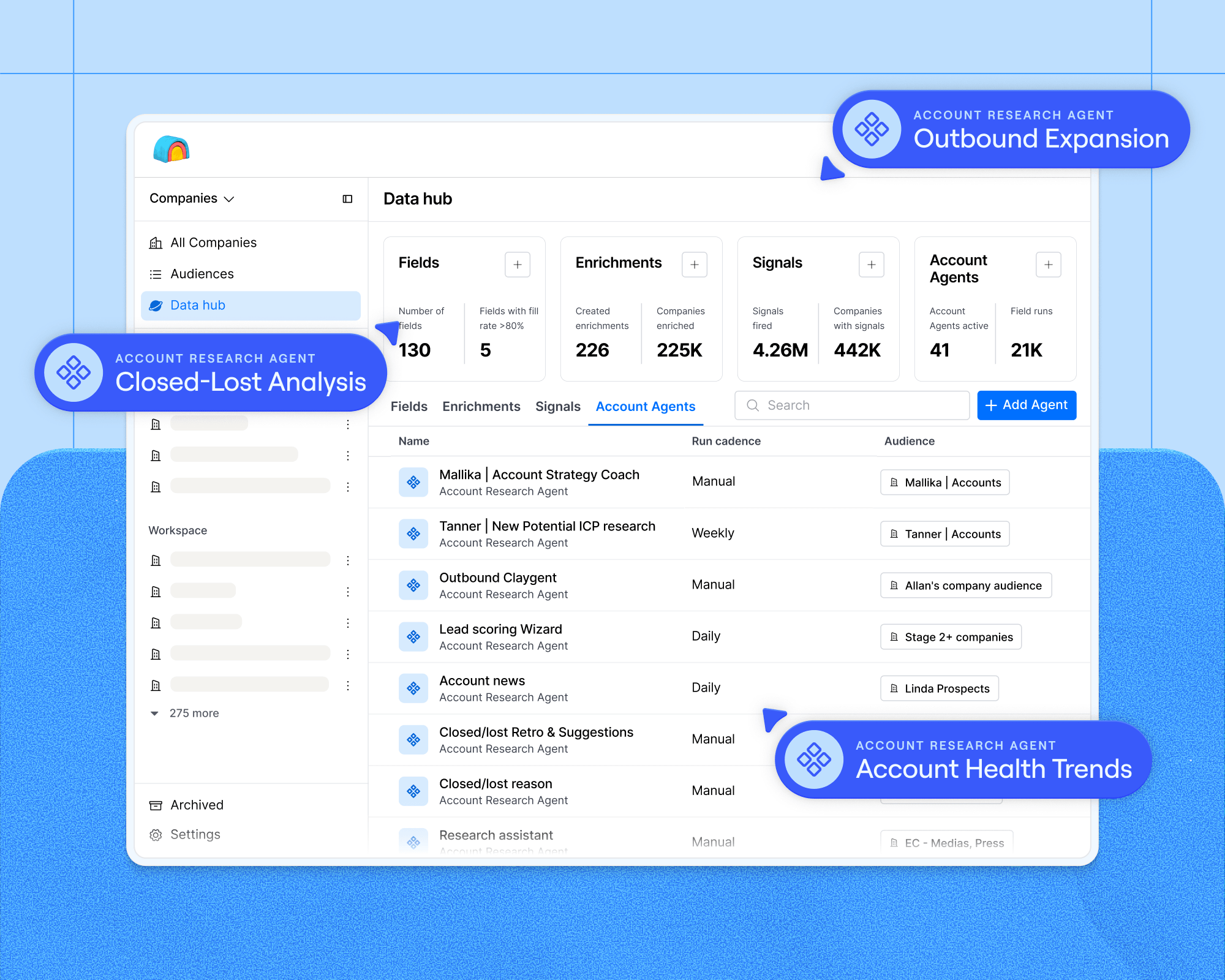
This play assigns an AI agent to each of your most important target accounts. The agent, called an account agent in Clay, watches its account continuously, looking for any reason to reach out, and hands your reps the findings while the moment is still fresh.
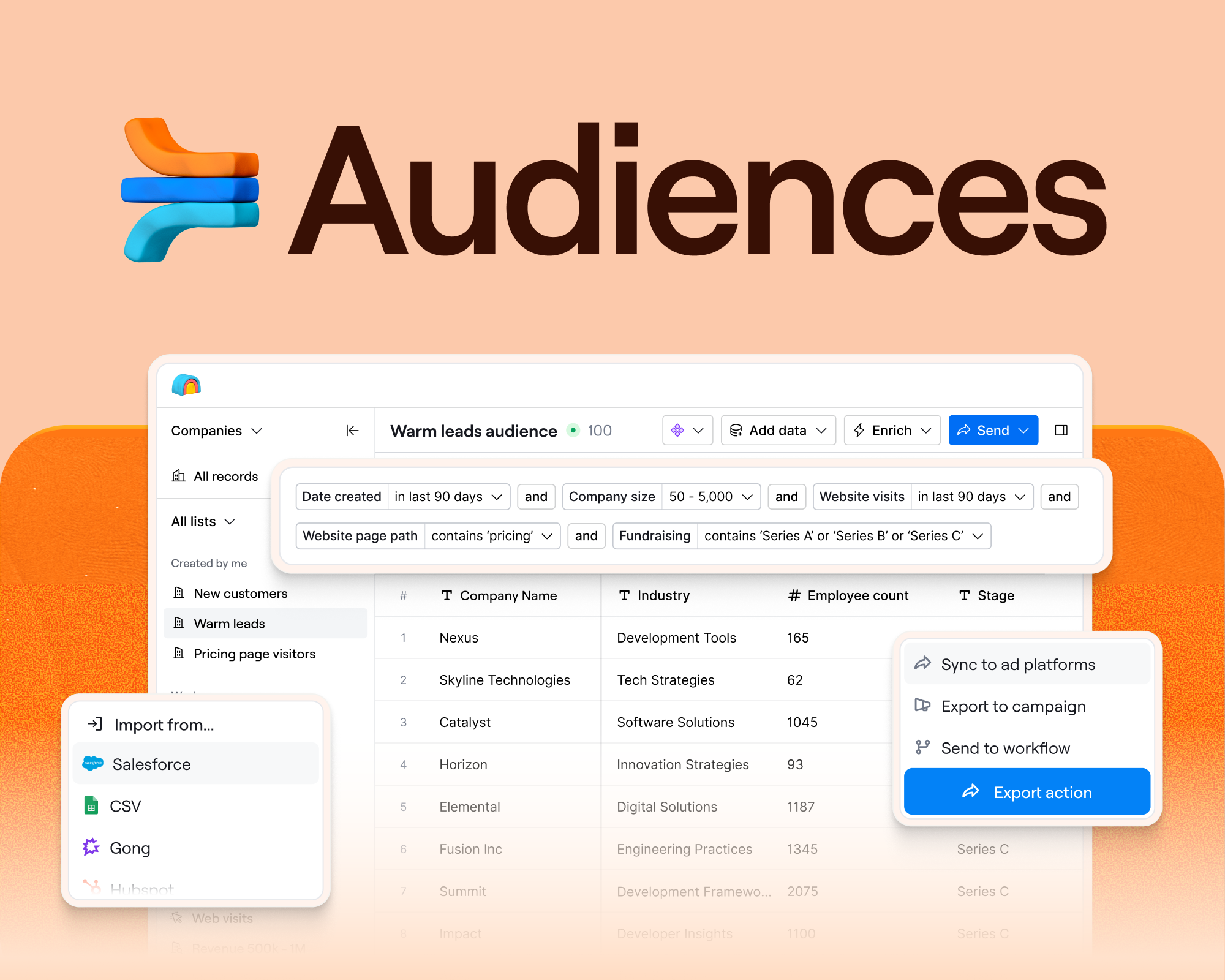
The watching happens in Audiences, which pulls everything you know about an account into one place. Product data attaches to the people using it, those people attach to their Salesforce contacts, and Gong transcripts add the sentiment of every past conversation, all refreshing on a 15-minute interval. A human scanning that much data would take hours and still miss things.
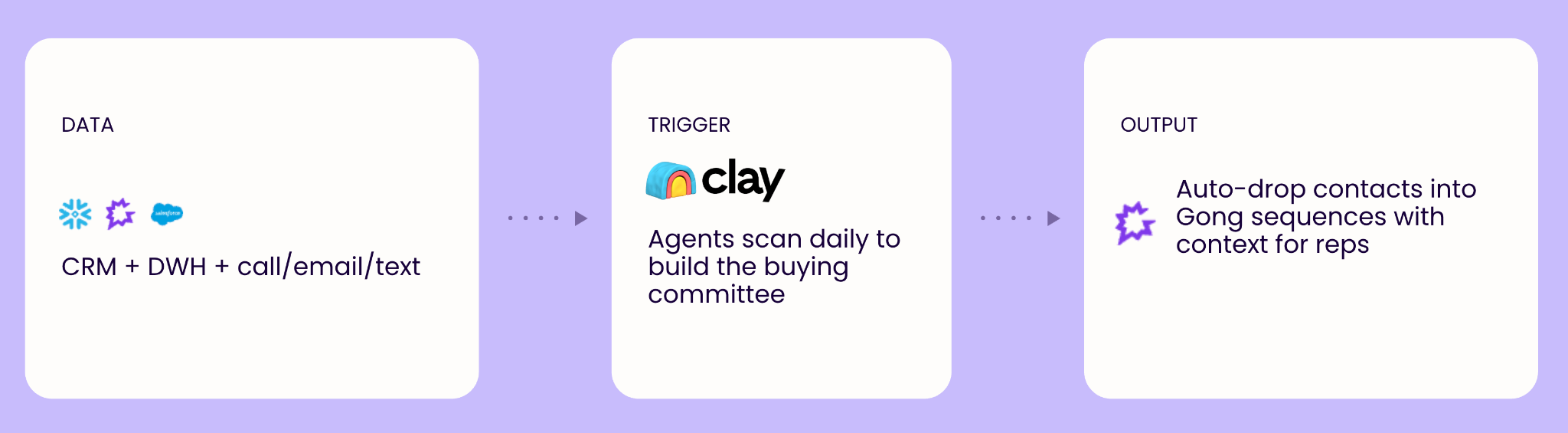
- Data. CRM records, warehouse product data, and call, email, and text history, unified in one audience.
- Trigger. Account agents scan the list daily with a standing prompt to build the buying committee. Ours asks for new product usage, the latest call transcripts, who to talk to, and who to avoid because sentiment went negative.
- Output. Contacts drop automatically into Gong sequences with full context for reps, and the same brief lands in our internal seller tools and Slack.
The recommended email writes itself from real conversation history, with an opener along the lines of:
“Last time we spoke, you mentioned you were having issues connecting Databricks data with Salesforce data. We’d love to understand more about that.”
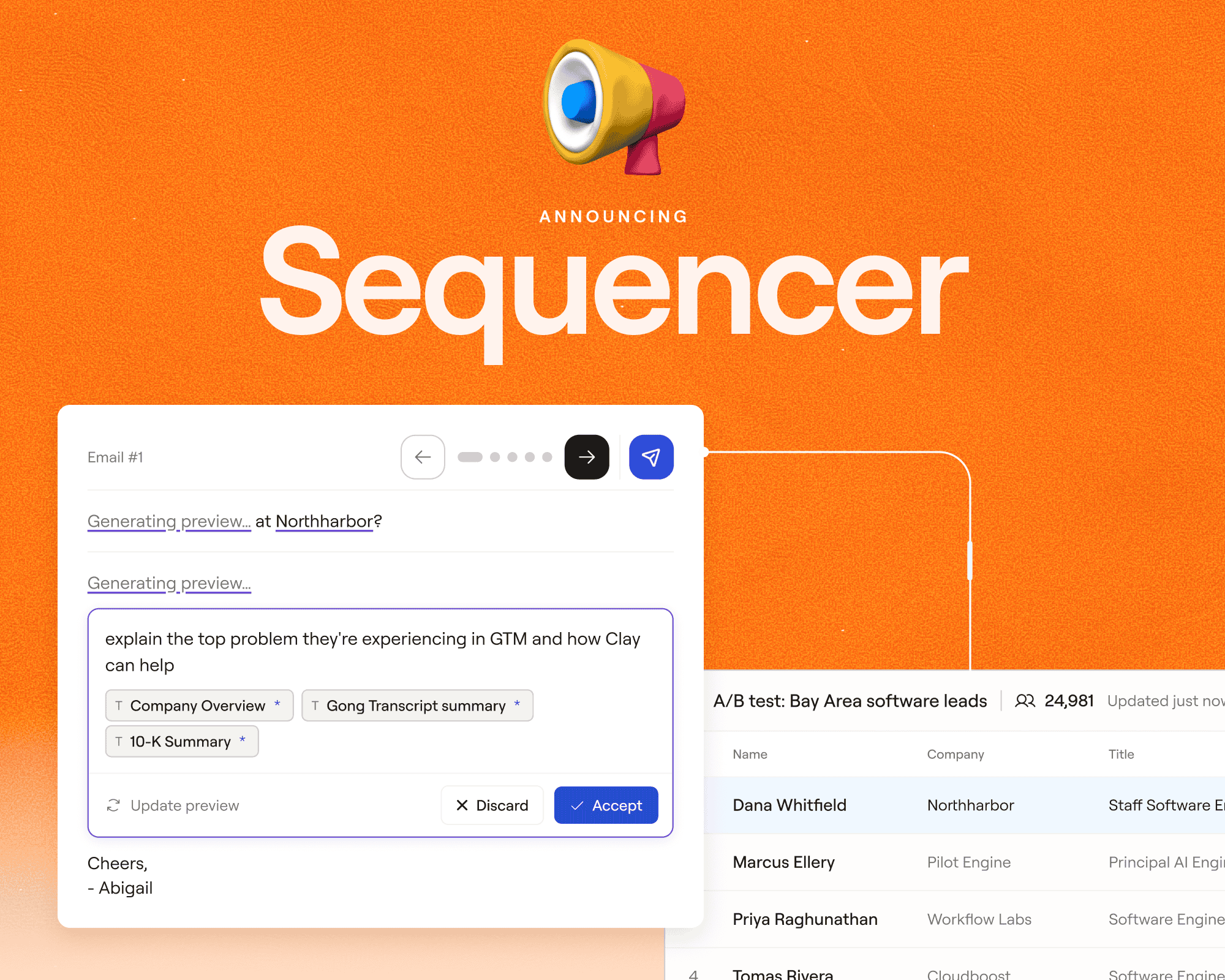
Since the alert reaches reps in their Sequencer, their internal tools, and Slack at once, we’re effectively running a multi-channel campaign on our own selling team. The agent’s findings don’t have to stop at an alert either. You can send the records to a Workflow or a workbook table for further processing, sync them to an ad platform so the same accounts start seeing your ads, layer on signals like a GTM engineer hire or a fresh funding round, or fill in missing contact details before a seller ever reaches out.
Play 2: Expansion and churn prevention
We’re in the middle of a summer of launches, with 12 launches in 12 weeks. When we ship that many new products at once, it’s challenging for customers to keep up with what’s available to them. That means the accounts that would clearly benefit from a new product but haven’t touched it yet are the perfect expansion signal. Unlike the other plays, this one doesn’t feed sellers. The alerts go to our post-sales team, called growth strategists at Clay, meaning the account managers and technical folks who help existing customers get more out of the product.
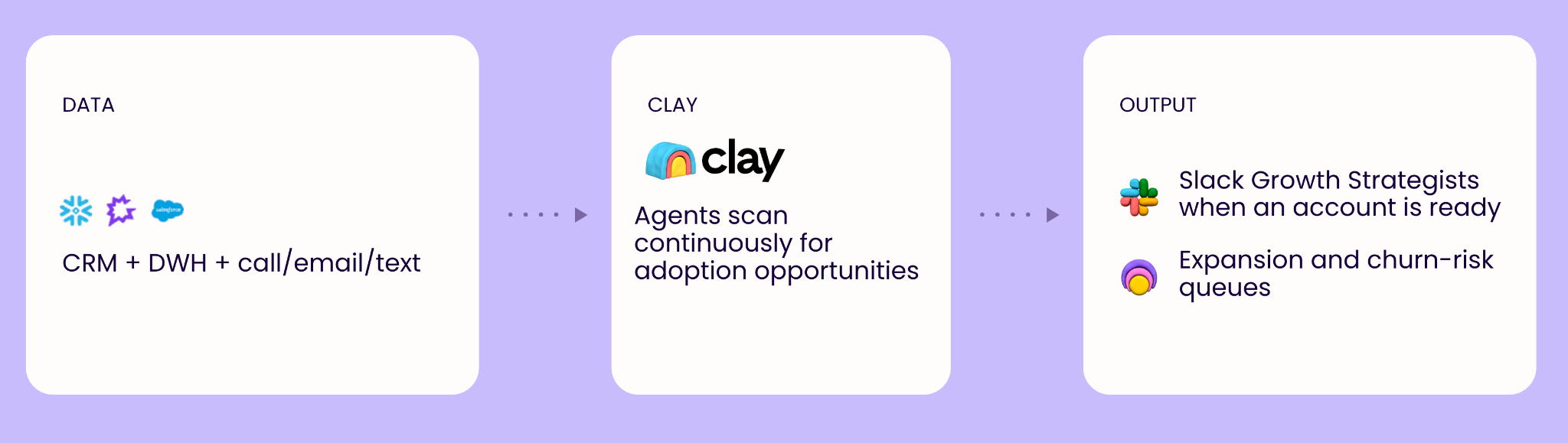
- Signal. A usage-based score showing which managed accounts should be using a new product but aren’t. At Clay, Audiences adoption is the current priority because it unlocks the rest of the new products.
- Trigger. Agents scan continuously for adoption opportunities and propose enablement sessions.
- Output. A Slack alert to the growth strategist when an account is ready, plus expansion and churn-risk queues.
One concrete example involves the 50,000-row table limit in Clay. When someone hits it, we find the person building that table and route them to a growth strategist, who reaches out offering a walkthrough of Audiences, which has no row limit. The customer gets unblocked, and the account gets deeper into the product. Building one of these agents happens in Claygent Builder; watch the full livestream for the demo.
Keep learning with us live
Clay runs livestreams like this one all the time, and August is packed. Here’s what’s on the calendar.
- August 5th. Top 1% features Faris Sumadi, Head of GTM Engineering at HubSpot, on running Clay across a 60-million-record CRM.
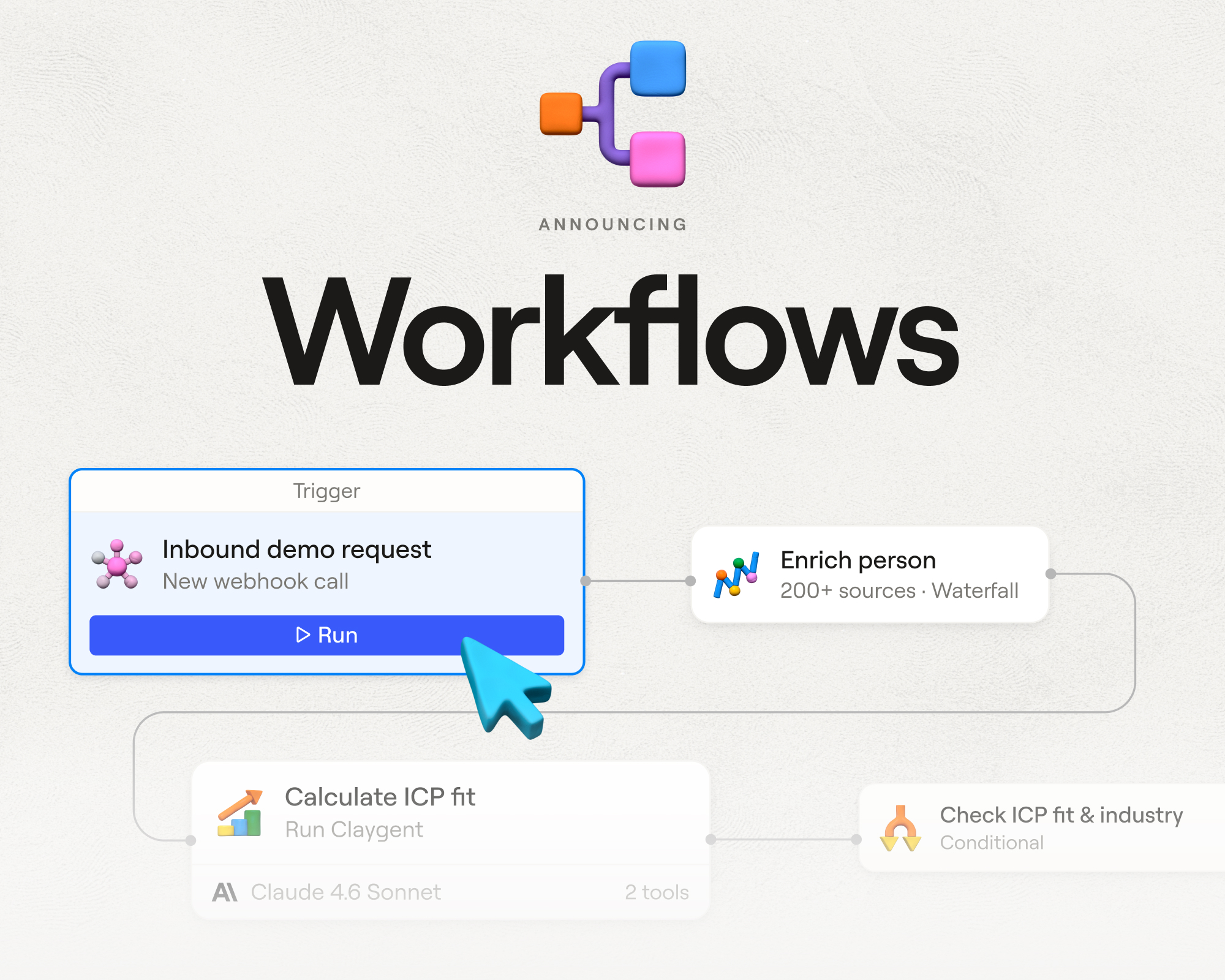
- August 12th. Build on Clay covers Clay Workflows with CEO Kareem Amin.
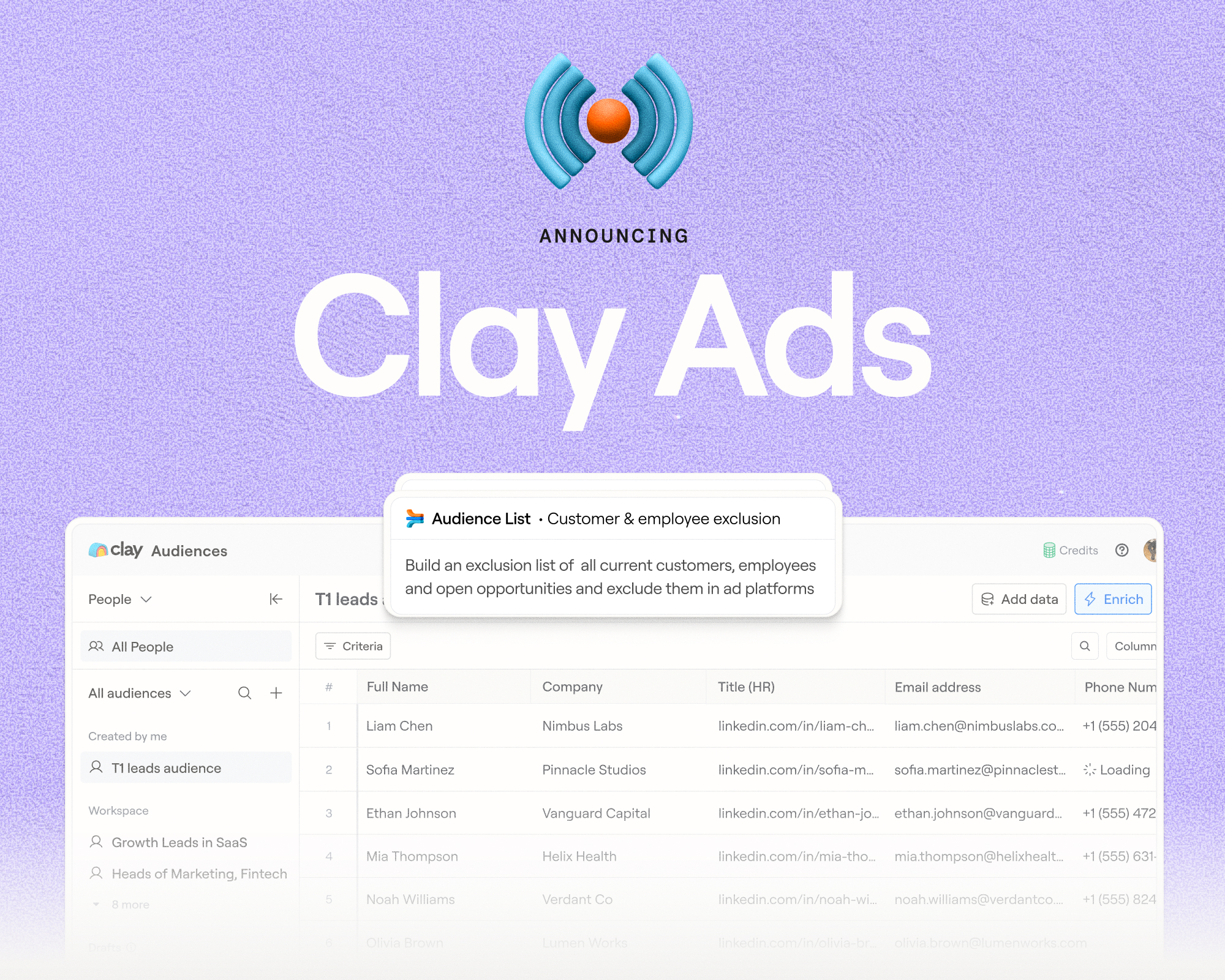
- August 14th. How Clay Uses Clay episode 13 digs into ABM ad audiences that convert, and we’re giving away playbooks for seed audiences, exclusion lists, and full-funnel ads.
- August 19th. Top 1% returns with Michael Tai, Senior Growth PM at Brex.
It all runs alongside the summer of launches, so save your seat and follow along as everything ships.






.png)



.avif)










.avif)












.avif)