


































.avif)










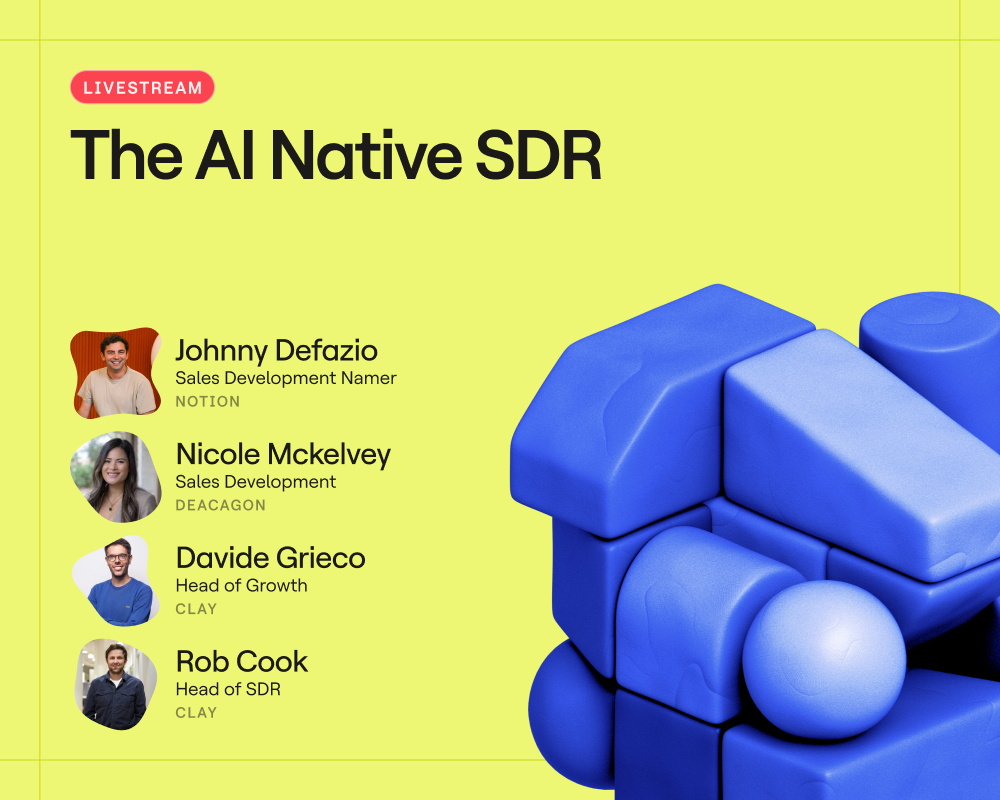
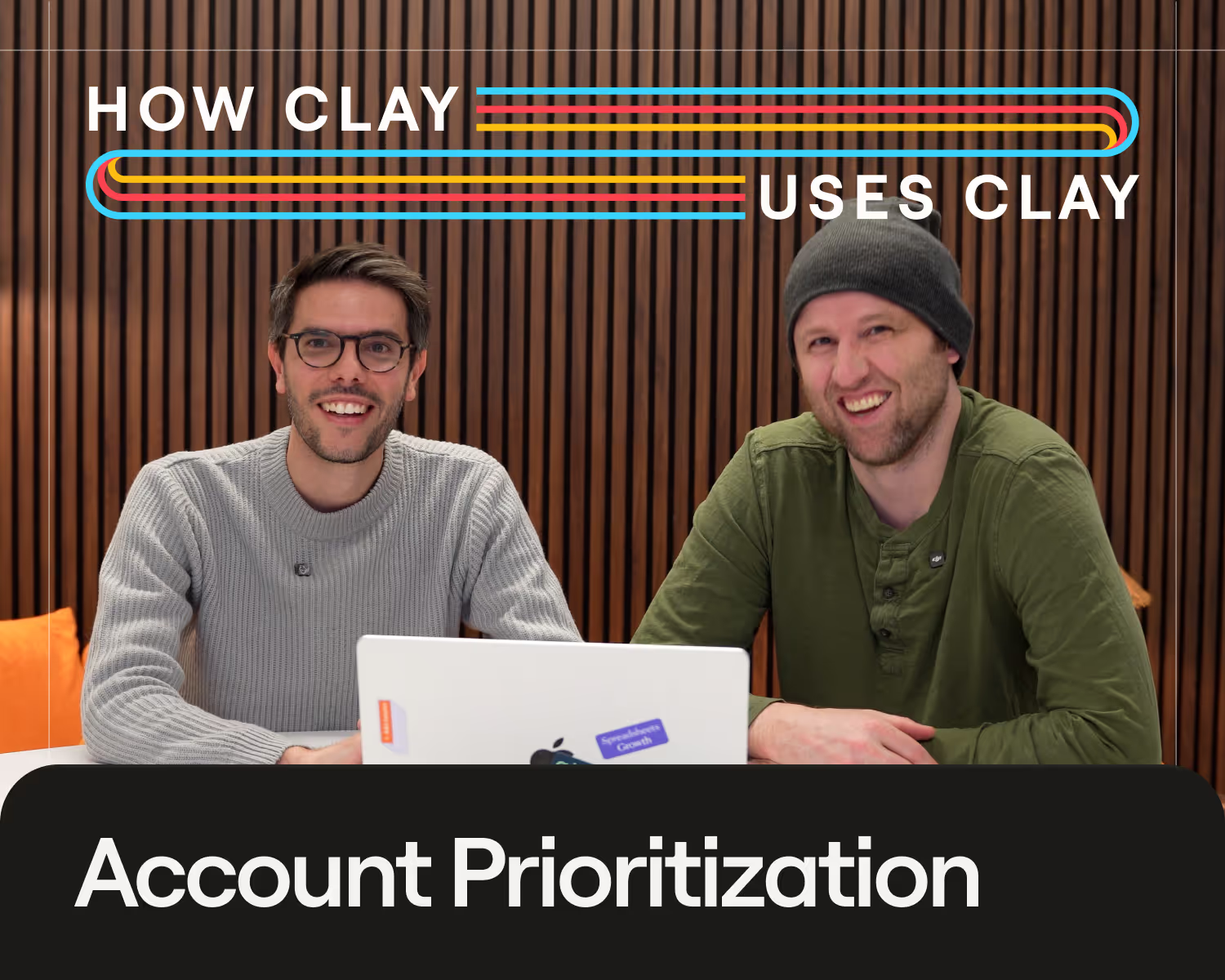
There's a lot of noise right now about AI and the disruption it’s having with sales development teams. So we went straight to the source and asked three leaders who are actively building and scaling SDR teams what's actually working and how they’re using AI to build pipeline.
Johnny Defazio, Head of Sales Development North America at Notion, scaled his team from 5 to 30 BDRs in two years.
Nicole McKelvey, Head of Sales Development at Decagon, grew from 3 to 12 SDRs in under a year.
Rob Cook, Head of ClayDR at Clay, built the function from zero to 16 in seven months across New York, San Francisco, and London.
Here's what they had to say.
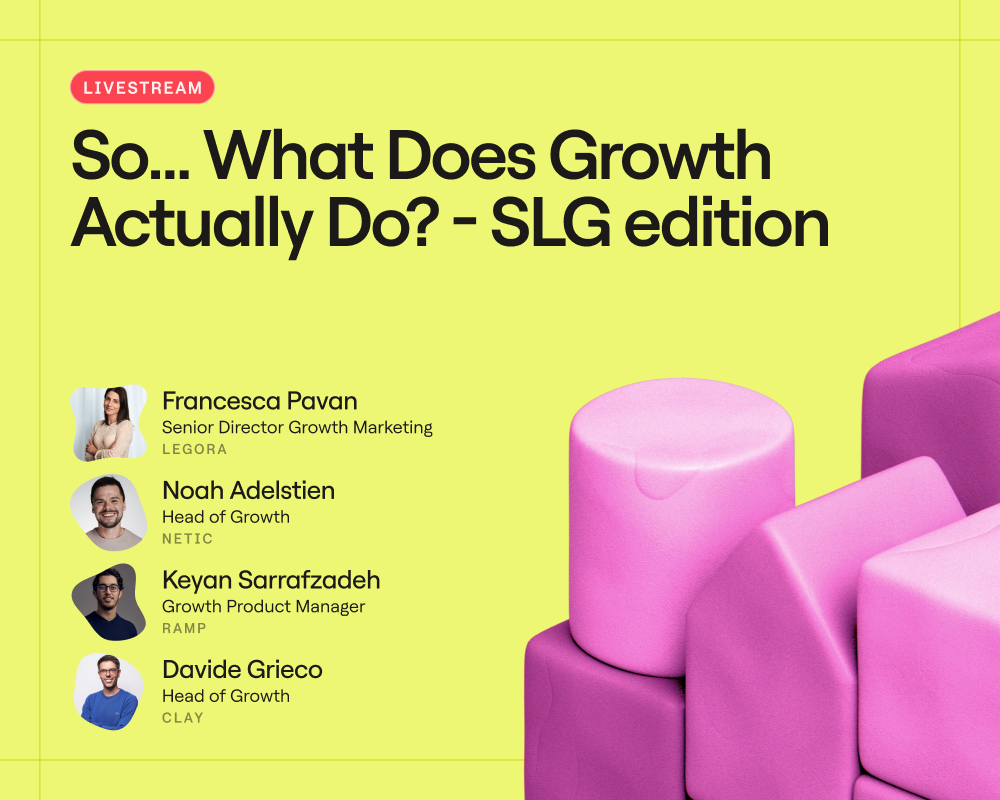
The Future of GTM is an ongoing series asking GTM leaders and operators for tactics, strategies, and learnings from adapting their programs to the ever-changing nature of GTM. Join live to ask the panelist questions and be part of the conversation.
The human touch isn't going anywhere, but the bar is rising
Every signal in the market points to humans being more important, not less. Field marketing budgets are bigger than ever. Conferences are packed, and not just with vendors. Return-to-office is happening. Rob put it simply: there's still massive complexity that's bespoke to every business. Software needs to get implemented, integrated with other tools, and maintained. That requires people.
Nicole framed it well: "The companies that win are the ones who re-build old workflows so that humans and AI work together better than anyone else." They all agreed that if you're using AI productivity gains to cut headcount instead of scaling more productive people, you're looking at the growth potential all wrong.
But that doesn’t mean there hasn’t been some changes to the org. SDRs are now being measured on pipeline that leads to closed-won deals, not just meetings booked. "To pick up the phone and call a VP and get them to want to buy your product is so difficult," said Nicole.
That difficulty is reflected in hiring. Nicole's top filter is whether candidates talk about business problems before they feature-dump about the product. Rob adopted a tactic from Nicole where he opens interviews with "we're having a really good week" or "we're having a really bad week" and watches whether the candidate asks why. If they move past it without digging into the mechanics of the business, that's a red flag.
The career path proves the bar is real. Notion has promoted 8 BDRs into AE roles, and some are now top commercial performers. Decagon's founding SDR got promoted to enterprise AE, cold-called a six-figure outbound deal in his first quarter, and hit top performer across the entire AE team.
Quality data is the foundation, and it requires a feedback loop
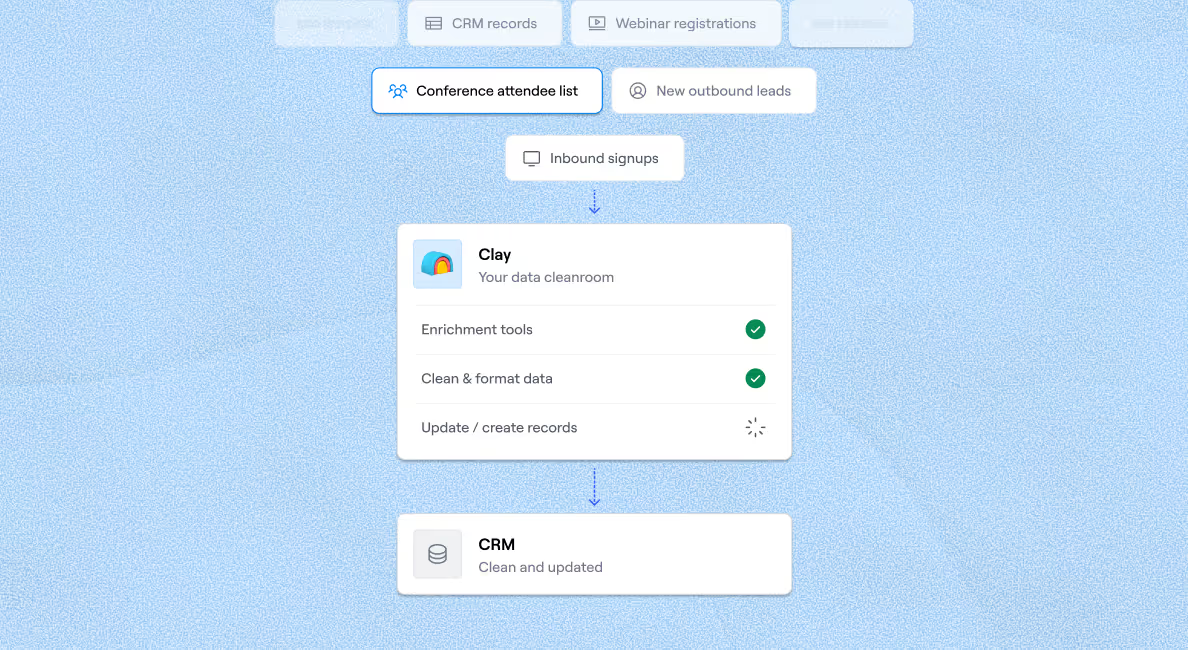
Nicole was direct about this: "I've spent so much time thinking about messaging and sequences and tools, but the real unlock is being super intentional about who you're calling. Garbage in, garbage out. Fix data first and everything else gets easier."
Without product-led signals, Decagon built their own signal layer. Reps use Clay’s MCP right from Claude to surface account news, AI hires, leadership changes, and competitor mentions. Marketing engagement serves as a heat map for where to hunt. This data and orchestration layer helps find warm paths into accounts.
That data layer only holds up if there's a tight feedback loop with the Ops team. When a prompt hallucinates or a signal is wrong, it needs to get fixed immediately or risk . He started an "outbound messaging that works" Slack channel where successful emails feed back into prompts as additional context. Product marketing is part of the loop too, because new positioning needs to get into prompts. Johnny took a different approach: an engineer embedded with his SDR team for a full quarter, sat in every team meeting, listened to cold calls, and built Notion's signal logic from that direct exposure.
The result of this partnership between SDRs and Ops is that reps spend their time on deals instead of doing manual research or working off stale context.
With the data right, reps focus on what moves the deal
Johnny's BDRs start their day by triaging product usage signals like account additions, database creation, and engagement warmth to decide which accounts to action first. Rob's team runs signal-based plays but insists on understanding the "why" behind every signal, even if it's not explicitly called out in the outbound email.
When it comes to messaging that works, Rob used to maintain hundreds of sequences at his previous companies pre-AI. At Clay, he runs one shell sequence. Everything is personalized with account-level context, persona-level pain, contextualized proof, and a persona-specific CTA. Templated copy only goes out for hand-raisers like book-a-demo or contact-us requests. Everything else gets a human review before it sends.
The shift is moving from the SDR leaders editing messaging templates to AI infusing new products and positioning directly into its draft messages.
But all three leaders agreed: the phone is the real leading indicator. “The emails we send are the notes for the call we're gonna make," said Rob. Nicole confirmed it. Outbound dials converting into meetings converting into pipeline is the core success metric at Decagon.
AI-powered call prep is where the leverage compounds. Johnny's team runs agents that produce account briefs with a specific point of view on how Notion can win, plus tailored discovery questions for the person they're meeting. "You literally can't fail if you follow the brief."
For leaders, the second unlock is reporting. Johnny runs agents against Gong and Salesforce to surface team performance by segment and pipeline source, replacing hours of manual data pulling.
What's next
AI has raised the ceiling on what good business development looks like. The teams winning right now are the ones treating data quality, ops feedback loops, and rep execution as a single system rather than separate workstreams.
SDRs are just one piece of the GTM stack getting rewired right now. Growth teams at sales-led companies are facing a version of the same question: where does AI actually compound results versus just add noise?
Register for future livestreams to join us live for the Q&A or watch the replay.





.png)






.avif)













.avif)














.avif)