


















.avif)









.avif)










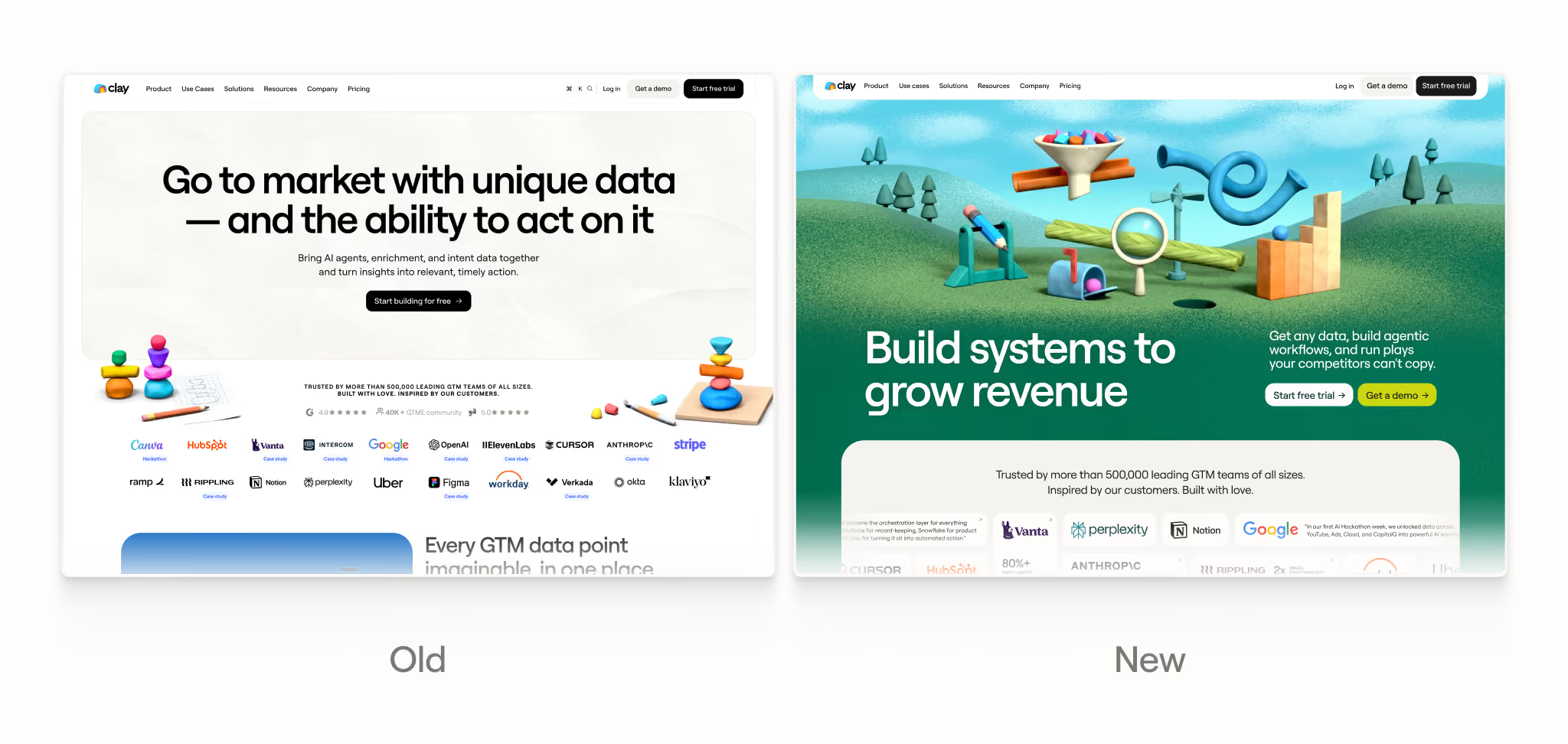
Last week, Clay launched a new homepage. Our last update was over a year and a half ago — back when Clay was primarily a data enrichment product. A lot has changed since then, and the old page no longer reflects the breadth of what you can do in Clay and the value we deliver to GTM teams every day. It was time for an update.
Clay is the infrastructure GTM engineers build on
We started with conviction that the new homepage should tell the story of GTM engineering. When we coined the term, it wasn’t obvious that the idea would catch on, but it has. Today more than half of the fastest growing B2B SaaS companies have a GTM Engineer on their team.
GTM engineers use AI and automation to remove all the bottlenecks to a company's growth. The function built around them turns GTM into a systematic, experimental practice.
A few ideas guided us:
- GTM engineering is a more systematic way to run GTM.
- Better data is the foundation of what makes our customers successful.
- But it's not just about having better data — it's about using it precisely in GTM plays. Like using signals to target accounts at the right time.
- GTM engineers build systems that are greater than the sum of their parts. Improving any piece improves conversion at every step downstream.
- This makes GTM engineering the winning operating model — one that AI has both enabled and required.
- GTM teams will be their company's competitive advantage.
- In the short term, data, speed, and scale are enough to win, but this will be table stakes in a few years. The edge will come from deep customer understanding and the creativity to build unique plays.
That led us to our new positioning: Clay is the infrastructure on which GTM engineers build systems so their companies can grow faster.
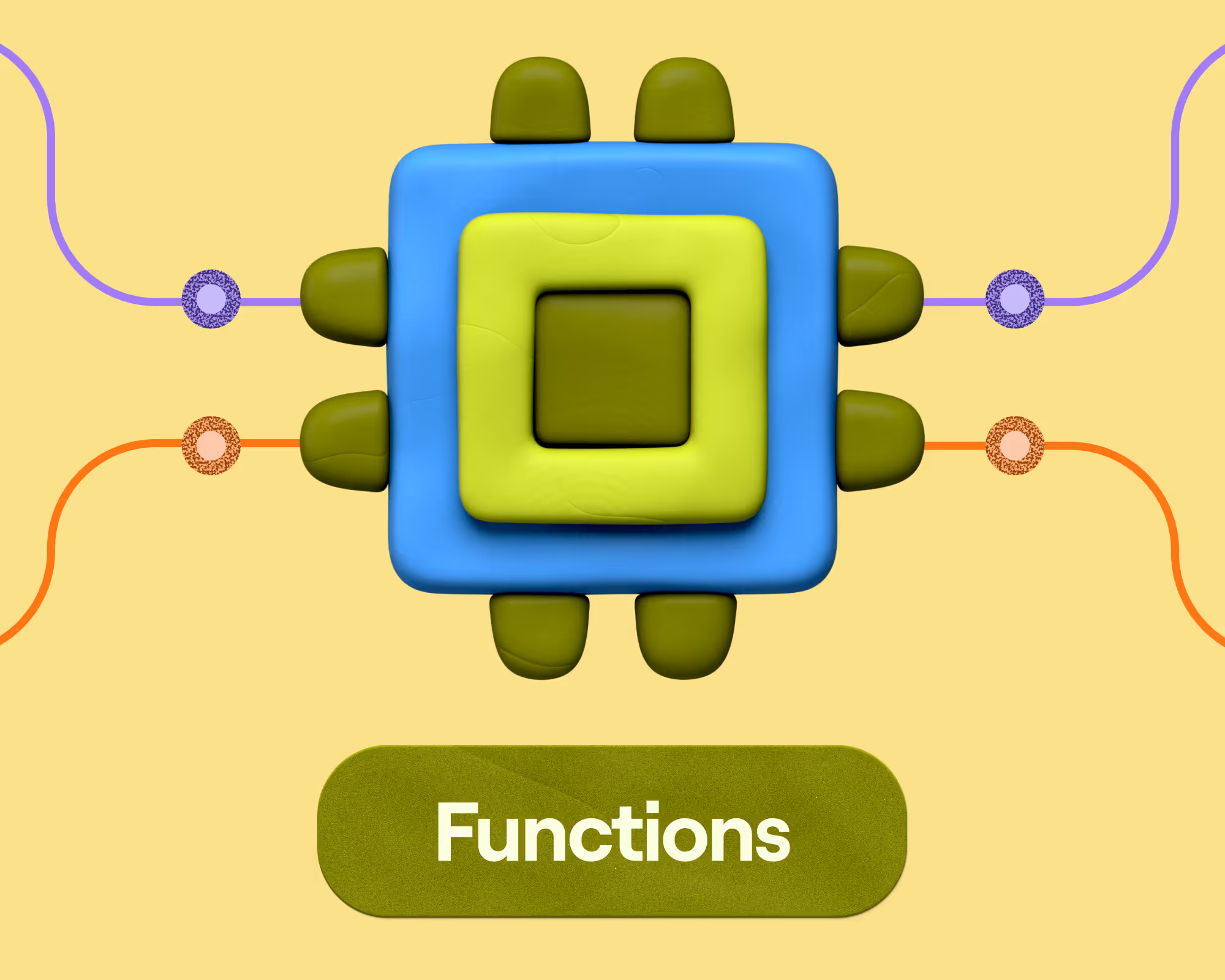
Every GTM system looks different. Clay gives customers the building blocks to create their own. And any GTM system — with or without Clay — is built from five primitives:
- Data: The context behind who to target, when, and why, and what to say. Built from first- and third-party identity, engagement, and signal data.
- Agents: The reasoning layer that completes tasks that used to require human judgment — research, writing, analysis, pattern recognition.
- Orchestration: The logic that connects the system — how data moves, how rules are applied, and what triggers action.
- Execution: The output — a sales, marketing, or operational action delivered across any GTM tool or channel.
- Governance: Control over who can view and change the system, observability into quality and behavior, and reliability at scale.
This framework gave us a single, consistent way to explain Clay across the dozens of use cases our customers use the product for. It reflects our product both as it is today, and the new products we’re working hard to build.
Building a homepage that's uniquely Clay
With positioning locked, we had a second challenge. We pride ourselves on being different from the typical tech company.
Making something fun and creative while telling a story about infrastructure and engineering is not easy. Our brand team explored a range of concepts to illustrate the GTM infrastructure: everything from 1970s IBM aesthetics to a hand-crank growing a flower.
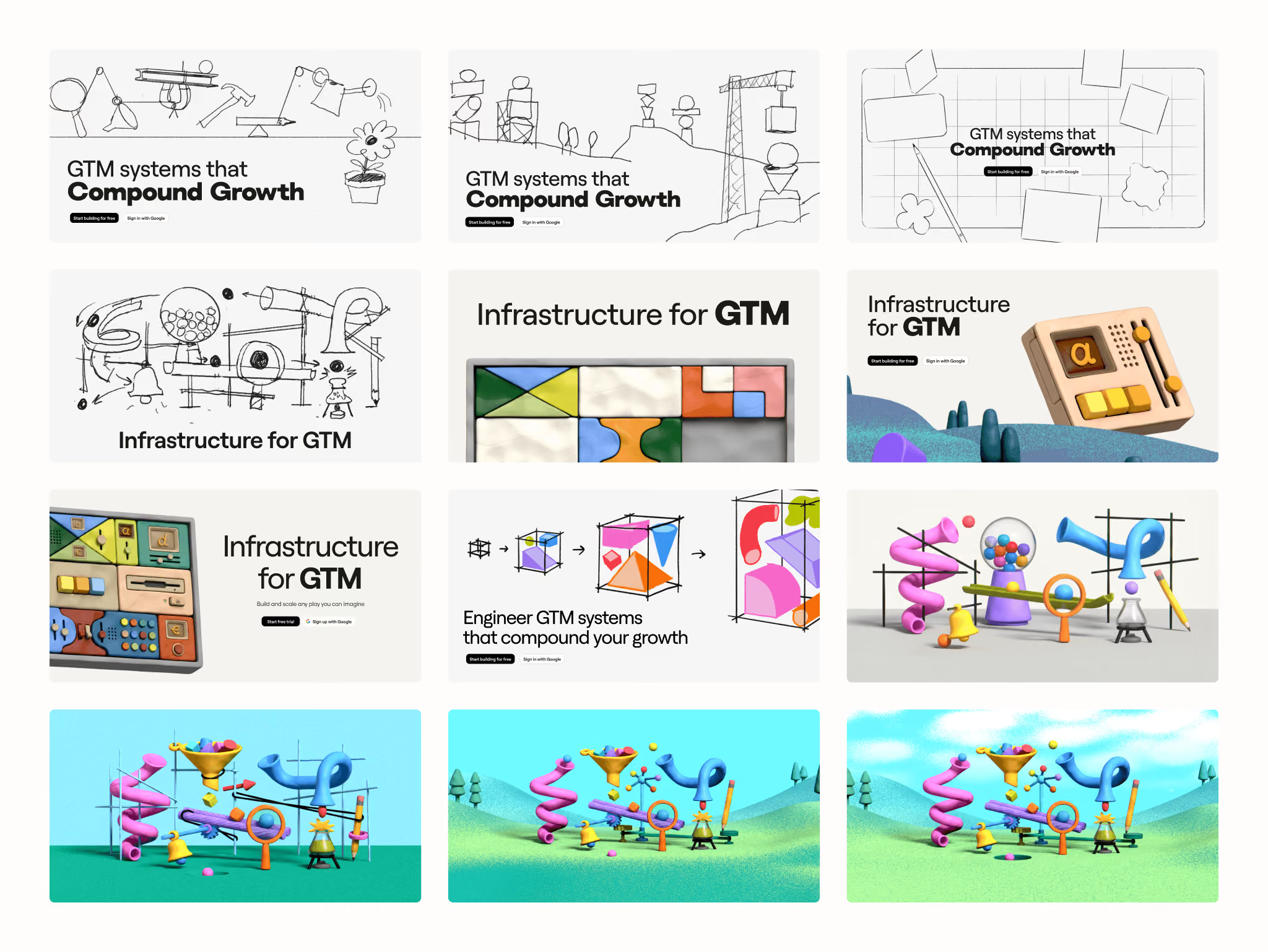
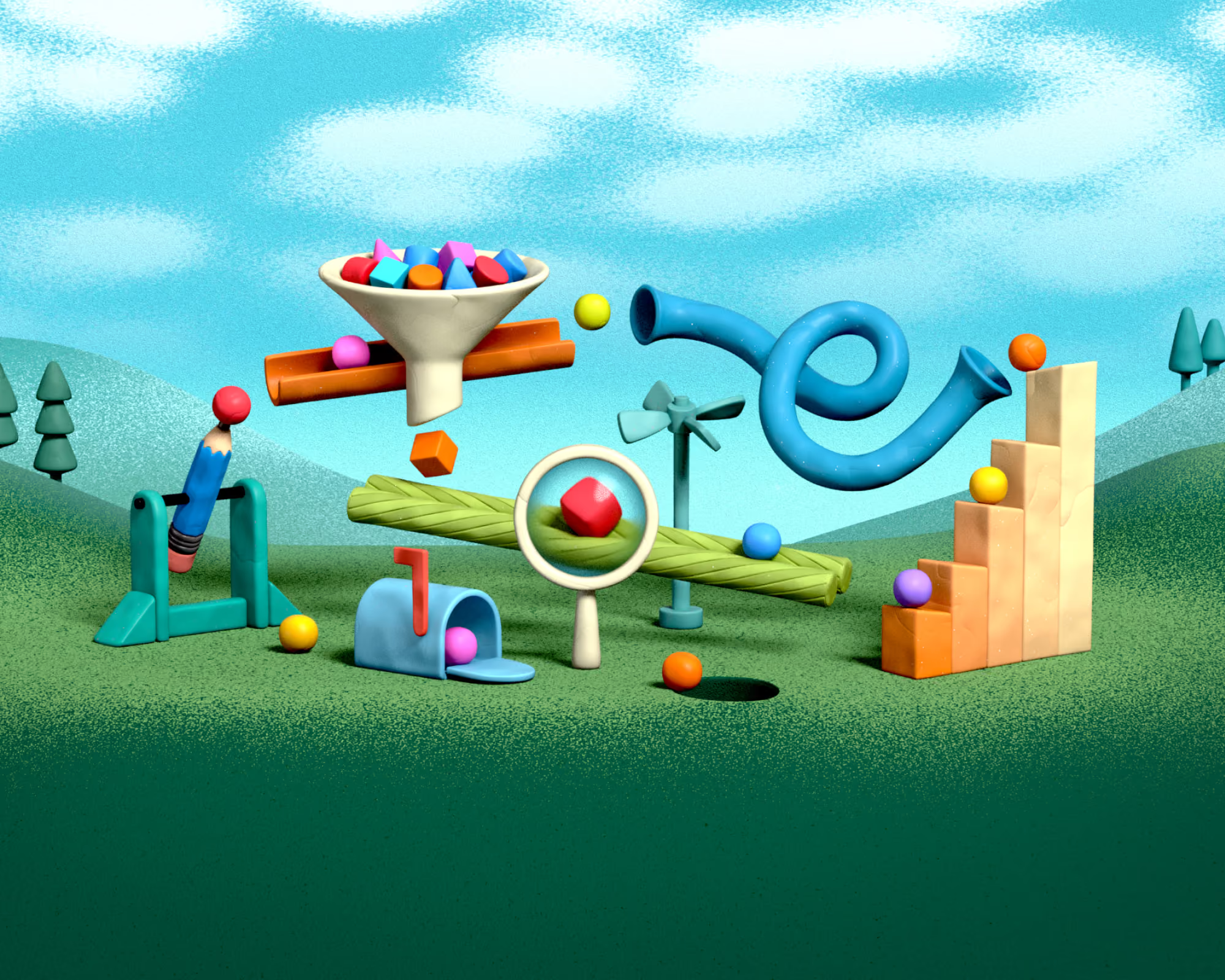
One concept stood out immediately: a Rube Goldberg machine. Playful, true to the product — a single interconnected system where an input moves through a chain of causes and effects. Every beat is engineered to produce the desired output.
Over the years we've built a visual language that's unmistakably Clay, and we wanted the new page to feel like a continuation of it, not a break from it. Our illustrator and animator Hudson Christie brought that world to life in a way that felt genuinely Clay: playful, expansive, creative, and true to our visual brand. The illustration carries the full journey — from the top of the page through each primitive, showing how the components of GTM infrastructure come together into a cohesive system. Ty Hughey built the page with precision, with careful developed interactions. Tanner Leslie and Justin Rands brought intention, care and craft to every detail of the design, structure, and flow to provide clarity for someone curious.
The result is a journey through the primitives you can use in Clay to build your own GTM system: bringing in data, putting agents to work, orchestrating workflows, and turning it all into execution. By the time you reach the bottom, the thesis lands on its own: Clay is go-to-market infrastructure. The system, not any single tool, powers a winning GTM motion.
The customers building on Clay are central to our story
On our old homepage, customers were the heroes. That's still true. We're here because of our customers. Almost every part of Clay exists because a customer imagined what should be possible.
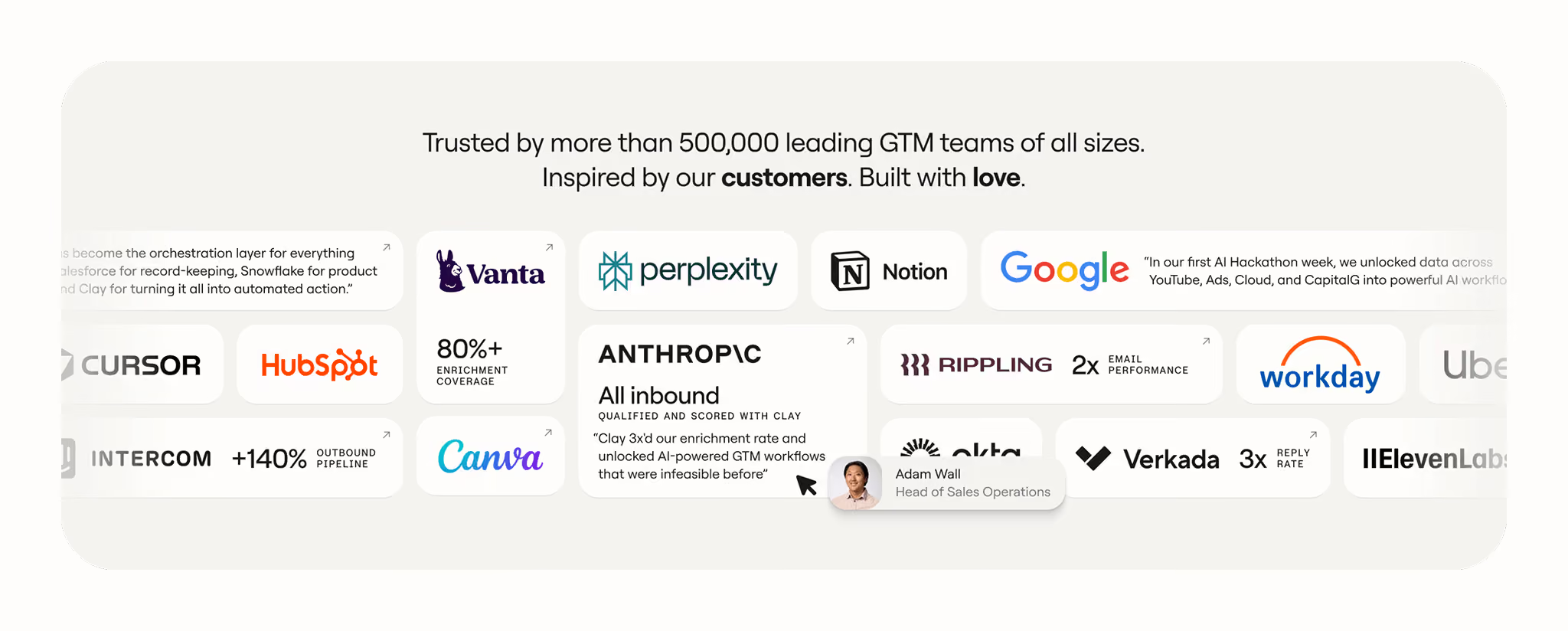
We've built alongside GTM engineers who are redefining this industry with us at some of the world’s most innovative companies. We wanted their stories to paint the picture of what’s possible with the real results they deliver at their organizations. Stewart Hillhouse worked in parallel to gather customer stories that show what GTM engineering actually makes possible at companies like Anthropic, Ramp, and Google.
Our homepage is built to convert
We had positioning, a visual concept, and customer stories we were proud of. But our homepage also needed to convert. Clay has both product-led and sales-led GTM motions and our homepage needed to deliver top of funnel for both.
The A/B tests are still in progress, but here’s how we approached maximizing conversion on our homepage:
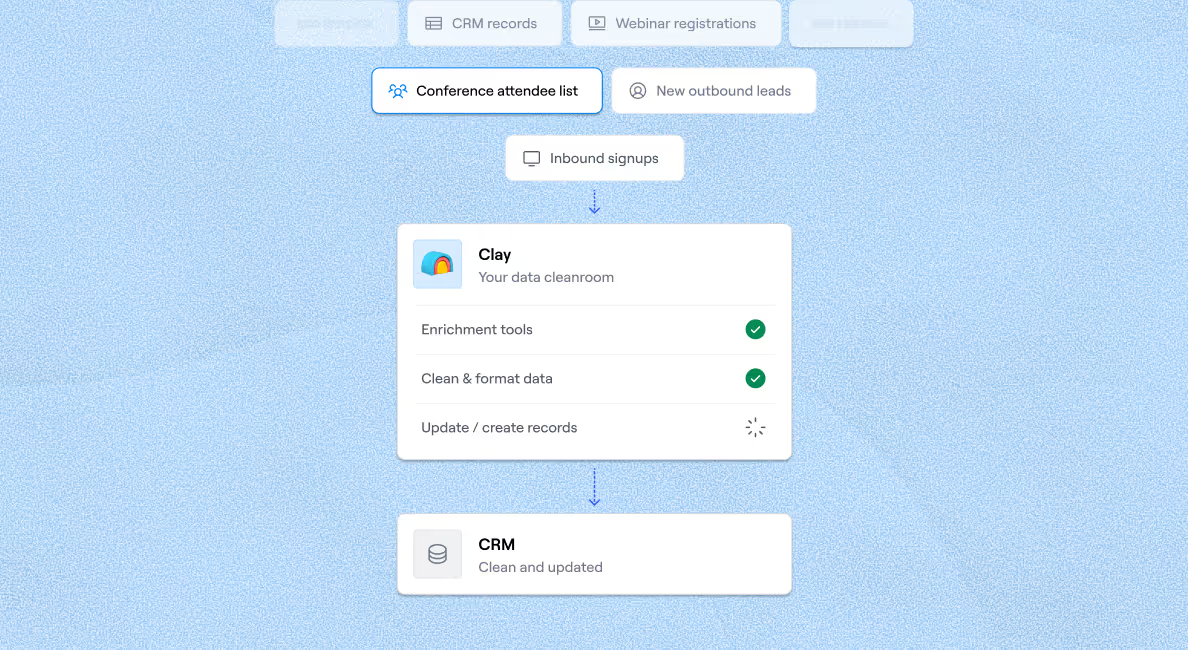
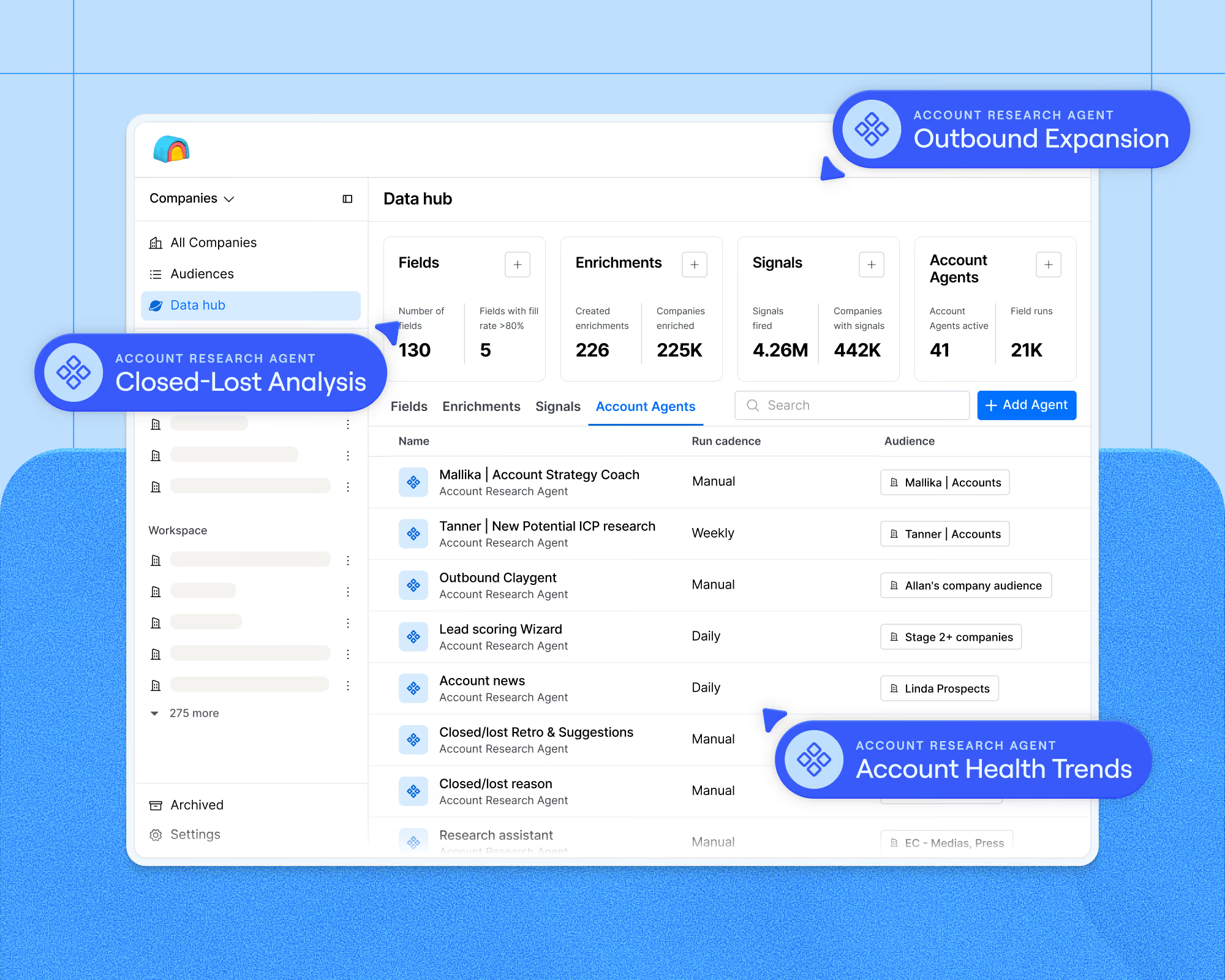
- Show the product in action with our top use cases. There are countless ways to build on top of Clay, but someone visiting the page for the first time should be able to quickly understand what’s possible. So, we added product screens organized around our best-converting use cases: automated outbound and inbound, launching ads, CRM enrichment, TAM sourcing, and more.
- Use real examples to credibly communicate impact. Clay’s impact can seem too good to be true. Clay customers really do “book 50% more qualified meetings” or “increase revenue per rep by 20%” – but it sounds like an over-promise. So we used real results from individual customers to make the revenue impact of building on Clay more credible.
- Create an “aha” moment in-product right from the homepage. We wanted to show-not-tell and deliver genuine value to someone in just a minute or two of them visiting our website for the first time. So we built an interactive feature where anyone can describe the GTM play they want to build with natural language to immediately get data that’s relevant to them in the product.
- Balance conversion and research with our CTAs. The old homepage relied on the navigation bar for vistors to go deeper exploring Clay. Our new homepage uses a mix of CTAs driving to free trials for self-serve users, demo sign-ups for enterprise prospects, and clear paths to learn more for people interested in researching further.
Products keep evolving, and so will this page. But for the first time in a while, the front door looks like the company behind it. We're proud of where it landed, and even prouder of what it points to. See for yourself at clay.com.
.png)






.avif)
.avif)












.avif)











.avif)