Close
Thank you! Your submission has been received!
Oops! Something went wrong while submitting the form.
We couldn't find anything for that query...

Behind the Scenes of Clay’s Marketing and Growth

Author
Author
Fadeke Adegbuyi
Date
Jul 10, 2026

Behind the Scenes of Clay’s Marketing and Growth

Clay looks like a rocket ship today, but we were founded in 2017 and spent seven years getting from zero to one. Then, we went from one to a hundred million in roughly two years. The joke goes that we’re a “nine-year overnight success.” Today, revenue splits about 60% self-serve and 40% sales-led, and two teams feed both: 

  • Bruno Estrella captains the marketing org and came to Clay after years of running growth at Webflow. 
  • Davide Grieco runs the growth department and joined our team from Verkada, where he was one of Clay’s first customers in 2023. 

Bruno made a bet on brand two years ago, building a user-generated content engine fueled by free courses and certifications, Clay Clubs, and the partner program for Claygencies. That’s only been amplified with events—from big conferences to intimate dinners—and Clay’s name on billboards across San Francisco and NYC. All of this, among other marketing activities, got Clay to $100 million in ARR, most of it self-serve. 

Davide joined Clay and started assembling his team just nine months ago. They launched an executive distribution program on LinkedIn to reach our sales-led personas, driving 6 million organic impressions in a single quarter. In parallel, they’re forming programs to capture and convert this demand, including building the “How Clay Uses Clay” webinar series, turning attention into pipeline the sales team can close. 

The result of their marketing-growth partnership is enterprise ARR roughly tripling in nine months and more than half of Clay’s pipeline now tracing back to marketing. There’s no cold outbound anywhere in the motion. 

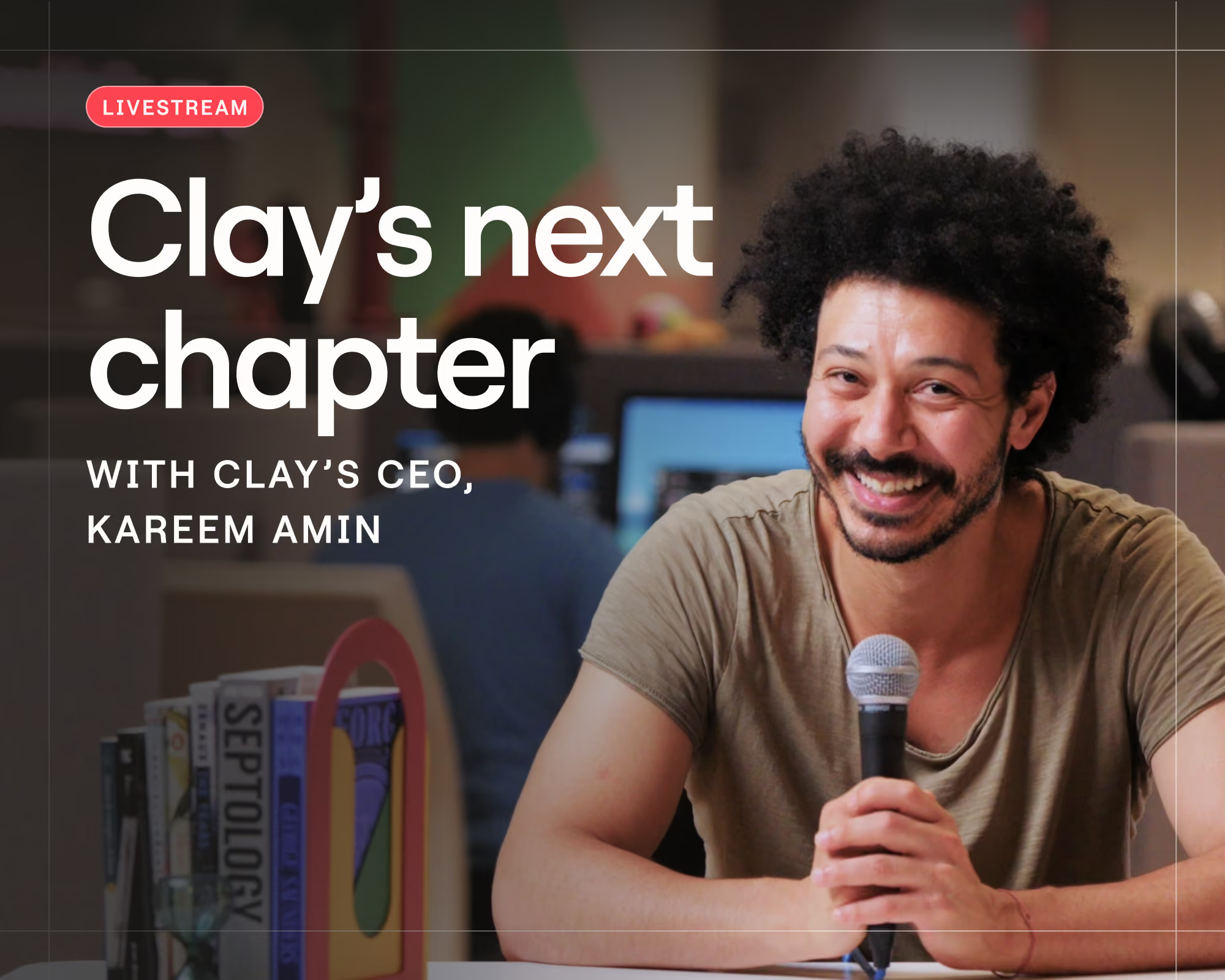
In this session, Bruno and Davide walk us through how their teams collaborate, where the handoff between marketing and growth happens, and their mutual distaste for marketing and growth tactics that feel like AI slop.

Clay runs livestreams like this all the time, and the next few go even deeper: How Clay Uses Clay: Agents, and Automated Growth Plays. Save your seat for these and every future livestream.

How Bruno runs self-serve and product-led growth

For most of its life, Clay was a self-serve business. How do you turn a stranger into a paying customer with no sales rep as an intermediary? Because of AI, the answer to that question is changing.

When ChatGPT landed in 2022, the cost of producing content fell to almost nothing. Data from Graphite shows that the number of AI-generated articles (50%) is equal to the number written by flesh-and-blood humans (50%). When everyone can publish endlessly, every channel gets crowded. 

“If you look into every B2B brand and content, they all say the same thing, they sound the same, the aesthetics are the same. They slap an AI word into the headline and say that they are the ‘AI of something.’ The reality is that’s not how people perceive it, so you have to really think differently,” says Bruno.

Clay needed an advantage that the noise could not wash away, so the marketing team committed to a few convictions:

  • People as the distribution lever. Anyone can publish, so the durable edge is getting real people to talk about you rather than producing more content yourself.
  • More is more. What moves the needle is the frequency of many different people mentioning Clay in many different places.
  • Make people feel loved. Customers build businesses and careers on top of Clay, so brand affinity is a requirement. 

These philosophies extend to every channel the team relies on, each one built to feed the same engine.

The UGC loop that turns users into marketers

From Lovable to Claude to Clay, one engine works unusually well for AI products: a user-generated content loop. For us, someone creates a Clay account, the product supports their career or business needs, and they build something they couldn’t build before. That makes them want to show their work, so they post about it on LinkedIn, and the people who see the post feel a flash of FOMO and create accounts of their own. Because self-serve carries so little friction, almost nothing stands between that interest and a new signup, which keeps the loop turning.

The programs that feed the loop

We don’t cross our fingers and hope the loop spins on its own. Instead, we’ve built programs whose job is to pour fuel on it, each one producing more content that pulls in the next wave of users.

  • Education. Clay University publishes a deep library of free curriculum covering AI skills, CRM enrichment, and automated outbound. The certifications prove to people that they know what they are doing and support them in advancing their careers. Even the studying becomes content; learners love to share what they’ve mastered.
  • The partner program. For agencies and freelancers, Clay routes real client work their way through our Clay Solutions Partner program and gives them the visibility they could not earn alone. Bruno met these operators one-on-one for months and has now watched some agencies either be acquired or generate more than a million dollars in annual revenue.
  • Clay Clubs. These are in-person gatherings where users learn from one another; people want to learn from others facing the same problems IRL, then post about it online. We’ve had users start clubs in London, England, and Manila, the Philippines. 
  • Clayback. Like Spotify Wrapped before it, Clayback hands each user a recap of everything they built over the year. Clay users get to position themselves as experts—sharing everything from enrichments used to contacts found—generating content in the process. 

Influencers who actually use the product

Because so many people post about Clay on their own, we get asked all the time whether we pay them to. Sometimes, but rarely. Clay has worked with a handful of B2B influencers, but our bar is high. 

They have to be real operators who use the product, and every partnership runs through heavy vetting. Our audience can tell instantly when someone is talking about a tool they do not understand.

Events for every stage of the funnel

Clay runs an almost absurd number of events, both through our community and ones we host ourselves. The right format depends on the funnel stage. The larger events work best for the top of the funnel and net new opportunities, like GTM in GMT, the conference we ran in London around deep go-to-market and AI content.

More exclusive events work best for people already in the pipeline who are considering Clay, whether that is a unique dining experience with other Clay users or a World Cup match. These accelerate the pipeline by putting senior prospects alongside current customers, who end up talking to each other and mentioning that they use Clay.

Billboards we can tie back to pipeline

Our billboards follow a rule Bruno applies to every brand investment: the spend has to solve a real problem rather than just look impressive. Everything marketing touches should serve growth. Clay timed our last billboard campaign to the September-through-November stretch, when the GTM conference calendar fills, and our buyers cluster in specific cities. 

It’s traditionally been challenging for companies to track the impact of something like an ad at a busy San Francisco intersection. But we’ve figured that out, too: the team scans Gong call recordings for mentions of the billboards, pulls that into Clay, and ties it back to pipeline.

How Davide builds a sales-led growth motion

The growth team is young. Davide started it nine months ago with five people. Before it existed, almost all of Clay’s growth came from the product itself;  enterprise was small and under-optimized. 

Davide’s mandate was to grow the enterprise motion until it outpaced self-serve and cleared half of our revenue. He views the sales-led motion as a factory with four machines in a line, each taking an input, doing its work, and passing the result to the next: 

  • Demand generation. Turn a cold ideal customer into someone who is aware of Clay and cares what we have to say.
  • Demand capture. Turn that awareness into leads.
  • Demand conversion. Turn leads into qualified pipeline.
  • Demand closing. Turn pipeline into revenue.

Output is capped by the slowest machine, so pouring effort into one that already works barely increases revenue. The job is to find the true bottleneck, fix it with Clay and some automation, then move to the next one. 

Two machines were already strong. 

Bruno’s brand work had demand generation humming. And our close rate was suspiciously high by B2B standards, which usually means the real bottleneck is sitting further upstream. The two machines in the middle were the weak ones. People knew Clay but had no idea what to do with us. We lacked the middle-of-funnel content that turns curiosity into intent, and our sales team could not process the inbound it already had.

Fixing those two machines has been most of what the team has done since, and the results followed. Enterprise ARR roughly tripled in nine months, the sales-led share of revenue climbed from 20% to 33%, and it reached 40% once you count the mid-market sales-assist motion. More than half of Clay’s pipeline now traces back to marketing.

Executive thought leadership on LinkedIn for a different buyer 

Generally speaking, at Clay, marketing builds the programs. That includes exec posting, events, and cohorts. Meanwhile, our growth team leverages these programs to make money. Executive thought leadership on LinkedIn is a marketing motion: Bruno’s team built and runs it, while Davide’s team uses it to drive leads and pipeline through promotional posts. 

LinkedIn has always worked well for us to build awareness, but we needed to use the same channel for a different enterprise persona. Clay’s enterprise buyers are heads of rev ops, along with the executives who sponsor and sign deals. Reaching them on a feed full of self-serve content takes a different approach. 

So we verticalized, putting individual executives at Clay at the center of the brand and having each own the content for their domain, all organic with no paid spend. The mapping is deliberate: each target persona is paired with the Clay leader most closely aligned with their role, so a head of growth hears from our head of growth and a CRO from our co-founder, rather than from a faceless brand account. In a single recent quarter, that executive program generated 6 million organic impressions. 

Davide treats his own feed like a portfolio, rotating four kinds of posts:

  • Promotional (20%). These posts have a clear CTA, with the goal of generating pipeline.
    Personal (25-40%). Updates that have no CTA; instead, they share personal and relatable content to build connections across LinkedIn.
  • Thought leadership (40%). These also lack a CTA, but their aim is to provide value by sharing GTM frameworks, learnings from our campaigns, or trends we see in the market.
  • Shitposting (0-15%). Funny posts that interrupt the pattern; some execs don’t do them, but Davide does—otherwise LinkedIn is painfully boring.

None of this comes from a PR team. The executives write their own posts, sometimes with a teammate sharpening a weak hook, and none of it is AI-generated. Executives are also the first and cheapest way we promote anything we launch.

Davide’s post, which promoted the “Behind the Scenes” webinar this one-pager is about, drove over 4,500 signups. If you look at the typical B2B SaaS acquisition cost for webinar leads ($50 to $100), we would have needed to spend $300,000 to $400,000 to get the same result with paid ads.

“Maybe it’s cringe, but it’s even more cringe having zero leads going to your webinar,” says Davide. 

Turning enterprise buyers into advocates 

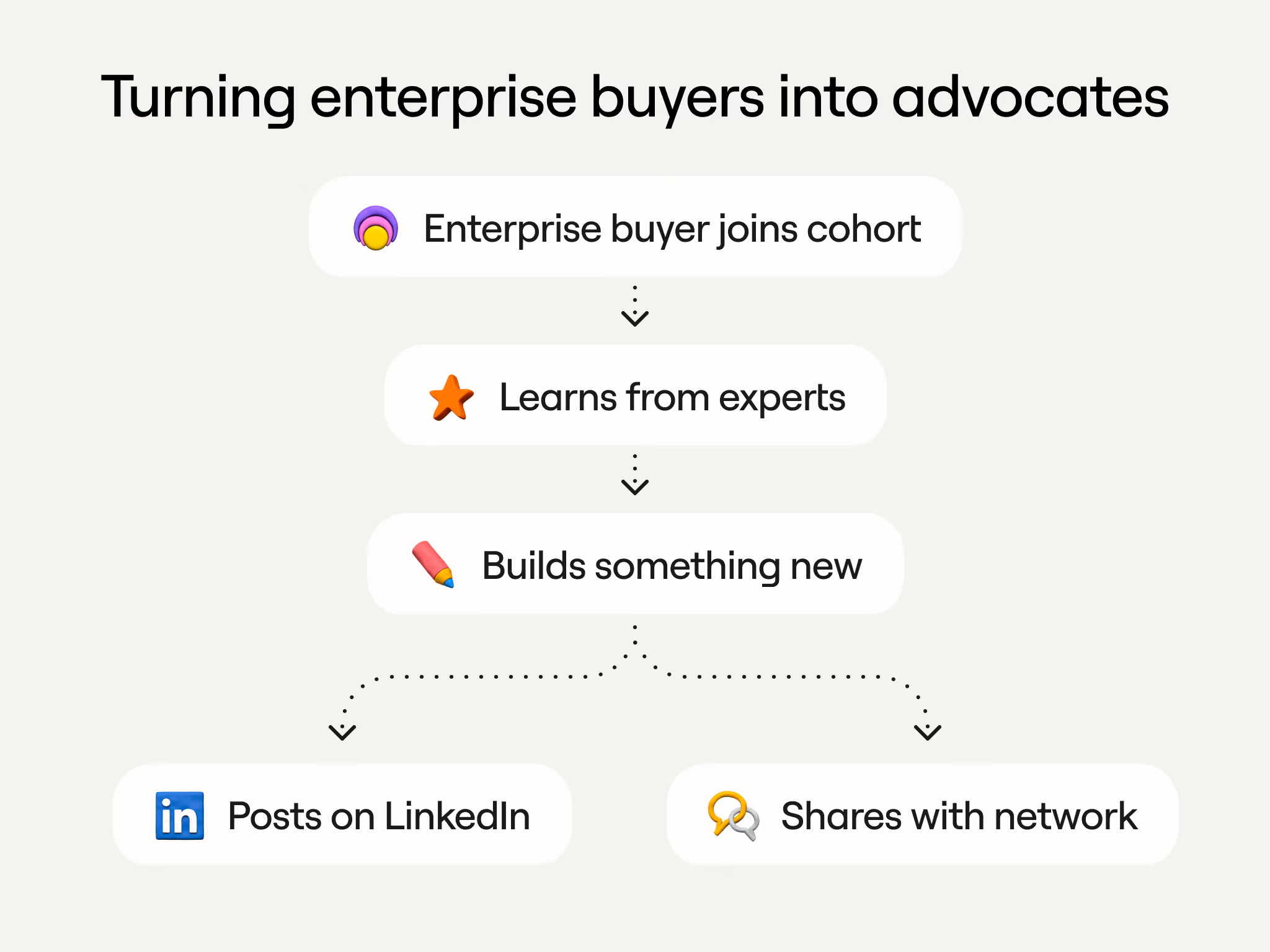
We’ve also adapted the convictions behind the self-serve loop for a more senior audience. Bruno’s team runs this as well, and growth leans on it to drive pipeline. For example, Clay Enterprise Cohorts give operators the same education and status that the self-serve motion runs on, and it spins up the same kind of user content. People from companies like Qualtrics, Wix, and UiPath are sharing what they’ve built with Clay. 

The part about making people feel loved shows up as experiences you might not expect from a B2B company. One partner session featured flower arrangements. Others have included sound baths and indoor skydiving. People need to feel that we genuinely care, and when they do, they talk, turning enterprise buyers into their own source of word-of-mouth.
The “How Clay Uses Clay” series

The first bottleneck, demand capture, came down to a lack of content. You wouldn’t normally ask a growth team to write articles or create videos; that responsibility often sits with content marketing and sales enablement. But treating go-to-market like a factory means breaking the silo and going after the bottleneck wherever it sits. So our Growth team built the content itself, a livestream series we produce in-house called “How Clay Uses Clay.” It’s content that earns money, reverse-engineered from a belief Davide repeats to the team about once a week: 

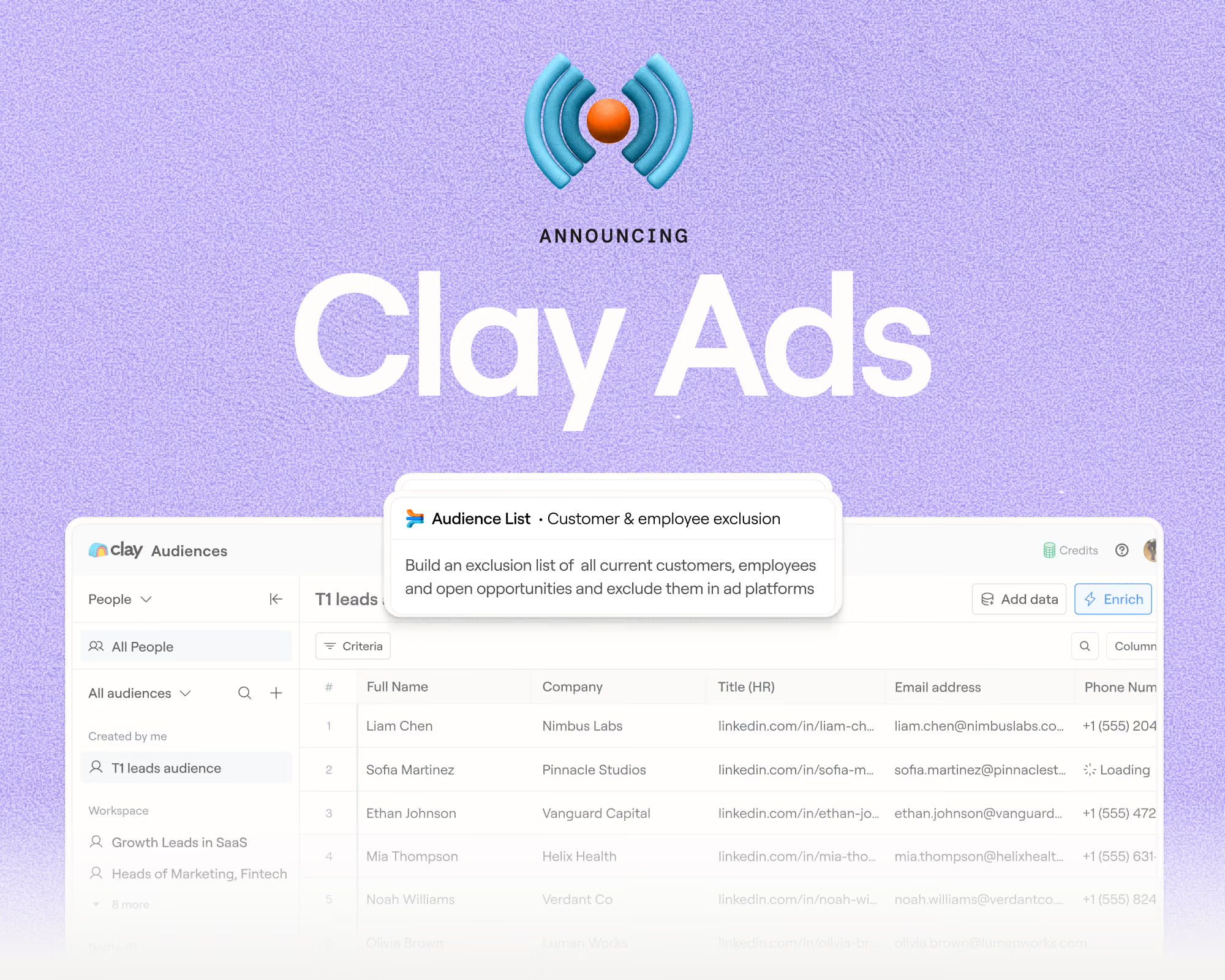
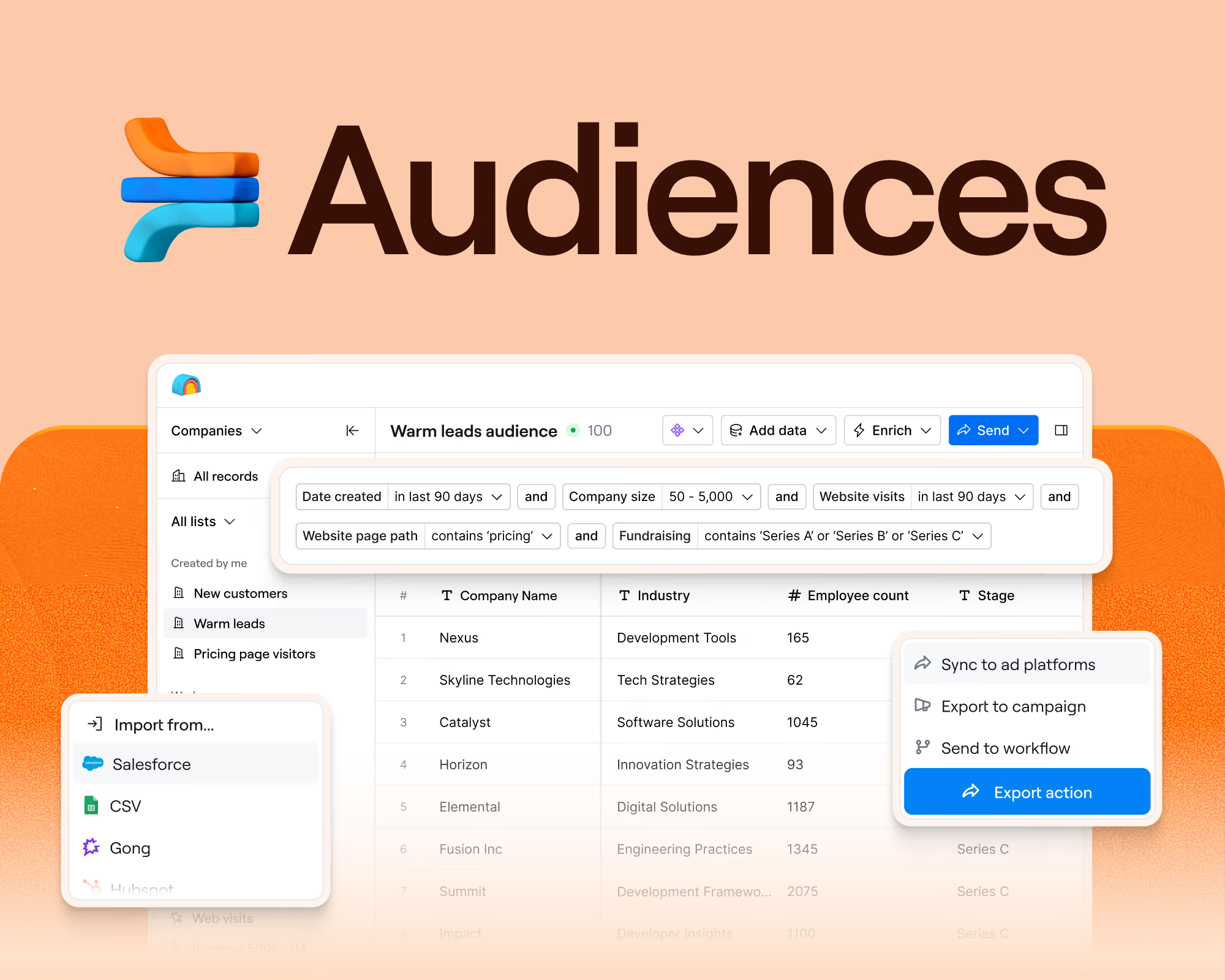
“Nobody cares about your product. Nobody cares about features. We just launched Clay Audiences. Nobody cares about Clay Audiences. What people care about is the use case, the pain point that this goes to solve.”

Sure, Audiences has a bunch of features. But what’s important is what you can actually do with it. It lets you pull your entire CRM, cut it into smaller lists (audiences) and use them to build always-on plays and campaigns with signals, ads, or outbound. It solves a real problem for users: carving a list from your CRM has always meant writing SQL or SOQL queries or wrestling a Salesforce report into shape. It should be as simple as adding a couple of filters and watching the audience update in real time.

Every episode is built around a single concrete use case, such as inbound lead management, rather than a tour of features. The first stretch lays out why the problem matters, speaking to the senior buyers who sign the checks. The second half hands the screen to an operator who builds the use case live, which is what the people doing the daily work want to see. 

The series has also helped to widen the total addressable market of our product. As people discovered Clay could build programmatic landing pages or run multichannel ABM, and as the product shipped capabilities like ads, the audience grew beyond our tool’s reputation for outbound. The series has drawn around 19,000 registrants at a blended cost per lead under $12, with more than a third of signups sourced through social.

Marketing to your own sales team

A program only works if sales actually runs with it, so the growth team spends roughly half its time on internal marketing, getting sellers excited about what is coming and making sure they adopt it. 

“You can have the best idea, but if sales doesn’t care about it, it’s going to flop,” says Davide. 

The most visible piece is what the team calls campaigns in a box. Sellers get a ready-made Claylist every Monday and can invite their accounts in a couple of clicks. For newer or more complex use cases like Clay ads, the team spent an hour teaching reps why marketers care about the topic, then booked call blocks for the days right after each episode so they could follow up while interest was still warm.

The other half of the work is ensuring the incoming leads are actually processed. Early on, with about a dozen reps, Clay was disqualifying 85% of the people who requested a demo. Not because they were bad fits, but because there were not enough sellers. So the team tripled the rep count and stood up the Clay DR team, which has nothing to do with AI SDRs or the AI slop Davide refuses to ship. They are real people, supported by Clay, so they can spend their hours talking to prospects instead of wrestling with tools. 

When someone with an enterprise-eligible account does something advanced, such as building Clay agents, a Clay DR takes on the task of converting that self-serve user into an enterprise deal. The reverse matters just as much, since demo requests too small for sales now skip the cold rejection and get routed into a group demo, a livestream that gives them everything a one-on-one would.

Paid and lifecycle that don’t feel like ads

Below the free channels sit lifecycle emails and a modest paid push, usually a thirty-second cut of a longer video dropped onto Instagram. The cost is tiny, and it works partly because viewers do not register it as an ad.

In the coming weeks and months, Davide wants to lean into YouTube because it is visual. He also plans to run ads against the best past episodes on demand, trading the big launch-day spikes for the steadier flow a sales team can actually work through.

Three growth and marketing lessons to leave with

Your own version of this will likely look nothing like Clay’s. The business model and the length of your sales cycle decide the channels. A company with a long, complex sales cycle cannot run a user-generated content loop the way Clay does.
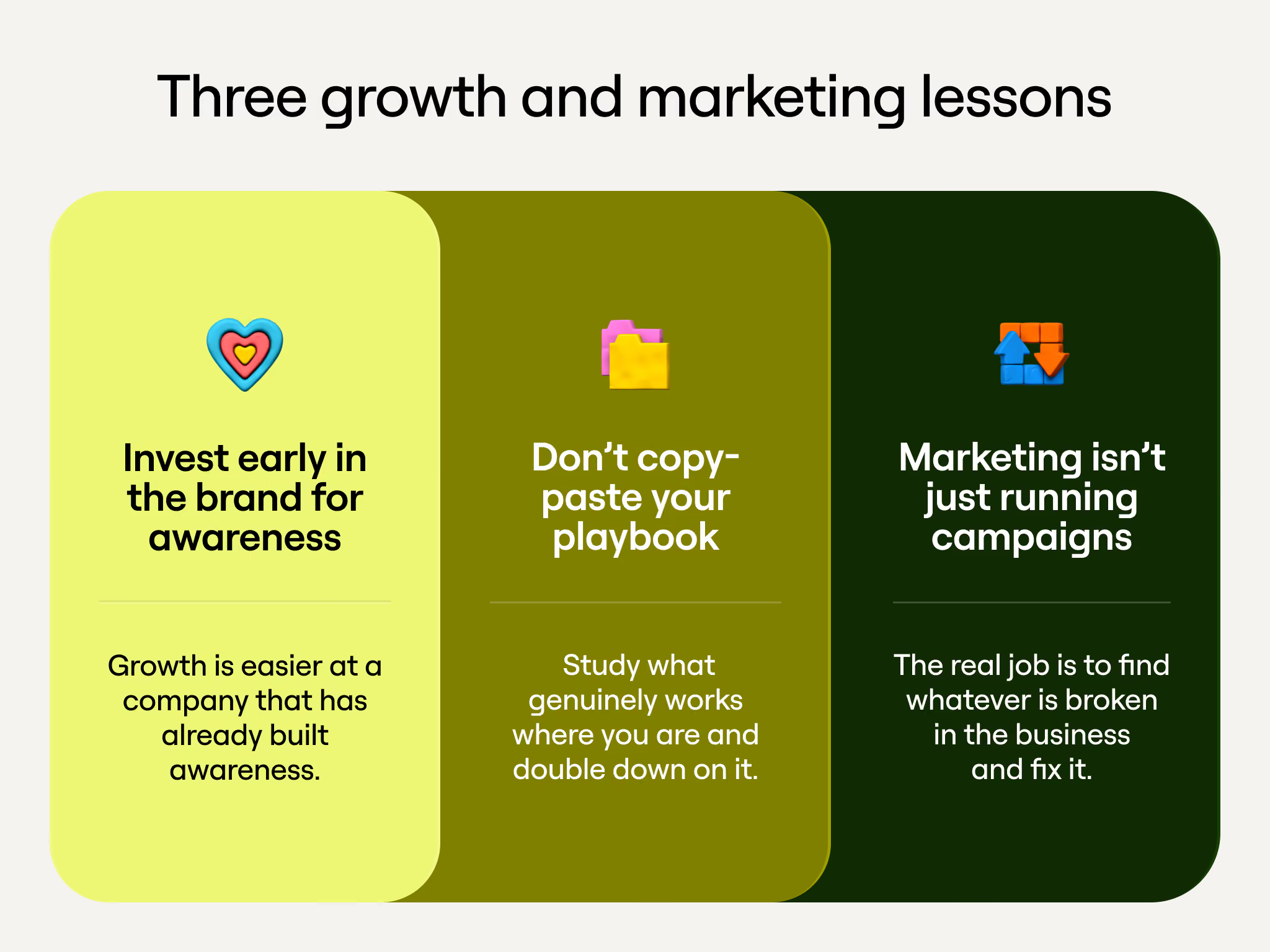
However, if the playbook compresses into anything portable, it’s these three ideas:

  • Invest in the brand early. Growth is dramatically easier at a company that has already built awareness. Davide believes today’s results would have been impossible without the bet that Bruno and our co-founder, Varun, made two years ago.
  • Don’t copy-paste your playbook. Davide is doing almost the opposite of what worked at his last company. Study what genuinely works where you are and double down on it.
  • Marketing isn’t just running campaigns. The real job is to find whatever is broken in the business and fix it, whether that turns out to be a shortage of leads or a sales team that cannot keep up.

You just read how we run growth and marketing at Clay. If you'd rather watch it happen inside the product, Davide hosts a live demo, Clay for Growth and Marketing, that runs through five real use cases, with a live table build. Register for that one, or explore the rest of our livestreams.

Behind the Scenes of Clay’s Marketing and Growth

Clay looks like a rocket ship today, but we were founded in 2017 and spent seven years getting from zero to one. Then, we went from one to a hundred million in roughly two years. The joke goes that we’re a “nine-year overnight success.” Today, revenue splits about 60% self-serve and 40% sales-led, and two teams feed both: 

  • Bruno Estrella captains the marketing org and came to Clay after years of running growth at Webflow. 
  • Davide Grieco runs the growth department and joined our team from Verkada, where he was one of Clay’s first customers in 2023. 

Bruno made a bet on brand two years ago, building a user-generated content engine fueled by free courses and certifications, Clay Clubs, and the partner program for Claygencies. That’s only been amplified with events—from big conferences to intimate dinners—and Clay’s name on billboards across San Francisco and NYC. All of this, among other marketing activities, got Clay to $100 million in ARR, most of it self-serve. 

Davide joined Clay and started assembling his team just nine months ago. They launched an executive distribution program on LinkedIn to reach our sales-led personas, driving 6 million organic impressions in a single quarter. In parallel, they’re forming programs to capture and convert this demand, including building the “How Clay Uses Clay” webinar series, turning attention into pipeline the sales team can close. 

The result of their marketing-growth partnership is enterprise ARR roughly tripling in nine months and more than half of Clay’s pipeline now tracing back to marketing. There’s no cold outbound anywhere in the motion. 

In this session, Bruno and Davide walk us through how their teams collaborate, where the handoff between marketing and growth happens, and their mutual distaste for marketing and growth tactics that feel like AI slop.

Clay runs livestreams like this all the time, and the next few go even deeper: How Clay Uses Clay: Agents, and Automated Growth Plays. Save your seat for these and every future livestream.

How Bruno runs self-serve and product-led growth

For most of its life, Clay was a self-serve business. How do you turn a stranger into a paying customer with no sales rep as an intermediary? Because of AI, the answer to that question is changing.

When ChatGPT landed in 2022, the cost of producing content fell to almost nothing. Data from Graphite shows that the number of AI-generated articles (50%) is equal to the number written by flesh-and-blood humans (50%). When everyone can publish endlessly, every channel gets crowded. 

“If you look into every B2B brand and content, they all say the same thing, they sound the same, the aesthetics are the same. They slap an AI word into the headline and say that they are the ‘AI of something.’ The reality is that’s not how people perceive it, so you have to really think differently,” says Bruno.

Clay needed an advantage that the noise could not wash away, so the marketing team committed to a few convictions:

  • People as the distribution lever. Anyone can publish, so the durable edge is getting real people to talk about you rather than producing more content yourself.
  • More is more. What moves the needle is the frequency of many different people mentioning Clay in many different places.
  • Make people feel loved. Customers build businesses and careers on top of Clay, so brand affinity is a requirement. 

These philosophies extend to every channel the team relies on, each one built to feed the same engine.

The UGC loop that turns users into marketers

From Lovable to Claude to Clay, one engine works unusually well for AI products: a user-generated content loop. For us, someone creates a Clay account, the product supports their career or business needs, and they build something they couldn’t build before. That makes them want to show their work, so they post about it on LinkedIn, and the people who see the post feel a flash of FOMO and create accounts of their own. Because self-serve carries so little friction, almost nothing stands between that interest and a new signup, which keeps the loop turning.

The programs that feed the loop

We don’t cross our fingers and hope the loop spins on its own. Instead, we’ve built programs whose job is to pour fuel on it, each one producing more content that pulls in the next wave of users.

  • Education. Clay University publishes a deep library of free curriculum covering AI skills, CRM enrichment, and automated outbound. The certifications prove to people that they know what they are doing and support them in advancing their careers. Even the studying becomes content; learners love to share what they’ve mastered.
  • The partner program. For agencies and freelancers, Clay routes real client work their way through our Clay Solutions Partner program and gives them the visibility they could not earn alone. Bruno met these operators one-on-one for months and has now watched some agencies either be acquired or generate more than a million dollars in annual revenue.
  • Clay Clubs. These are in-person gatherings where users learn from one another; people want to learn from others facing the same problems IRL, then post about it online. We’ve had users start clubs in London, England, and Manila, the Philippines. 
  • Clayback. Like Spotify Wrapped before it, Clayback hands each user a recap of everything they built over the year. Clay users get to position themselves as experts—sharing everything from enrichments used to contacts found—generating content in the process. 

Influencers who actually use the product

Because so many people post about Clay on their own, we get asked all the time whether we pay them to. Sometimes, but rarely. Clay has worked with a handful of B2B influencers, but our bar is high. 

They have to be real operators who use the product, and every partnership runs through heavy vetting. Our audience can tell instantly when someone is talking about a tool they do not understand.

Events for every stage of the funnel

Clay runs an almost absurd number of events, both through our community and ones we host ourselves. The right format depends on the funnel stage. The larger events work best for the top of the funnel and net new opportunities, like GTM in GMT, the conference we ran in London around deep go-to-market and AI content.

More exclusive events work best for people already in the pipeline who are considering Clay, whether that is a unique dining experience with other Clay users or a World Cup match. These accelerate the pipeline by putting senior prospects alongside current customers, who end up talking to each other and mentioning that they use Clay.

Billboards we can tie back to pipeline

Our billboards follow a rule Bruno applies to every brand investment: the spend has to solve a real problem rather than just look impressive. Everything marketing touches should serve growth. Clay timed our last billboard campaign to the September-through-November stretch, when the GTM conference calendar fills, and our buyers cluster in specific cities. 

It’s traditionally been challenging for companies to track the impact of something like an ad at a busy San Francisco intersection. But we’ve figured that out, too: the team scans Gong call recordings for mentions of the billboards, pulls that into Clay, and ties it back to pipeline.

How Davide builds a sales-led growth motion

The growth team is young. Davide started it nine months ago with five people. Before it existed, almost all of Clay’s growth came from the product itself;  enterprise was small and under-optimized. 

Davide’s mandate was to grow the enterprise motion until it outpaced self-serve and cleared half of our revenue. He views the sales-led motion as a factory with four machines in a line, each taking an input, doing its work, and passing the result to the next: 

  • Demand generation. Turn a cold ideal customer into someone who is aware of Clay and cares what we have to say.
  • Demand capture. Turn that awareness into leads.
  • Demand conversion. Turn leads into qualified pipeline.
  • Demand closing. Turn pipeline into revenue.

Output is capped by the slowest machine, so pouring effort into one that already works barely increases revenue. The job is to find the true bottleneck, fix it with Clay and some automation, then move to the next one. 

Two machines were already strong. 

Bruno’s brand work had demand generation humming. And our close rate was suspiciously high by B2B standards, which usually means the real bottleneck is sitting further upstream. The two machines in the middle were the weak ones. People knew Clay but had no idea what to do with us. We lacked the middle-of-funnel content that turns curiosity into intent, and our sales team could not process the inbound it already had.

Fixing those two machines has been most of what the team has done since, and the results followed. Enterprise ARR roughly tripled in nine months, the sales-led share of revenue climbed from 20% to 33%, and it reached 40% once you count the mid-market sales-assist motion. More than half of Clay’s pipeline now traces back to marketing.

Executive thought leadership on LinkedIn for a different buyer 

Generally speaking, at Clay, marketing builds the programs. That includes exec posting, events, and cohorts. Meanwhile, our growth team leverages these programs to make money. Executive thought leadership on LinkedIn is a marketing motion: Bruno’s team built and runs it, while Davide’s team uses it to drive leads and pipeline through promotional posts. 

LinkedIn has always worked well for us to build awareness, but we needed to use the same channel for a different enterprise persona. Clay’s enterprise buyers are heads of rev ops, along with the executives who sponsor and sign deals. Reaching them on a feed full of self-serve content takes a different approach. 

So we verticalized, putting individual executives at Clay at the center of the brand and having each own the content for their domain, all organic with no paid spend. The mapping is deliberate: each target persona is paired with the Clay leader most closely aligned with their role, so a head of growth hears from our head of growth and a CRO from our co-founder, rather than from a faceless brand account. In a single recent quarter, that executive program generated 6 million organic impressions. 

Davide treats his own feed like a portfolio, rotating four kinds of posts:

  • Promotional (20%). These posts have a clear CTA, with the goal of generating pipeline.
    Personal (25-40%). Updates that have no CTA; instead, they share personal and relatable content to build connections across LinkedIn.
  • Thought leadership (40%). These also lack a CTA, but their aim is to provide value by sharing GTM frameworks, learnings from our campaigns, or trends we see in the market.
  • Shitposting (0-15%). Funny posts that interrupt the pattern; some execs don’t do them, but Davide does—otherwise LinkedIn is painfully boring.

None of this comes from a PR team. The executives write their own posts, sometimes with a teammate sharpening a weak hook, and none of it is AI-generated. Executives are also the first and cheapest way we promote anything we launch.

Davide’s post, which promoted the “Behind the Scenes” webinar this one-pager is about, drove over 4,500 signups. If you look at the typical B2B SaaS acquisition cost for webinar leads ($50 to $100), we would have needed to spend $300,000 to $400,000 to get the same result with paid ads.

“Maybe it’s cringe, but it’s even more cringe having zero leads going to your webinar,” says Davide. 

Turning enterprise buyers into advocates 

We’ve also adapted the convictions behind the self-serve loop for a more senior audience. Bruno’s team runs this as well, and growth leans on it to drive pipeline. For example, Clay Enterprise Cohorts give operators the same education and status that the self-serve motion runs on, and it spins up the same kind of user content. People from companies like Qualtrics, Wix, and UiPath are sharing what they’ve built with Clay. 

The part about making people feel loved shows up as experiences you might not expect from a B2B company. One partner session featured flower arrangements. Others have included sound baths and indoor skydiving. People need to feel that we genuinely care, and when they do, they talk, turning enterprise buyers into their own source of word-of-mouth.

The “How Clay Uses Clay” series

The first bottleneck, demand capture, came down to a lack of content. You wouldn’t normally ask a growth team to write articles or create videos; that responsibility often sits with content marketing and sales enablement. But treating go-to-market like a factory means breaking the silo and going after the bottleneck wherever it sits. So our Growth team built the content itself, a livestream series we produce in-house called “How Clay Uses Clay.” It’s content that earns money, reverse-engineered from a belief Davide repeats to the team about once a week: 

“Nobody cares about your product. Nobody cares about features. We just launched Clay Audiences. Nobody cares about Clay Audiences. What people care about is the use case, the pain point that this goes to solve.”

Sure, Audiences has a bunch of features. But what’s important is what you can actually do with it. It lets you pull your entire CRM, cut it into smaller lists (audiences) and use them to build always-on plays and campaigns with signals, ads, or outbound. It solves a real problem for users: carving a list from your CRM has always meant writing SQL or SOQL queries or wrestling a Salesforce report into shape. It should be as simple as adding a couple of filters and watching the audience update in real time.

Every episode is built around a single concrete use case, such as inbound lead management, rather than a tour of features. The first stretch lays out why the problem matters, speaking to the senior buyers who sign the checks. The second half hands the screen to an operator who builds the use case live, which is what the people doing the daily work want to see. 

The series has also helped to widen the total addressable market of our product. As people discovered Clay could build programmatic landing pages or run multichannel ABM, and as the product shipped capabilities like ads, the audience grew beyond our tool’s reputation for outbound. The series has drawn around 19,000 registrants at a blended cost per lead under $12, with more than a third of signups sourced through social.

Marketing to your own sales team

A program only works if sales actually runs with it, so the growth team spends roughly half its time on internal marketing, getting sellers excited about what is coming and making sure they adopt it. 

“You can have the best idea, but if sales doesn’t care about it, it’s going to flop,” says Davide. 

The most visible piece is what the team calls campaigns in a box. Sellers get a ready-made Claylist every Monday and can invite their accounts in a couple of clicks. For newer or more complex use cases like Clay ads, the team spent an hour teaching reps why marketers care about the topic, then booked call blocks for the days right after each episode so they could follow up while interest was still warm.

The other half of the work is ensuring the incoming leads are actually processed. Early on, with about a dozen reps, Clay was disqualifying 85% of the people who requested a demo. Not because they were bad fits, but because there were not enough sellers. So the team tripled the rep count and stood up the Clay DR team, which has nothing to do with AI SDRs or the AI slop Davide refuses to ship. They are real people, supported by Clay, so they can spend their hours talking to prospects instead of wrestling with tools. 

When someone with an enterprise-eligible account does something advanced, such as building Clay agents, a Clay DR takes on the task of converting that self-serve user into an enterprise deal. The reverse matters just as much, since demo requests too small for sales now skip the cold rejection and get routed into a group demo, a livestream that gives them everything a one-on-one would.

Paid and lifecycle that don’t feel like ads

Below the free channels sit lifecycle emails and a modest paid push, usually a thirty-second cut of a longer video dropped onto Instagram. The cost is tiny, and it works partly because viewers do not register it as an ad.

In the coming weeks and months, Davide wants to lean into YouTube because it is visual. He also plans to run ads against the best past episodes on demand, trading the big launch-day spikes for the steadier flow a sales team can actually work through.

Three growth and marketing lessons to leave with

Your own version of this will likely look nothing like Clay’s. The business model and the length of your sales cycle decide the channels. A company with a long, complex sales cycle cannot run a user-generated content loop the way Clay does.

However, if the playbook compresses into anything portable, it’s these three ideas:

  • Invest in the brand early. Growth is dramatically easier at a company that has already built awareness. Davide believes today’s results would have been impossible without the bet that Bruno and our co-founder, Varun, made two years ago.
  • Don’t copy-paste your playbook. Davide is doing almost the opposite of what worked at his last company. Study what genuinely works where you are and double down on it.
  • Marketing isn’t just running campaigns. The real job is to find whatever is broken in the business and fix it, whether that turns out to be a shortage of leads or a sales team that cannot keep up.

You just read how we run growth and marketing at Clay. If you'd rather watch it happen inside the product, Davide hosts a live demo, Clay for Growth and Marketing, that runs through five real use cases, with a live table build. Register for that one, or explore the rest of our livestreams.

More Articles