


































.avif)










In product-led growth, the growth team has a built-in feedback loop: users sign up, hit a free tier or trial, and their behavior tells you where they’re getting stuck or converting. Sales-led growth is messier. Growth sits in the gap between marketing and sales, and what the team actually does varies with the company’s stage and its biggest revenue bottleneck.
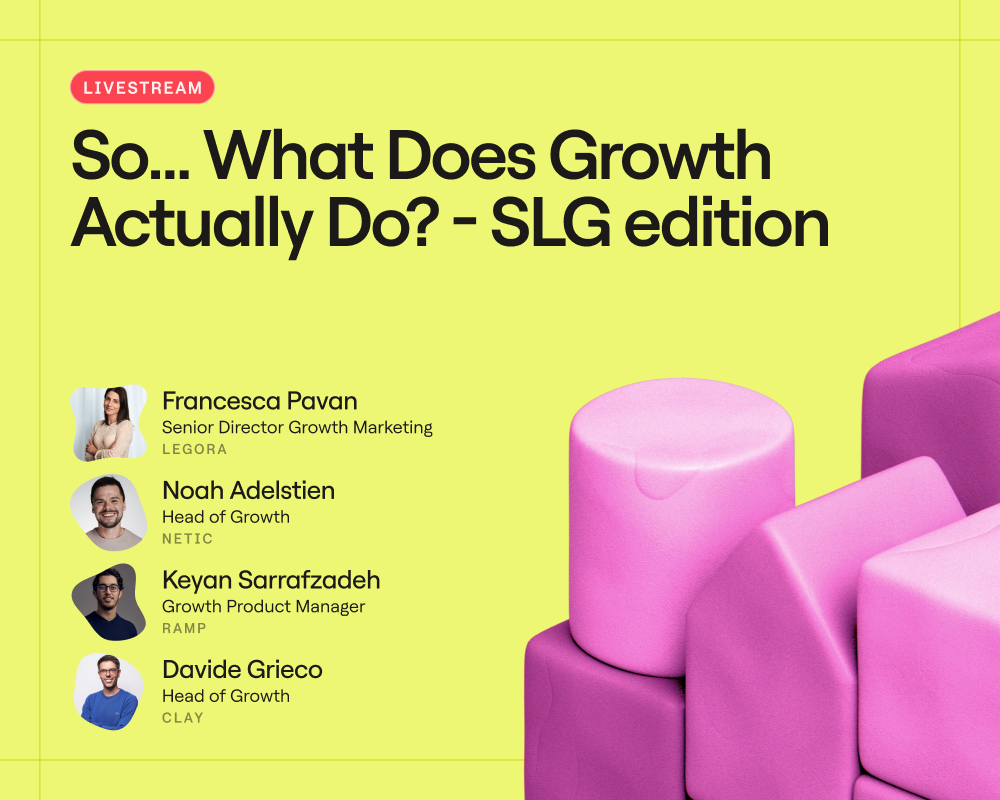
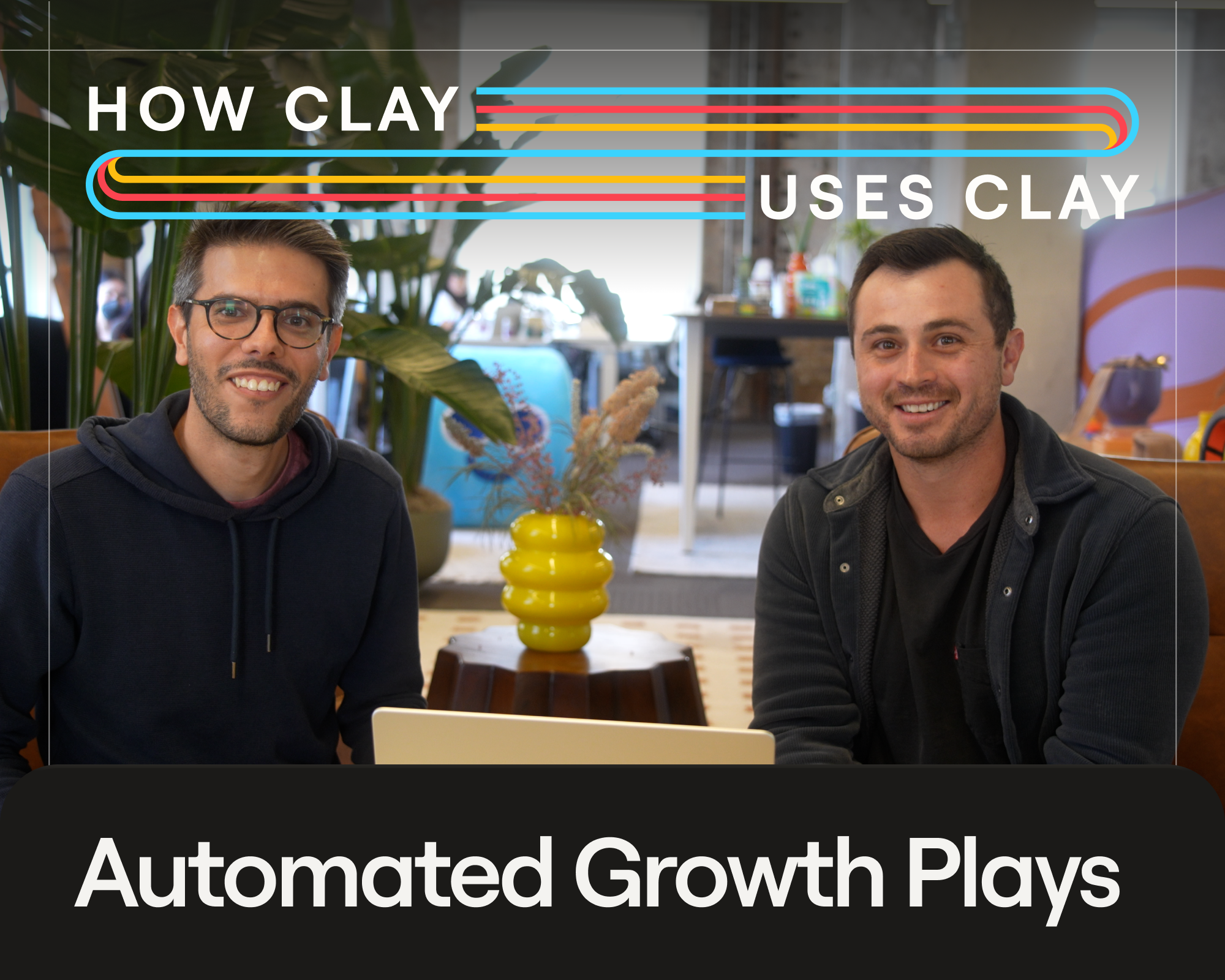
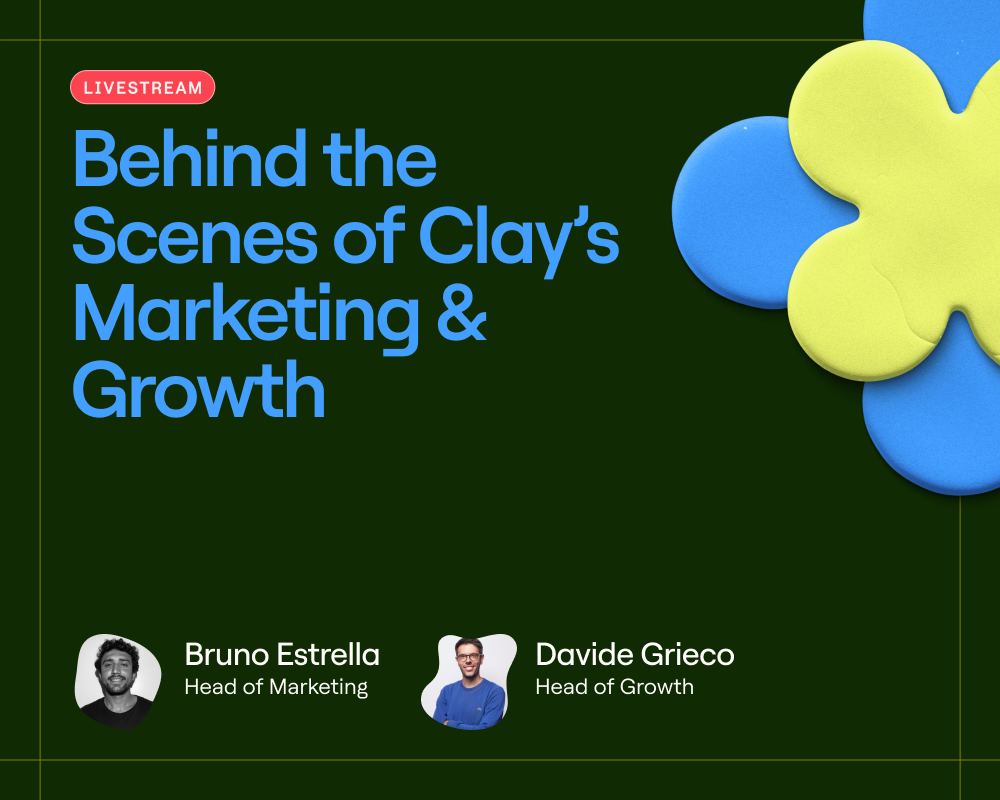
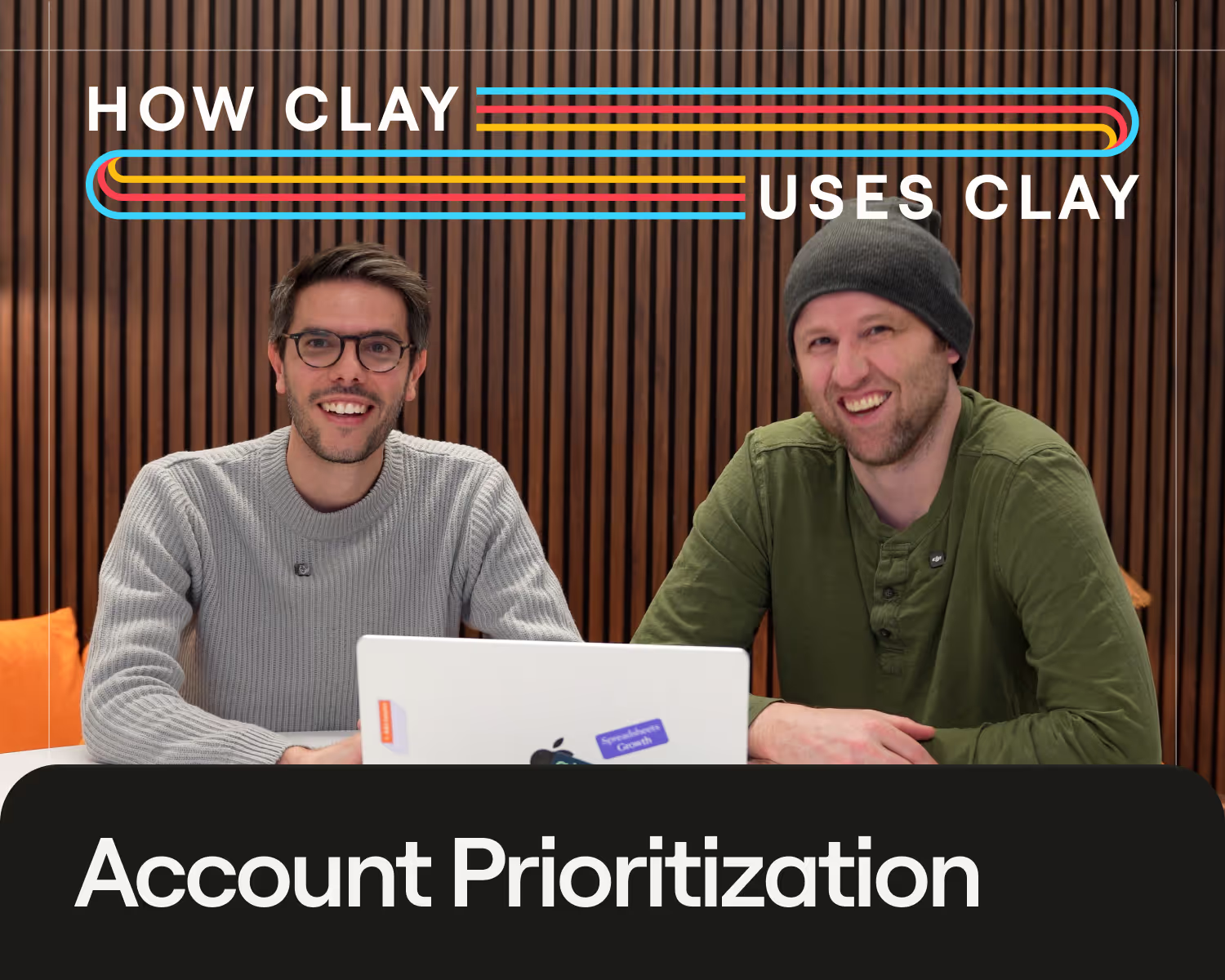
To help wrap our heads around this, our Head of Growth at Clay, Davide Grieco, sat down with three growth leaders at very different companies:
- Keyan Sarrafzadeh, Growth PM at Ramp, where he’s spent four years building what started as an AI SDR program into a full growth platform team. His team of PMs, engineers, designers, and data scientists builds tooling that supercharges Ramp’s 150-plus-person sales org.
- Francesca Pavan, Senior Director of Growth Marketing at Legora, a legal AI company in Stockholm. Francesca joined when it was 40 people and has since built everything from BDR programs to employee advocacy campaigns with a small, agile team.
- Noah Adelstein, Head of Growth at Netic AI, which builds AI for essential service businesses like HVAC and plumbing. Noah also spent over three and a half years at Rippling as their Director of Automated Growth, scaling cold email to one million sends per month and leading international expansion. Plus, he hosts The GTM Engineer, a podcast on go-to-market engineering.
All three agreed that growth comes down to sustainably increasing revenue, but the way each of them does it varies. Below, they got specific about the tactics, trade-offs, and organizational battles that come with doing growth.
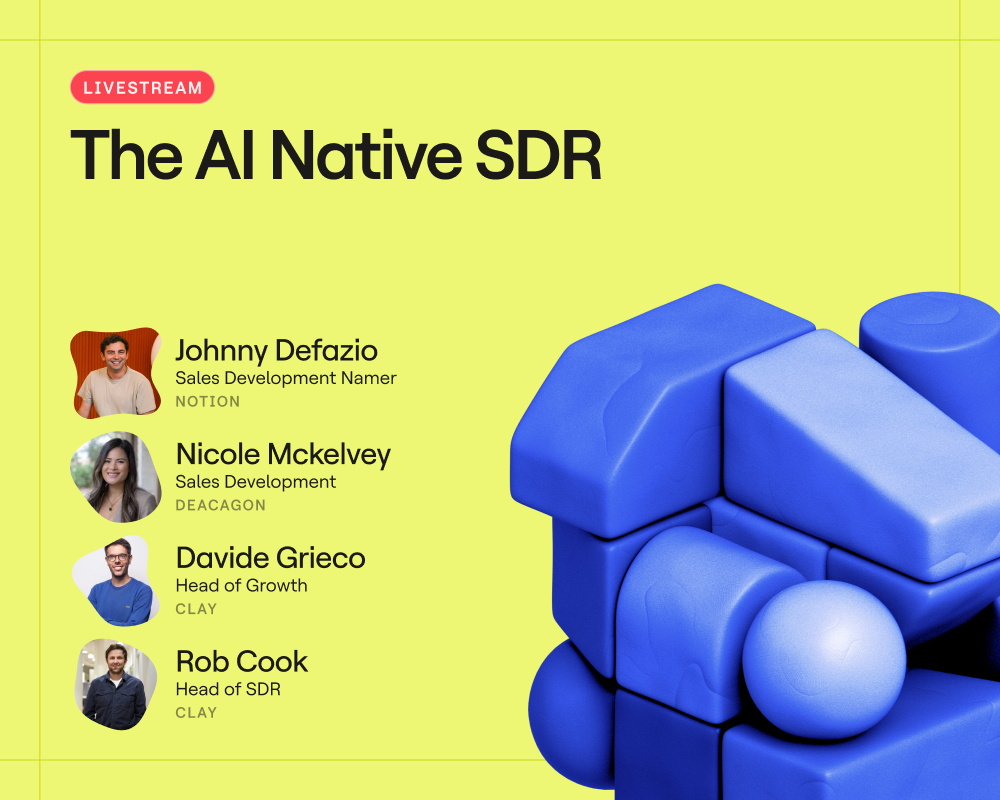
This is the second episode of The Future of GTM. In the first, sales development leaders from Notion, Decagon, and Clay broke down how their teams are actually using AI to build pipeline, from signal-based prospecting to the feedback loops between reps and ops that make it all work. Catch up on the conversation.
Growth teams that stay in their lane don’t actually grow anything
Most companies have clear lines between marketing, sales, and ops. Growth tends to ignore them. When it comes to getting buy-in to work on things that technically fall outside their remit, Francesca was direct: “You need to step onto other people’s toes to do growth properly,” she said. “If you don’t get uncomfortable sometimes, you’re not doing a good enough job.”
The others backed it up. Keyan described how his team at Ramp shares pipeline goals with sales so there’s no competitiveness. “If you’re doing your job well, what ends up happening is actually they come to you and ask for more,” he said, “as opposed to there being any kind of conflict.”
Noah sees two categories of opportunity: programs nobody is thinking about that you can take on without asking permission, and programs other teams are actively mismanaging. For that second category, go straight to leadership. “Find the people who actually have the decision-making authority, whether that’s your CRO or CMO…those people care about revenue.”
Davide shared a lesson from his time at Clay, too: make your CFO your friend. “By definition, they are the people that care a little bit less about the looks of it. They just care about making money.”
Don’t let attribution become a distraction
When multiple teams touch the same deal, who gets the credit can get political. But overcomplicating attribution is one of the fastest ways to stall a growth team.
Noah pushed back on overthinking it. At Rippling, direct mail was hard to cleanly attribute because prospects were also seeing ads and receiving emails from other channels. Rather than plugging it into the attribution model, he told leadership: “Here’s how I’m going to measure this. I’m going to look at how many people we sent direct mail to... [and] how many turned into demos. It’s not going to touch the model.” Everyone agreed.
Francesca has invested in the infrastructure; her team uses Dreamdata to map the full customer journey with multi-touch attribution, tracking every ad impression and page visit before a lead even hits the CRM. “It really makes a whole difference when you talk to sales,” she said.
Hire for the spark, not the CV
With AI automating more of the tactical work, Noah pointed out that growth teams can be leaner than they used to be. That raises the stakes on every individual hire. Francesca has changed the way she hires. “I’m not impressed by someone’s CV necessarily,” she said. “I’m looking for something that’s not in the CV. It’s a spark in the eyes. It’s the hustle, the grit.” She steers interviews away from standard playbooks to learn who the candidate is as a person. She wants to know what they do outside of work and whether they’d mesh with her existing team. “I’m basically doing a bit of vibe hiring,” she admits. “It has worked well up until now.”
Noah wants something different: people who spike in distinct areas rather than generalists who all look the same. “I actually want one to be absolutely amazing at writing, and one is super creative, or one’s insanely analytical,” he said.
Keyan hires for what he calls “a future founder type of person.” Their eyes should light up when you put a revenue problem in front of them. And he wants that disposition from everyone on the team, not just PMs. “We want our engineers to feel empowered to actually just talk to salespeople and understand the problems.”
Cap the volume, unlock the creativity
AI has also made it trivially easy to send more emails, which makes restraint more important to prevent outbound from becoming spam. Keyan believes imposing volume constraints on your salespeople comes with benefits. “If everyone is capped on volume, they are ultimately forced to get more creative with their copywriting,” he said. For example, Ramp limited how much of their TAM any rep can contact in a given month. “We’ve seen some exceptional creativity from our salespeople by having these limits on how many people you can actually contact.”
Noah notes that not every channel regenerates. “If you have a million people in your database and you email all of them in January and get 1,000 demos, you can’t just email them all again in February and also get 1,000 demos,” he said. His advice: look at every channel and figure out its sustainable run rate so you can grow predictably rather than burning through your market.
At Legora, Francesca found her most sustainable channel hiding inside the company: employee advocacy. She tapped about 15 of Legora’s legal engineers to post on LinkedIn about their day-to-day work. These were genuine, unscripted posts from subject-matter experts. She turned them into LinkedIn thought leadership ads, and the results outperformed every other ad format Legora had tested. “Especially for us working with lawyers, and they’re by nature quite skeptical,” she said. “It makes much more sense to buy from someone that has credibility.”
Growth will continue to shape-shift
Growth works best when it’s a company-wide mindset, not just a single team’s responsibility. Francesca sees the line between marketing and sales blurring further. “There will be more situations where your role is gonna be very much a hybrid between marketing and sales,” she said. “More and more we’re gonna see that, especially with AI.”
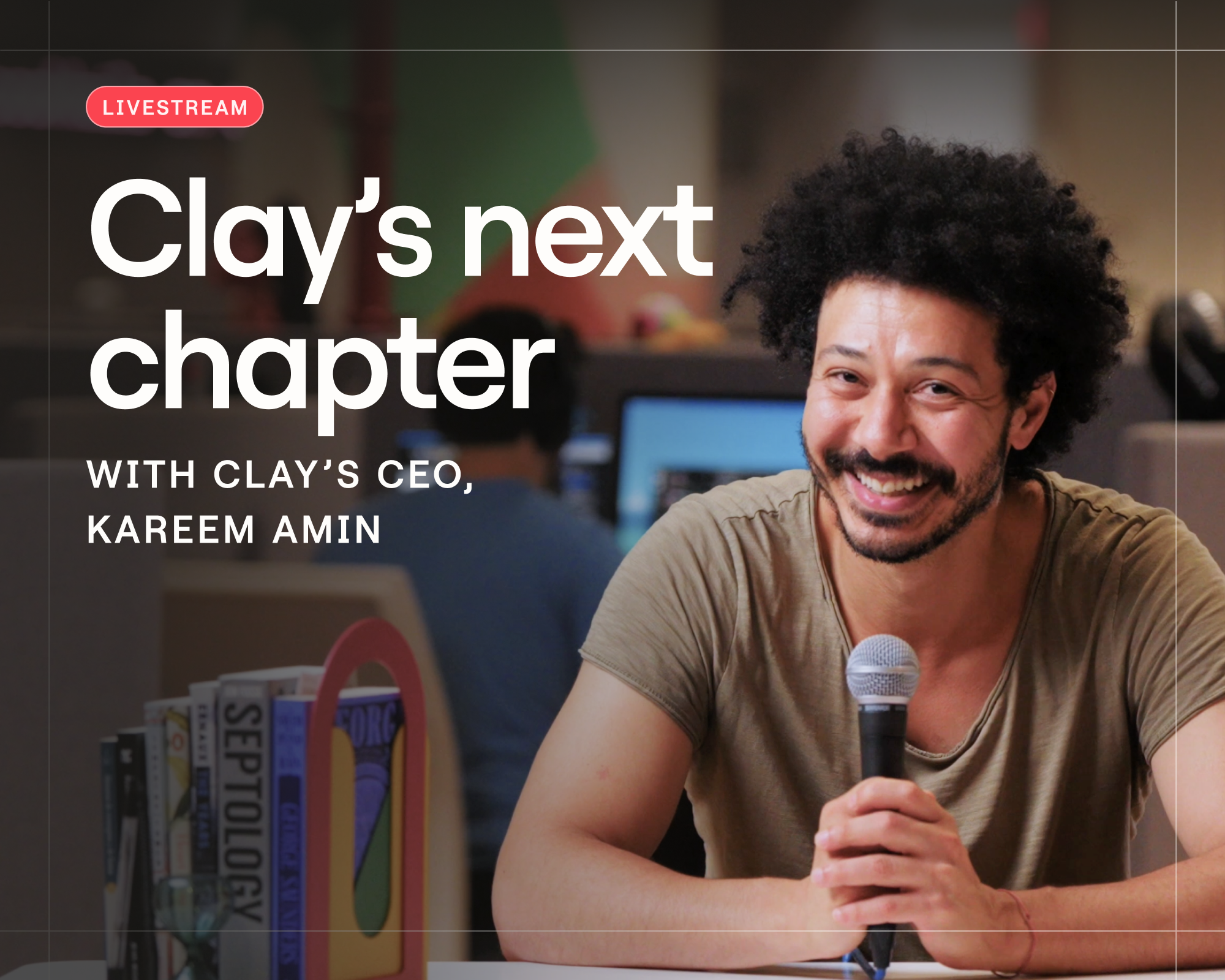
Register for future livestreams to join us live for the Q&A or watch the replay.






.png)





.avif)















.avif)















.avif)