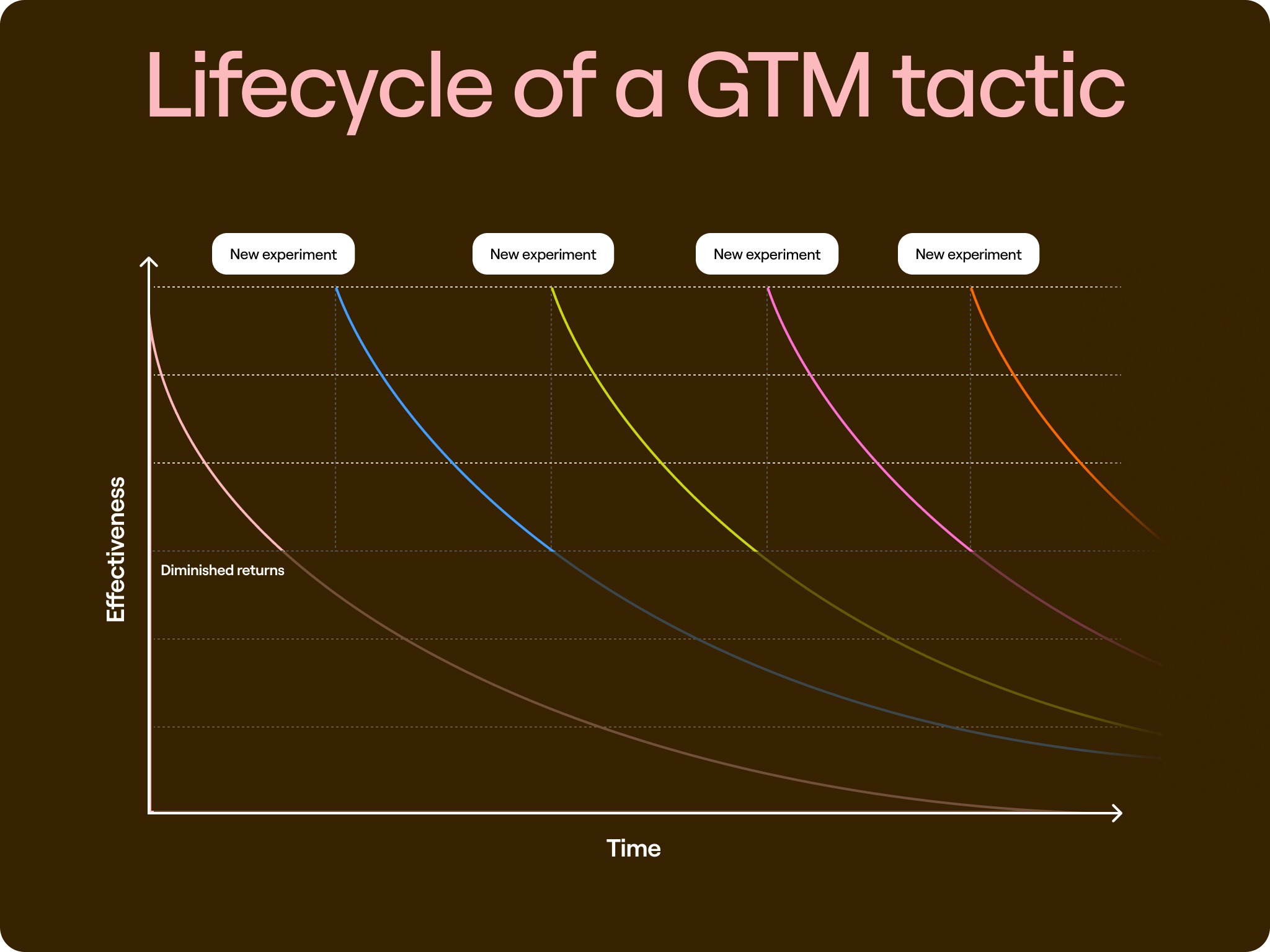
In Finding GTM Alpha, we argued that winning teams use data others don't have, in plays others can't run, to build an edge. We also argued that no play lasts forever, and that teams must learn and iterate quickly.
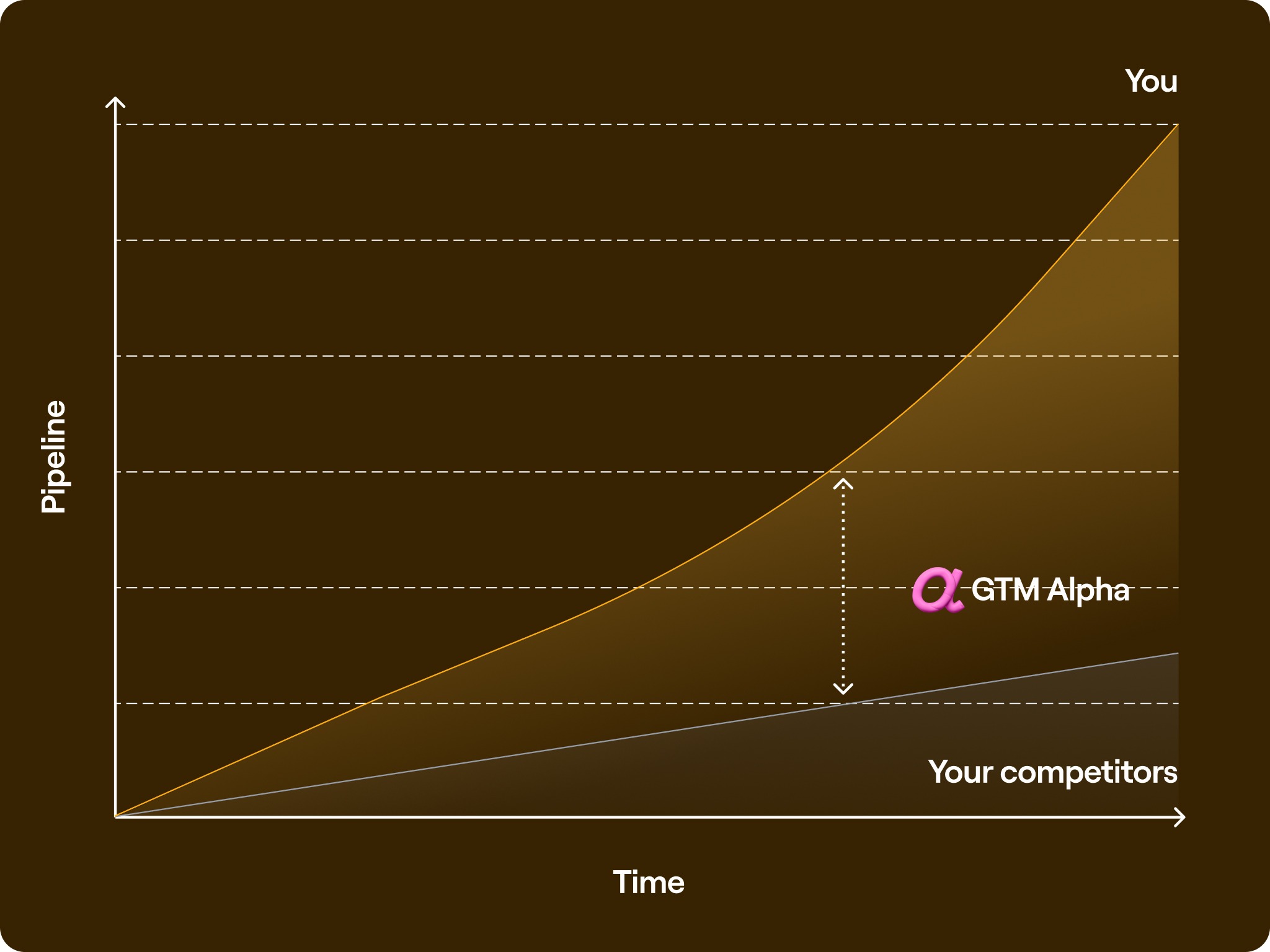
Using unique data in unique plays matters as much as ever. But agents have massively changed how much — and how fast — a team can learn.
On any given day, a company may have thousands of emails going out, signals firing on hundreds of accounts, and sellers holding dozens of conversations. Every of these produces evidence about what works. Until now, teams could only learn from the small share of evidence they had time to review on a quarterly basis. Agents, however, can read all of it and turn the patterns they find into the next change a team should make.
The companies that learn fastest will grow fastest. In the age of agents, GTM alpha belongs to teams with continuous self-learning agents that notice where plays fail, adjust them, and try again.
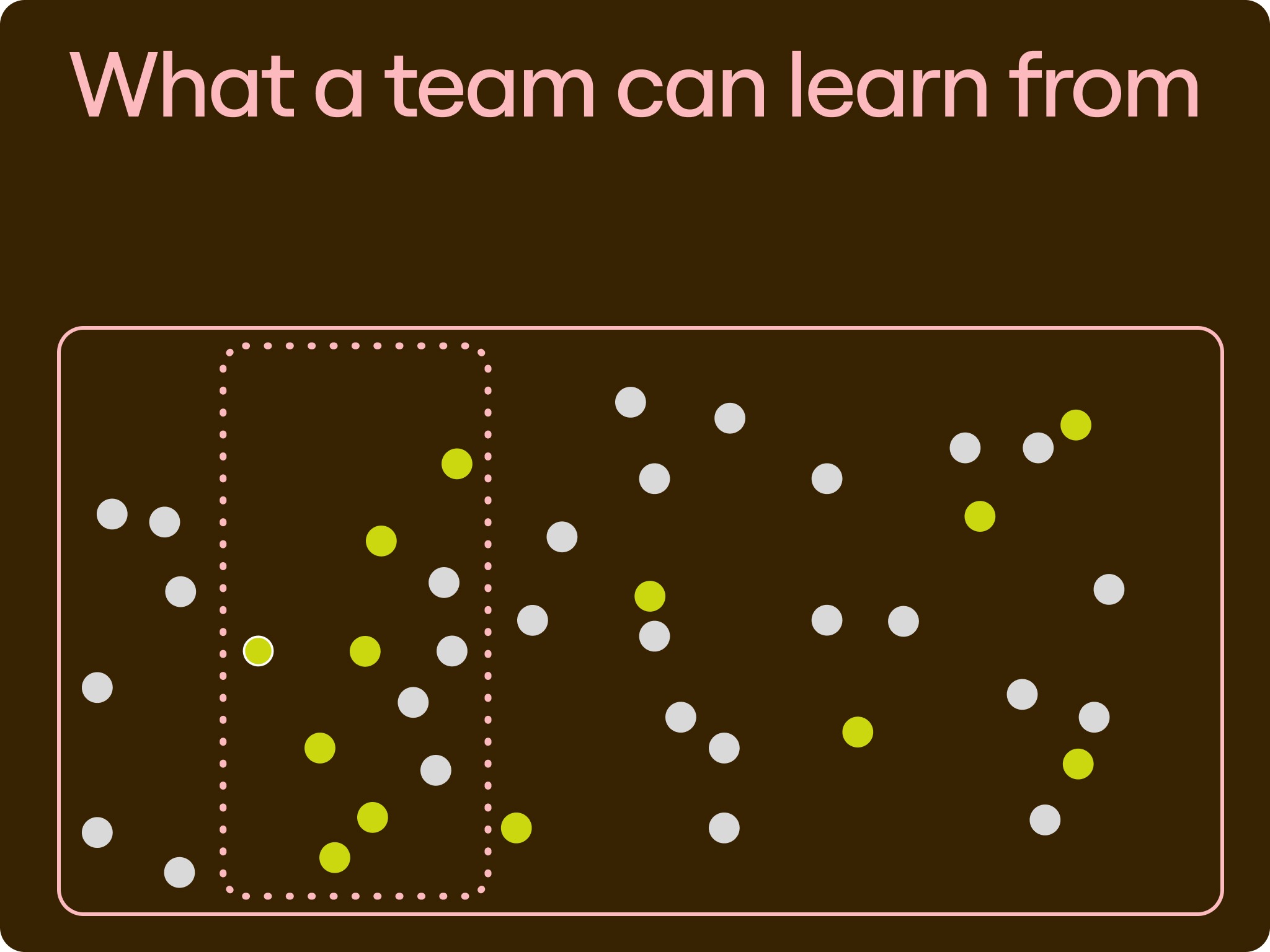
What self-learning looks like
Any self-learning GTM system needs to be rooted in a company’s full context, from CRM data and product usage to calls and emails. It layers on signals from the outside world, like funding events and job changes. From all of this, the system can build a live understanding of the company’s market.
It can then run plays on that context, record what happened, and look for patterns. When it finds one, it can propose a change, wait for human approval, and execute it. This kind of system will improve the more it runs.
Self-learning can happen at three levels:
- Find the next best message. When a new inbound lead arrives, the system picks the product, use case, and proof point most likely to turn that lead into pipeline. Many teams already do a version of this today.
- Run the next best play. When a signal says an account deserves attention, the system looks at every play the team runs and assigns the one most likely to convert that account. Some accounts respond best to a call; others to a gift in the mail.
- Propose the next best strategy. The system looks across every play and every closed deal and gives the team strategic advice, which could include changing pricing, altering sales training, adjusting an ICP definition, or even tweaking product UX.
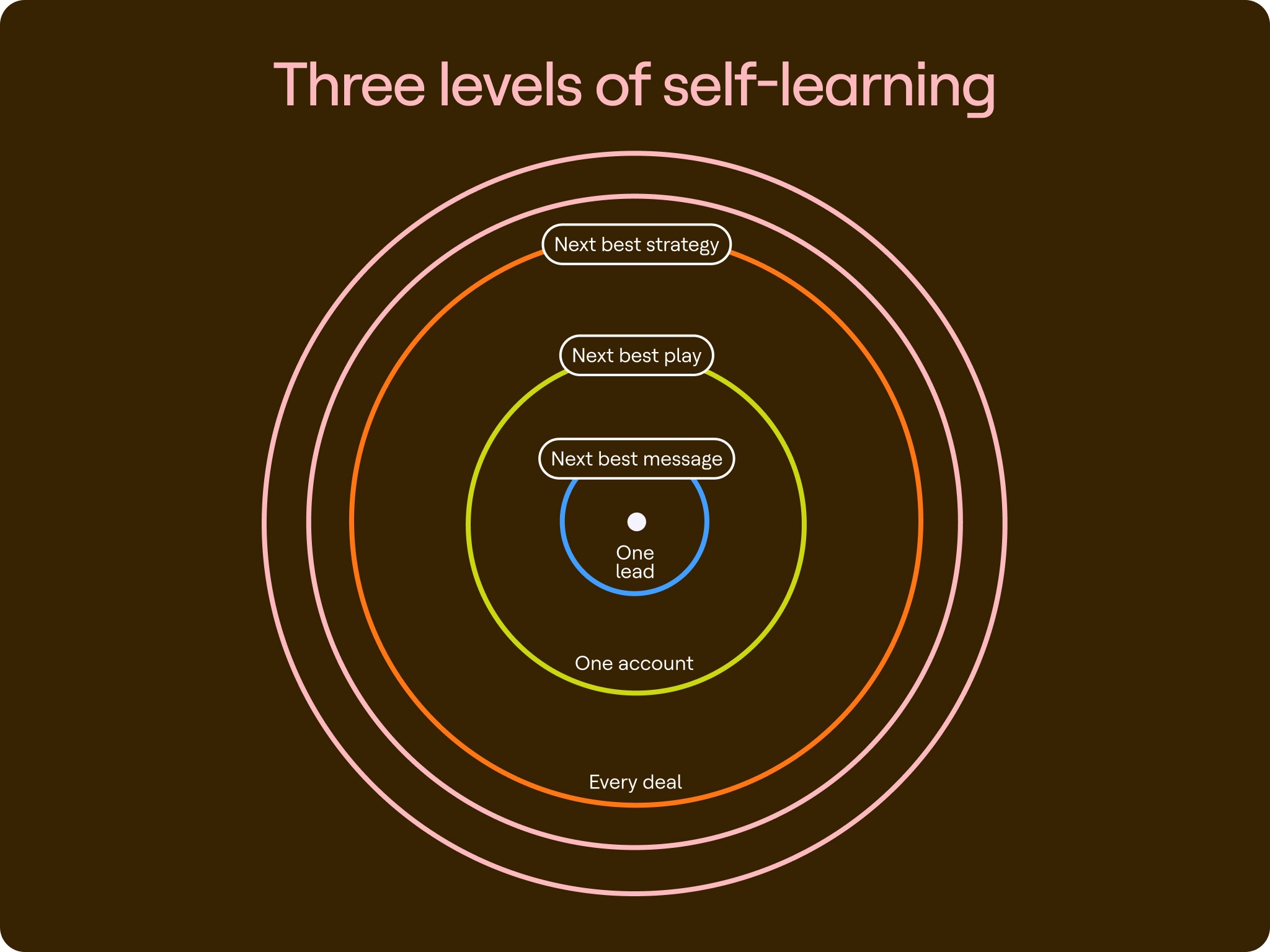
The three levels connect in practice. Say a mid-market company starts hiring for IT roles, a sign it may be ready to buy. Similar accounts have converted more often after a live call, so the system sends this one to a rep (next best play). Their brief features the proof point that has worked best for mid-market IT teams (next best message).
As the system logs the call’s outcome, alongside hundreds of others, it spots a pattern. Mid-market IT buyers who met your team at an in-person event closed faster, and your team runs only a few events a year. The system recommends a field event series for that segment (next best strategy). Once you approve it, every account like it now has a new play the system can assign.
That pattern is your GTM alpha, from your own proprietary results. A self-learning system keeps finding edges like this one as the old ones wear out.
What a self-learning system needs
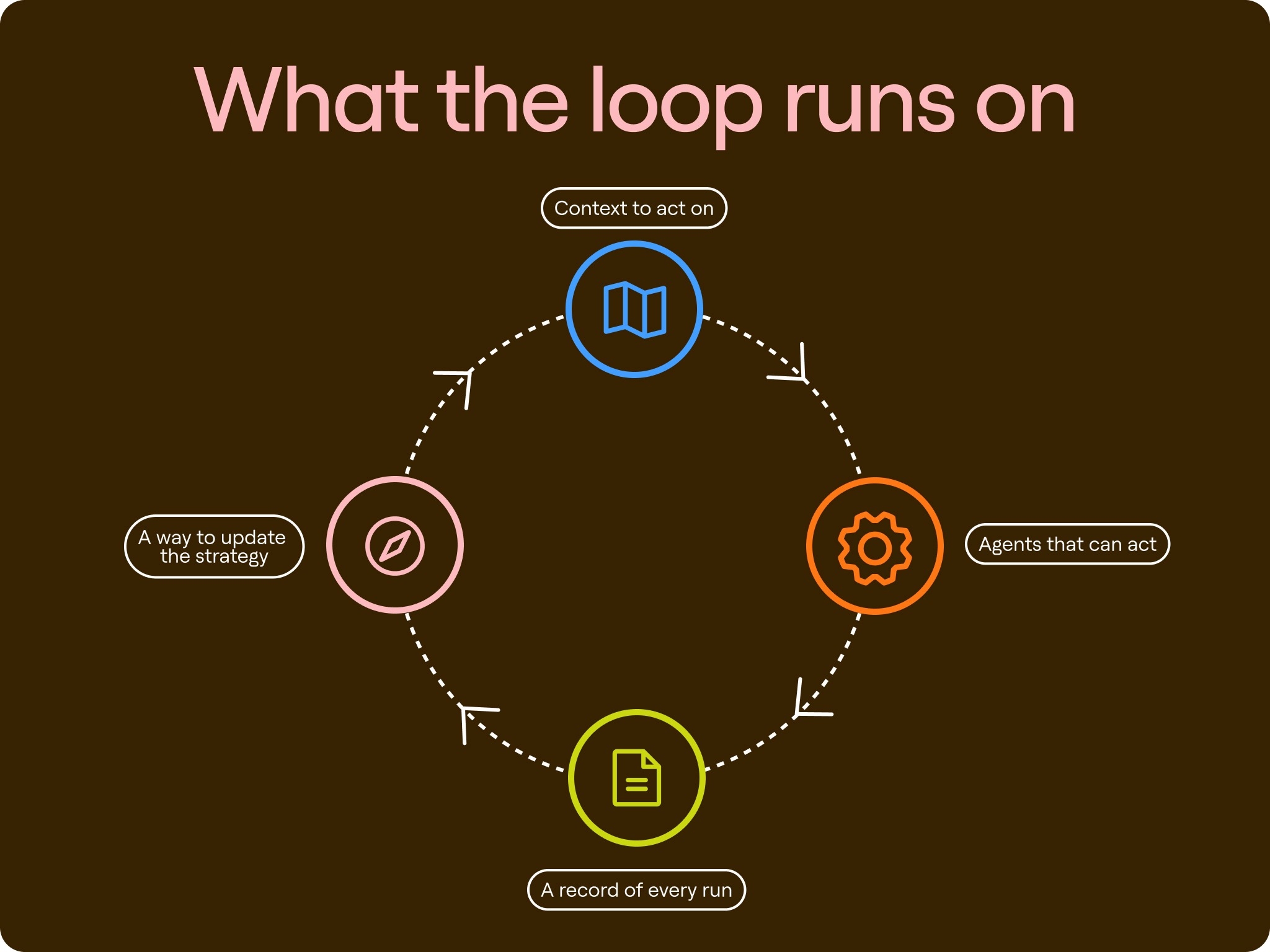
A self-learning system runs the above loop over and over. Each step of that loop depends on something most teams have only partly built.
Context to act on. The system needs to know who to target and when, and it needs context on each account (see: the four layers of winning GTM infrastructure). It also needs the team’s ICP and positioning strategy written down — not just in slide decks and people’s heads. An agent can only improve a strategy it can read.
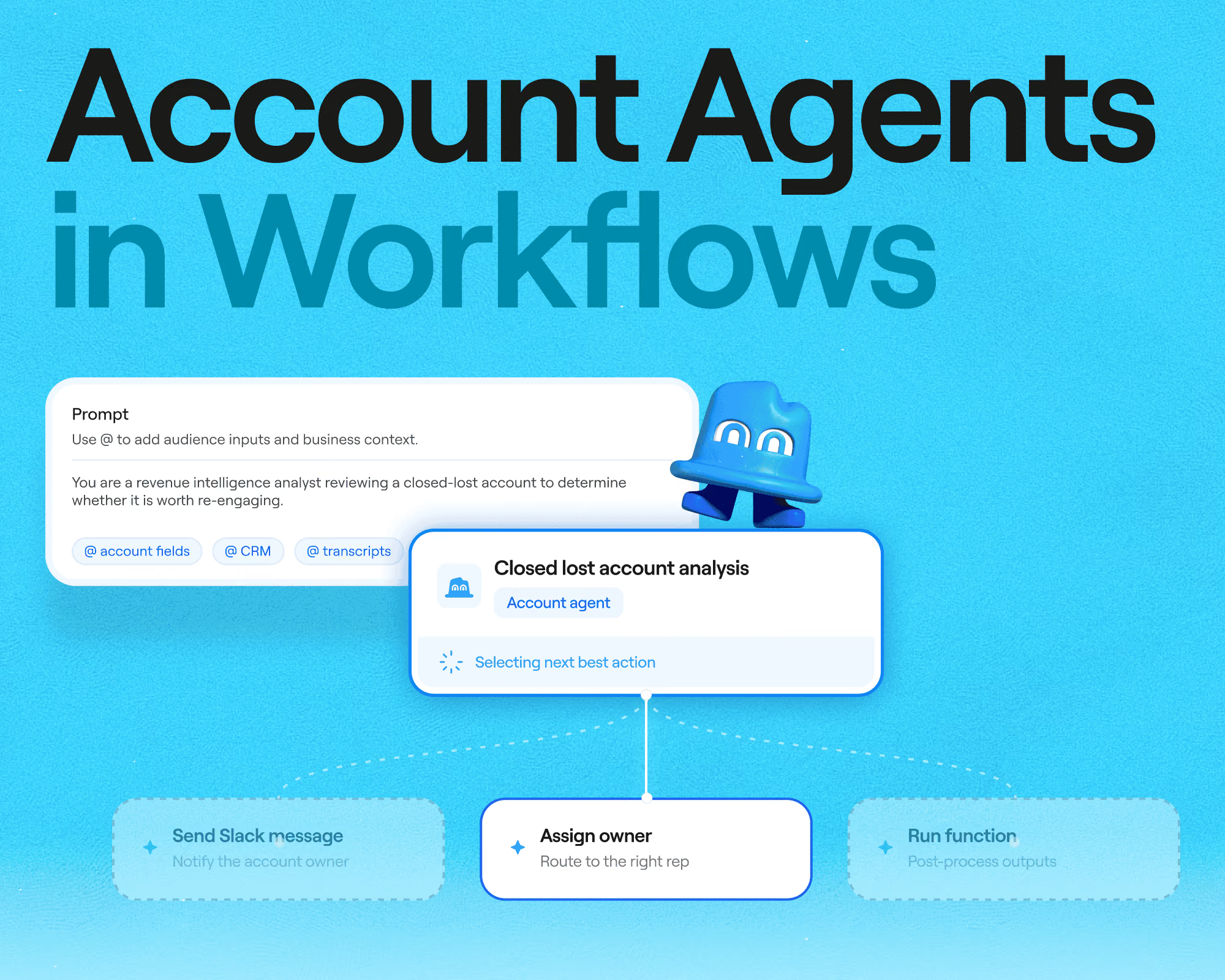
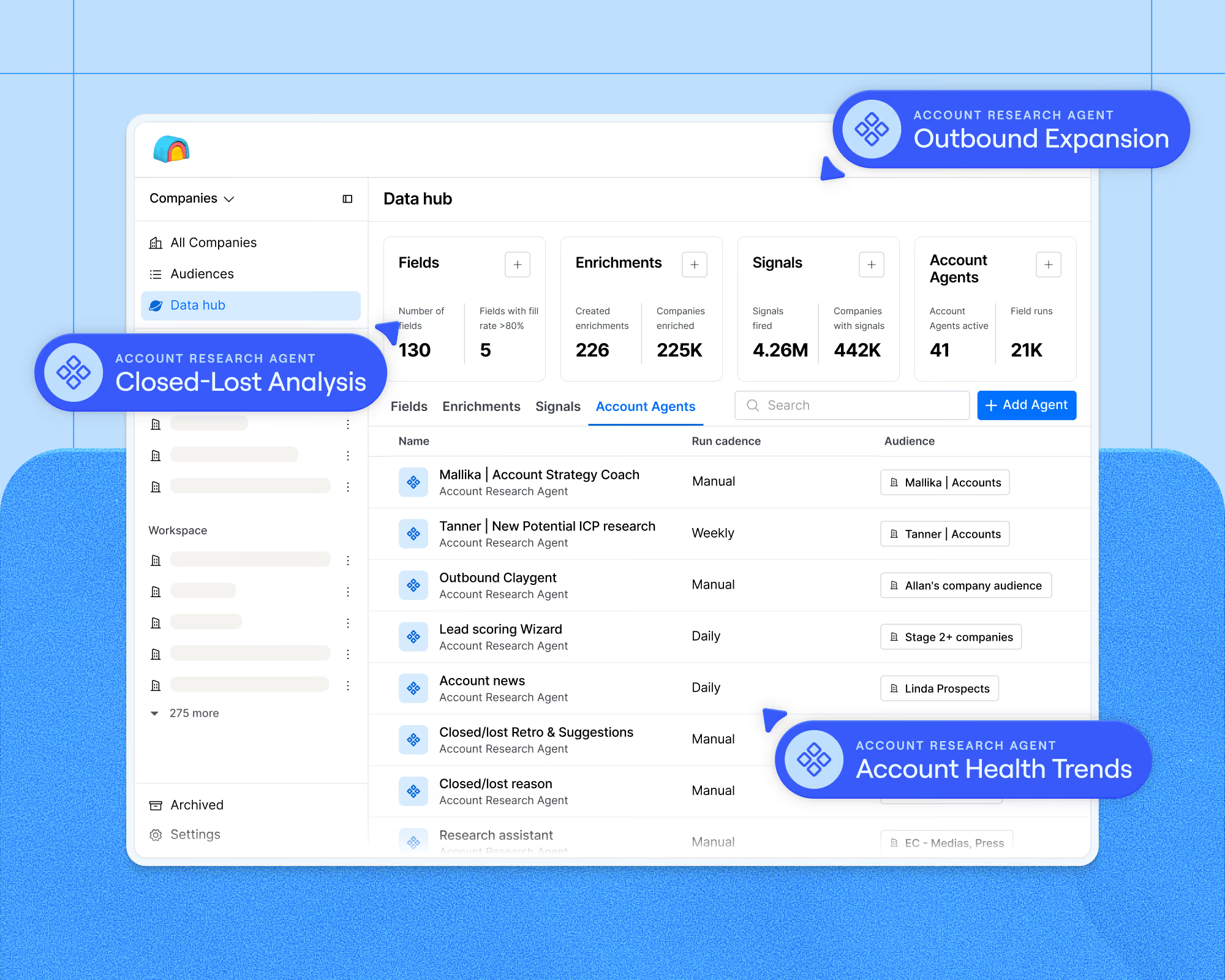
Agents that can act. Today's agents handle discrete tasks well. A self-learning system also needs agents that can take a goal, like generating 50 more opportunities this month, build a plan, run it once a person approves, and check back on the results.
A record of every run. People and agents both need to see what each run did, what worked, and what broke.
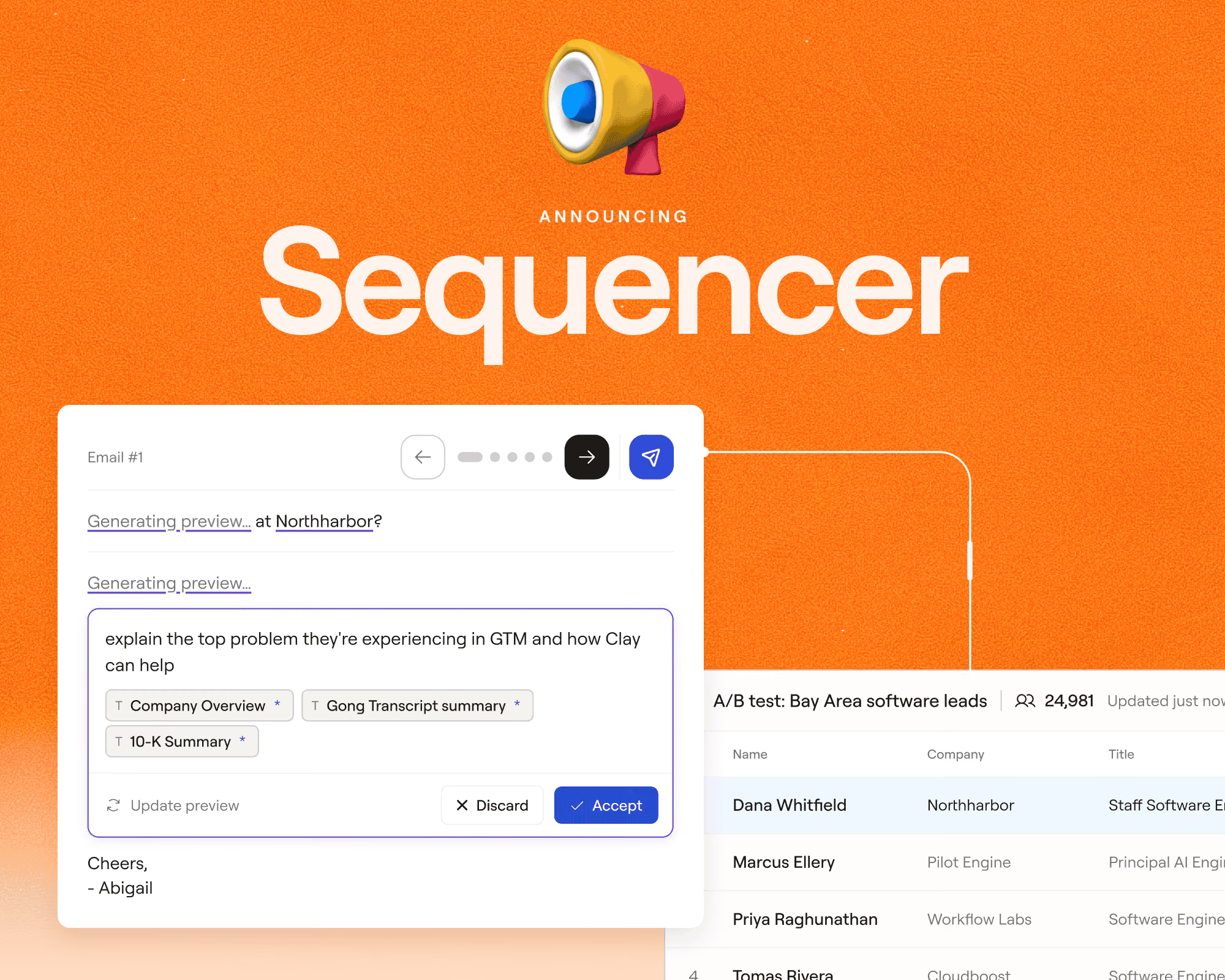
A way to update the strategy. Once the system spots a pattern, it needs to propose a change and have a person approve it. In a demo at our Sculpt keynote, an agent ran an account-based campaign for a fictional payments company and booked six meetings from 18 replies within a few days. It noticed that four of the six companies were multi-site healthcare operators and suggested adding that segment to the ICP. Once a person accepted, every agent working on the account used the updated ICP.
At Clay, the newest pieces of this system are Knowledge Hub, where the strategy lives, the GTM Agent, which pursues goals over time, and the Inbound SDR Agent, which talks to buyers. We introduced all three at Sculpt.
How GTM engineering will change
In Finding GTM Alpha, we argued that GTM engineering lets a team find and scale winning plays faster than competitors, by bringing data, tooling, and sales knowledge into one team. Self-learning systems change how GTM engineers spend their time:
GTM engineers will manage agents. Software engineers used to write every line of code, and now many of them manage agents that write it. GTM engineers are reaching the same point. More of their week will go to directing agents that build, test, and monitor plays, and deciding which of the agents' proposals to approve.
Reps will specialize. As GTM engineers automate more of the research and routine outreach, reps will spend their time on the parts of selling that depend on a person, and those parts rest on trust.
GTM will run as one system. Agents make better decisions and cost less to run when data, plays, and strategy live in one connected system. A strategy change made in one place should reach every campaign.
The continuous pursuit of GTM alpha
As we said in our original piece, there's no permanent competitive advantage in GTM, only the continuous pursuit of temporary ones. That pursuit once depended on how fast humans could run experiments. It now depends on how fast agents learn, and how well people direct them.
.png)
.avif)

.png)

.avif)

.avif)











.avif)












.avif)